Little Forest-style napa cabbage pancakes (baechujeon)
Whole napa leaves in a thin, crisp batter, inspired by the cabbage pancakes shown in the Korean film Little Forest. This practical home version makes four small pancakes.
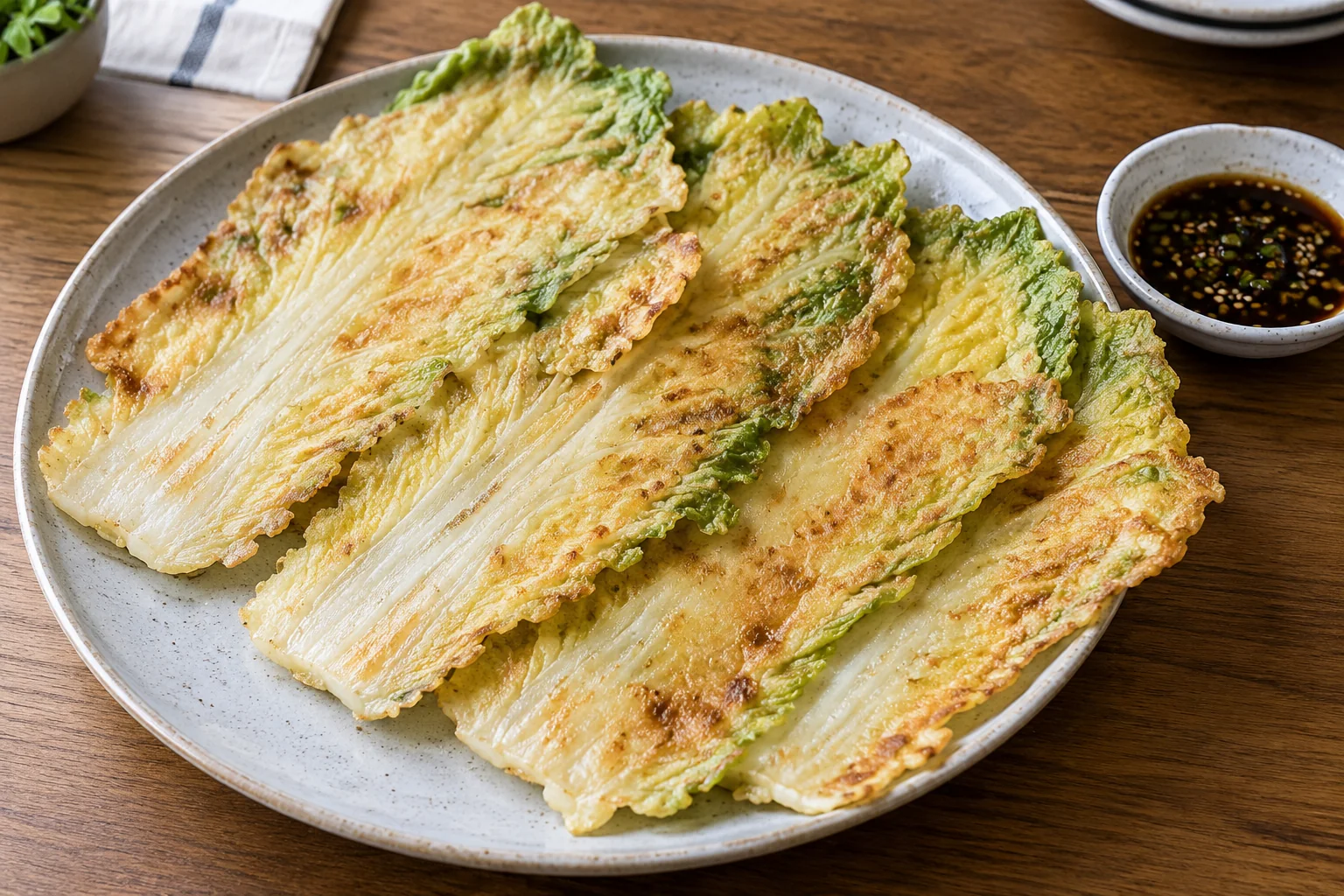
AI-generated cooking illustrations. Follow the written quantities and instructions.
Ingredients
2 servings
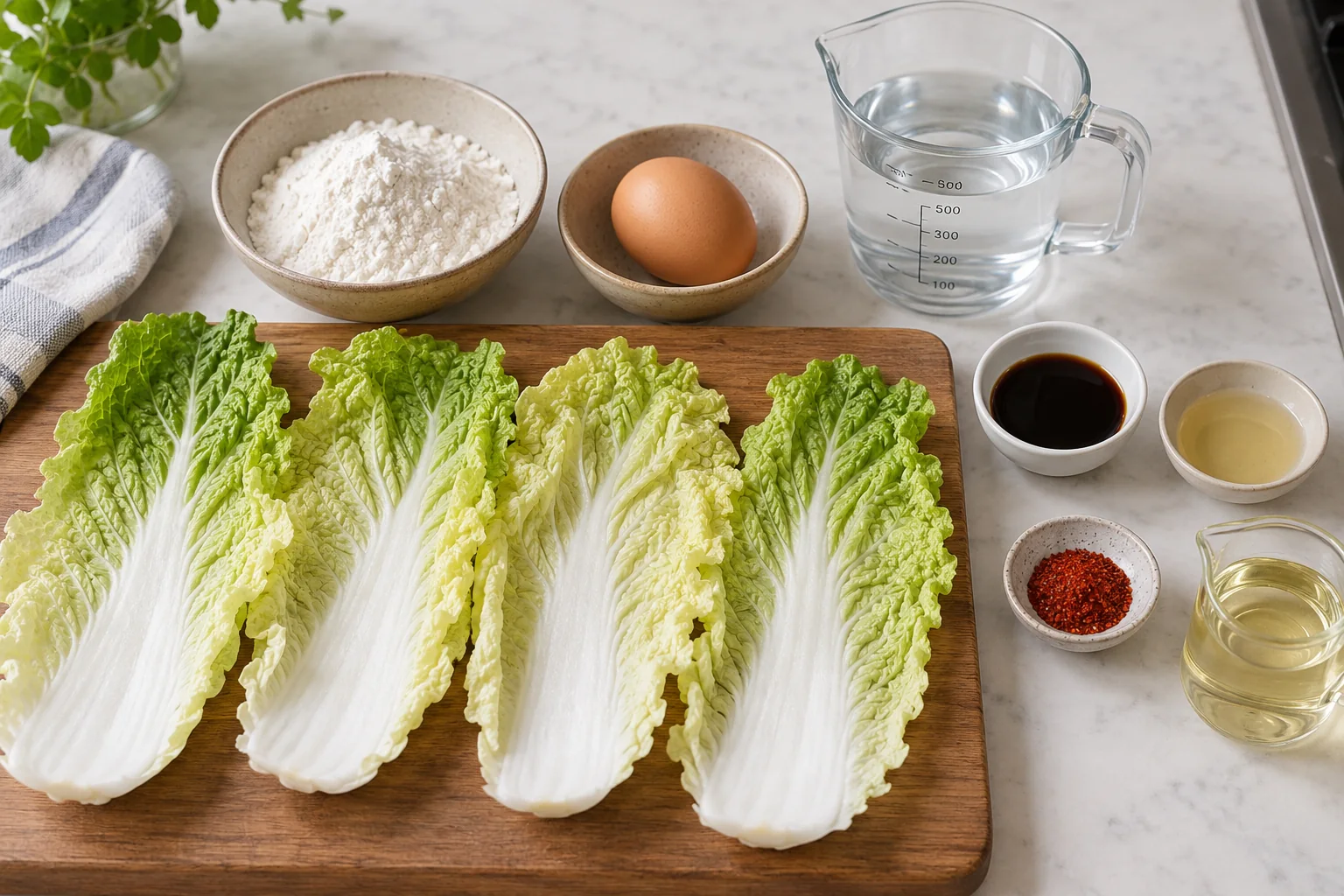
Everyday kitchen measurements
For 2 servings. Use a small 180 ml paper cup, a level eating spoon (about 15 ml) and a small teaspoon (about 5 ml).
How to fill the cup and spoons
Use the same cup and spoons throughout. Their sizes vary, so these amounts are approximate. Spoon flour in loosely and level the top without pressing. Measure vegetables after chopping, without packing them down. The amounts in g/ml are the original reference quantities. For part of a pack, use the specified pack weight and divide the contents evenly.
King Arthur Baking-
Substitute available
If Napa cabbage leaves — 4 large leaves is unavailable
If napa cabbage is unavailable, use 4 tender savoy cabbage leaves. Flatten the thick ribs first; the flavor and shape will be different.
-
Essential
Use a level paper cup, not a heaped one. Wheat flour forms the thin coating; check the label if avoiding wheat.
-
Essential
The batter should run off a spoon in a thin stream. Add 1 more tablespoon water only if too thick.
-
Substitute available
If Egg — 1 is unavailable
If egg is unavailable, mix 1 extra tablespoon water and 1 teaspoon flour into the batter; the coating will be slightly less rich.
-
Essential
Use canola or sunflower oil. Add a little more only if the pan becomes dry between batches.
-
Substitute available
If Soy sauce — 1 level tablespoon is unavailable
For the dipping sauce; use the same amount of gluten-free tamari if avoiding wheat, and check saltiness.
-
Optional
Omit for a milder dipping sauce or use the same amount of lemon juice.
-
Optional
Omit for children or anyone avoiding heat; it seasons only the dipping sauce.
Tap each ingredient as you prepare it. Check product labels for egg, soy, sesame, wheat, fish or shellfish where relevant.
Step-by-step cooking
-
Step 1
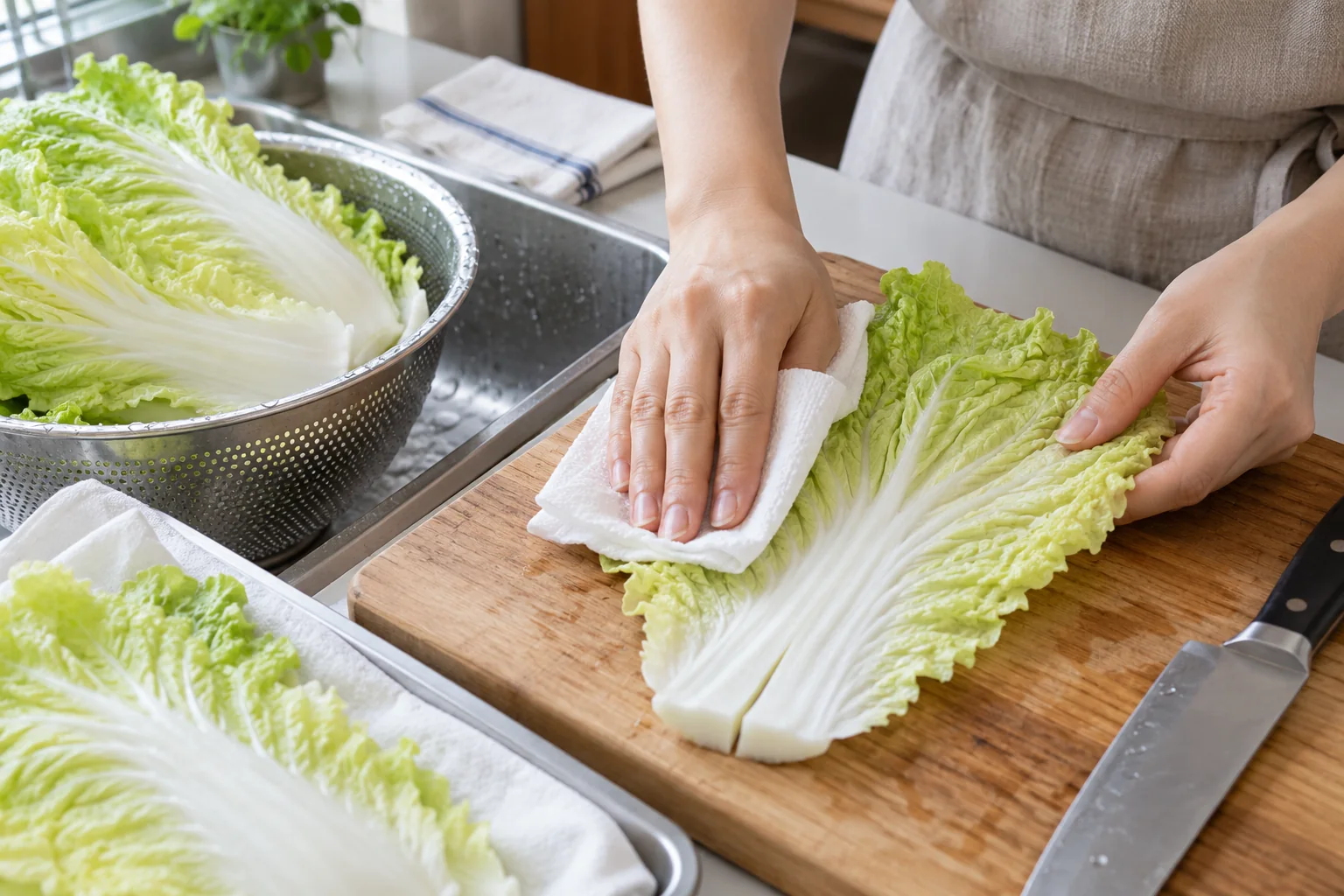
Wash 4 napa cabbage leaves and dry well. Make a short slit at the thick white base of each leaf, then press the rib gently so the leaf lies flat; keep each leaf whole.
-
Step 2
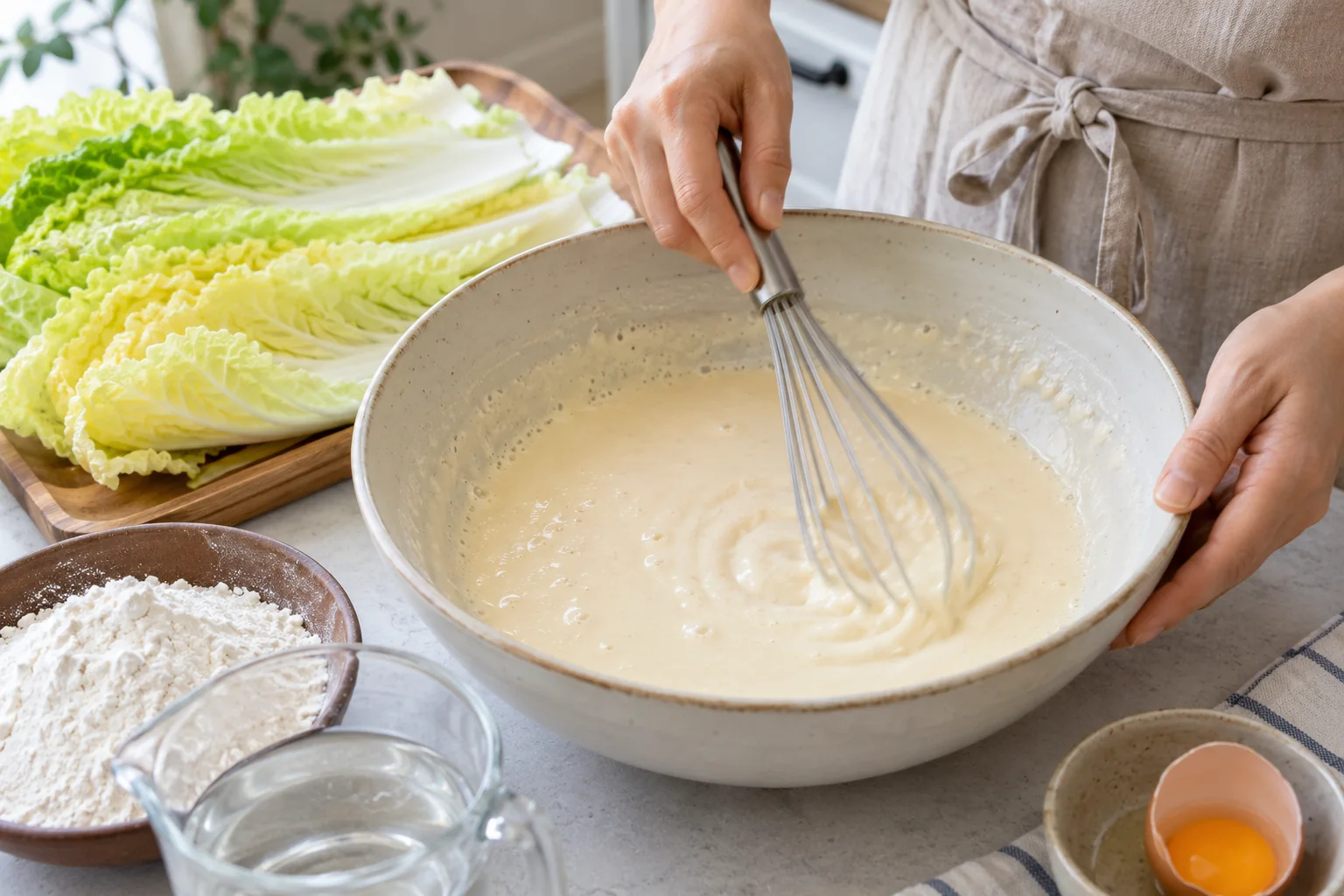
Whisk 3/4 paper cup all-purpose flour, 2/3 paper cup cold water and 1 egg in a wide bowl. The batter should be thin enough to drip from a spoon; if needed add 1 more tablespoon water. Let it stand 5 minutes.
-
Step 3
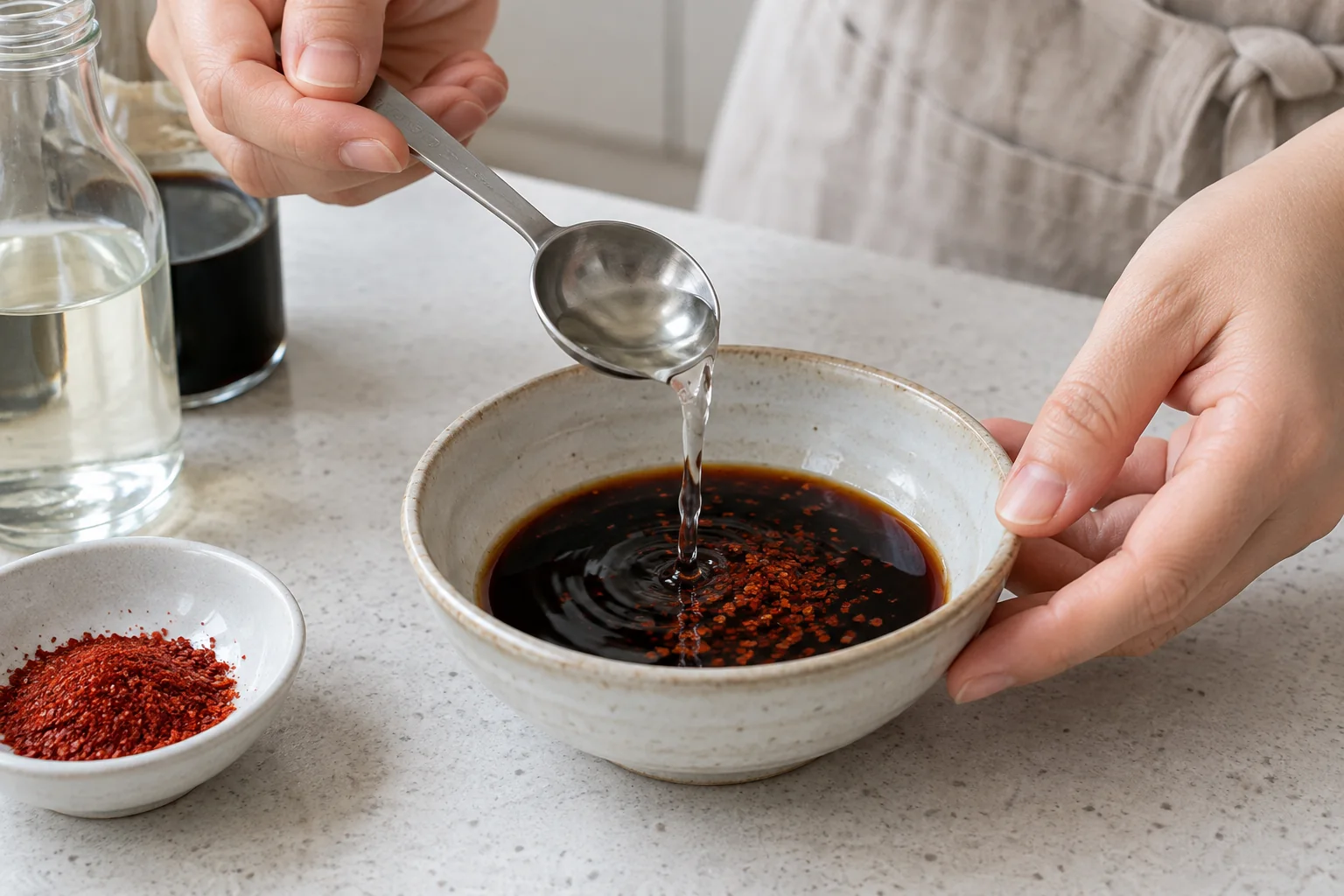
Stir 1 tablespoon soy sauce and 1 teaspoon vinegar in a small bowl. Add 1/2 teaspoon gochugaru only if using. Keep the sauce separate from the uncooked batter.
-
Step 4
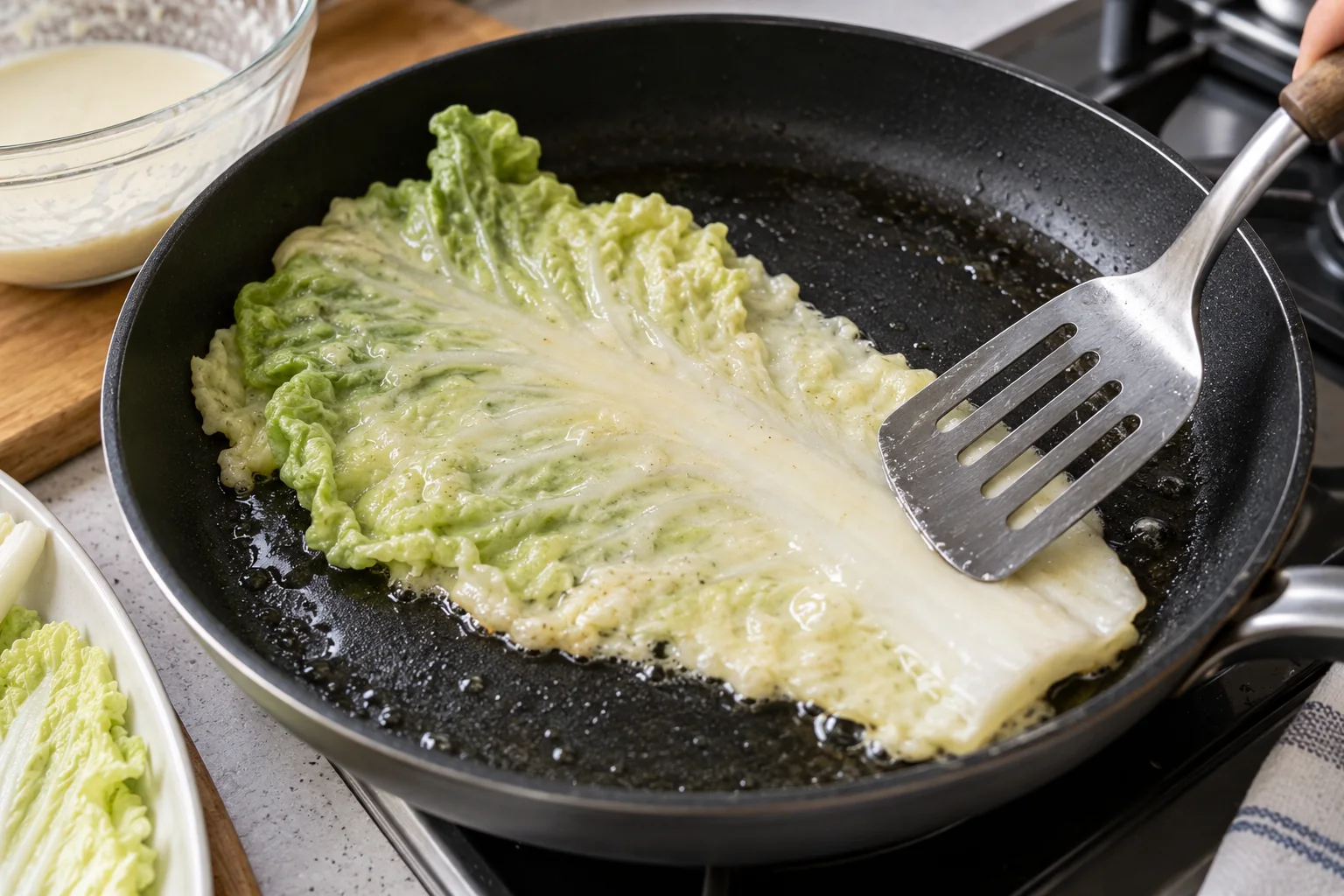
Heat 1 tablespoon oil in a large nonstick pan over medium heat. Dip one cabbage leaf into the batter, let excess drip off, and lay it flat in the pan. Press the thick rib with a spatula; add a second leaf if it fits without overlap.
-
Step 5
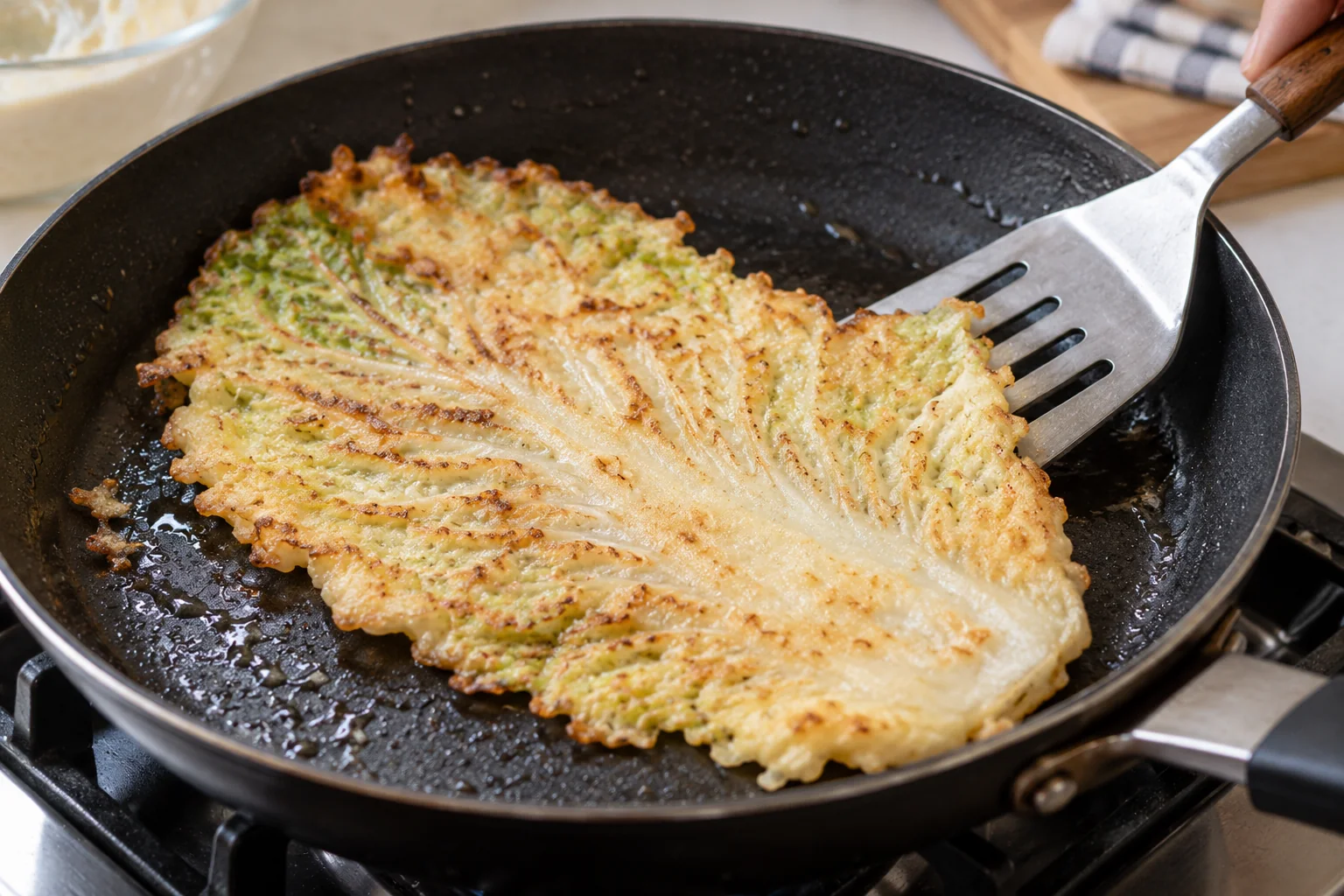
Cook about 2 minutes until the underside is lightly golden and the coating sets. Turn each leaf carefully, add a little more oil if the pan is dry, and cook another 2 minutes until the cabbage is tender and no wet batter remains. Repeat with the remaining leaves and oil.
-
Step 6
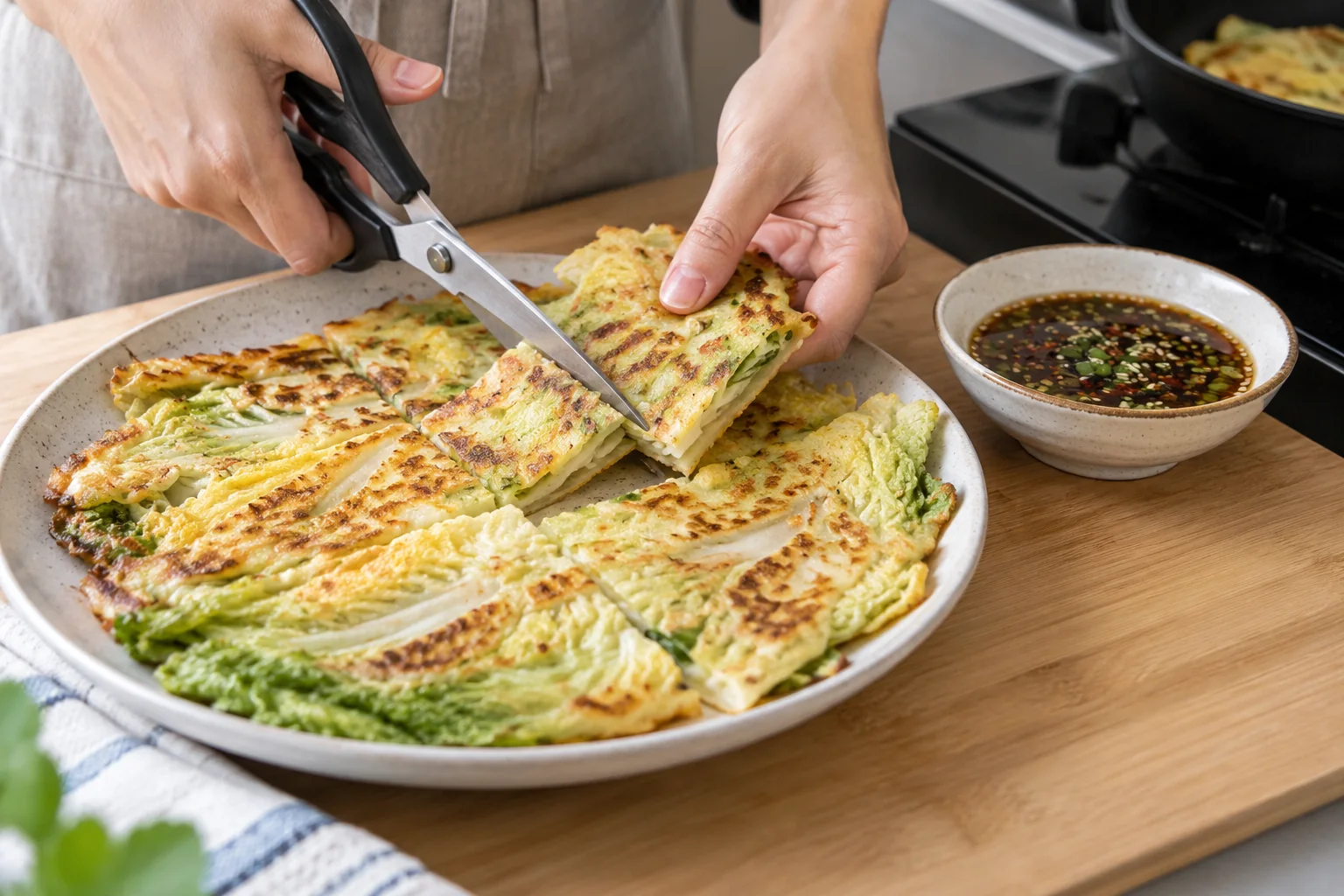
Transfer the hot pancakes to a plate. Cut into bite-size pieces with clean kitchen scissors and serve immediately with the dipping sauce. Keep the cooked pancakes separate from raw batter utensils.
Finished dish
A paper cup is 180 ml; a level tablespoon is 15 ml and a teaspoon is 5 ml. Work in batches so the leaves stay flat and crisp. Contains wheat, egg and soy unless substitutions are used.