
How to cook delicious Korean ramyeon
One satisfying bowl of springy soup noodles with soft cooked egg ribbons and fresh spring onion. Learn measured water, steady heat and a simple cooking timeline so the broth stays flavourful and the noodles do not go mushy.

Share recipe ↗
Choose an app on your device, or copy the link for Instagram and other apps.
✦ AI-generated cooking illustrations. Follow the written quantities and instructions.
Ingredients
1 servings
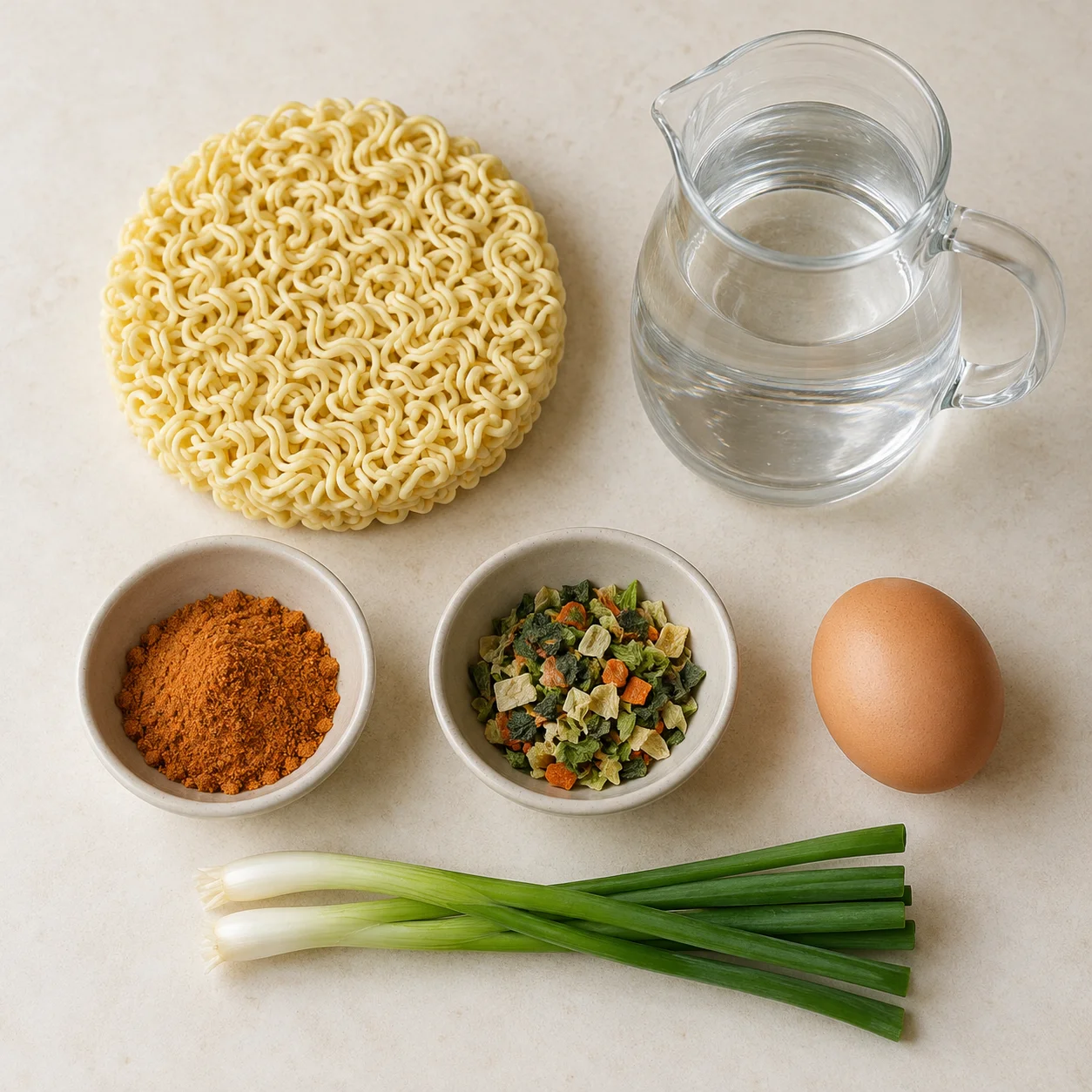
- Substitute available
Use one serving of another Korean soup-noodle bag. Follow that packet's water and total noodle time; dry stir-fry noodles need a different method.
- Essential
Use 550 ml for the example packet. If you change the soup-noodle brand, use its stated water amount instead; this liquid forms the broth.
- Optional
May be omitted; skip pouring the egg but keep the full packet noodle time. The broth becomes clearer and less rich.
- Optional
May be omitted; it adds fresh aroma rather than structure. Keep the recipe's remaining cooking time.
1 tbsp = 15 ml · 1 tsp = 5 ml. Use level measuring spoons. Quantities below make 1 servings.
Tap each ingredient as you prepare it. Check product labels for egg, soy, sesame, wheat, fish or shellfish where relevant.
Step-by-step cooking
-
Step 1
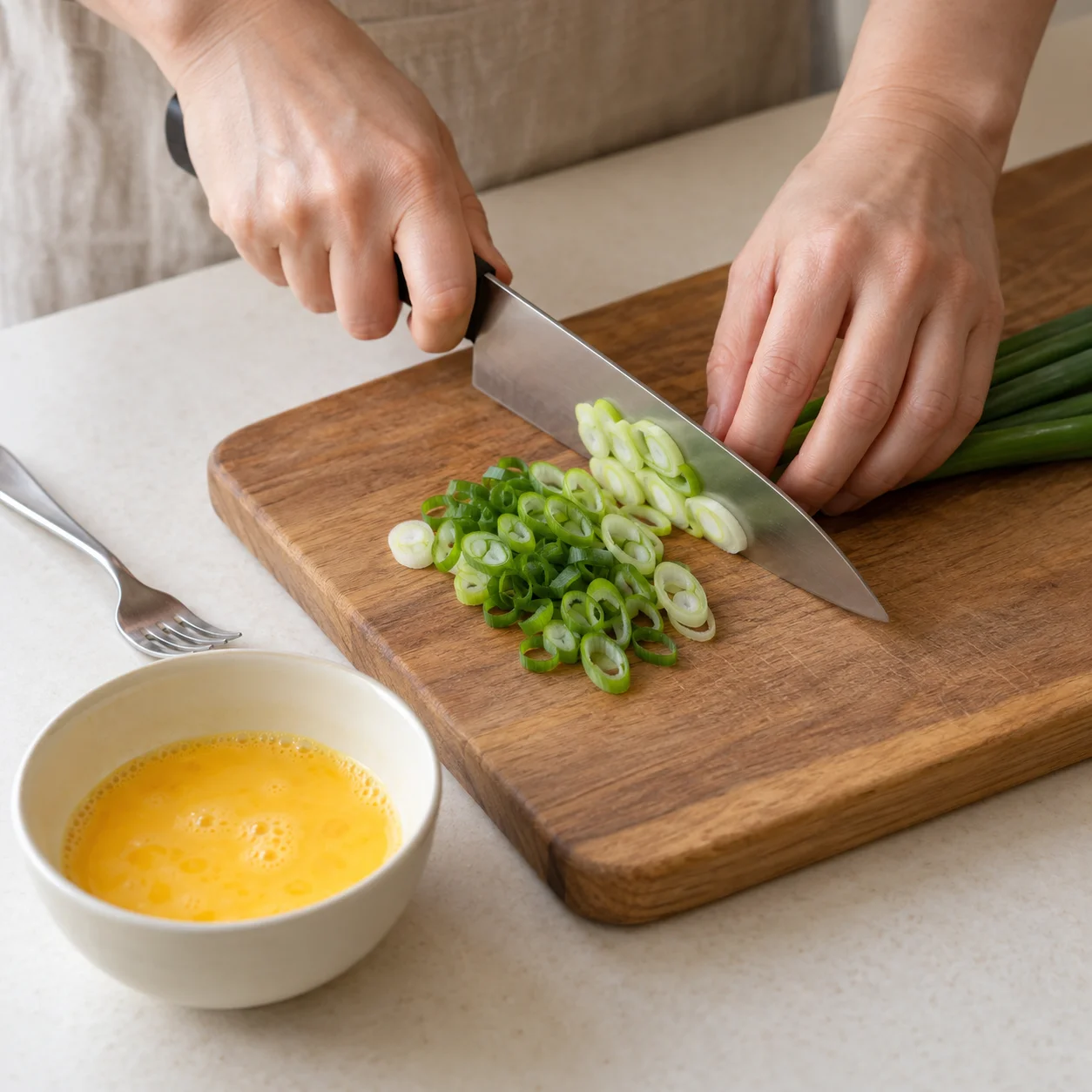
Read the soup-noodle packet first. This example uses one 120 g Shin-style bag with 550 ml water and a 4 minute 30 second noodle cooking time; if your packet differs, follow its water and total time. Slice 20 g spring onion thinly and beat one egg in a small cup. Have a serving bowl ready.
-
Step 2
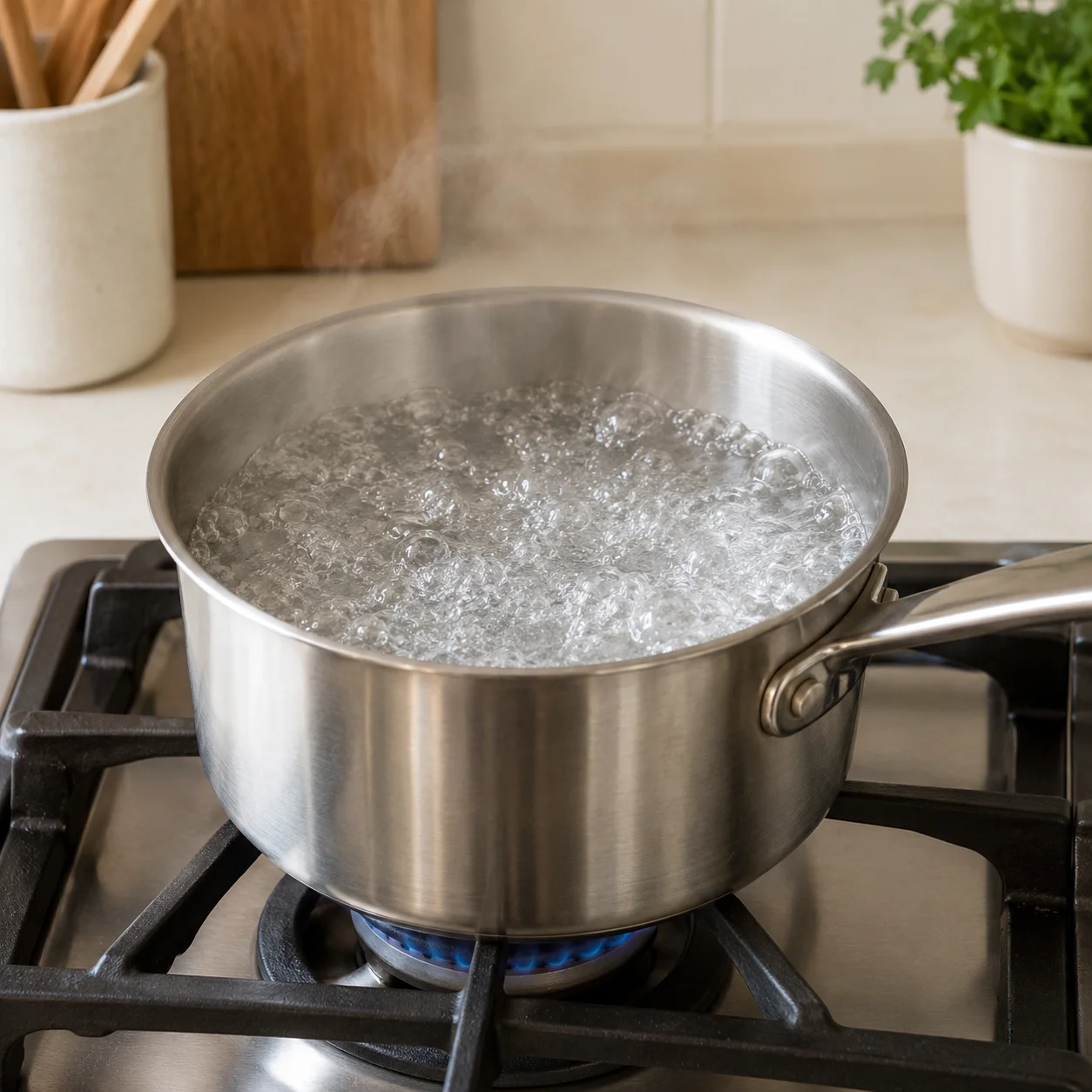
Measure the water into a compact 1.5–2 litre saucepan with enough room above the liquid. Bring to a full boil over high heat before adding noodles. A measured amount keeps the broth consistent; too much water dilutes it, while boiling it away aggressively makes it too salty.
-
Step 3

Add the included soup powder and dried vegetable flakes, stir briefly, then add the noodle block. Start the noodle timer immediately, at 0:00. Keep the pot uncovered and adjust the heat to a steady boil that does not overflow. Do not add extra salt or soy sauce.
-
Step 4
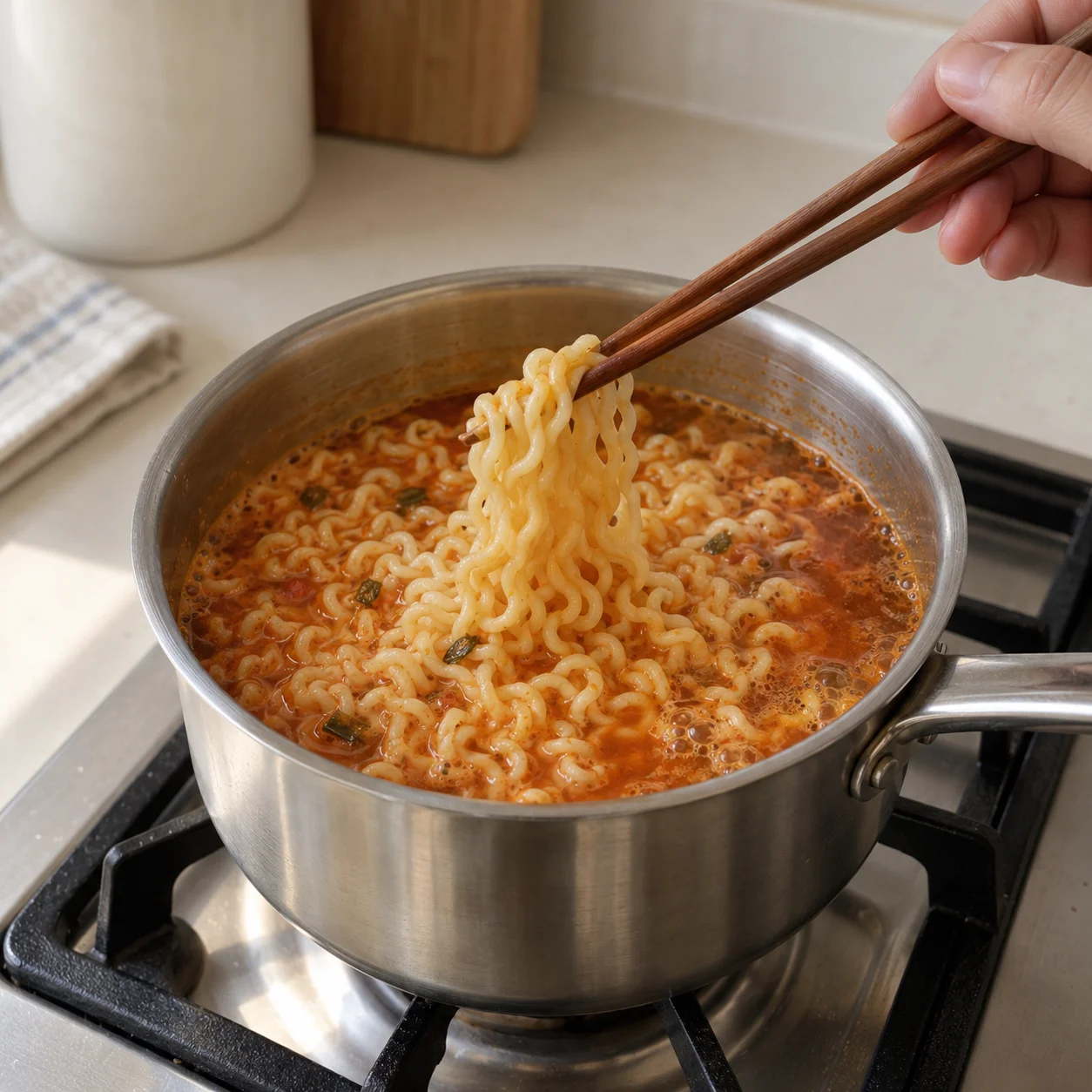
After about 1 minute, gently turn the softening block with chopsticks or a spoon. By 2:00, ease the strands apart so they cook evenly. Stir only occasionally and keep the noodles mostly in the broth; constant stirring can break them. Continue boiling to the egg-adding point.
-
Step 5
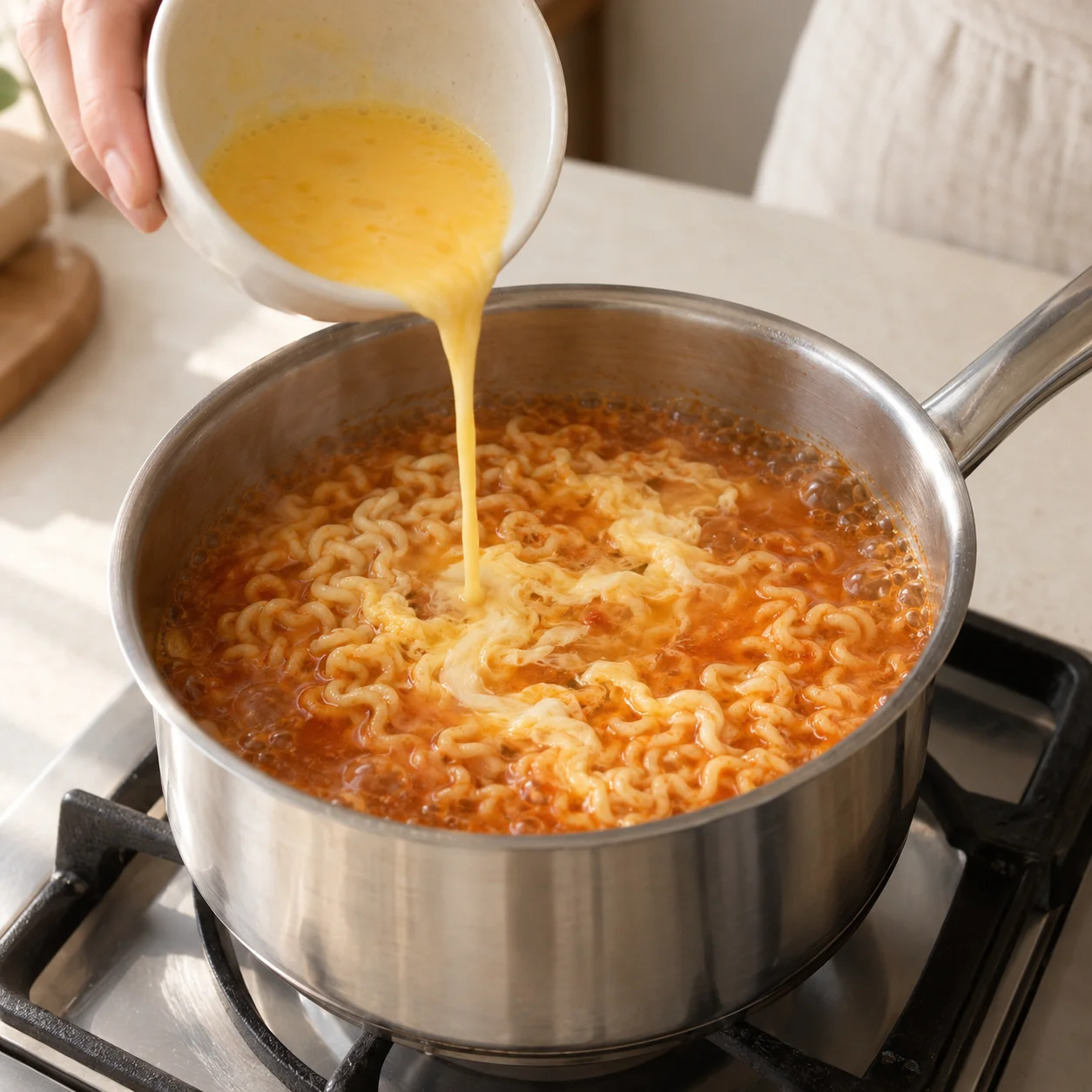
For the 4:30 example, at 3:00 slowly pour the beaten egg in a thin stream around the noodles. Wait about 10 seconds for ribbons to form, then move them gently once with a spoon. Continue boiling until 4:00; the 10-second wait is included in this minute. For a different packet, add the egg 90 seconds before its noodle time ends.
-
Step 6

At 4:00 in this example, add the sliced spring onion and boil for the final 30 seconds. At 4:30, check that the noodles are cooked but springy and the egg ribbons are opaque and fully set, then turn off the heat and serve immediately. If egg remains unset, lift the noodles into the bowl and briefly finish cooking the broth and egg before pouring them over the noodles.
Finished dish
Total time is about 10 minutes including boiling the water. All timer marks start when the noodles enter the boiling broth; the example ends at 4:30, not 4:30 plus another 90 seconds. For another soup packet, add beaten egg during the last 90 seconds and spring onion during the last 30 seconds of its stated noodle time. This method is for stovetop soup bags; cup noodles and dry Buldak/Chapagetti have different instructions. For milder heat, choose a mild soup packet and use its water quantity. The egg ribbons are an adaptation of the public egg-and-spring-onion method. Contains egg; check the packet for wheat, soy, milk, seafood or other allergens. Eat freshly cooked: the noodles continue absorbing broth in the bowl. Adults handle the hot pot; cool a spoonful before tasting.
This complete home version was written for this site using the public recipe as a reference. Open the original for another method.
Maangchi — Korean ramyeon; egg-ribbon home adaptation ↗