
Jajang tteokbokki
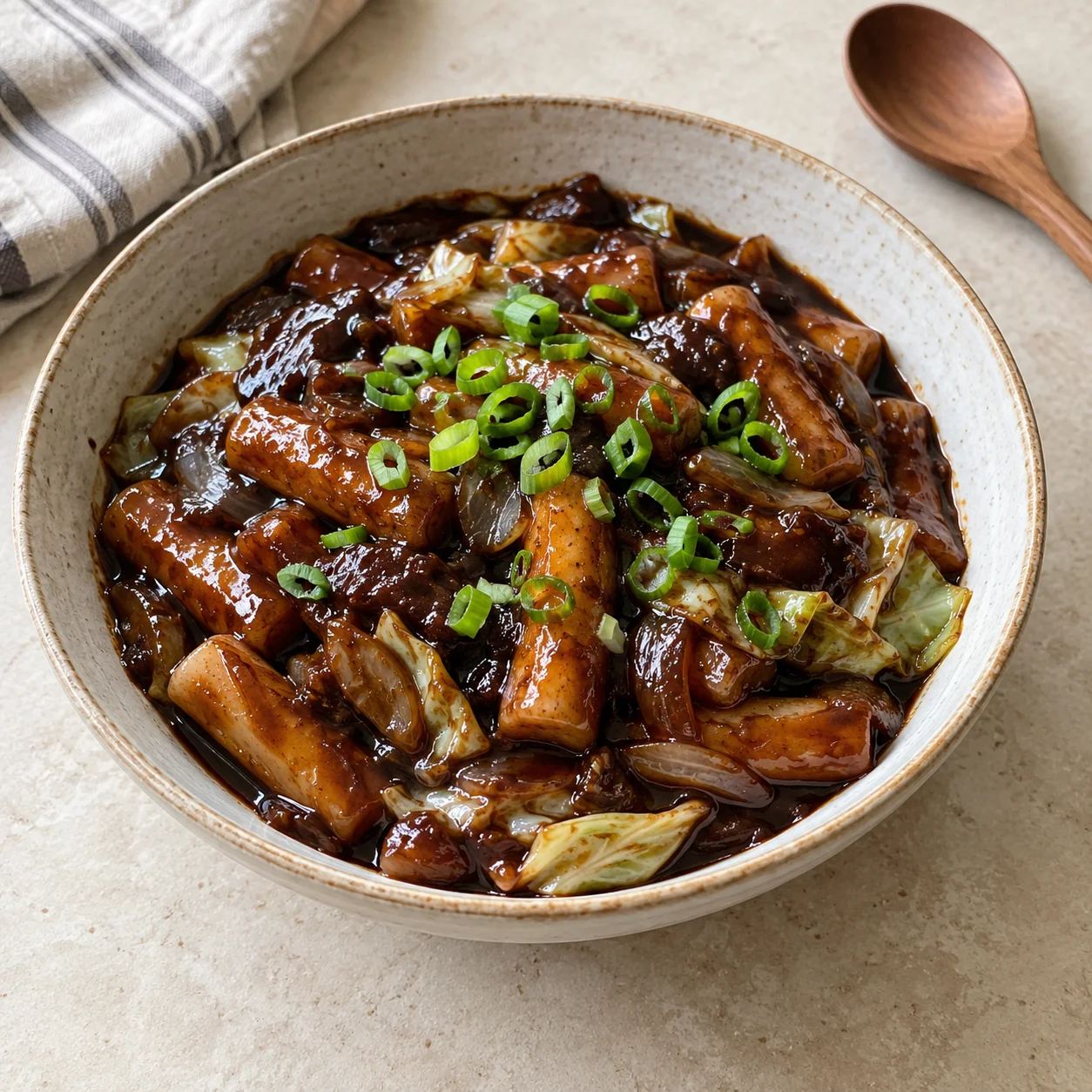
Chewy rice cakes in a glossy Korean black bean sauce, with onion and cabbage. A mild alternative to red tteokbokki.
Share recipe ↗
Choose an app on your device, or copy the link for Instagram and other apps.
✦ AI-generated cooking illustrations. Follow the written quantities and instructions.
Ingredients
2 servings
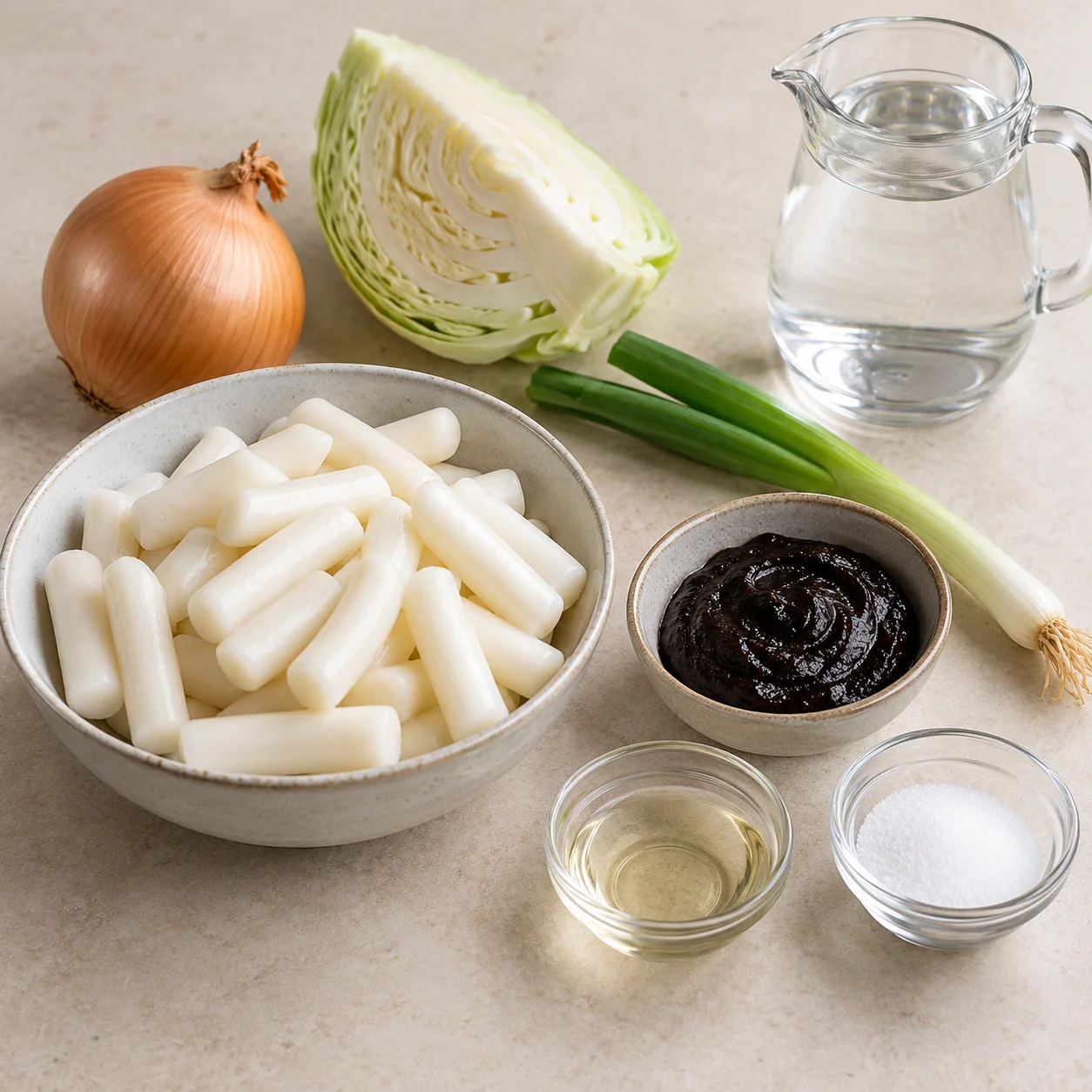
1 tbsp = 15 ml · 1 tsp = 5 ml. Use level measuring spoons. Quantities below make 2 servings.
Tap each ingredient as you prepare it. Check product labels for egg, soy, sesame, wheat, fish or shellfish where relevant.
Step-by-step cooking
-
Step 1
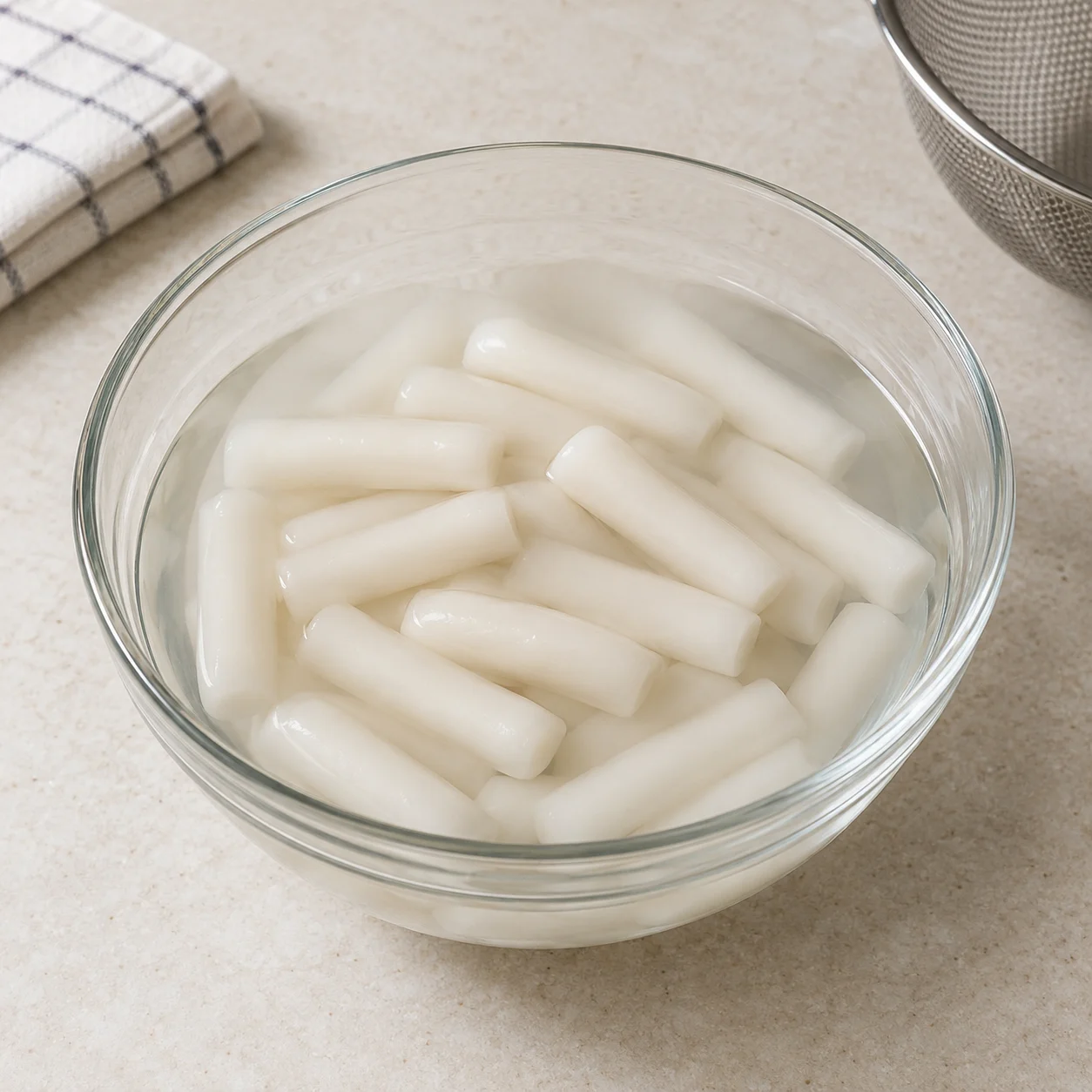
Separate the rice cakes. If firm from refrigeration, soak in cool water for 10 minutes, then drain. Fresh soft rice cakes can go straight into the sauce; follow package thawing directions for frozen ones.
-
Step 2
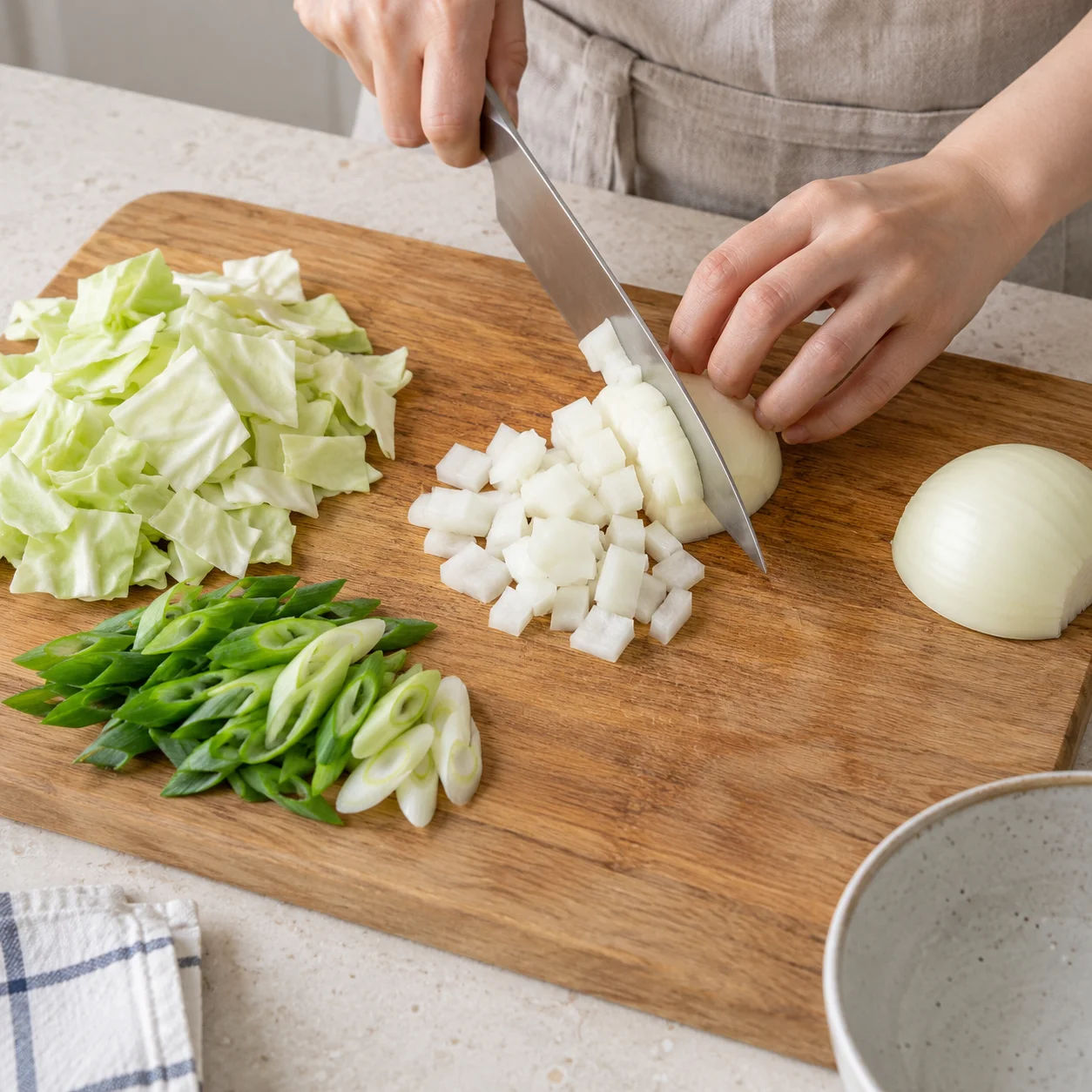
Dice the onion and cabbage into 1 cm pieces, and slice the scallion. Keep the scallion separate. Measure the chunjang, sugar and 350 ml water before heating the pan.
-
Step 3
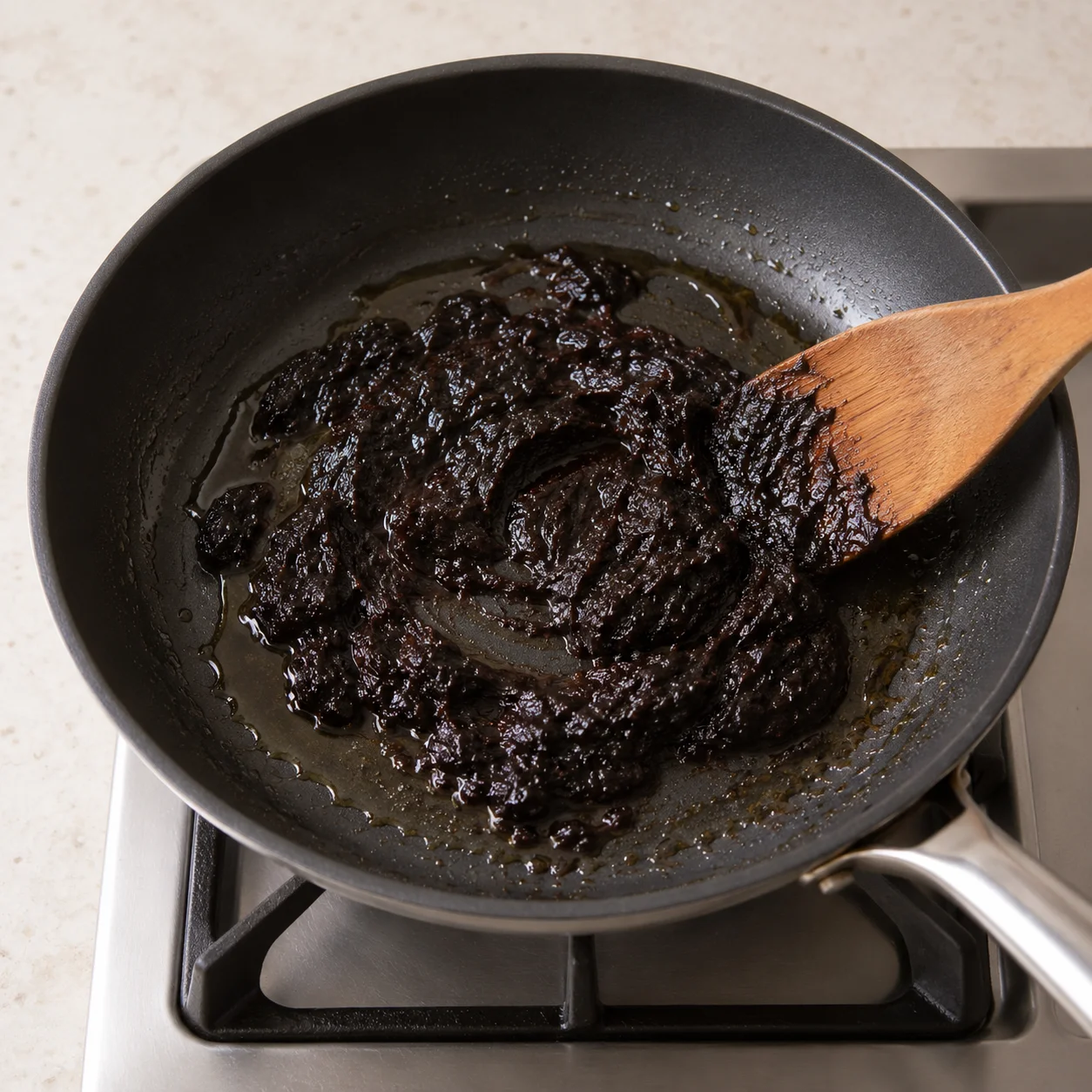
Warm 15 ml oil in a skillet over medium-low heat. Stir in 40 g raw chunjang and fry gently for 1–2 minutes, keeping it moving. If the paste is sold already fried, simply warm it briefly.
-
Step 4
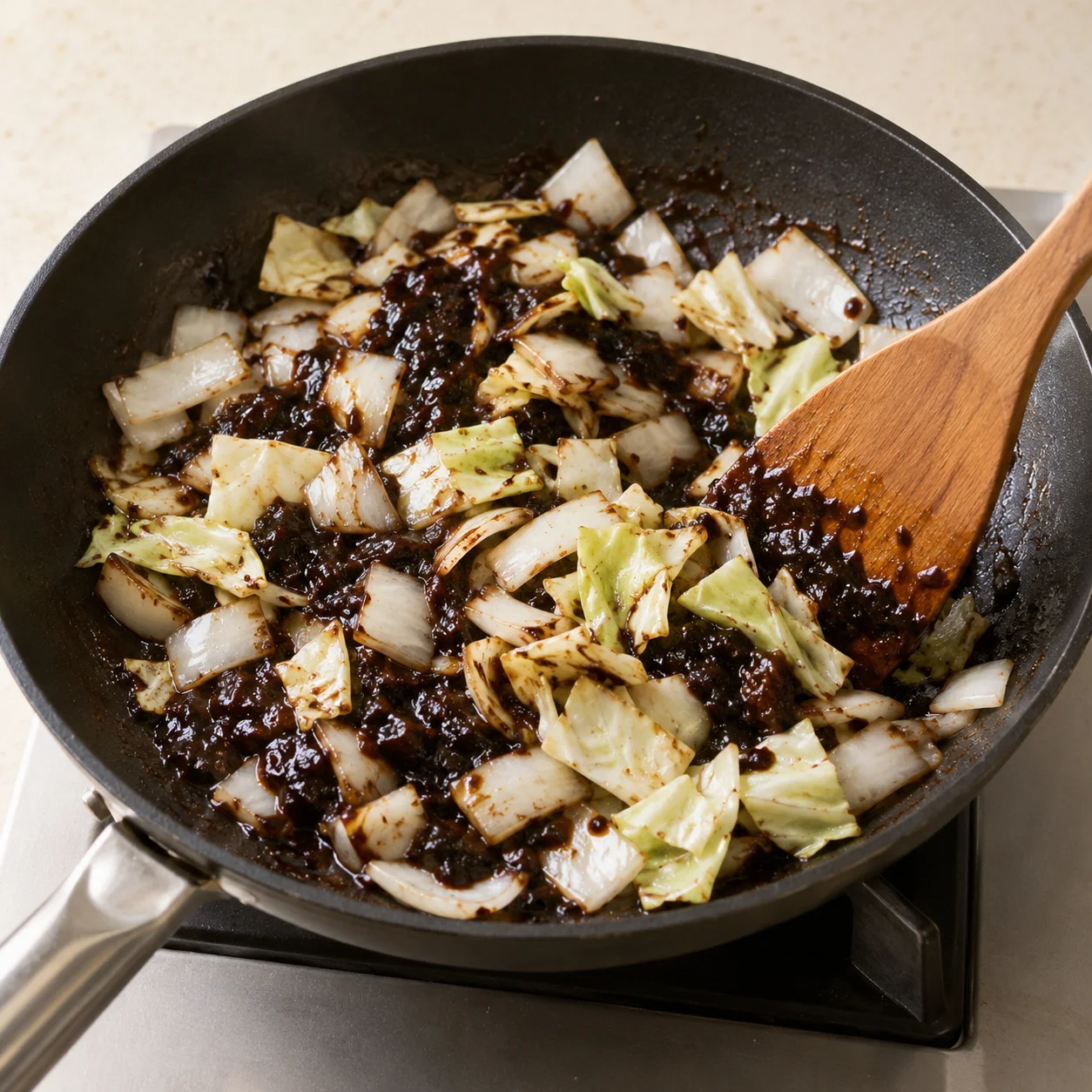
Add onion and cabbage. Stir-fry for about 3 minutes until the onion starts to soften and the vegetables are coated. Reduce the heat if the paste catches on the pan.
-
Step 5
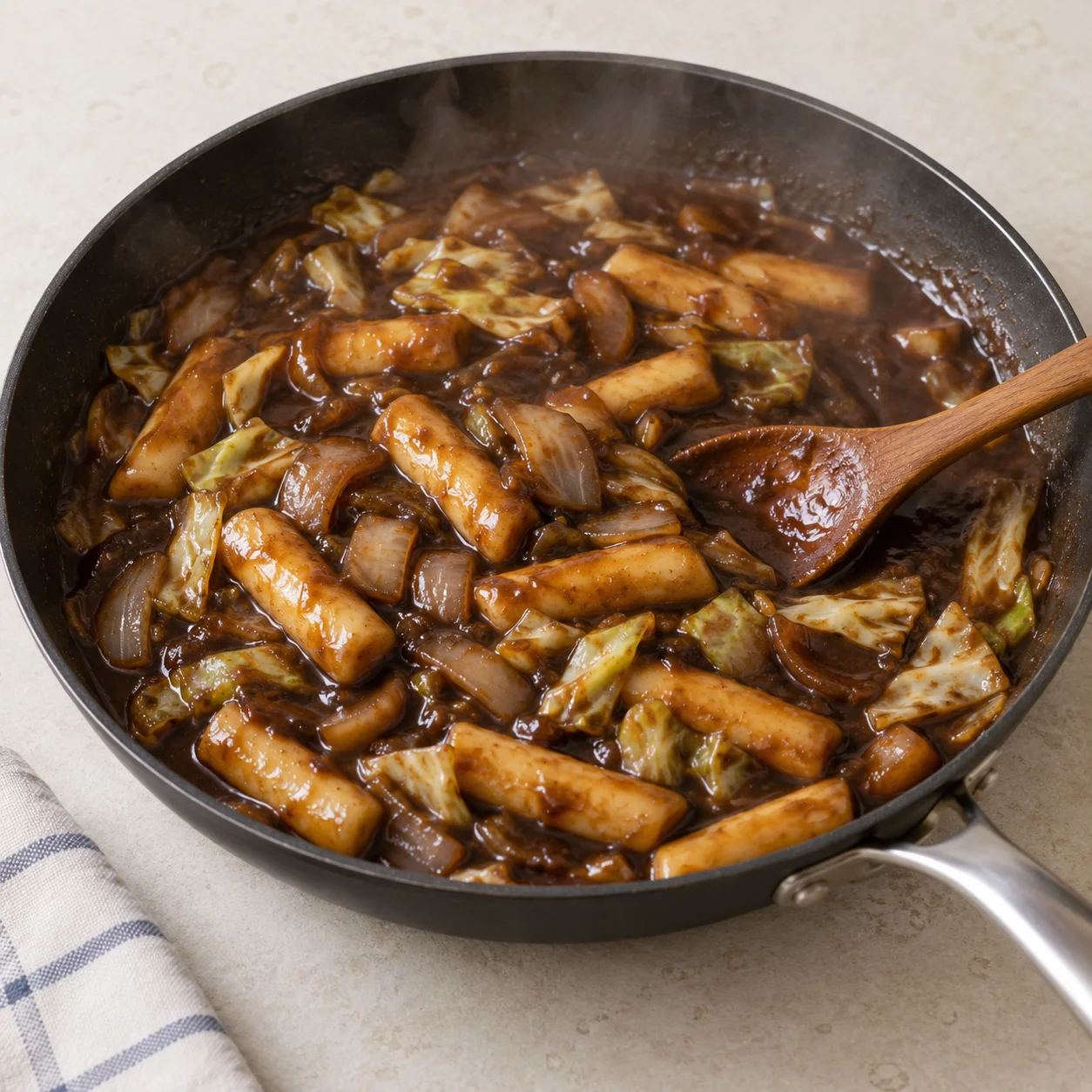
Pour in 350 ml water, stir to loosen the paste, then add drained rice cakes and 10 g sugar. Bring to a gentle simmer and cook 8–10 minutes, stirring often so the rice cakes do not stick.
-
Step 6
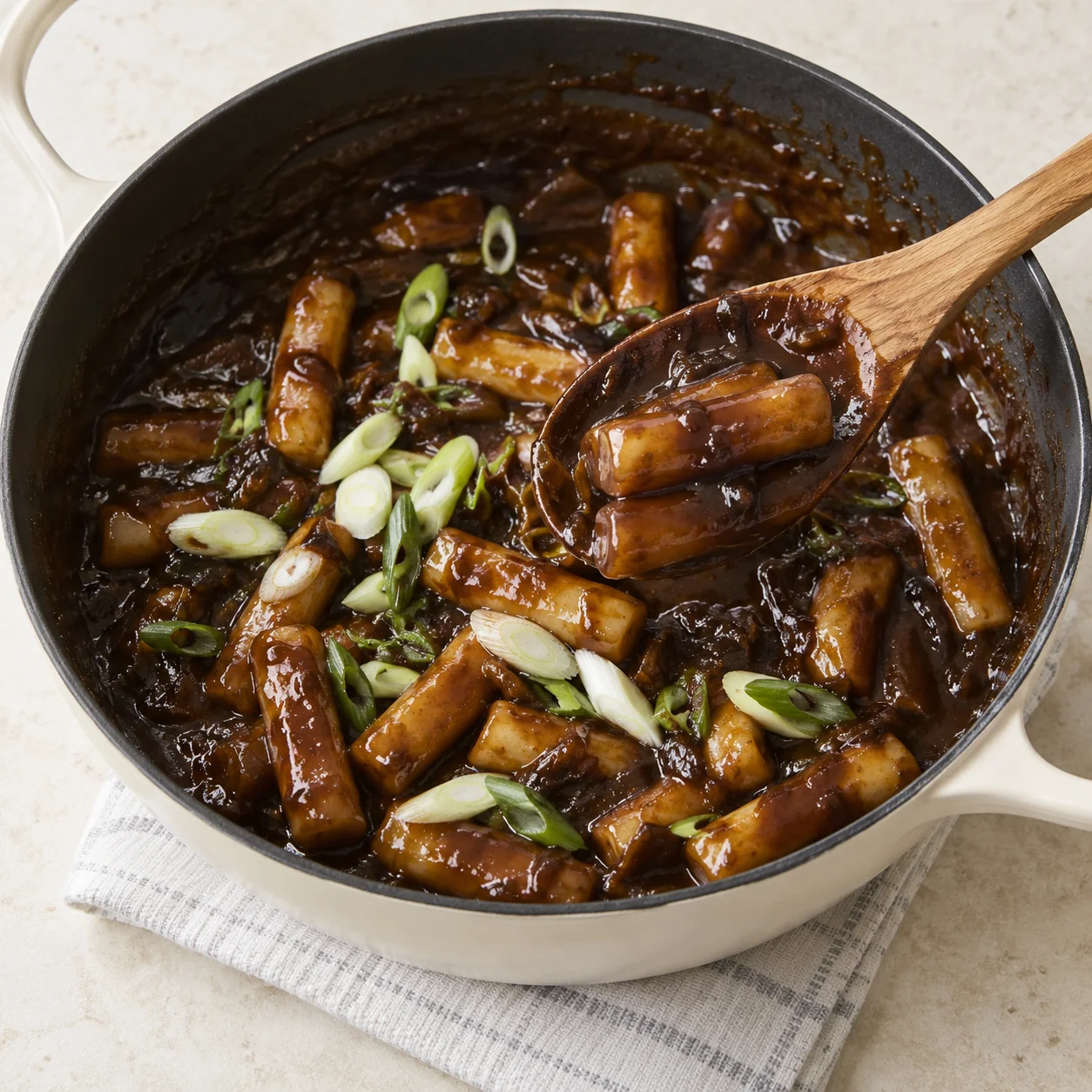
Taste a cooled rice cake: the center should be soft and chewy. Simmer 1–2 minutes more for a sauce that coats a spoon, or add a little water if too thick. Stir in scallions and serve immediately.
Finished dish
Choose Korean chunjang; check whether it is raw or pre-fried. Soaking time is included in the 30-minute estimate. This vegetable version contains soy and often wheat; check the paste label.
This complete home version was written for this site using the public recipe as a reference. Open the original for another method.
Paik Jong Won · Jajang tteokbokki ↗