Korean seafood hot pot (haemultang)
A bubbling Korean seafood soup with shrimp, squid, clams and mussels in a quick anchovy broth. Use a ready-cleaned seafood mix and simple spoon measures for an easy home version.
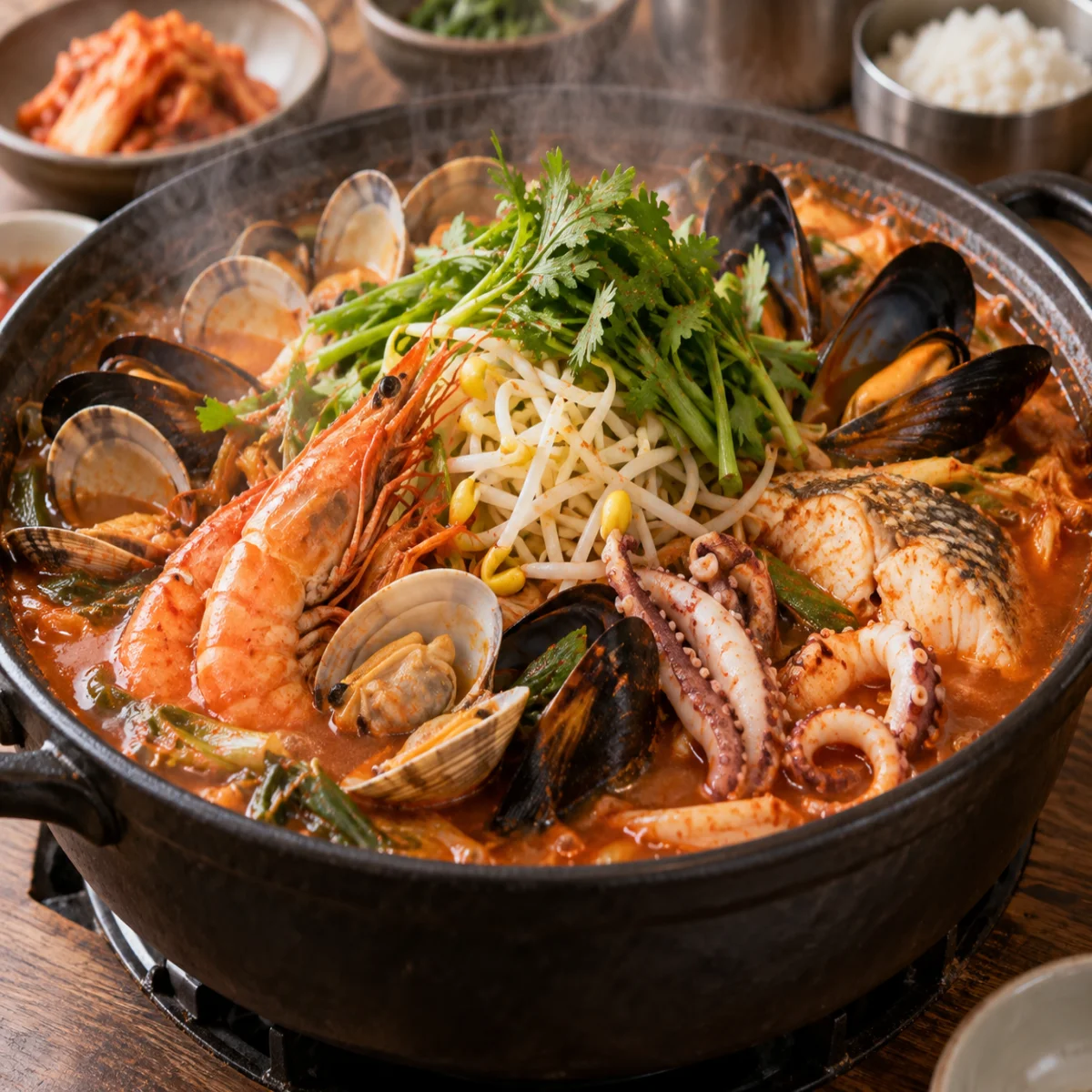
AI-generated cooking illustrations. Follow the written quantities and instructions.
Ingredients
4 servings
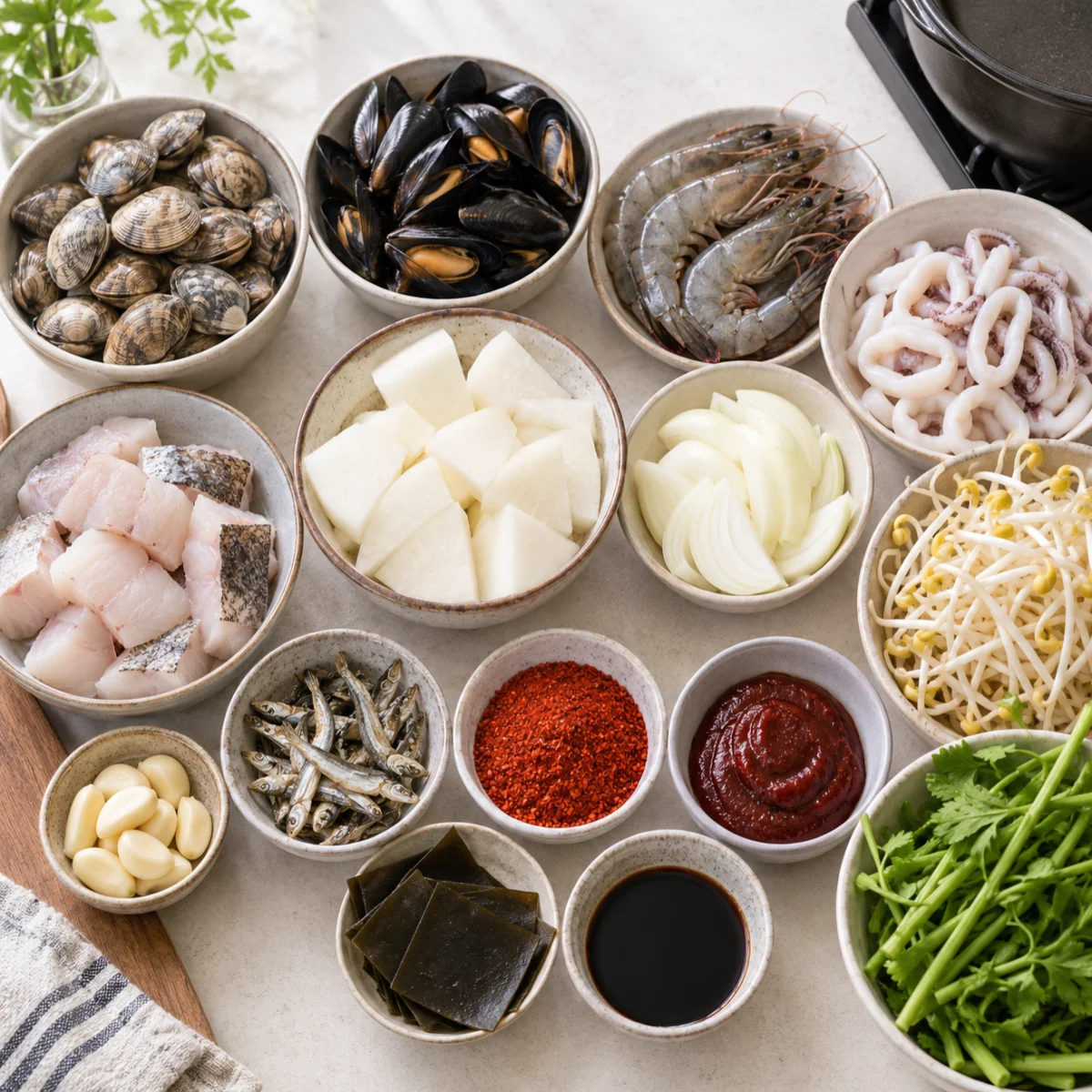
Everyday kitchen measurements
For 4 servings. Use a small 180 ml paper cup, a level eating spoon (about 15 ml) and a small teaspoon (about 5 ml).
How to fill the cup and spoons
Use the same cup and spoons throughout. Their sizes vary, so these amounts are approximate. Spoon flour in loosely and level the top without pressing. Measure vegetables after chopping, without packing them down. The amounts in g/ml are the original reference quantities. For part of a pack, use the specified pack weight and divide the contents evenly.
King Arthur Baking-
Essential
Keep chilled. If using frozen seafood, thaw it in the refrigerator. Use a mix you enjoy; keep shellfish separate while cleaning.
-
Essential
Use clean drinking water; this makes the soup broth.
-
Substitute available
If Korean radish, cubed — 1 heaped paper cup is unavailable
Daikon works in the same amount. If neither is available, use napa cabbage, though the broth will taste less sweet.
-
Optional
Leave it out if unavailable; the soup will still have plenty of flavour.
-
Substitute available
If Dried anchovies — 6 medium is unavailable
Use 1 small teaspoon anchovy stock powder instead, or leave out for a lighter broth.
-
Optional
Leave it out if unavailable; do not boil kelp for a long time because it can make broth bitter.
-
Substitute available
If Garlic, minced — 1 level tablespoon is unavailable
Use 1 small teaspoon garlic powder if needed; add it with the broth seasonings.
-
Substitute available
If Korean red pepper flakes (gochugaru) — 1 level tablespoon, or more to taste is unavailable
Use less or omit for a milder soup. Crushed red pepper can replace it, but may taste hotter.
-
Substitute available
If Korean chili paste (gochujang) — 1 level tablespoon is unavailable
If unavailable, use 1/2 tablespoon doenjang plus 1/2 tablespoon chili flakes; flavour will change.
-
Substitute available
If Soy sauce — 1 level tablespoon is unavailable
If unavailable, season with a small pinch of salt at a time and taste the broth.
-
Substitute available
If Bean sprouts — 2 paper cups is unavailable
Napa cabbage or sliced cabbage works in the same amount; the crunch will change.
-
Optional
Leave it out or use watercress. Add it at the end so it stays fresh.
-
Optional
Leave it out if unavailable; it is a finishing garnish.
Tap each ingredient as you prepare it. Check product labels for egg, soy, sesame, wheat, fish or shellfish where relevant.
Step-by-step cooking
-
Step 1
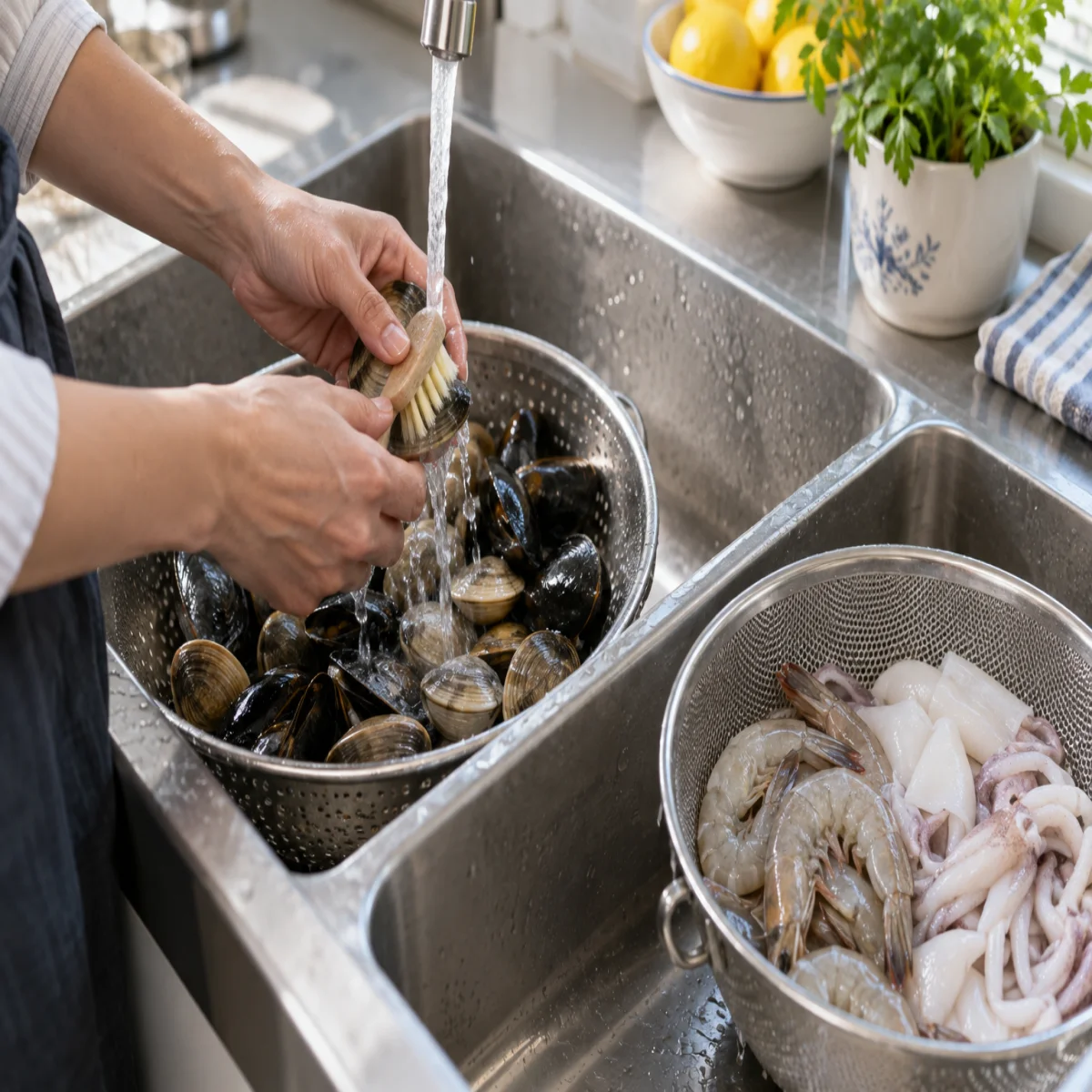
Rinse the seafood under cold running water. Scrub clams and mussels and discard any with broken shells. Keep raw seafood in a clean bowl in the refrigerator while preparing the vegetables. Cut the radish and onion.
-
Step 2
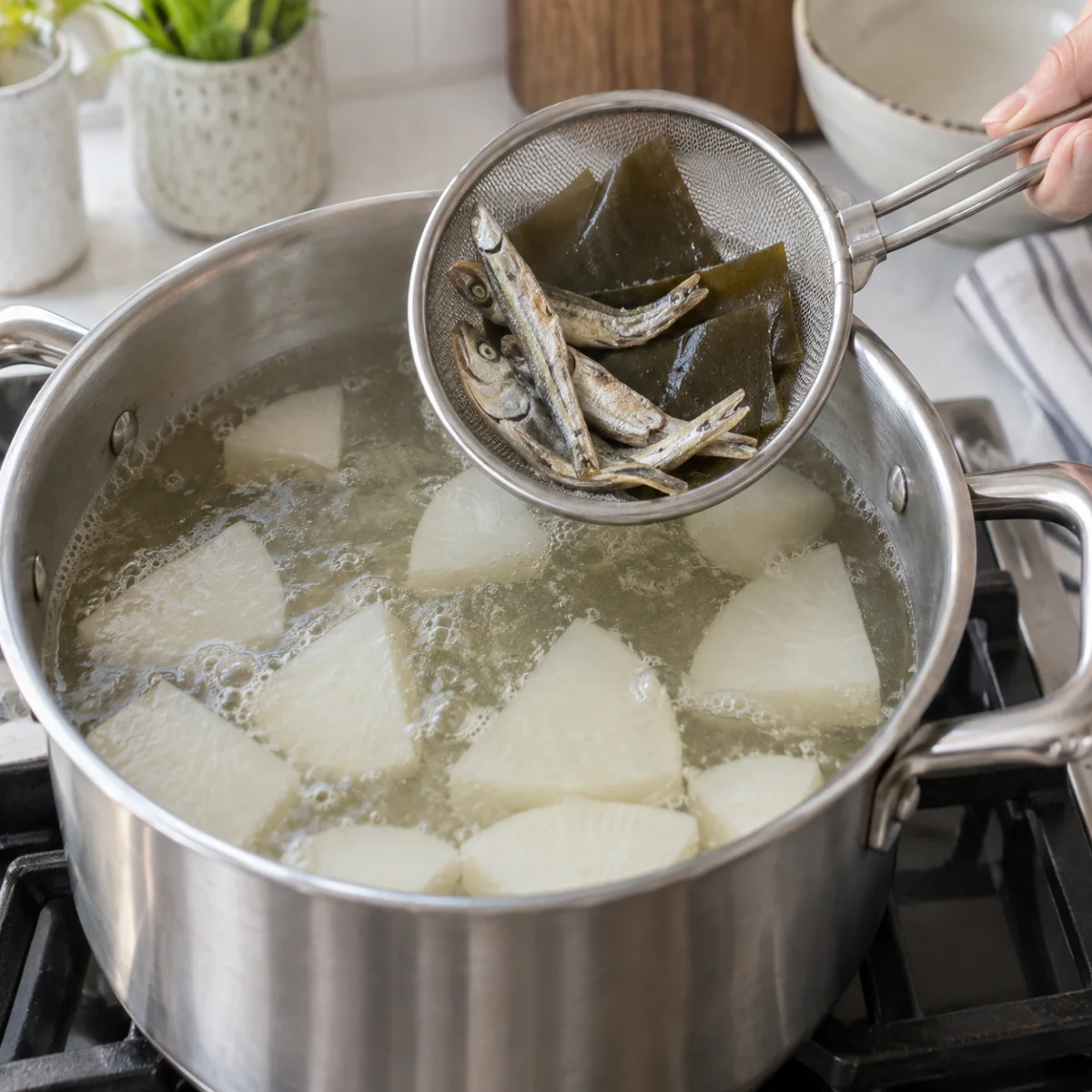
Put the water, dried anchovies, kelp and radish in a pot. Bring to a boil, then simmer for 10 minutes. Remove and discard the anchovies and kelp; keep the radish in the broth.
-
Step 3
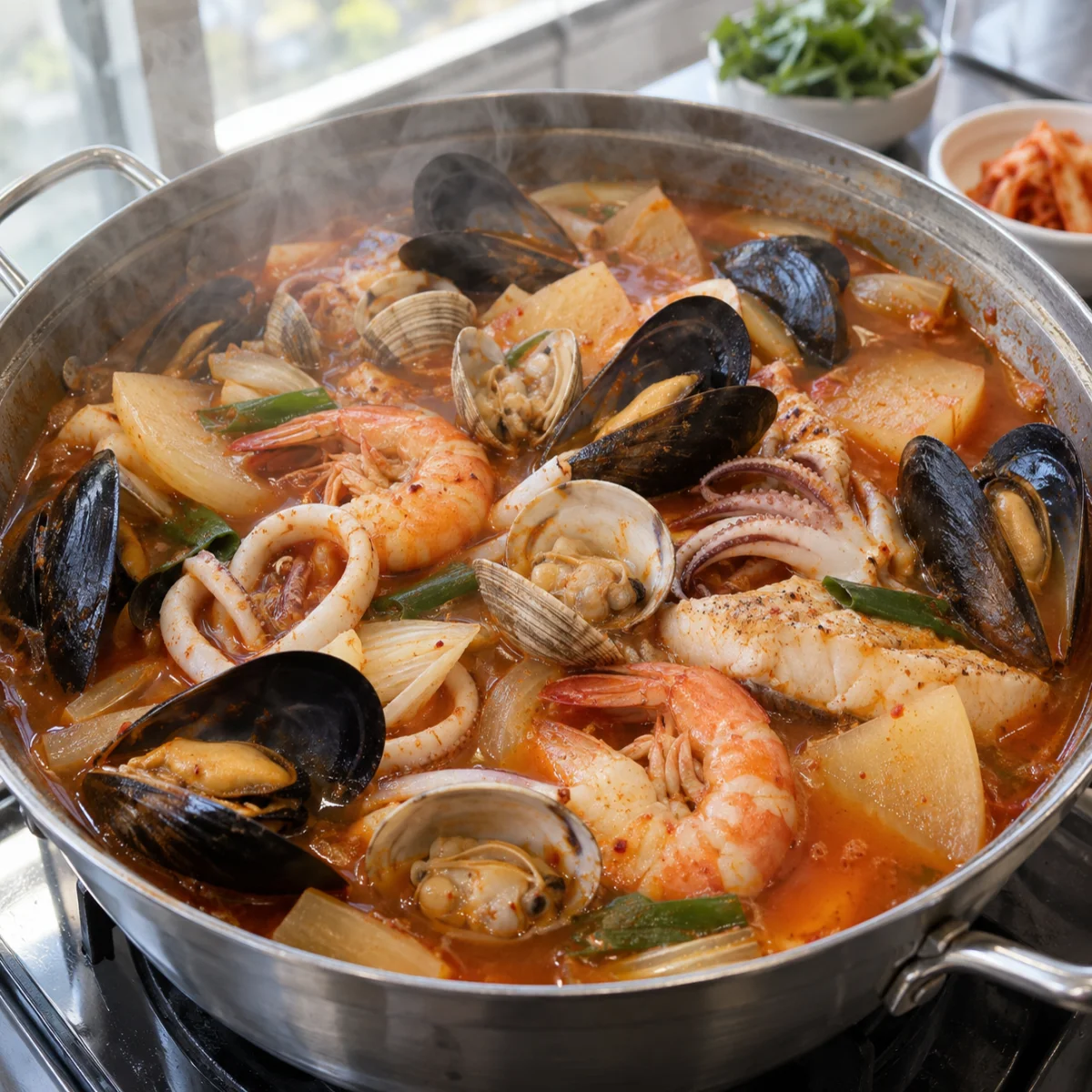
Stir in the onion, garlic, gochugaru, gochujang and soy sauce. Add the seafood, cover and simmer for 6–10 minutes, until shrimp turn pink, fish is opaque and shellfish open. Discard shellfish that stay closed.
-
Step 4
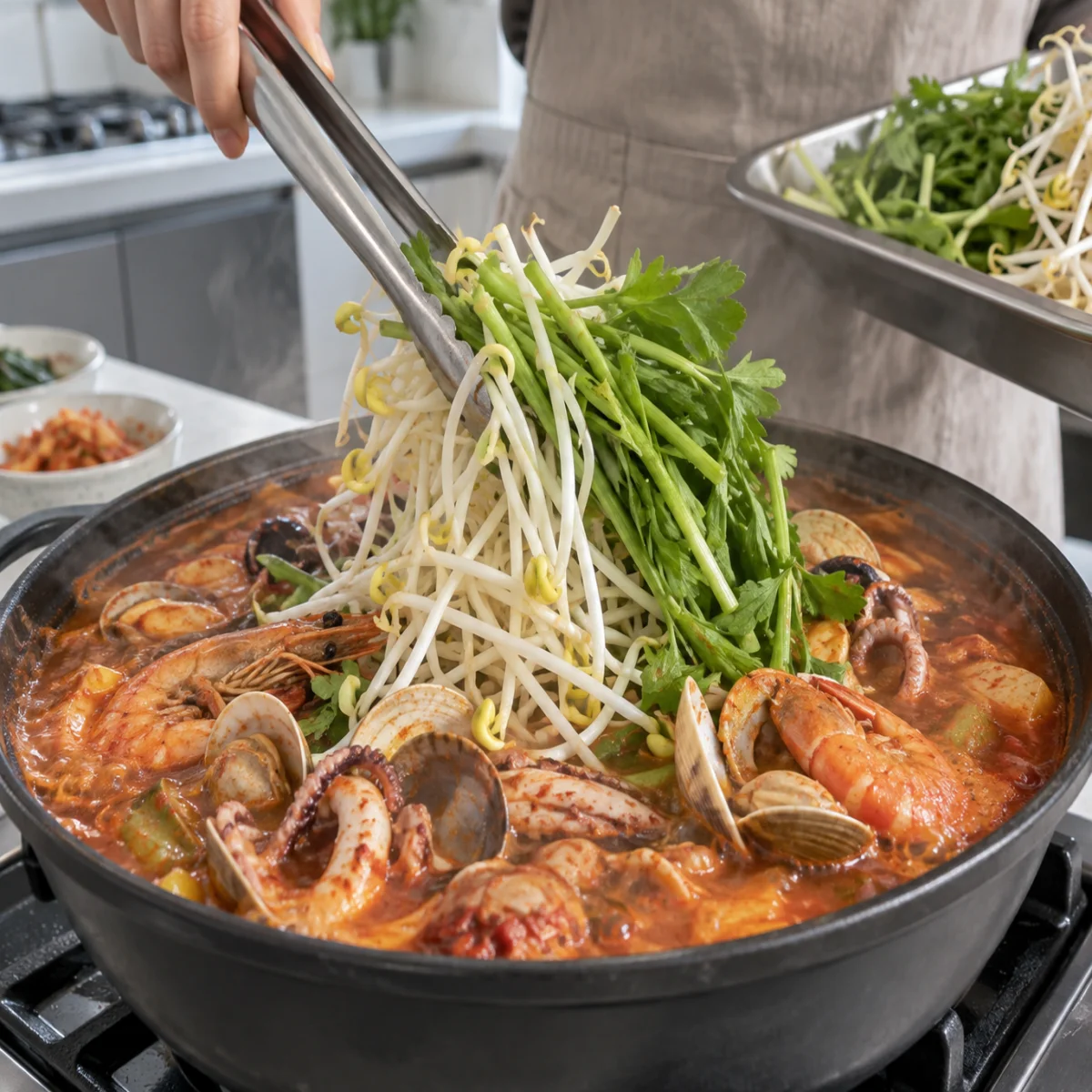
Add the bean sprouts and simmer for 2 minutes. Stir in water parsley and green onion for the last minute. Taste the broth and adjust with a little salt or chili. Serve hot.
Finished dish
The soup is naturally spicy; start with less gochugaru and add more at the table. Keep seafood cold before cooking and use clean utensils. Check shellfish carefully and discard any that remain closed after cooking. Check labels for shellfish, fish, soy and wheat allergens.
Enjoy every bite
How to enjoy it
Build each spoonful with broth and one seafood bite. Keep rice nearby to soften the chili between tastes.
Serve it with
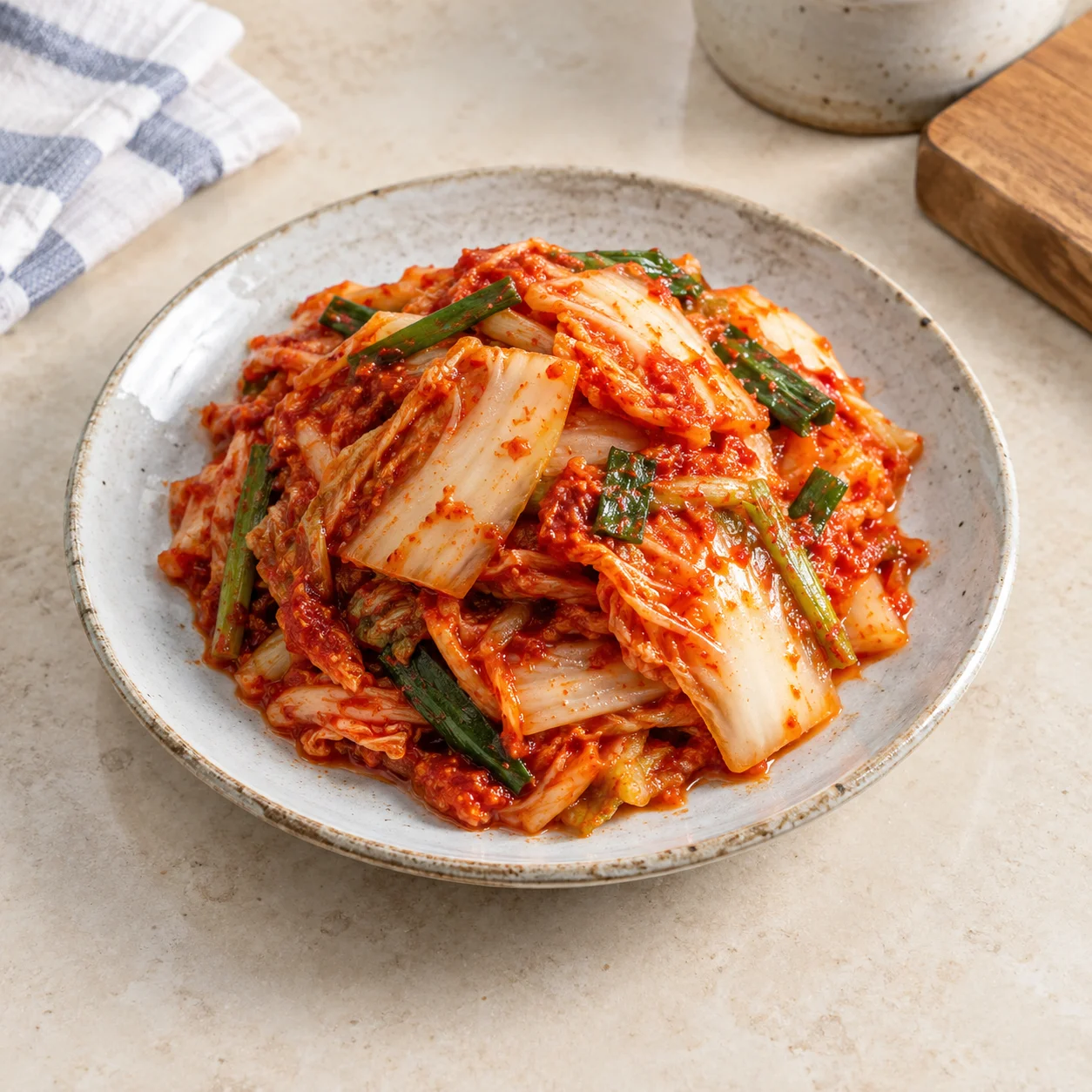
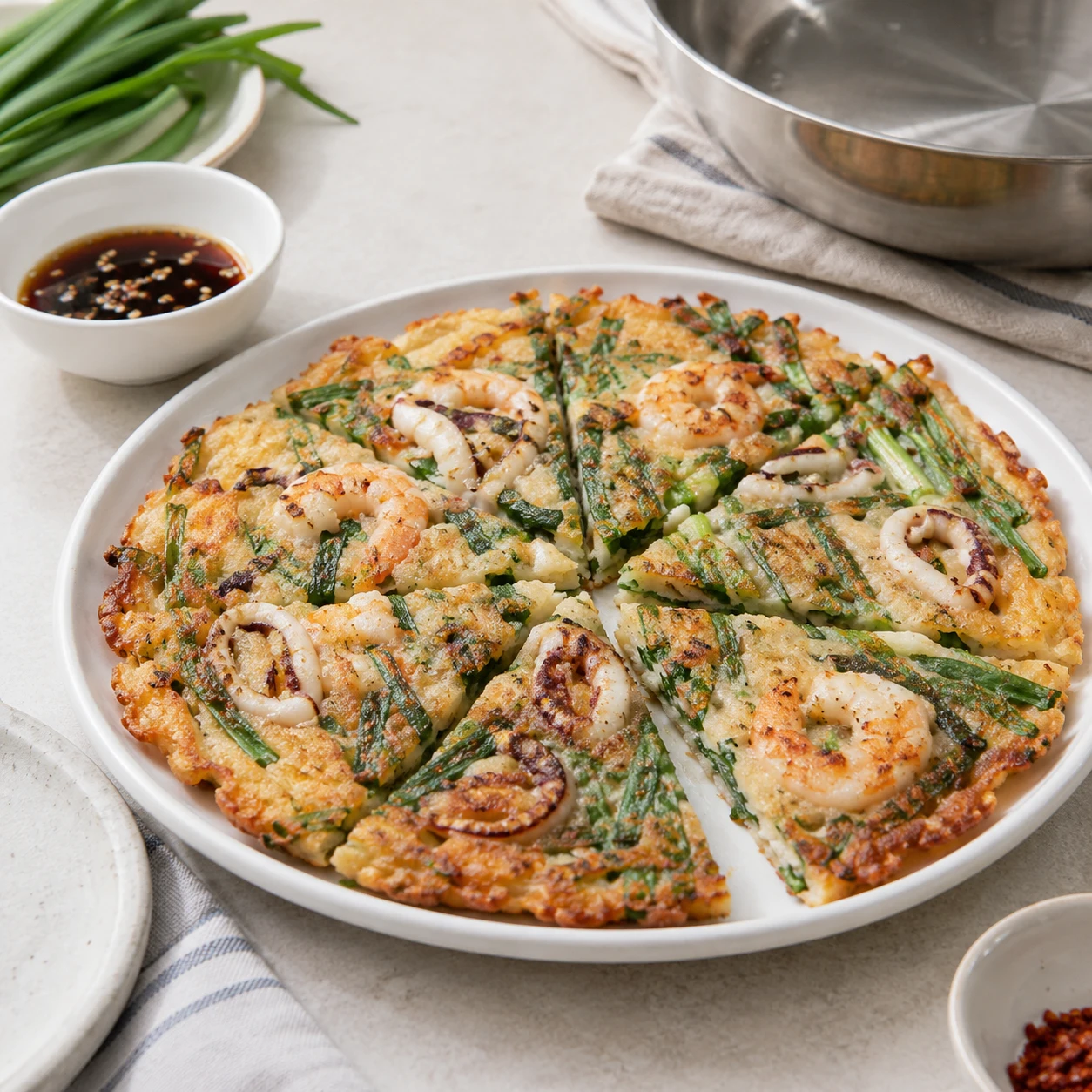
Crisp seafood and spring-onion pancakes
A crisp bite contrasts with the softer main dish; keep its sauce separate.
View recipe