Guljeon — Korean oyster egg fritters
Small, tender oyster fritters with a light flour-and-egg coating. Briefly pre-boil the oysters so their centers are cooked before the delicate egg coating turns golden.
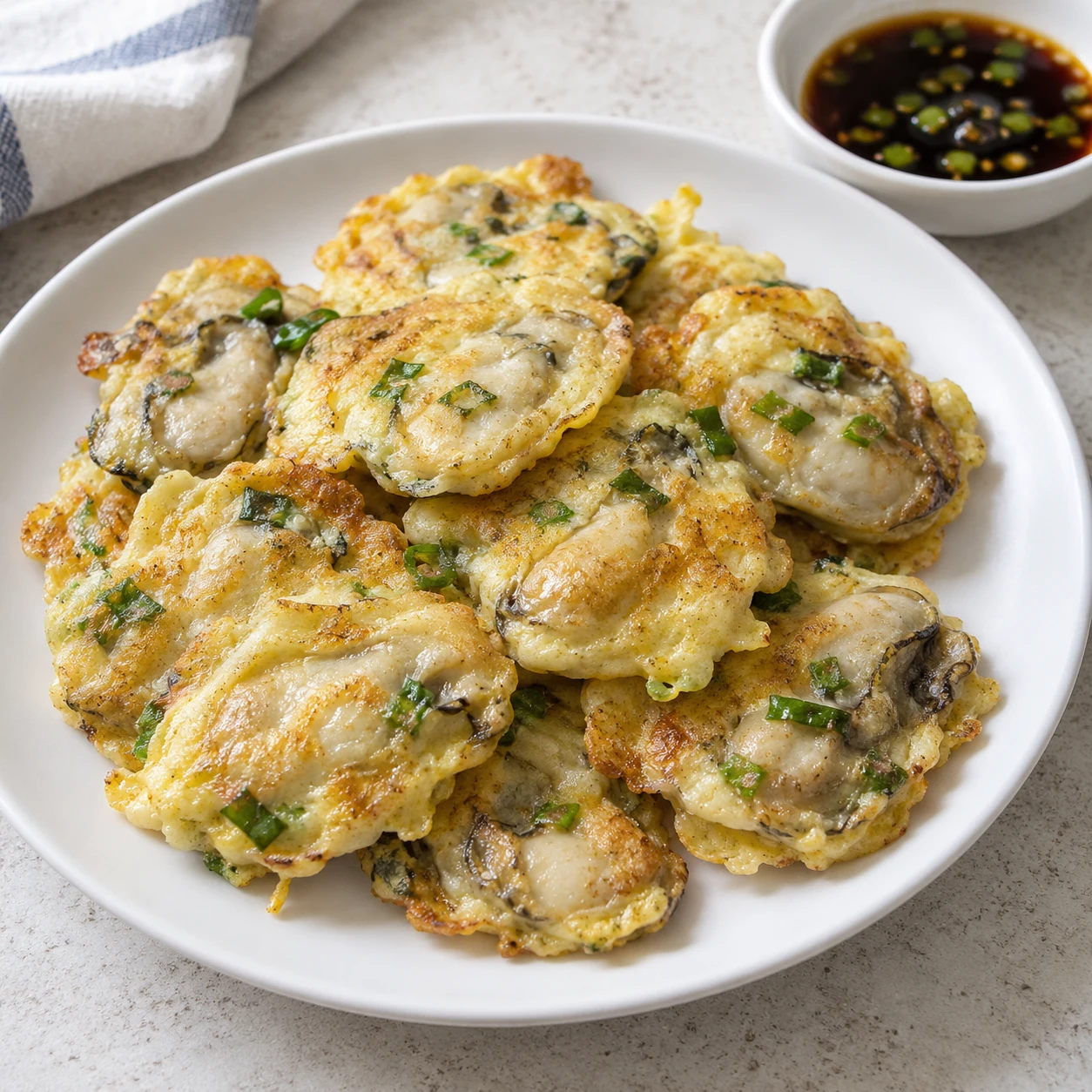
AI-generated cooking illustrations. Follow the written quantities and instructions.
Ingredients
3 servings
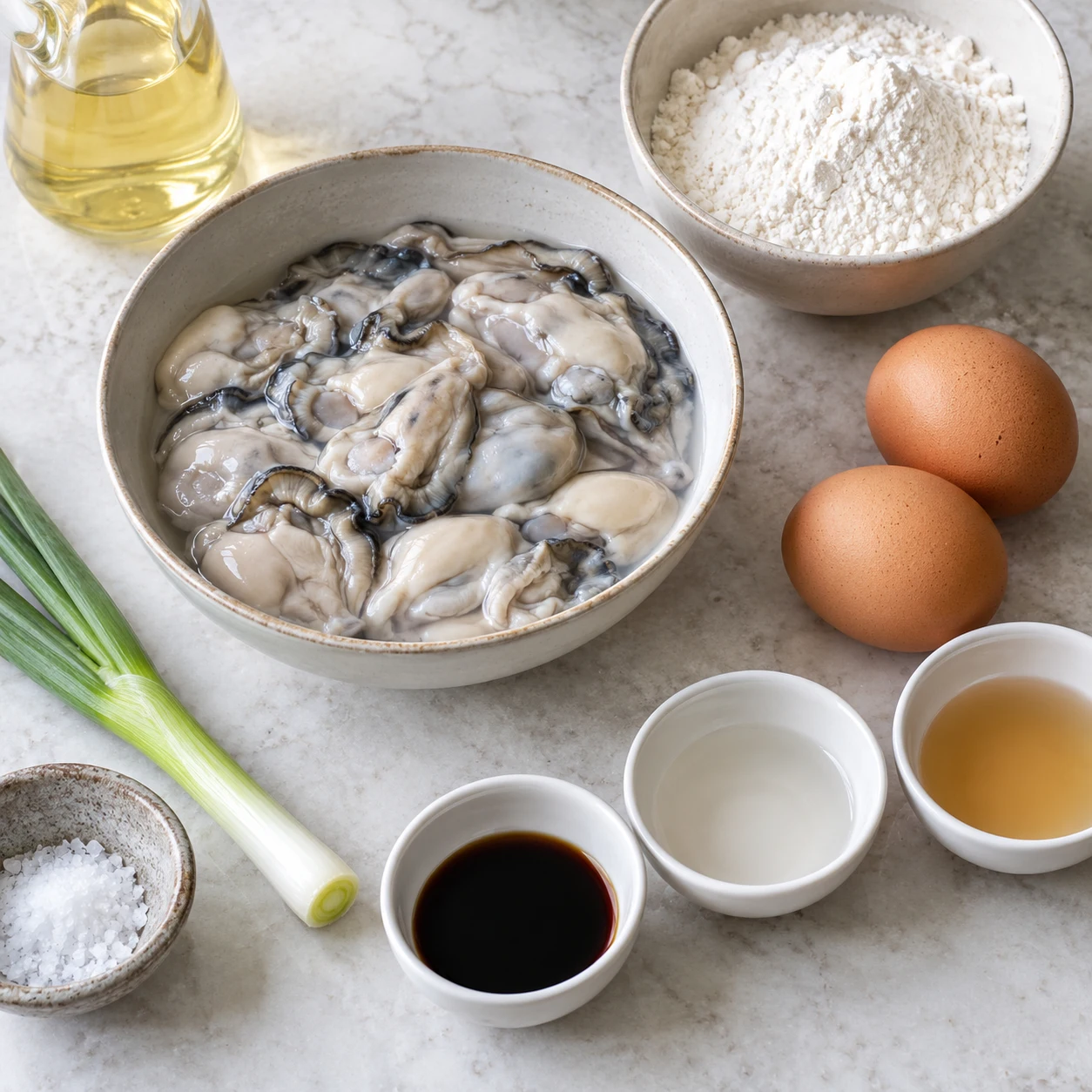
Everyday kitchen measurements
For 3 servings. Use a small 180 ml paper cup, a level eating spoon (about 15 ml) and a small teaspoon (about 5 ml).
How to fill the cup and spoons
Use the same cup and spoons throughout. Their sizes vary, so these amounts are approximate. Spoon flour in loosely and level the top without pressing. Measure vegetables after chopping, without packing them down. The amounts in g/ml are the original reference quantities. For part of a pack, use the specified pack weight and divide the contents evenly.
King Arthur Baking-
Essential
Use one 200 g pack of properly chilled shucked oysters from a regulated supplier, checking use-by information and current recalls. Remove shell fragments carefully. Keep refrigerated until needed.
-
Essential
Keep this ingredient: it provides the main structure or seasoning of this dish.
-
Substitute available
If Plain flour is unavailable
- Use instead
- Rice flour
- Substitute quantity
- 3 level eating spoonsReference quantity: about 24 g
Use the same 3 level eating spoons of fine rice flour to lightly dust the cooked dry oysters. Shake off excess. The crust will be slightly crisper.
-
Essential
Keep this ingredient: it provides the main structure or seasoning of this dish.
-
Essential
Keep this ingredient: it provides the main structure or seasoning of this dish.
-
Optional
Omit the spring onion from the beaten egg if unavailable.
-
Substitute available
If Soy sauce is unavailable
- Use instead
- Tamari
- Substitute quantity
- 1 level eating spoonReference quantity: 15 ml
Use the same spoon quantity of regular-strength tamari. Saltiness varies, so taste before adding any extra seasoning. Check the label if avoiding wheat.
-
Substitute available
If Rice vinegar is unavailable
- Use instead
- Lemon juice
- Substitute quantity
- 1 small teaspoonReference quantity: 5 ml
Use the same teaspoon quantity only in the dipping sauce. This changes flavor and is not a seafood-sanitizing treatment.
-
Essential
Keep this ingredient: it provides the main structure or seasoning of this dish.
Tap each ingredient as you prepare it. Check product labels for egg, soy, sesame, wheat, fish or shellfish where relevant.
Step-by-step cooking
-
Step 1
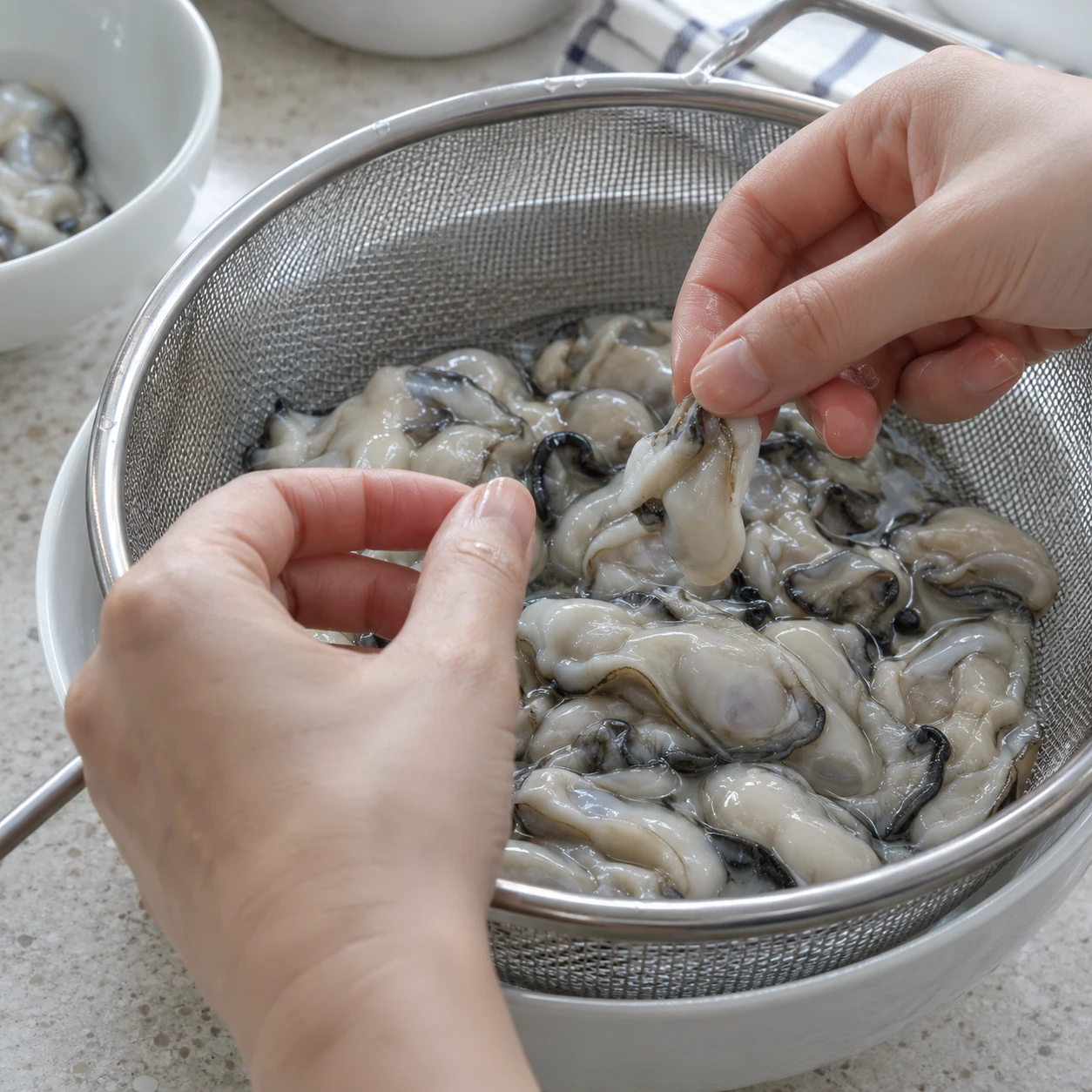
Inspect and drain the oysters. Open one chilled 200 g pack of shucked oysters. Discard broken shell pieces and rinse briefly with cold drinking water only if needed to remove grit; do not splash nearby ready-to-eat food. Drain. Wash hands and tools after contact with raw oyster juices. Rinsing, salt and lemon do not make raw oysters safe.
-
Step 2
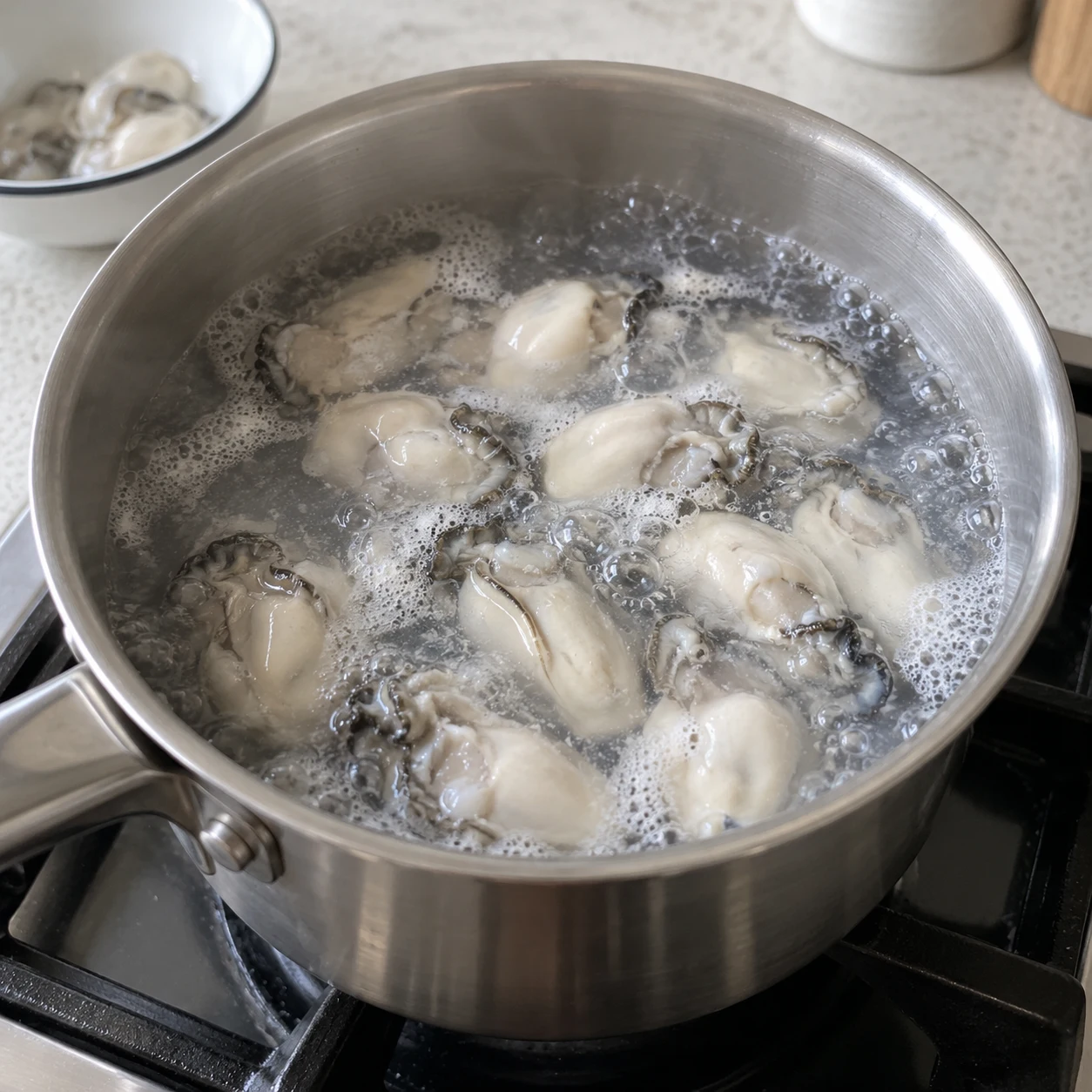
Pre-cook the oysters. Bring a small pot of water to a full boil. Add the oysters, allow the water to return to a boil, then boil for at least 3 minutes. Drain with a clean strainer, spread on a clean plate and cool briefly until easy to handle. The oysters should be opaque and firm. Blot them dry so the coating adheres; do not use the raw-oyster plate again.
-
Step 3
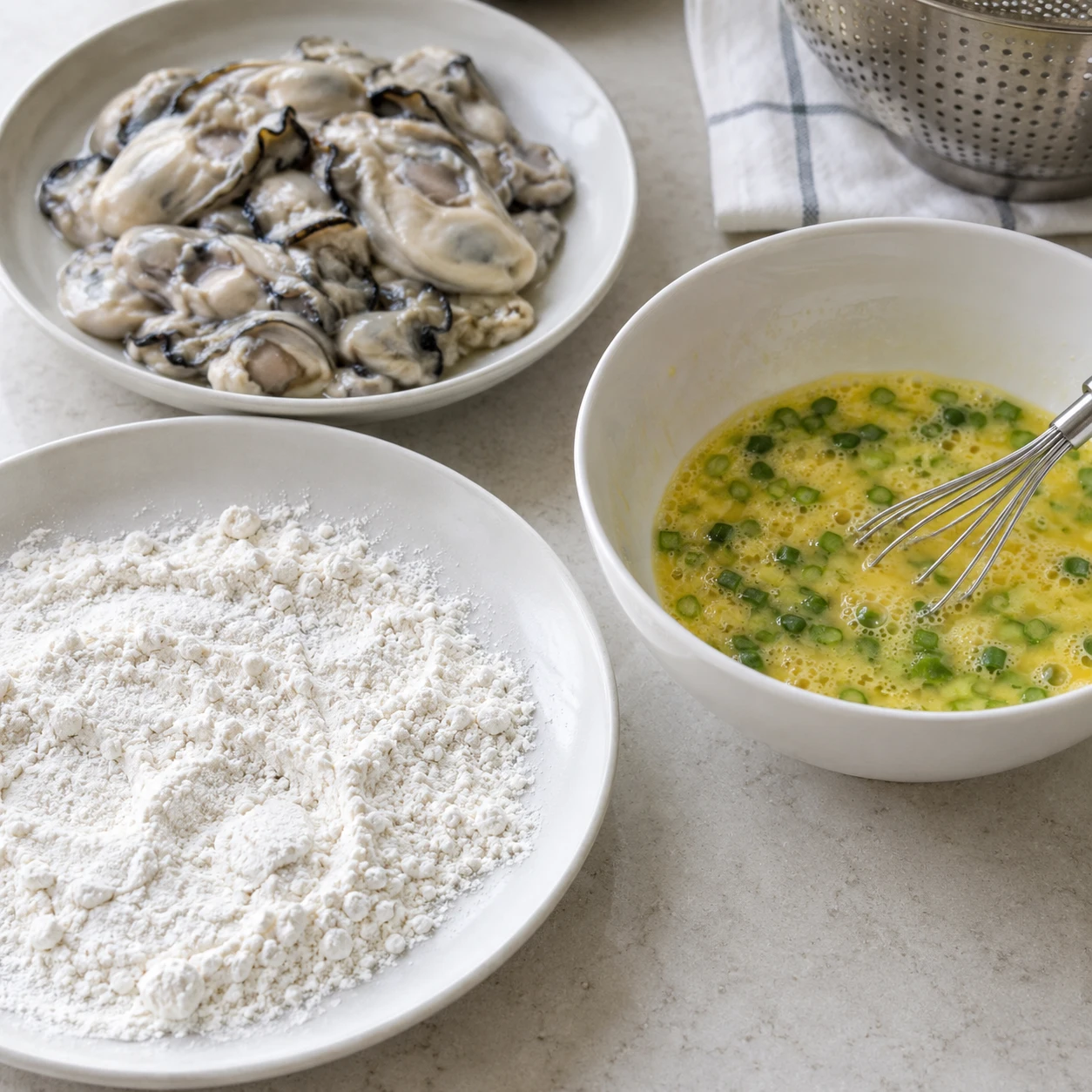
Prepare the light coatings. Beat 2 eggs with 1 small pinch salt and the optional finely chopped ½ spring onion. Spread 3 level eating spoons plain flour on a separate plate. Do not mix flour and egg into a thick pancake batter: each oyster will be lightly dusted and dipped separately.
-
Step 4
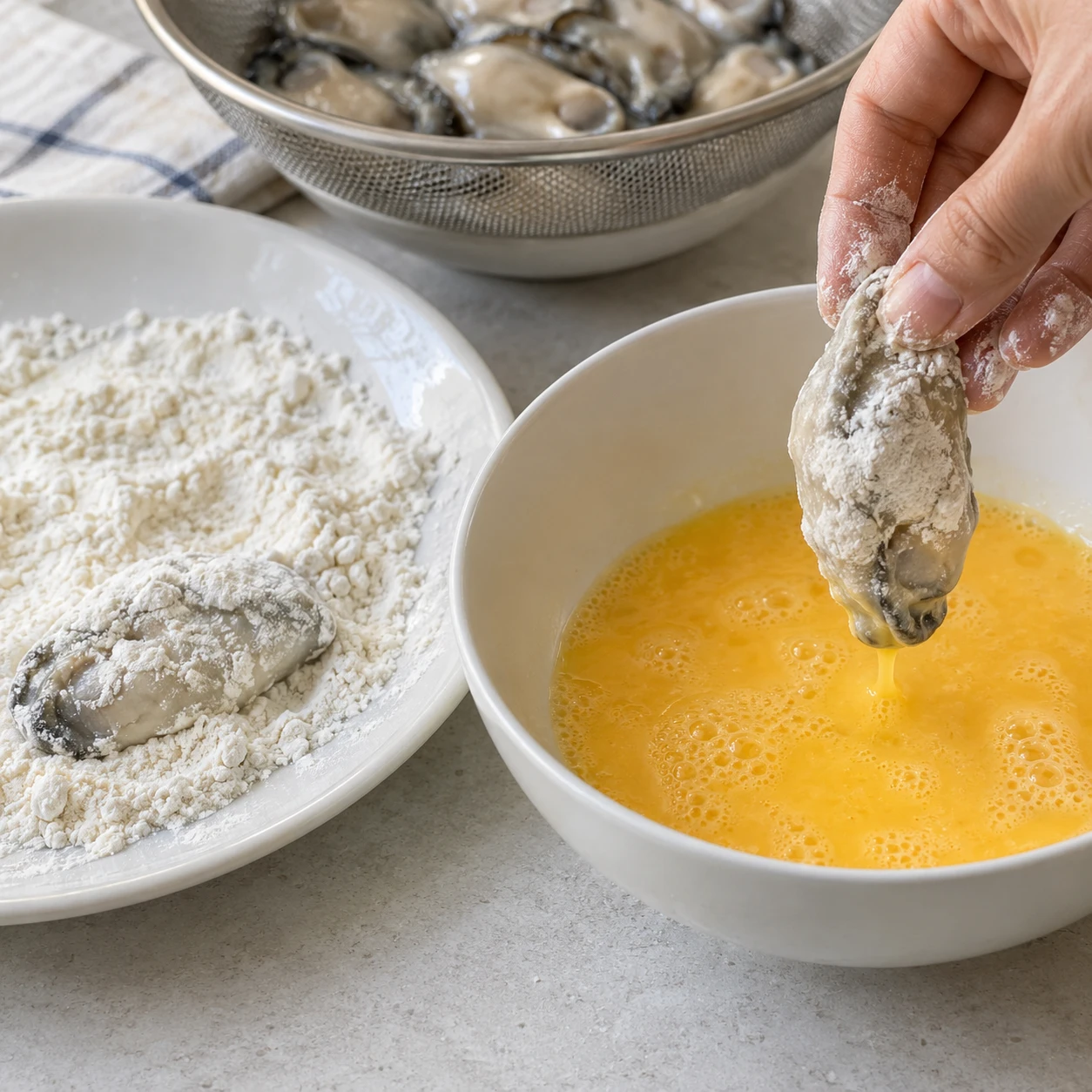
Dust and dip in small batches. Coat each dry, pre-cooked oyster lightly in flour, shaking off excess, then dip it in beaten egg. Let a little excess egg drip back into the bowl. Prepare only the pieces that will fit in the pan so the flour does not become soggy while waiting.
-
Step 5
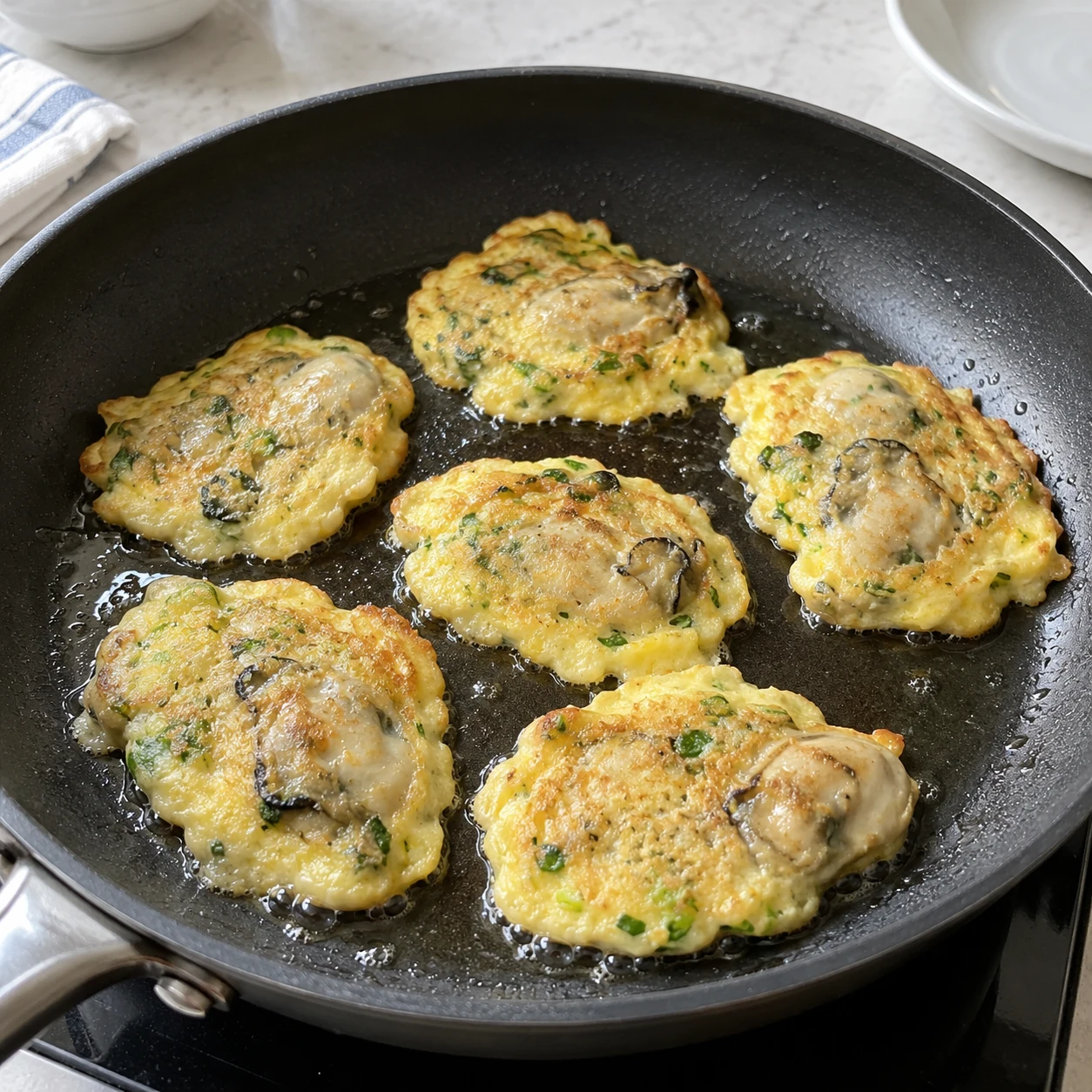
Pan-fry gently. Heat 1 level eating spoon oil in a nonstick pan over medium-low heat. Add coated oysters in a single layer with space between them. Cook for about 2 minutes on the first side, turn carefully and cook for about 2 more minutes until both sides are pale golden and the egg is completely set. Repeat with the remaining oil and oysters. The pre-boiled centers should be hot through.
-
Step 6
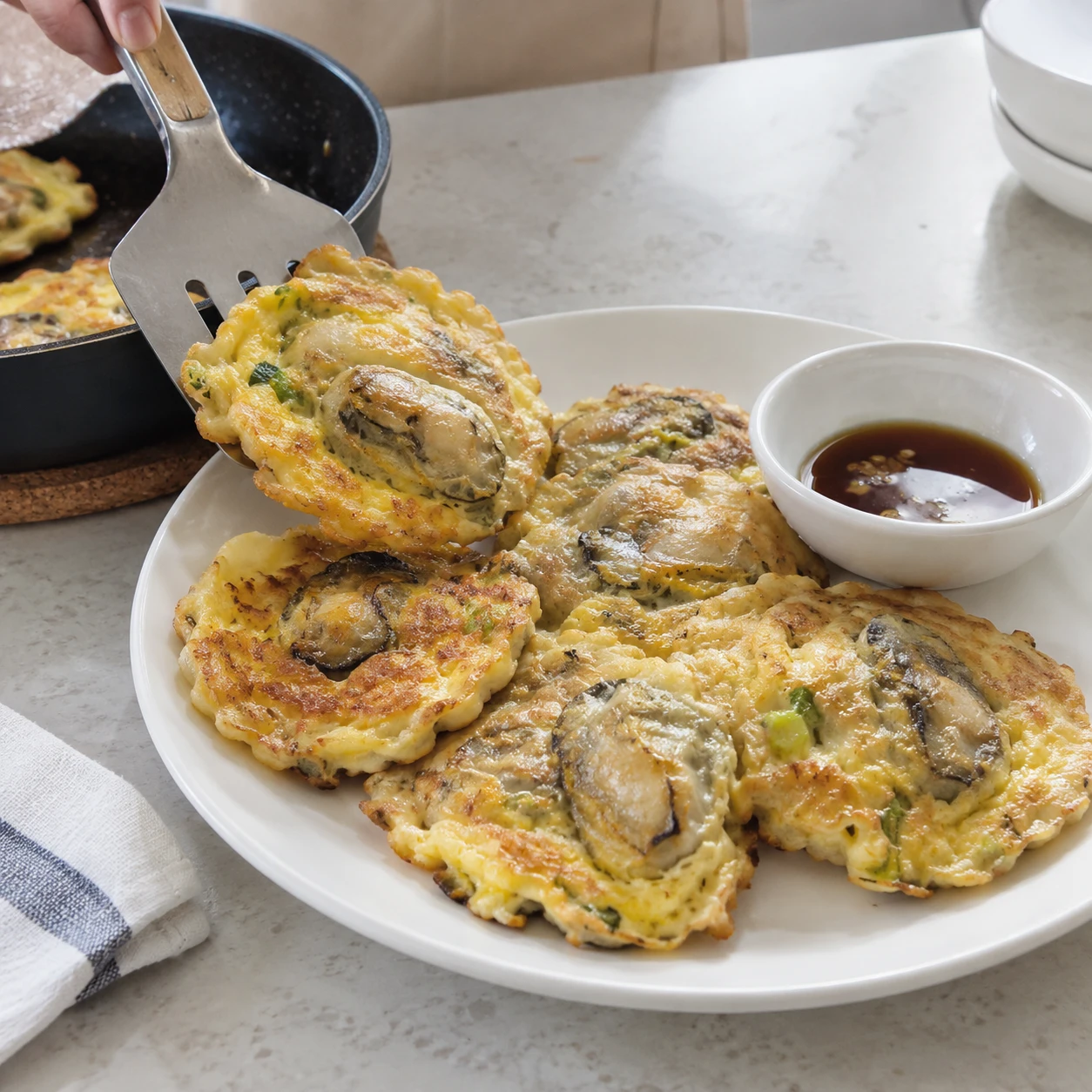
Mix the dip and serve. Stir 1 level eating spoon soy sauce, 1 small teaspoon rice vinegar and 1 small teaspoon water in a small bowl. Transfer the fritters to a clean plate and serve warm, with dip on the side. Discard unused raw egg coating. Let a portion cool before eating, and cut larger oysters into manageable pieces if needed.
Finished dish
A level eating spoon here is about 15 ml, a small teaspoon about 5 ml, and a small paper cup about 180 ml. Use the same spoon and cup throughout; household sizes and ingredient weights vary. The pre-boiling step follows the recommendation to boil shucked oysters for at least 3 minutes; it helps avoid browning the egg while leaving the oyster center undercooked. This is a fully cooked variation of guljeon. Use clean utensils after boiling. Refrigerate within 2 hours, use within 2 days and reheat thoroughly to 74°C. Contains oyster, egg and usually wheat and soy.
Enjoy every bite
How to enjoy it
Serve the fully cooked fritters without stacking. Add a small dip of sauce at the table so their egg coating stays delicate.
Serve it with
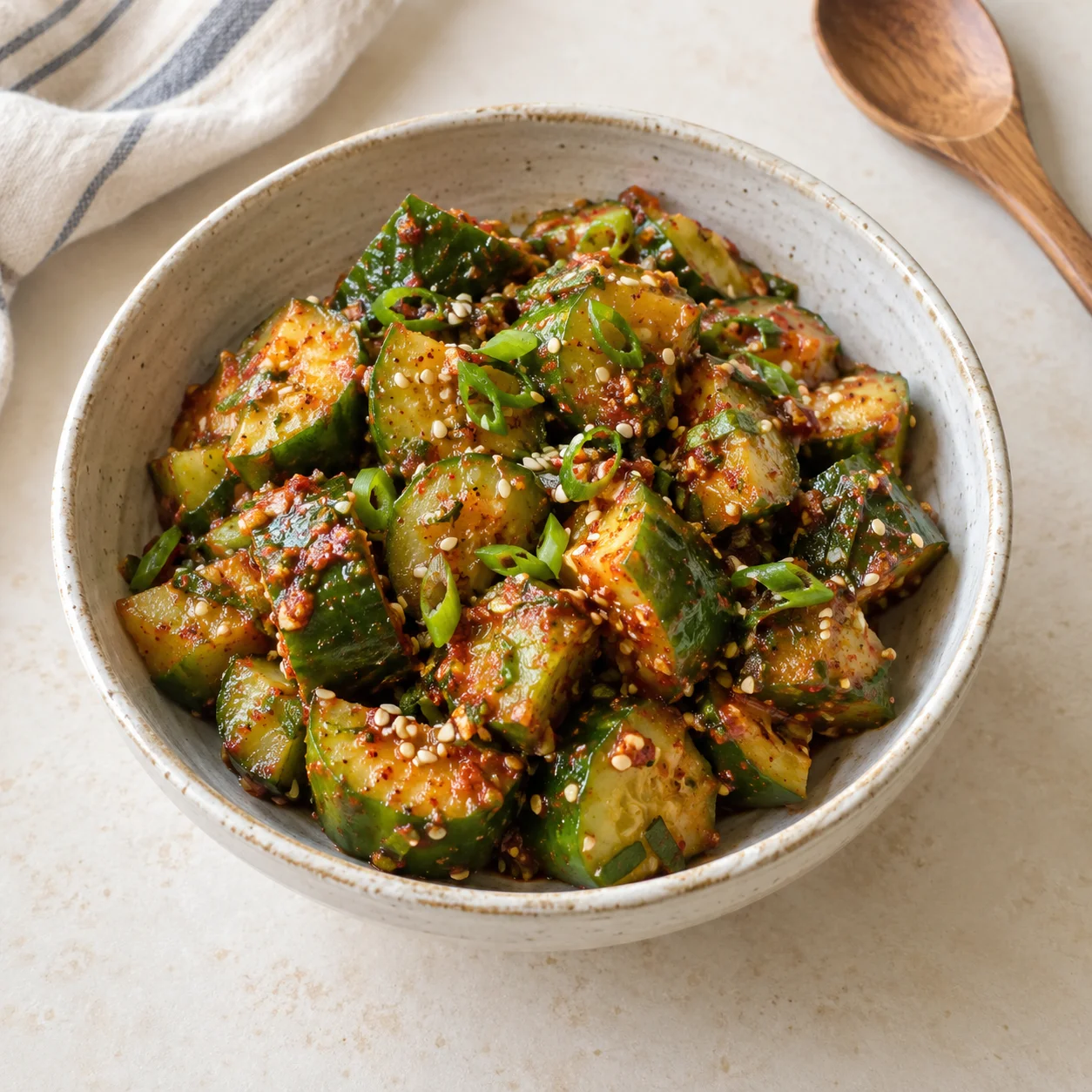
Korean spicy cucumber salad (oi-muchim)
A crisp vegetable bite contrasts with a richer or spicier dish.
View recipe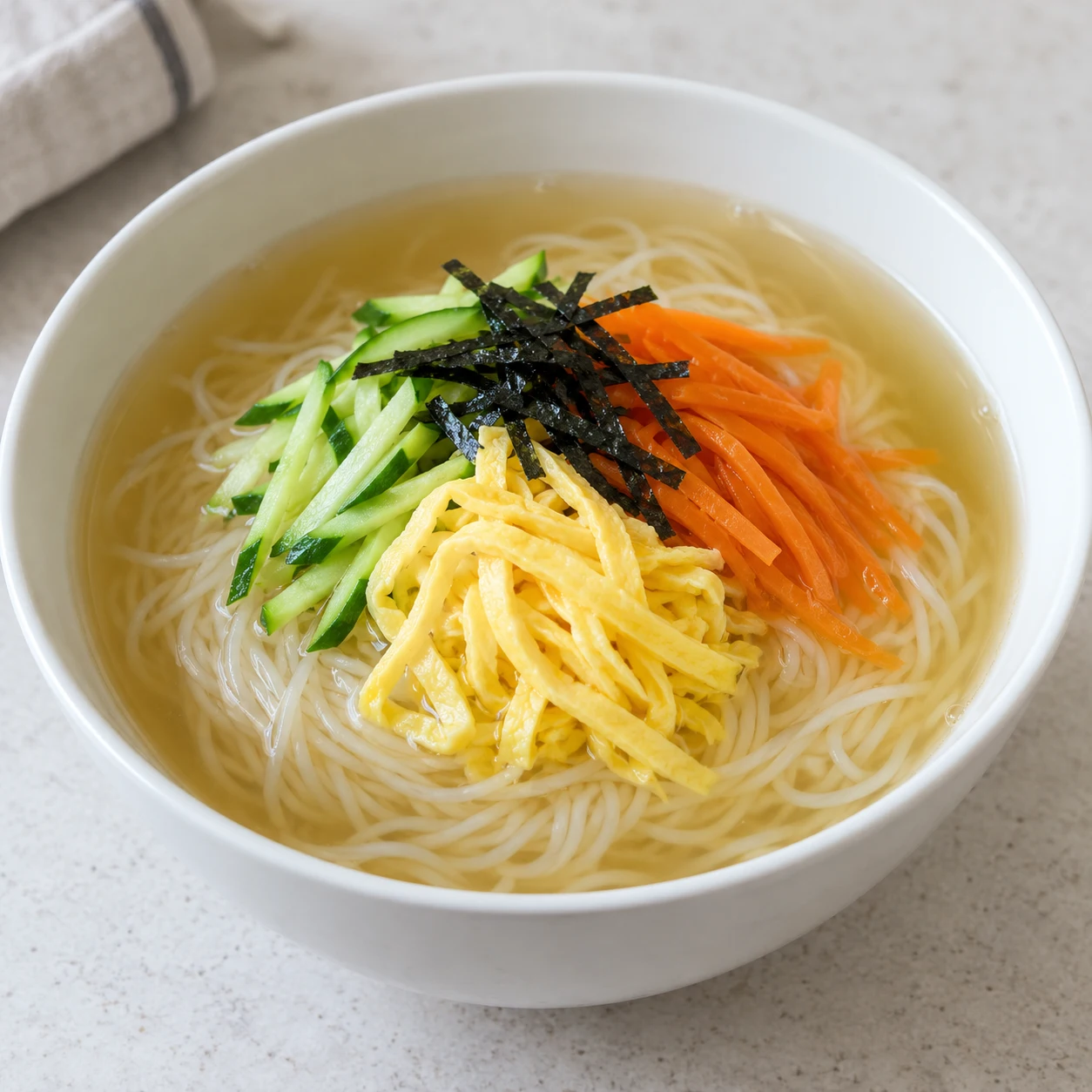
Janchi guksu — warm Korean noodle soup
A sip of warm broth makes a pleasant change between bites.
View recipe