Korean pan-grilled mackerel
Crisp-skinned mackerel cooked in a frying pan with a little oil. A light flour dusting is optional; start skin-side down and turn only once.
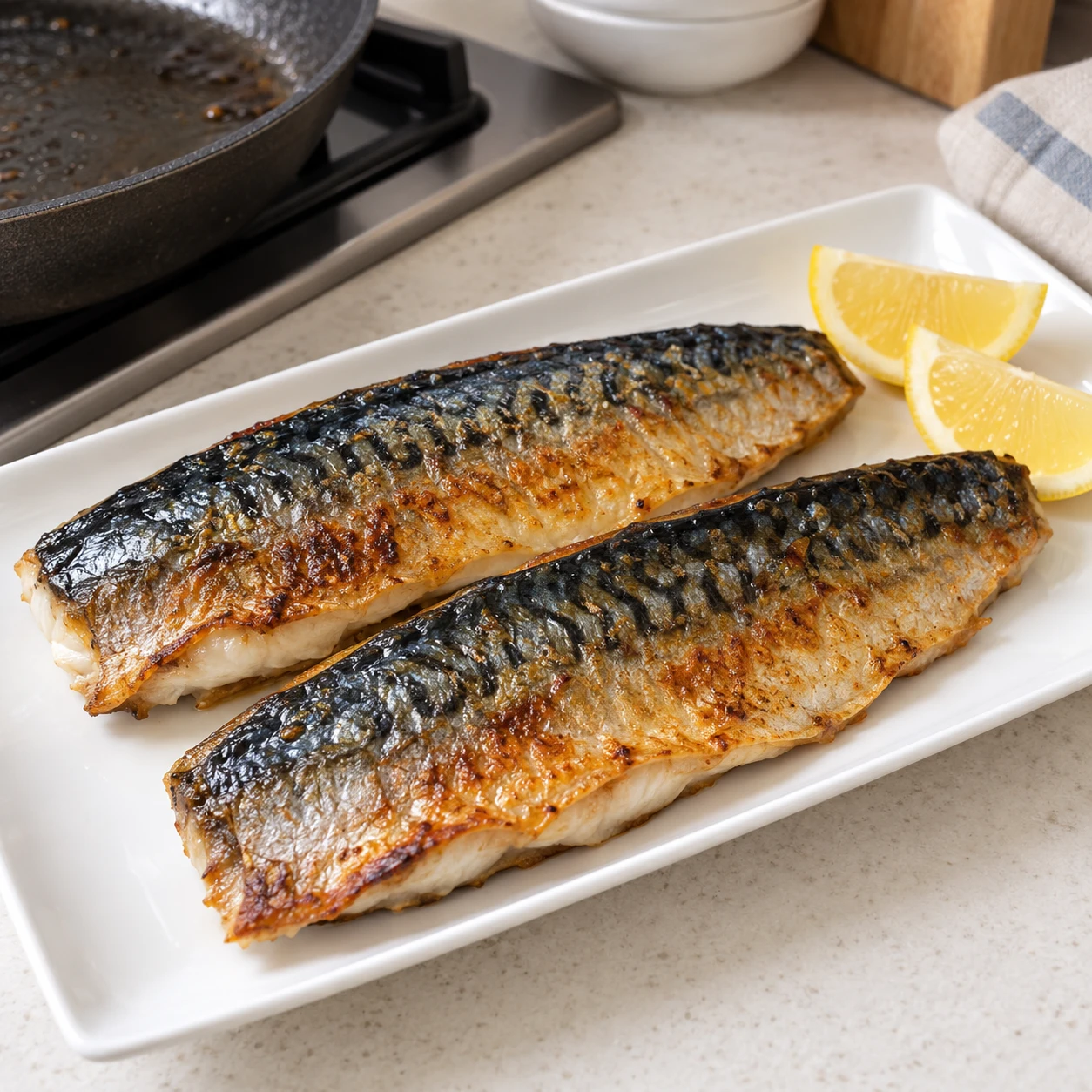
AI-generated cooking illustrations. Follow the written quantities and instructions.
Ingredients
2 servings
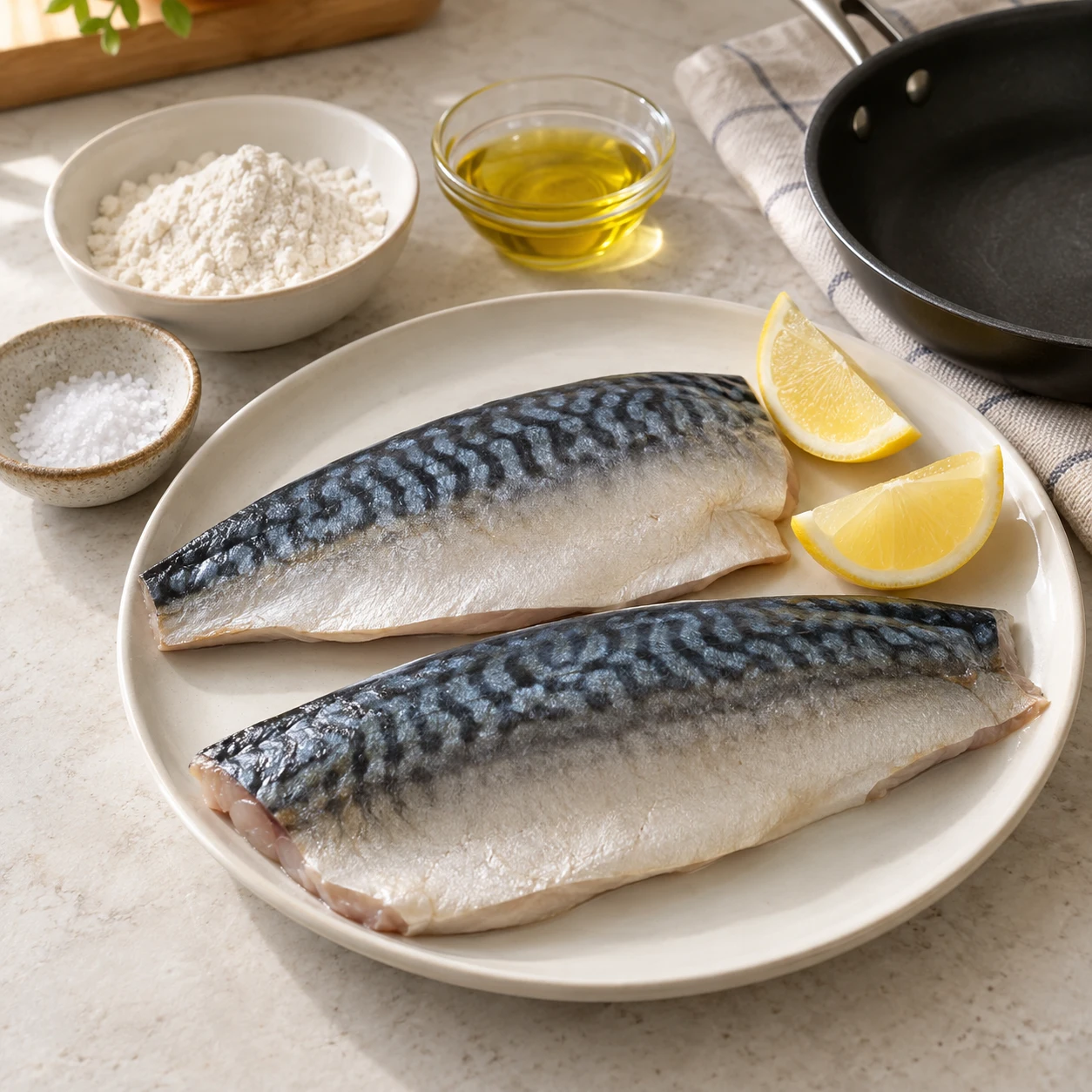
Everyday kitchen measurements
For 2 servings. Use a small 180 ml paper cup, a level eating spoon (about 15 ml) and a small teaspoon (about 5 ml).
How to fill the cup and spoons
Use the same cup and spoons throughout. Their sizes vary, so these amounts are approximate. Spoon flour in loosely and level the top without pressing. Measure vegetables after chopping, without packing them down. The amounts in g/ml are the original reference quantities. For part of a pack, use the specified pack weight and divide the contents evenly.
King Arthur Baking-
Substitute available
If Unsalted raw skin-on mackerel fillets is unavailable
- Use instead
- Fresh unsalted skin-on salmon fillets
- Substitute quantity
- 2 fillets, about 200 g eachReference quantity: 400 g
Use two raw skin-on salmon fillets about 2 cm thick, not smoked salmon. Fry skin-side down for 5–6 minutes, then flesh-side down 3–5 minutes on lower heat. Check 63°C and opaque flaky flesh before serving. The flavor and fat content differ; the optional flour amount stays the same.
-
Optional
May be omitted for a less salty dish. Use no more than the listed small amount; cooking time stays the same.
-
Substitute available
If Neutral oil is unavailable
- Use instead
- Canola, sunflower or rice-bran oil
- Substitute quantity
- 1 level eating spoonReference quantity: 15 ml
Choose one unflavoured oil and use the amount shown. Toasted sesame oil changes the flavor and is not a neutral-oil equivalent.
-
Optional
May be omitted. Dry the fish particularly well and follow the same gentle frying method; the crust will be a little less crisp. Wheat flour contains a wheat allergen.
-
Optional
Optional at the table. Without it, serve the cooked fish plain; the fresh tang will be absent.
Tap each ingredient as you prepare it. Check product labels for egg, soy, sesame, wheat, fish or shellfish where relevant.
Step-by-step cooking
-
Step 1
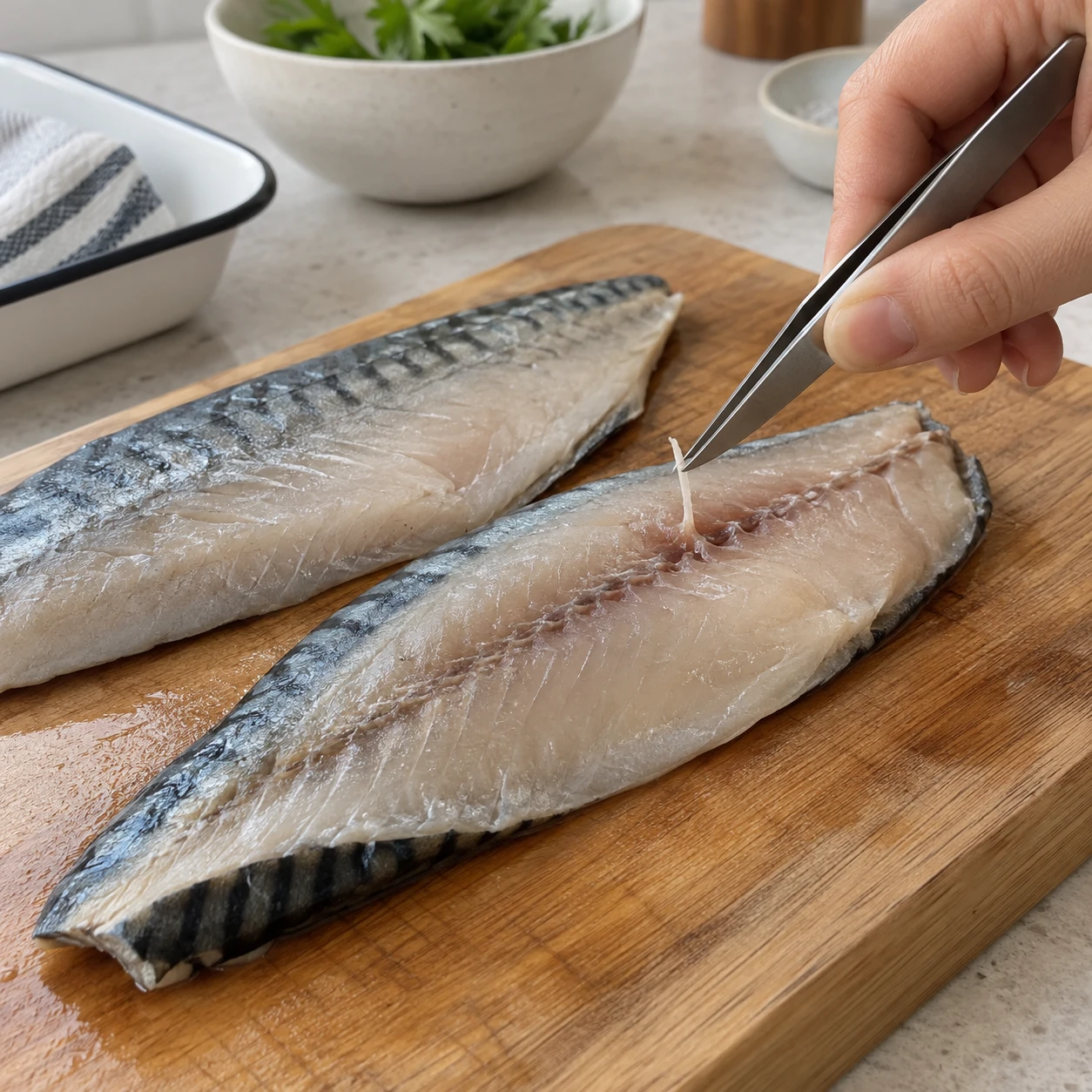
Use 2 unsalted, skin-on raw mackerel fillets, about 400 g altogether and 1–2 cm thick. Thaw frozen fish in the refrigerator as the packet directs. Pat both sides very dry and feel for pin bones, removing them with clean tweezers. These are fillets, not thick whole-fish chunks.
-
Step 2
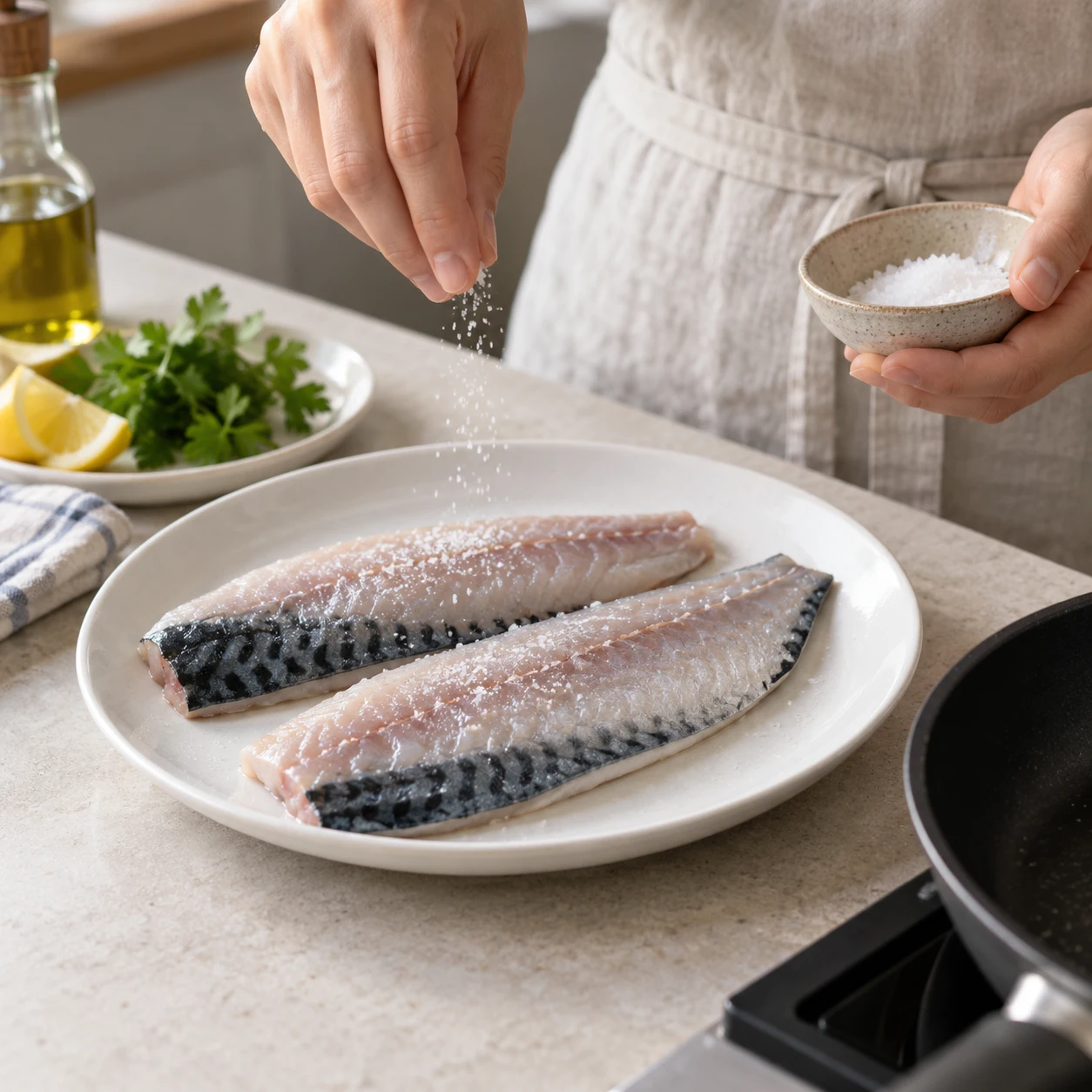
Sprinkle ¼ small teaspoon salt in total across both fillets, mainly on the flesh. Leave on a plate in the refrigerator for 10 minutes, then blot any new moisture. If the packet says the fish is already salted, omit this salt entirely.
-
Step 3
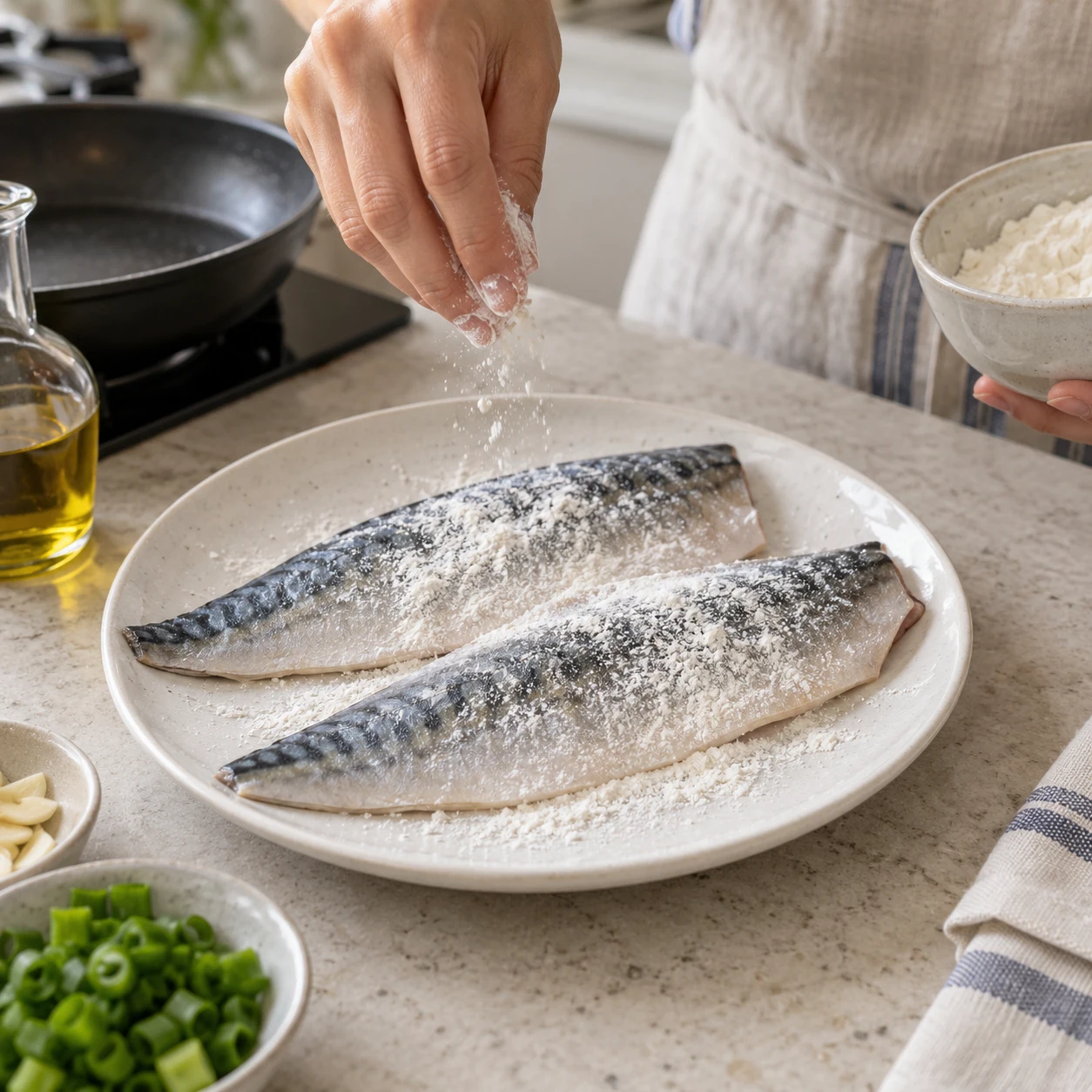
Optional: dust both sides very lightly with 1 level eating-spoon flour shared between the two fillets, then shake off loose flour. Do not make batter or a thick breading. Without flour, simply proceed with the dry fish.
-
Step 4
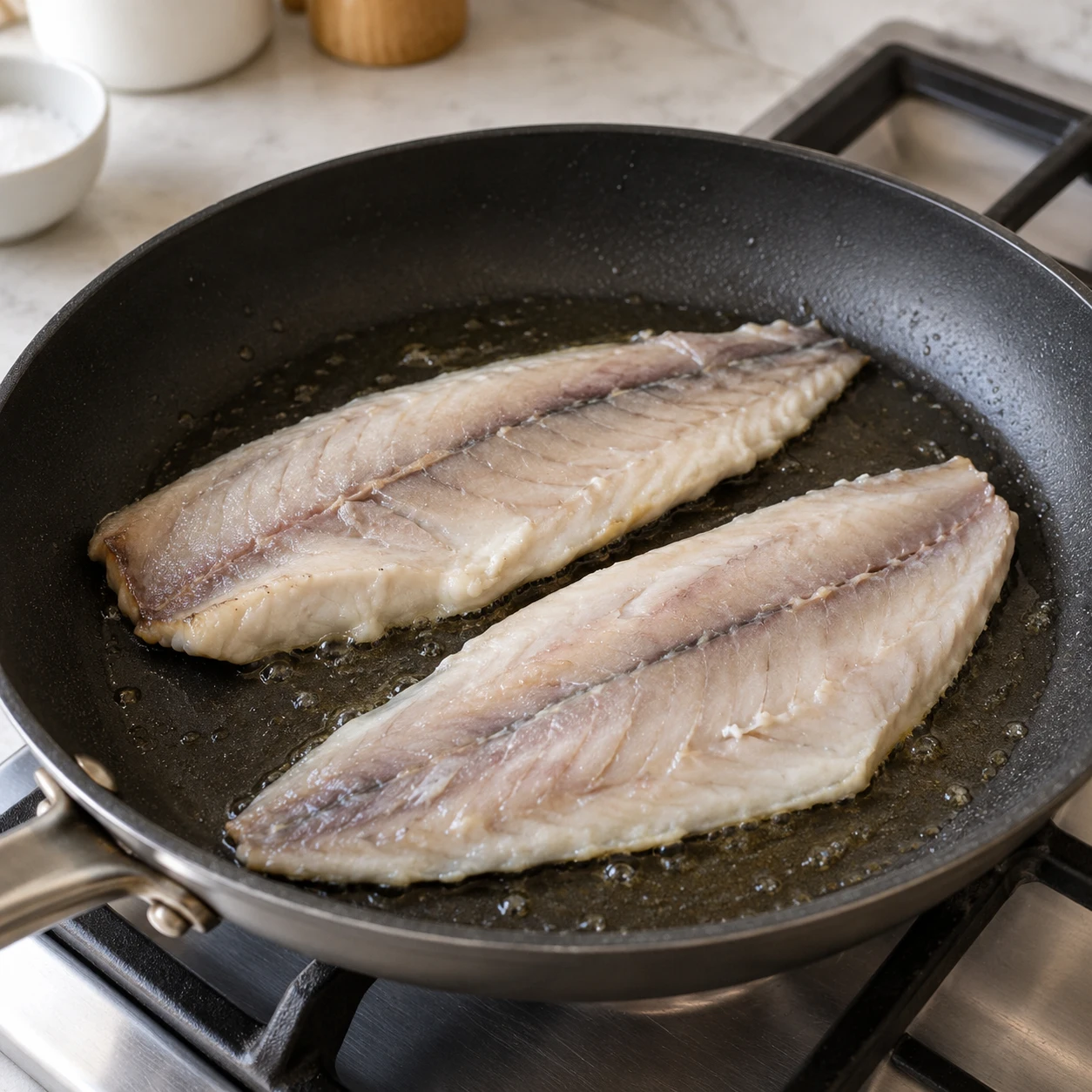
Heat a nonstick frying pan over medium heat for about a minute. Add 1 level eating-spoon neutral oil and tilt to spread it. Lay the fish skin-side down, away from you to avoid splashes. Press lightly with a spatula for the first 10 seconds if it curls, then cook without moving for 4–5 minutes.
-
Step 5
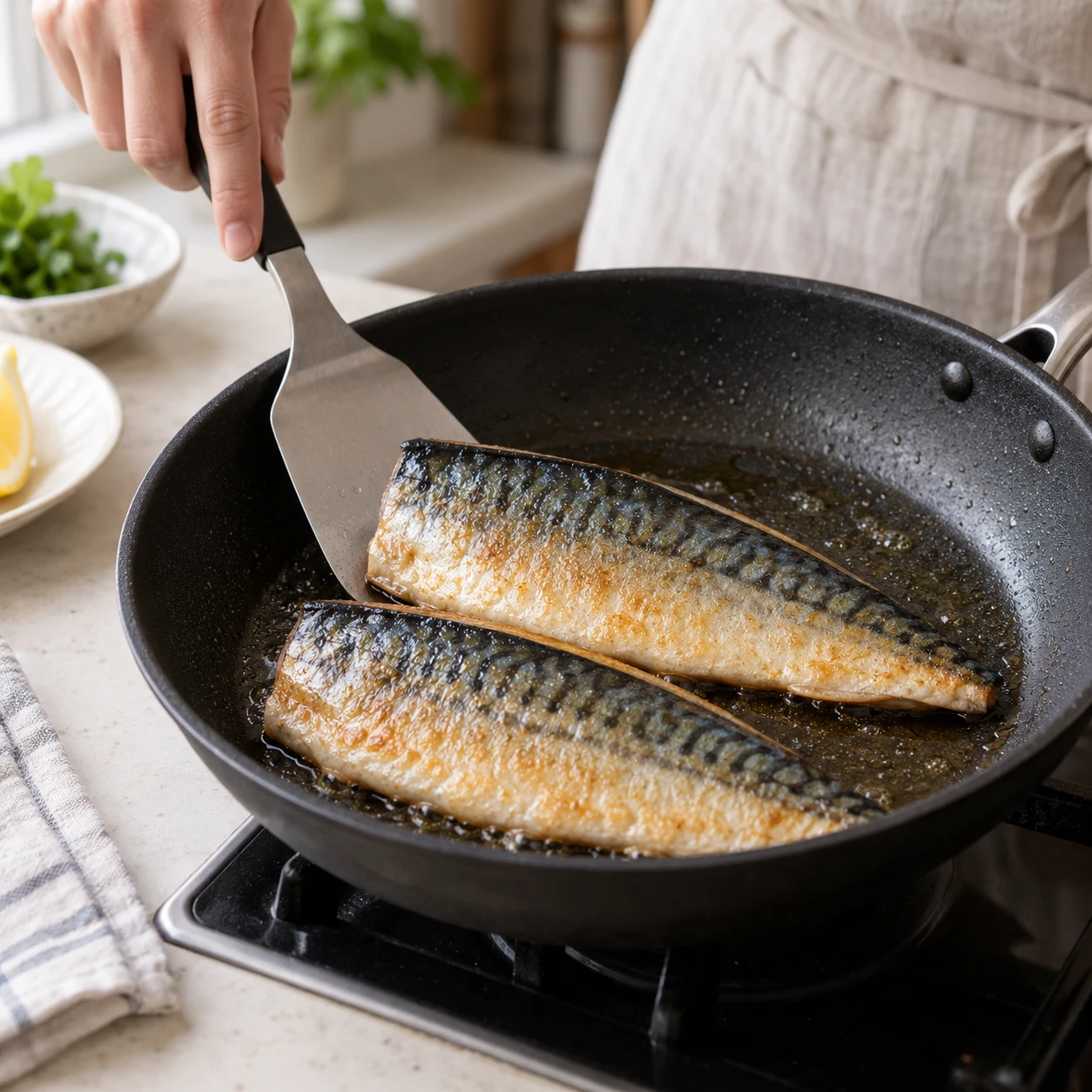
When the skin is golden and releases, turn each fillet once with a wide spatula. Lower to medium-low heat and cook flesh-side down for another 3–5 minutes. Do not repeatedly flip. If browning too quickly, reduce heat; the inside still needs to cook.
-
Step 6
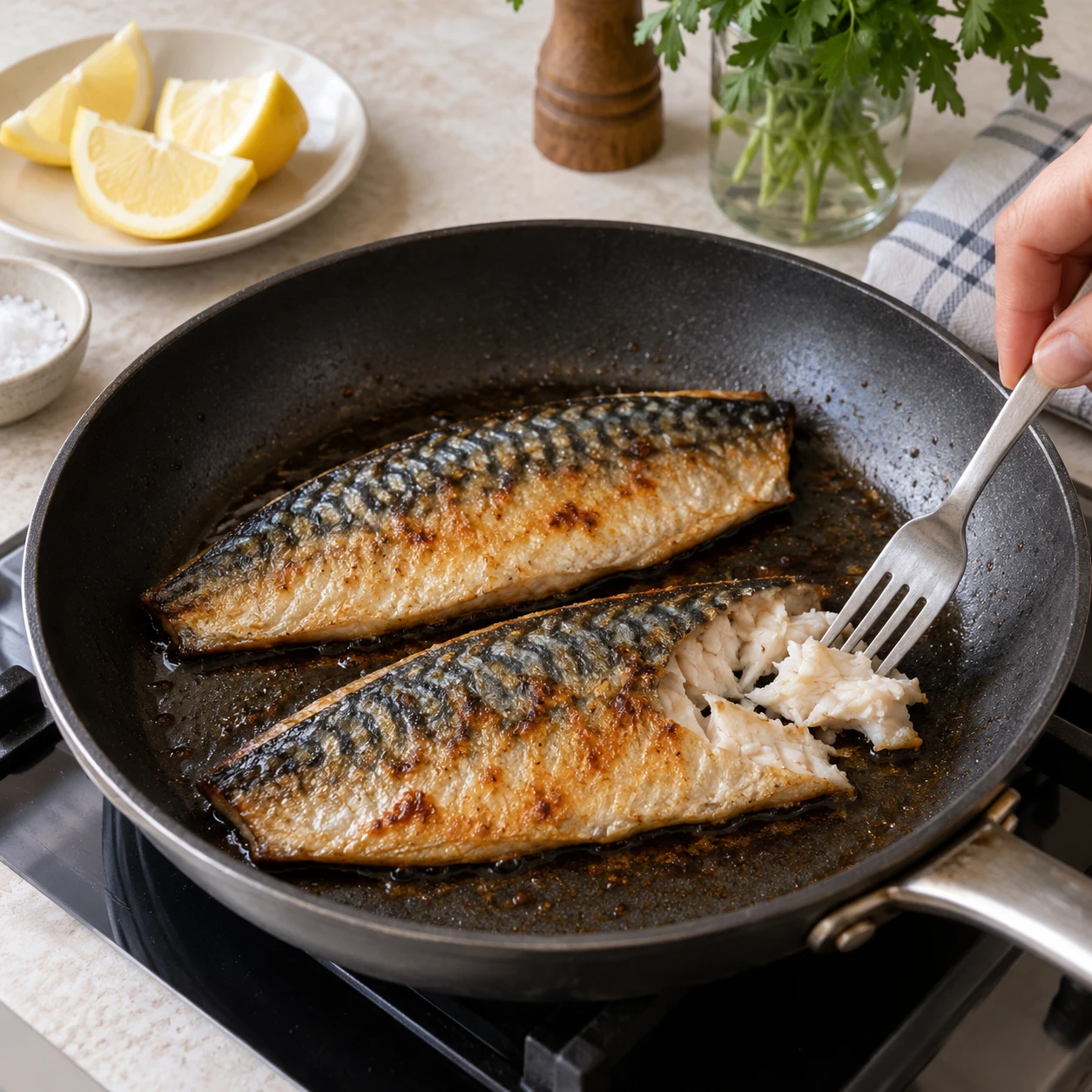
Check the thickest flesh is opaque and flakes easily, reaching 63°C if measured. Thicker fish needs extra time at low heat. Lift onto two plates, skin-side up, and serve with optional lemon wedges and rice. Carefully check for remaining bones before eating or serving children.
Finished dish
Contains fish; optional flour adds wheat. This pan method is for thin fillets, not whole thick fish. Skip salt for pre-salted mackerel, and keep raw fish cold during the resting stage. Rice is cooked separately. Two modest portions; carefully remove remaining bones for children. Use a small 180 ml paper cup, a level eating-spoon (about 15 ml) and a small teaspoon (about 5 ml). Household spoon and vegetable sizes vary; pack weights are a helpful reference. Thawing time is not included. Photos show the original ingredients, including optional extras; substitutions can change the appearance. Divide leftovers into shallow containers and refrigerate within 2 hours, or 1 hour if the room is hotter than 32°C. Keep at 4°C or colder and use within 3–4 days. Reheat the portion needed thoroughly to 74°C; soy sauce is seasoning, not a method for making meat or fish safe at room temperature.