Gochujang samgyeopsal — spicy Korean pork belly
Thin pork belly slices seared in their own fat, then coated with a sweet-spicy gochujang sauce. Adding the sauce near the end keeps it glossy instead of burnt.
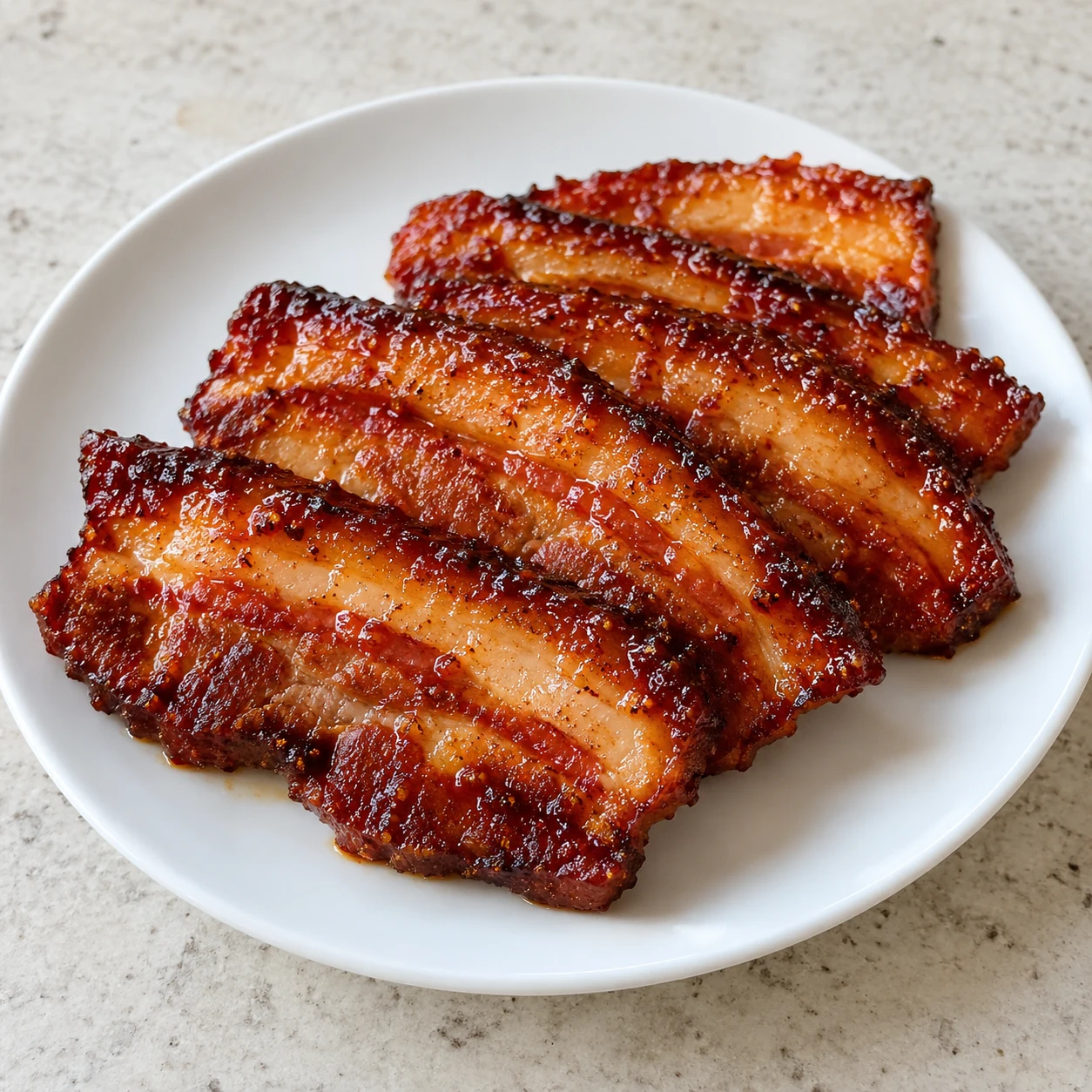
AI-generated cooking illustrations. Follow the written quantities and instructions.
Ingredients
2 servings
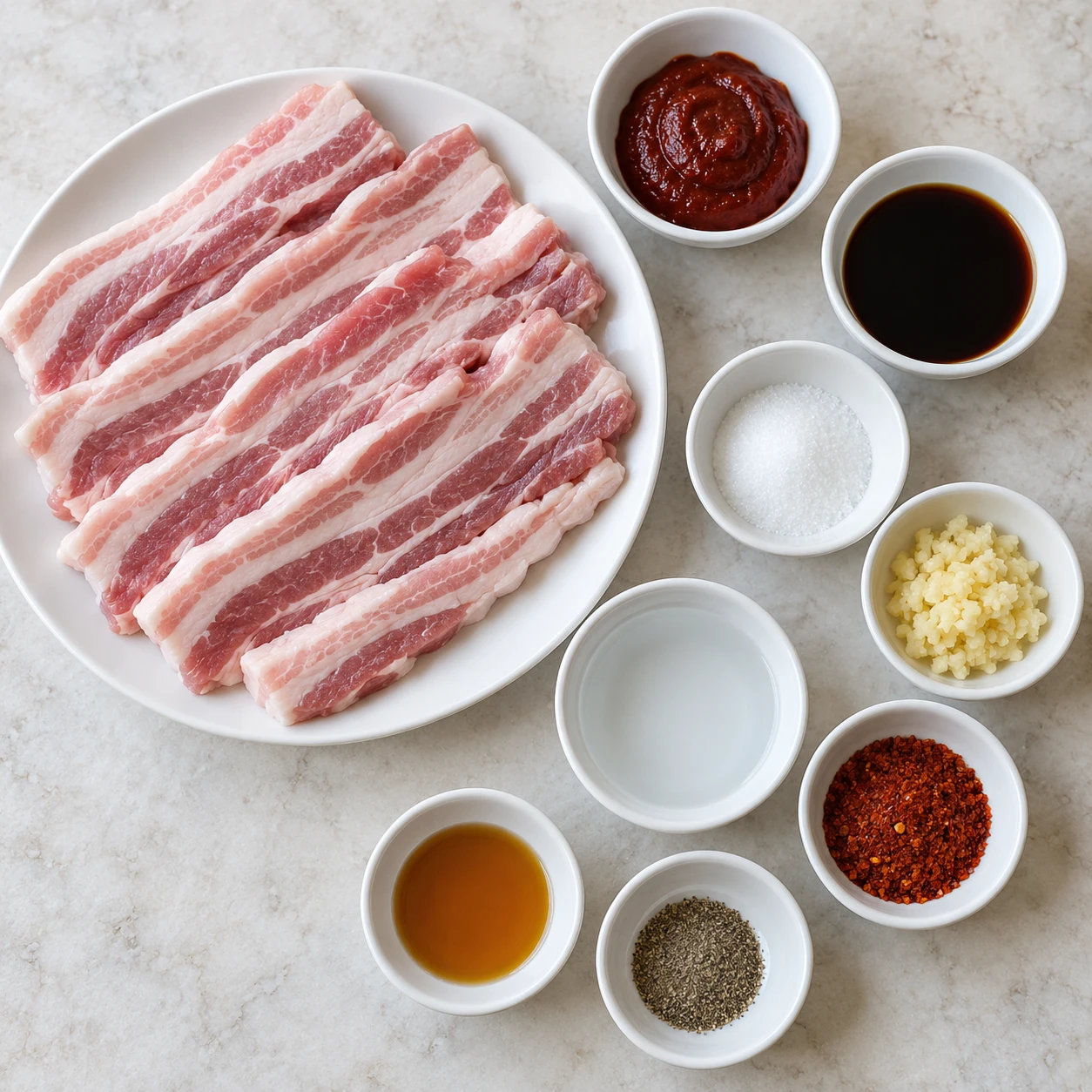
Everyday kitchen measurements
For 2 servings. Use a small 180 ml paper cup, a level eating spoon (about 15 ml) and a small teaspoon (about 5 ml).
How to fill the cup and spoons
Use the same cup and spoons throughout. Their sizes vary, so these amounts are approximate. Spoon flour in loosely and level the top without pressing. Measure vegetables after chopping, without packing them down. The amounts in g/ml are the original reference quantities. For part of a pack, use the specified pack weight and divide the contents evenly.
King Arthur Baking-
Essential
Choose slices about 5 mm thick, with distinct layers of meat and fat. Thick whole pork belly needs a different cooking method.
-
Essential
This fermented chili paste gives the dish its characteristic flavor. Use a mild version for less heat. Hot sauce alone is not an equivalent replacement.
-
Substitute available
If Soy sauce is unavailable
- Use instead
- Tamari
- Substitute quantity
- 1 level eating spoonReference quantity: 15 ml
Use the same spoon amount in the sauce. Choose a similar salt level; do not add extra salt. Check labels if avoiding wheat.
-
Substitute available
If Sugar is unavailable
- Use instead
- Honey
- Substitute quantity
- 1 level eating spoonReference quantity: 15 ml
Use the same spoon amount. The sauce will be more moist; simmer briefly to coat the food, and keep the heat gentle once the sweet sauce is added. Do not serve honey to infants under 12 months.
-
Substitute available
If Minced garlic is unavailable
- Use instead
- Garlic powder
- Substitute quantity
- ½ small teaspoonReference quantity: about 1 g
Mix the powder into the sauce or broth instead of the fresh garlic. Do not use garlic salt.
-
Essential
This loosens the paste so it coats the meat without scorching.
-
Optional
Omit these flakes from the sauce for less heat. Keep the gochujang and all other amounts unchanged.
-
Optional
You may omit this finishing oil at the last step. The dish will have less nutty aroma; the cooking time and other amounts stay the same.
-
Optional
Omit this pinch from the sauce if unavailable. The dish will be less peppery; no other change is needed.
Tap each ingredient as you prepare it. Check product labels for egg, soy, sesame, wheat, fish or shellfish where relevant.
Step-by-step cooking
-
Step 1
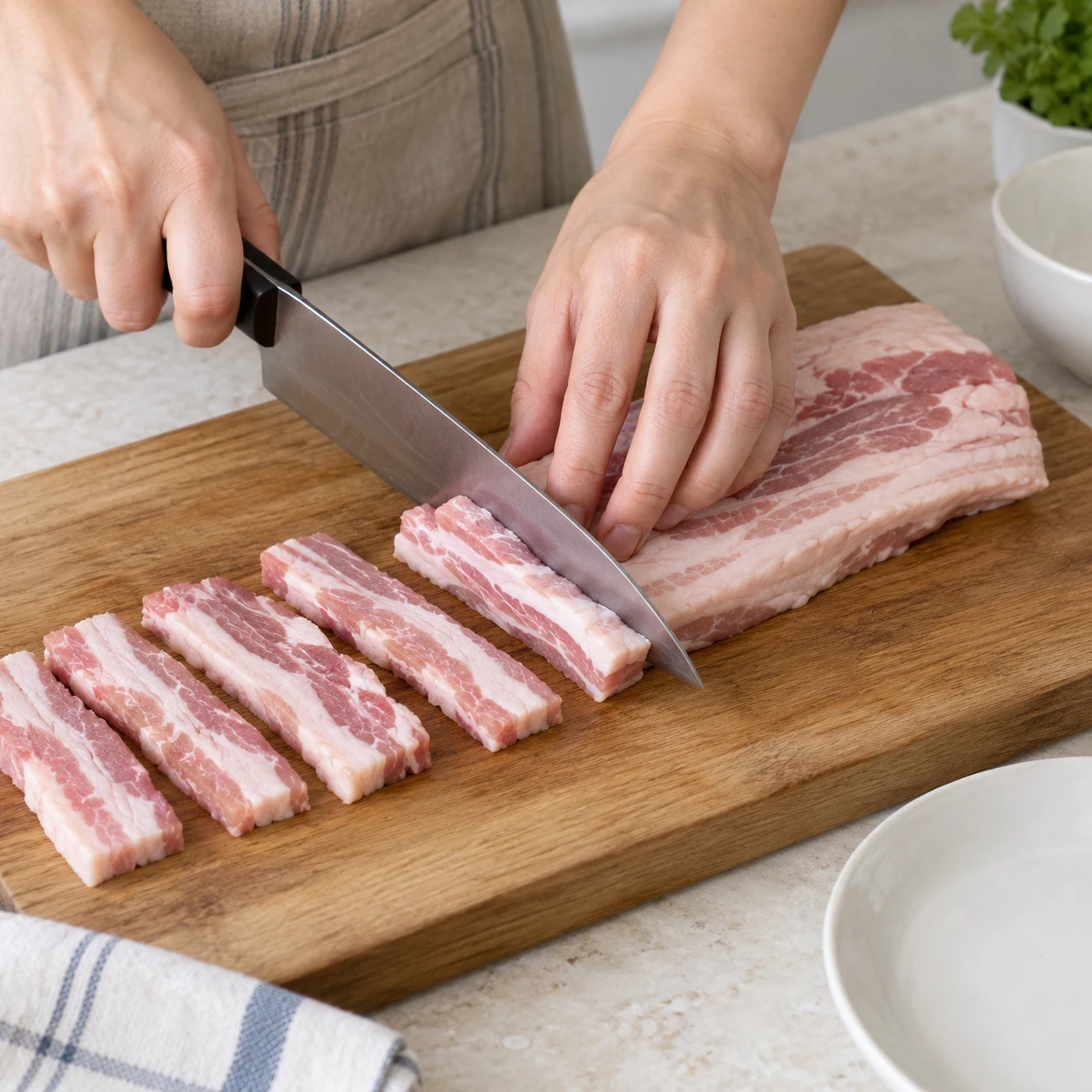
Prepare the pork. Use half of a 600 g pack of skinless pork belly sliced about 5 mm thick. Thaw frozen meat in the refrigerator first. Pat dry without washing raw pork and cut into 5 cm lengths. Keep the layers of meat and fat together. Clean the board and your hands after cutting.
-
Step 2
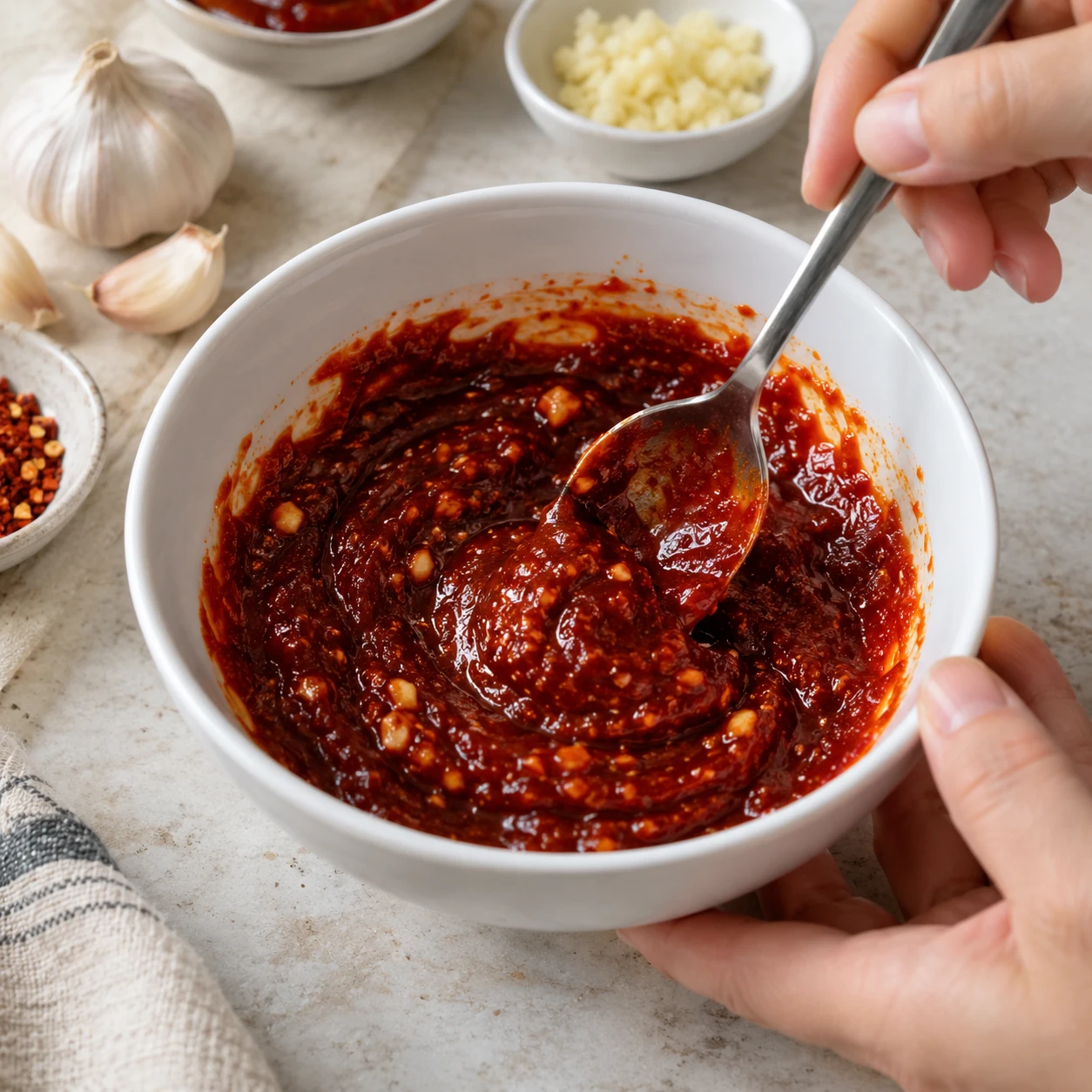
Mix the separate sauce. Combine 2 level eating spoons gochujang, 1 level eating spoon soy sauce, 1 level eating spoon sugar, 2 small teaspoons minced garlic and 2 level eating spoons water. Add the optional 1 small teaspoon gochugaru and pinch of black pepper. Stir until smooth. Keep this sauce away from the raw pork.
-
Step 3
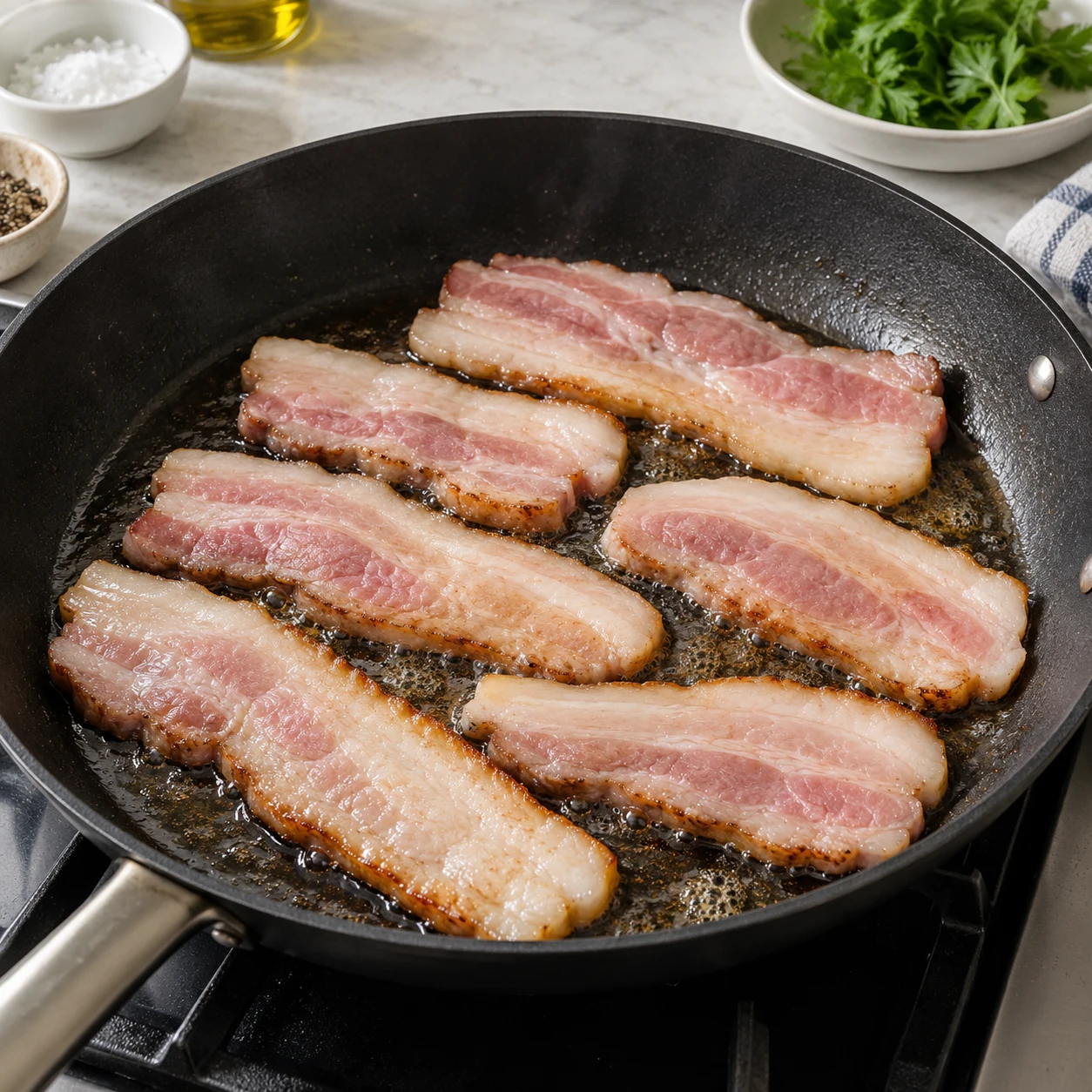
Render the first side. Place the pork in a cold wide nonstick pan in one layer, with no added oil. Turn the heat to medium. Cook for 4–5 minutes until fat begins to melt and the underside turns golden. If the pan is small, cook half the pork at a time; do not stack it.
-
Step 4
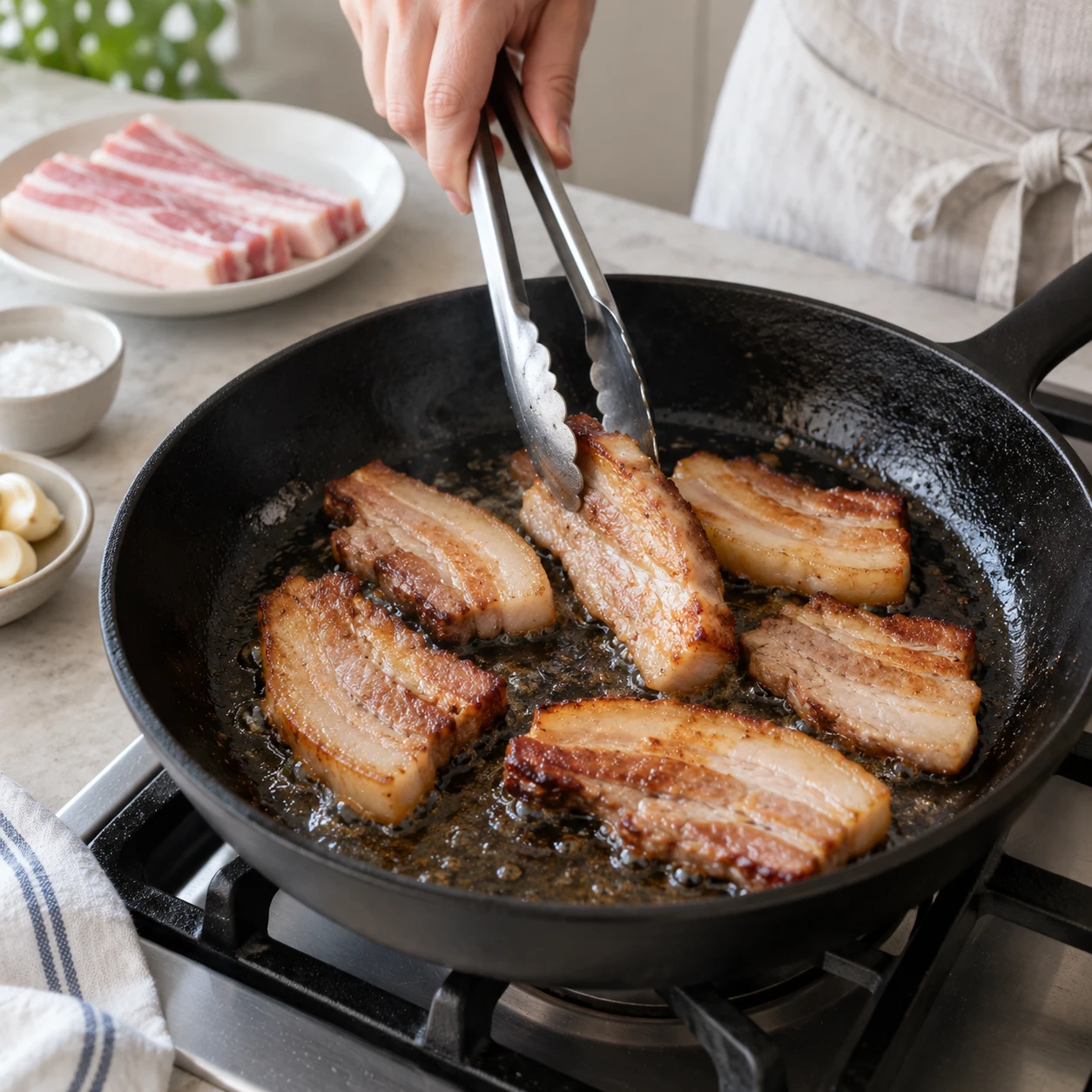
Turn and fully cook. Turn each slice and cook the other side for 3–5 minutes until both sides are golden and the center is cooked. Check the thickest meat: a thermometer should read at least 63°C. Pour off most of the rendered fat into a heatproof bowl, leaving only a thin film in the pan. Do not pour hot fat down the sink.
-
Step 5
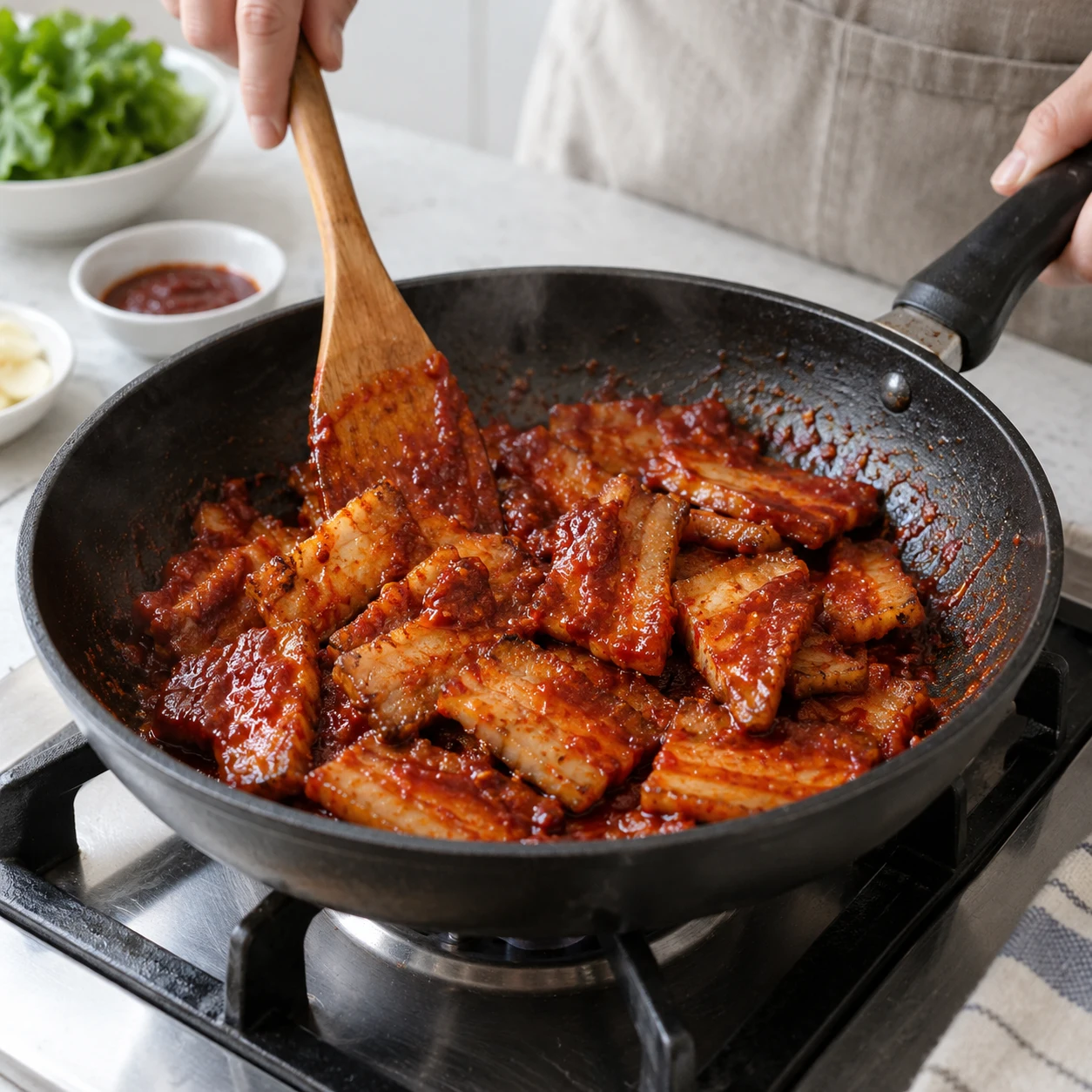
Glaze over low heat. Reduce the heat to low and add all the separate sauce to the cooked pork. Turn and toss for 2–3 minutes until the sauce bubbles and coats every slice. If it gets sticky before coating the meat, add 1 extra level eating spoon water. Do not keep the heat high: the sugar and chili paste can burn.
-
Step 6
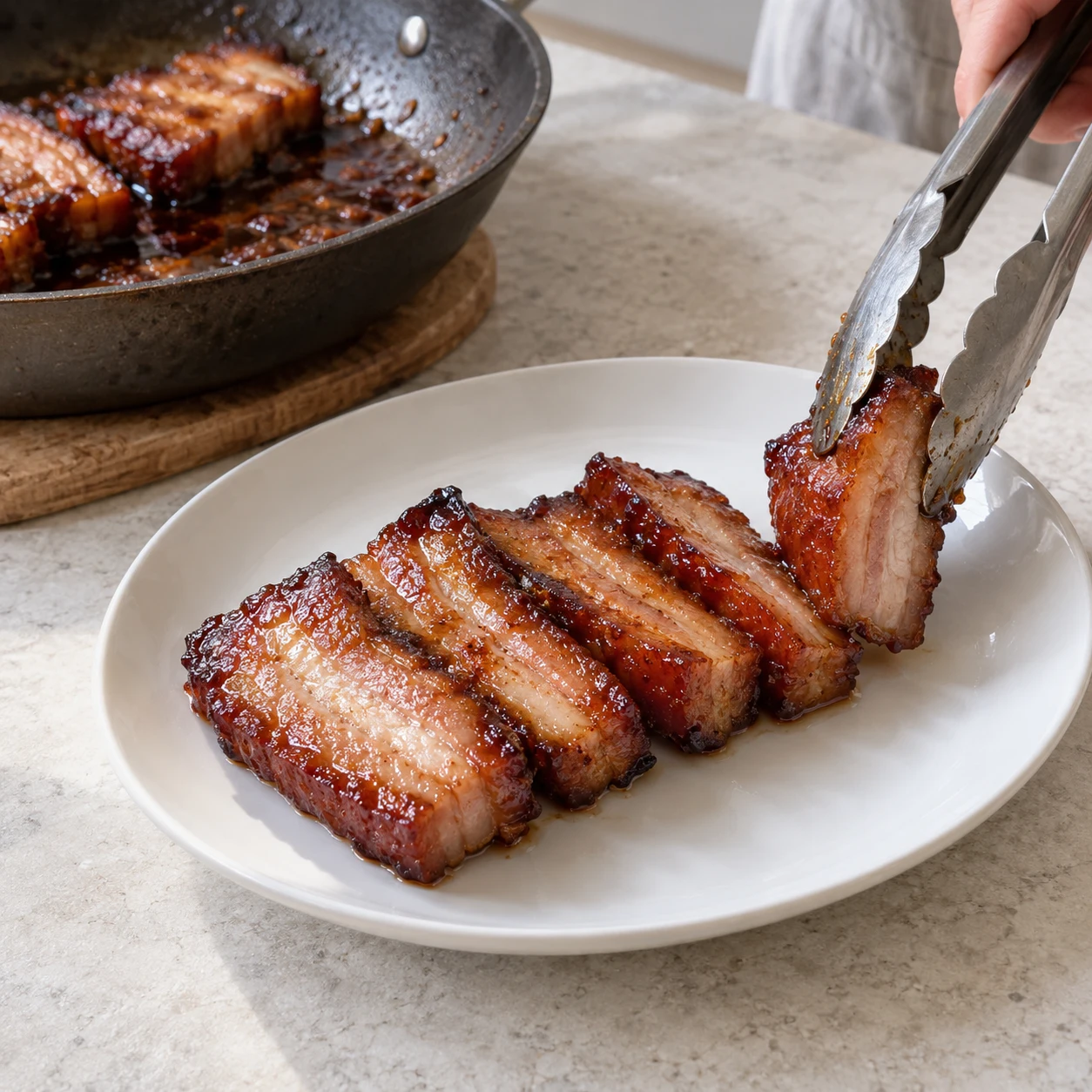
Finish and rest. Turn off the heat, mix in the optional 1 small teaspoon sesame oil and transfer to a plate. Rest for at least 3 minutes before eating. Serve with plain rice or lettuce if desired. This is a spicy dish; omit extra chili flakes and choose mild gochujang to make it gentler.
Finished dish
This is pork belly with visible fat layers, not the lean pork used for jeyuk bokkeum. Thin slices are important for this quick pan method. The rendered pork fat supplies the cooking oil; do not add extra oil at the start. A thermometer is the most reliable way to check the meat. Keep raw pork utensils separate from the finished dish. Refrigerate leftovers within 2 hours, use within 3–4 days and reheat to 74°C. Let discarded fat cool before putting it in a suitable waste container.