Potato hand-torn noodle soup (gamja sujebi)
A simple Korean soup with potatoes and thin flakes of hand-torn dough. Rest the dough before stretching it so the pieces cook evenly without a thick raw centre.
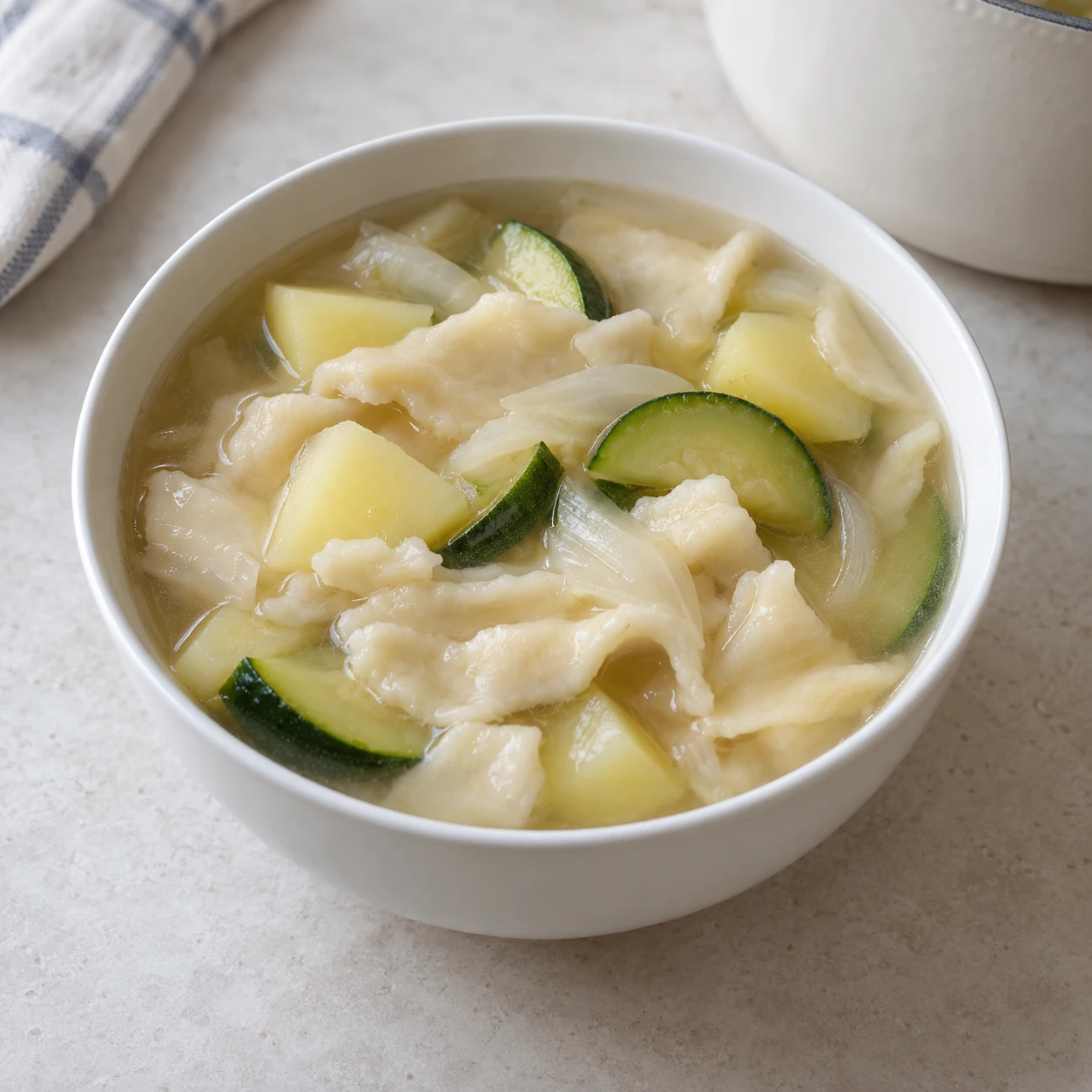
AI-generated cooking illustrations. Follow the written quantities and instructions.
Ingredients
2 servings
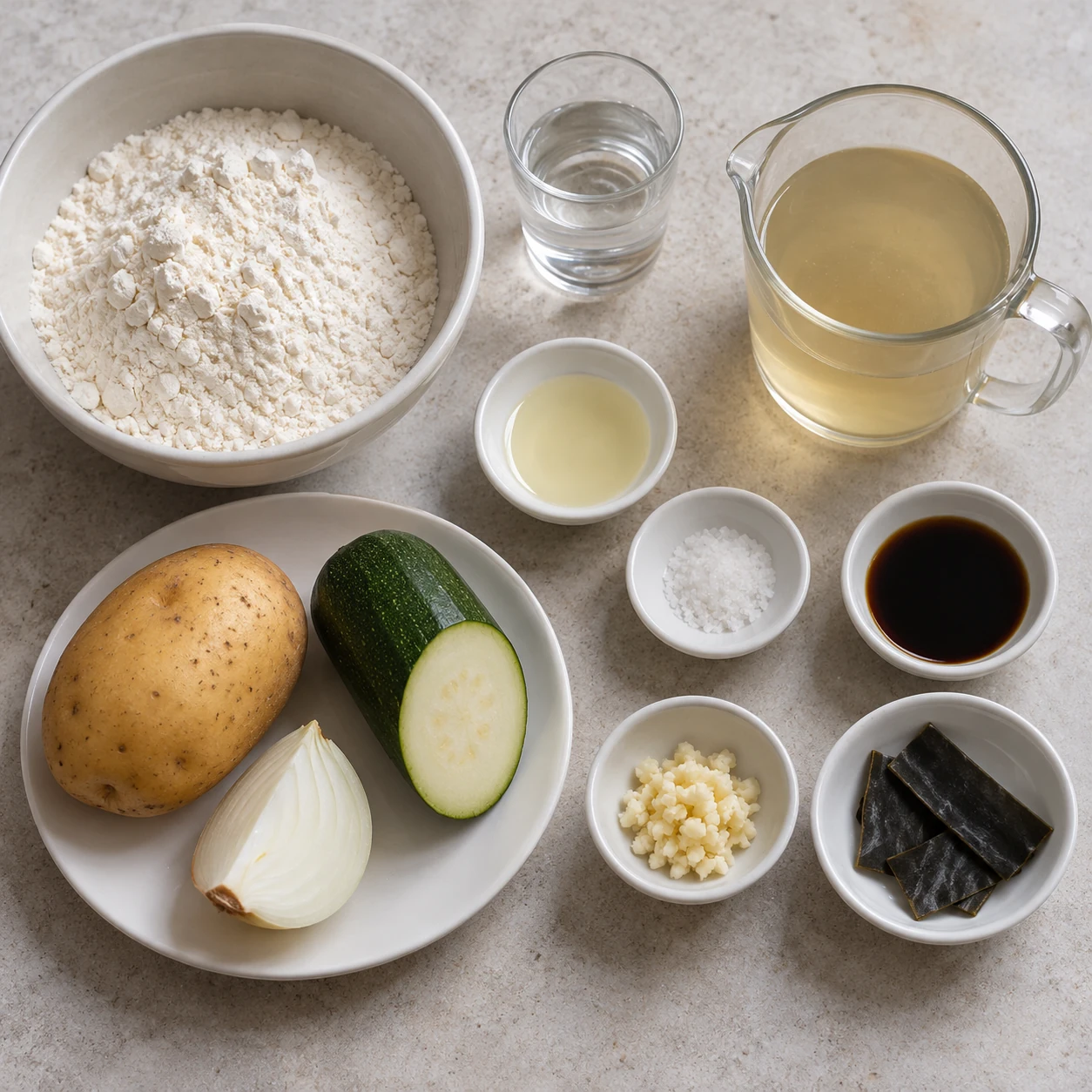
Everyday kitchen measurements
For 2 servings. Use a small 180 ml paper cup, a level eating spoon (about 15 ml) and a small teaspoon (about 5 ml).
How to fill the cup and spoons
Use the same cup and spoons throughout. Their sizes vary, so these amounts are approximate. Spoon flour in loosely and level the top without pressing. Measure vegetables after chopping, without packing them down. The amounts in g/ml are the original reference quantities. For part of a pack, use the specified pack weight and divide the contents evenly.
King Arthur Baking-
Essential
Loosely fill and level the cups; do not pack flour down. The dough texture is the final guide because different flours absorb water differently.
-
Essential
Start with this amount. Add only one small teaspoon at a time if dry crumbs will not come together.
-
Optional
Makes the dough a little easier to handle, but may be omitted.
-
Essential
Mix with the flour before adding water.
-
Essential
Peel and cut into thin bite-size pieces so they cook in the broth.
-
Optional
Cut into thin pieces and add after the dough, or omit.
-
Optional
Slice and simmer with the potato, or omit.
-
Essential
Use a roomy pot and add a little hot water if the soup thickens too much.
-
Optional
Remove after the first 5 minutes. Omit if unavailable; this version does not require anchovy stock.
-
Substitute available
If Soy sauce is unavailable
- Use instead
- Tamari
- Substitute quantity
- 1 level eating spoonReference quantity: 15 ml
Use an unsweetened version in the broth. Taste before adding extra salt.
-
Essential
Add to the broth with the potato.
Tap each ingredient as you prepare it. Check product labels for egg, soy, sesame, wheat, fish or shellfish where relevant.
Step-by-step cooking
-
Step 1
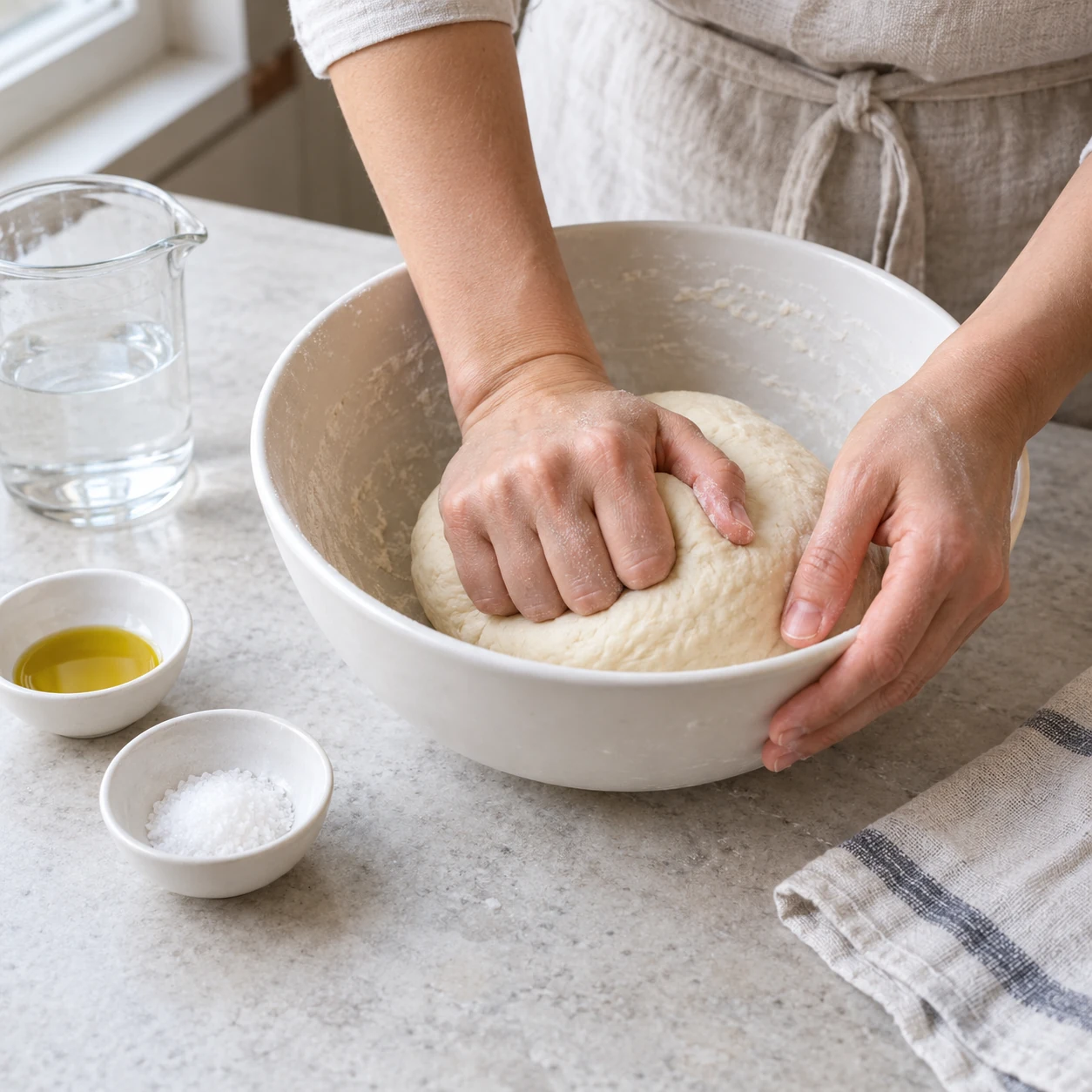
Mix flour and salt in a bowl. Add half a paper cup of dough water and the optional teaspoon of oil. Mix, then knead for 5 minutes until a firm smooth dough forms. If dry crumbs remain, add water one small teaspoon at a time; do not pour in a large splash.
-
Step 2
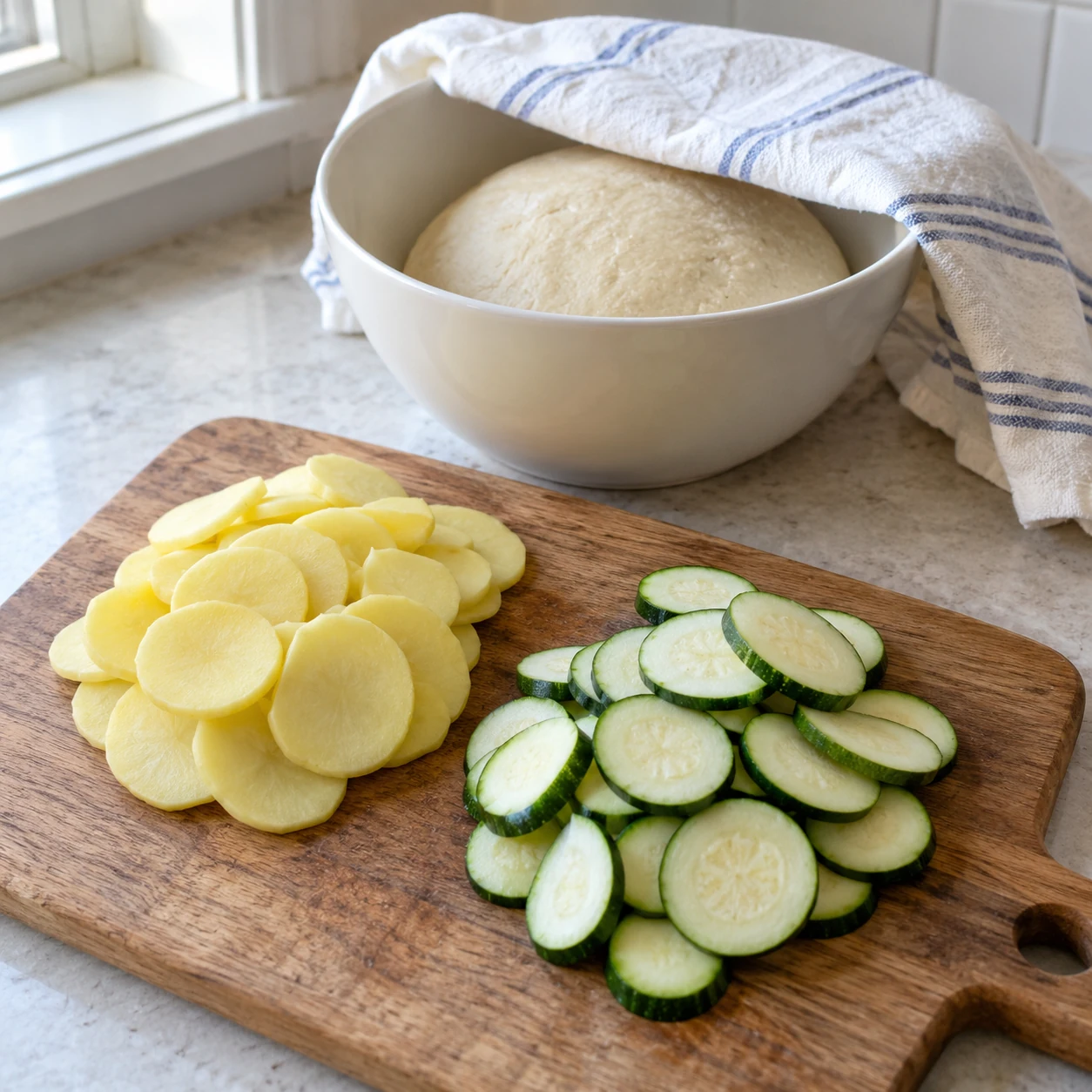
Cover the dough in a clean bowl and rest for 20 minutes. Meanwhile peel and slice the potato into thin bite-size pieces, slice onion and zucchini if using, and mince garlic. Keep the resting dough covered so the surface does not dry.
-
Step 3
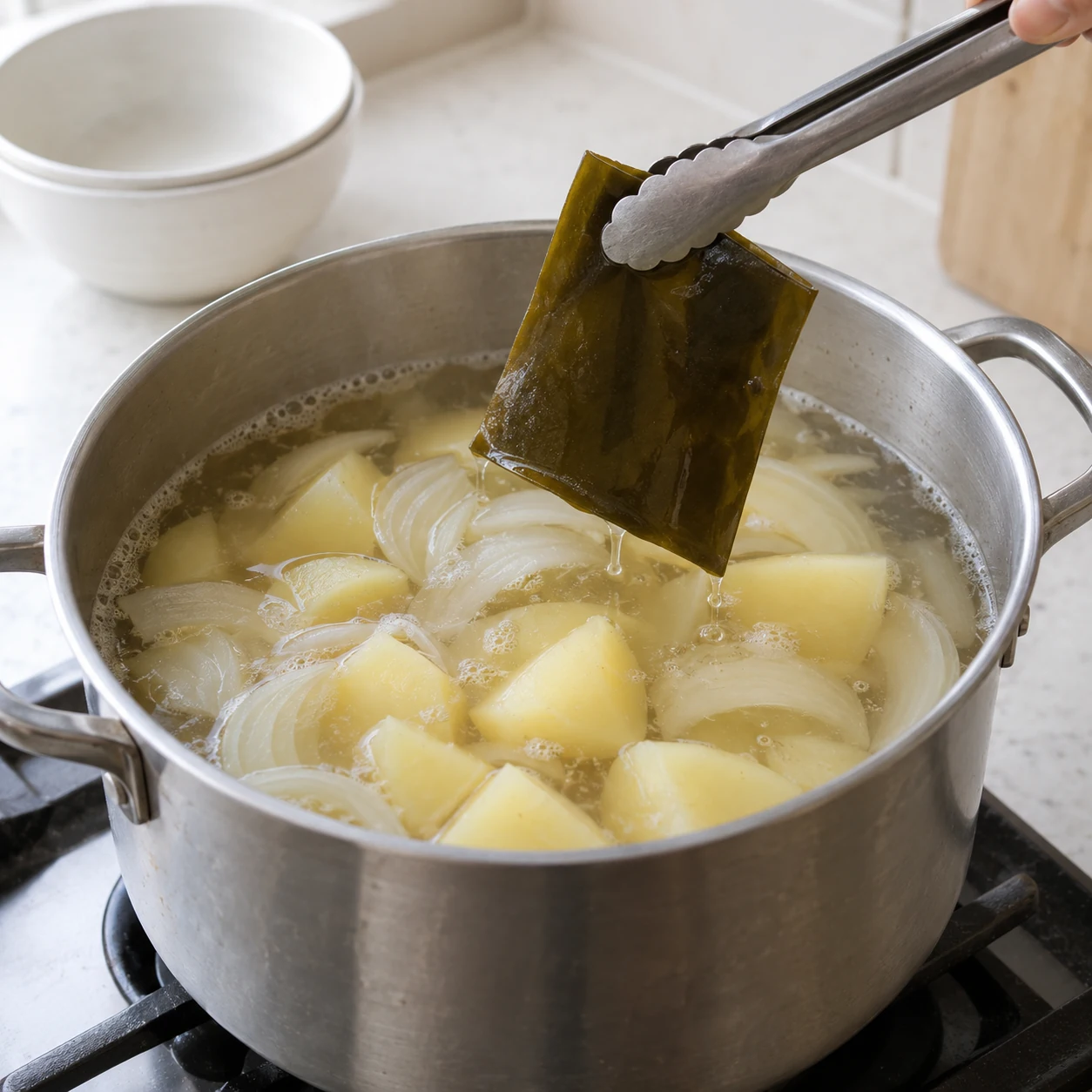
Heat 6 paper cups of broth water with the optional kelp. Simmer for 5 minutes and remove the kelp. Add potato, onion, garlic and soy sauce, and simmer for 8–10 minutes until the potato is nearly tender.
-
Step 4
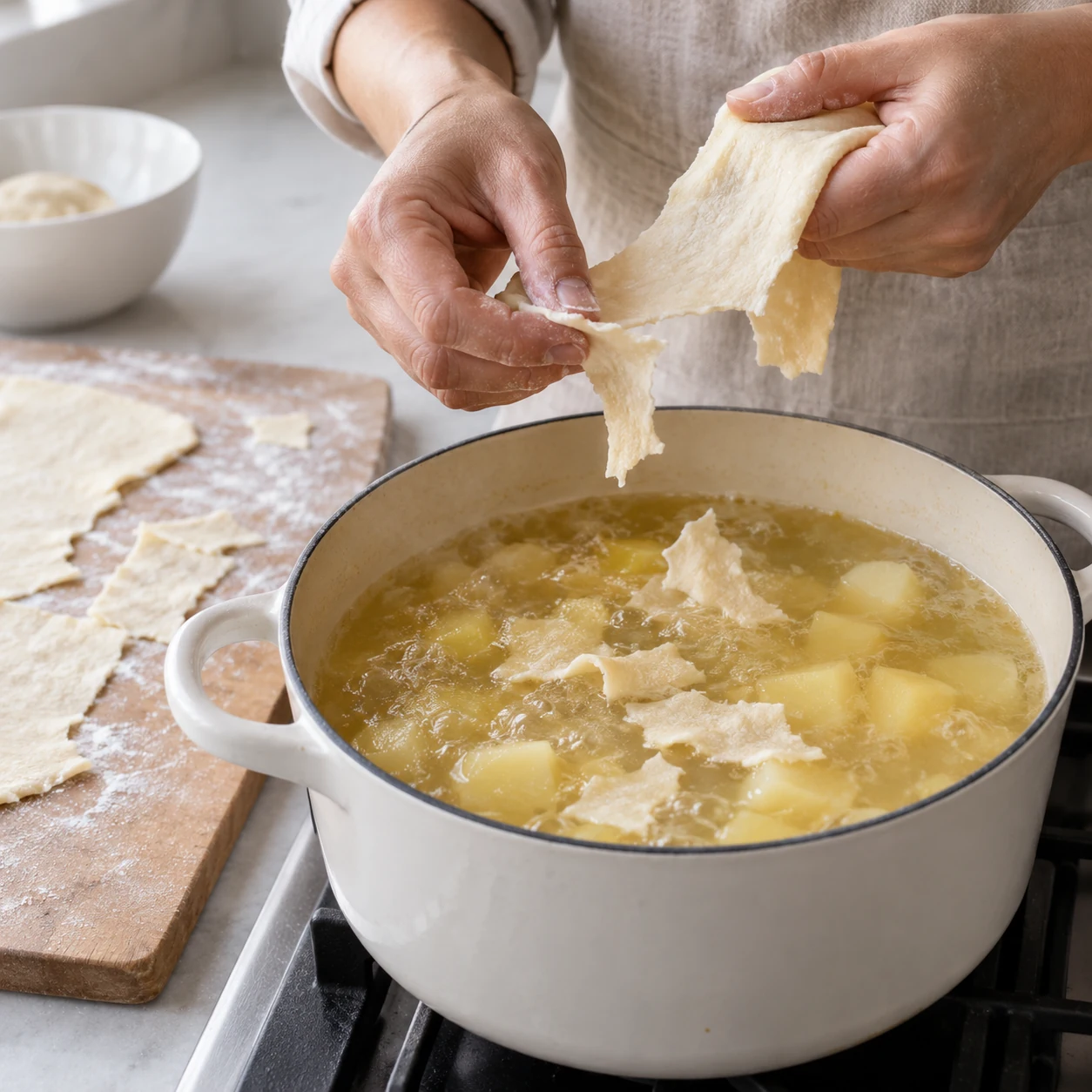
Keep the broth gently boiling. With clean lightly damp hands, stretch a small edge of dough very thin and tear off a piece about 3–4 cm wide. Drop into the broth and repeat, stirring occasionally so pieces do not stick. Work steadily and keep pieces thin rather than dropping thick lumps.
-
Step 5
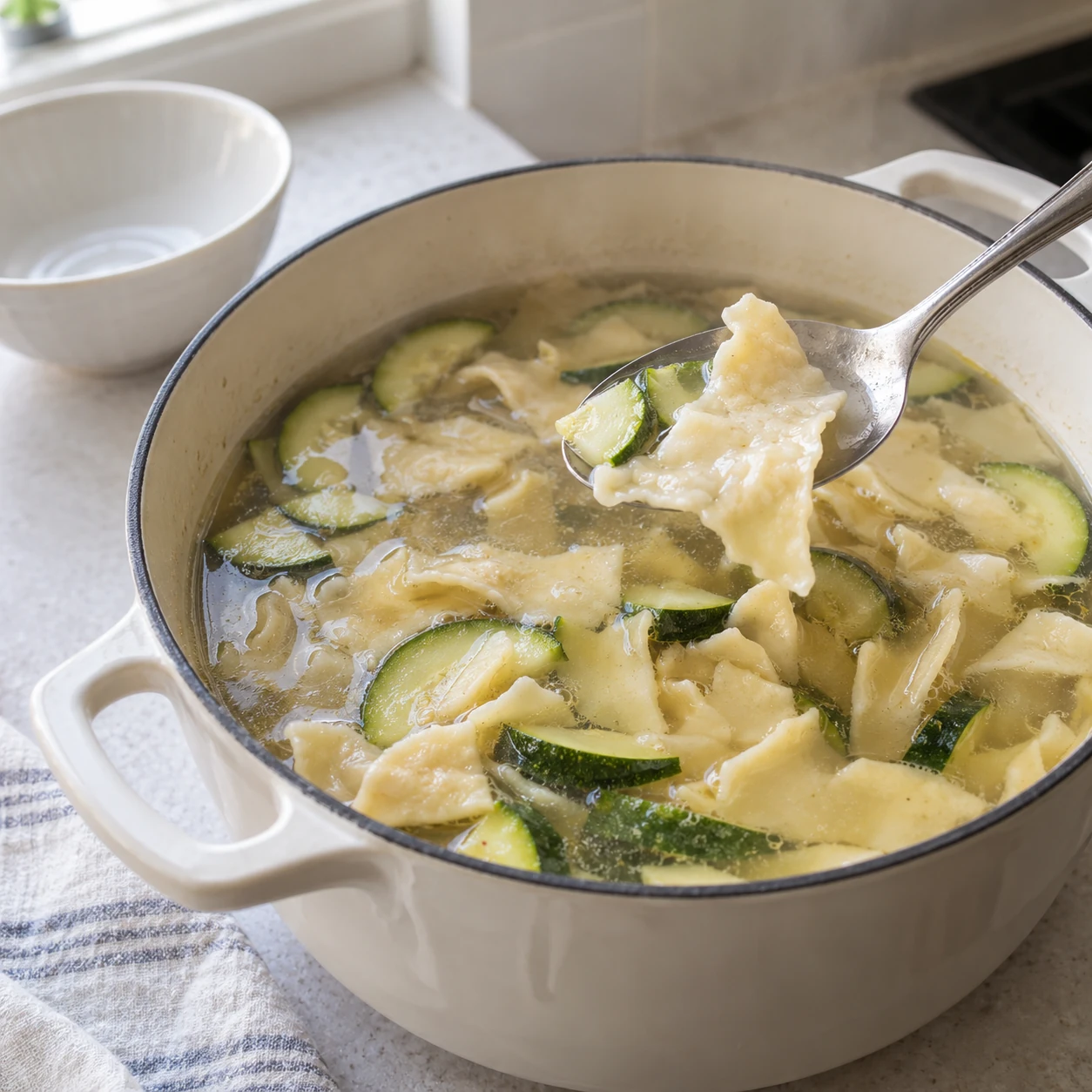
Add zucchini if using and simmer for 5–7 minutes after the last dough piece enters, stirring gently. Cut one thicker piece after cooling it briefly: there should be no chalky raw flour centre. Simmer longer if needed, adding a little hot water if the soup becomes too thick.
-
Step 6
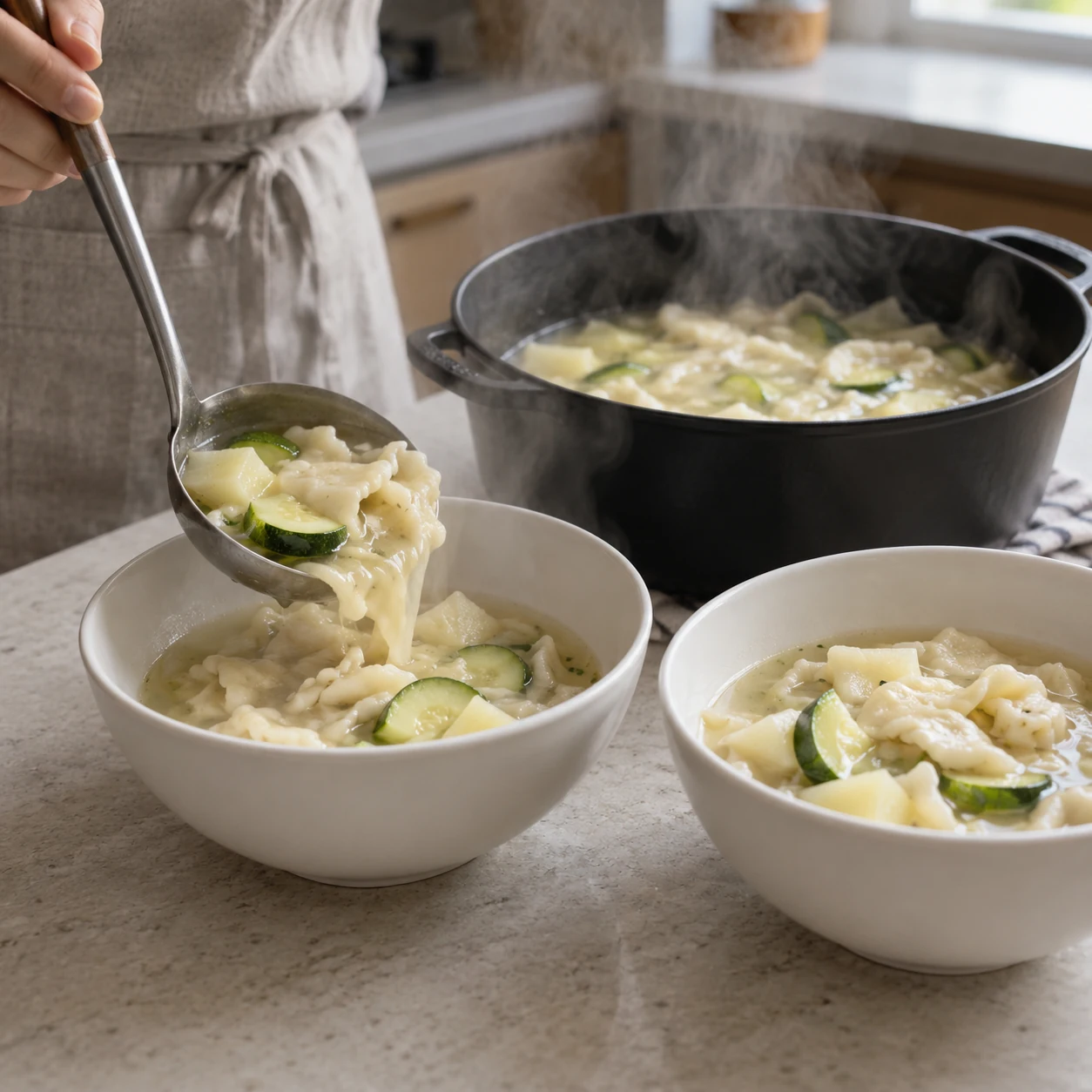
Taste the cooked broth and divide soup, potato and torn noodles between two bowls. Serve promptly; the dough absorbs broth as it stands. Let the hot dough and potato cool slightly before eating, especially for children.
Finished dish
The total time includes a 20-minute dough rest while vegetables and broth are prepared. Flour cups are loosely filled; add water gradually to obtain a firm, stretchable dough. This recipe uses wheat and is not suitable for someone who must avoid it. Refrigerate leftovers in shallow containers within 2 hours, or within 1 hour if the room is hotter than 32°C. Keep at 4°C or below, use within 3–4 days and reheat cooked leftovers to 74°C.
Enjoy every bite
How to enjoy it
Thin pieces are easier to cook and eat than thick dough lumps. Serve immediately with enough broth in each bowl.
Serve it with
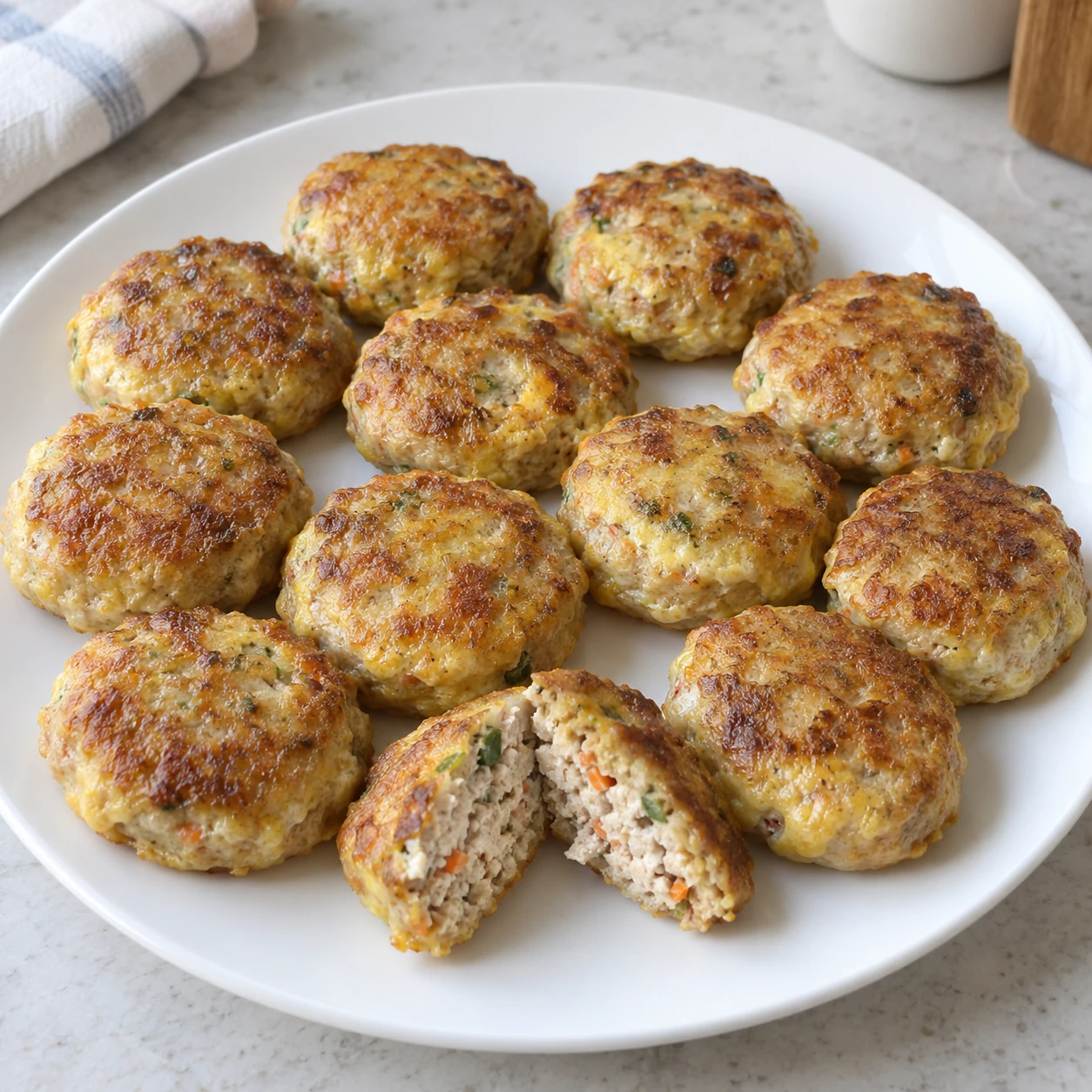
Korean meat and tofu patties (donggeurangttaeng)
A small savory bite complements a lighter noodle or vegetable dish.
View recipe