Braised beltfish with radish
Delicate silver beltfish with juicy radish in a chili-soy sauce. This dish keeps the fish in large pieces; remove bones carefully before eating.
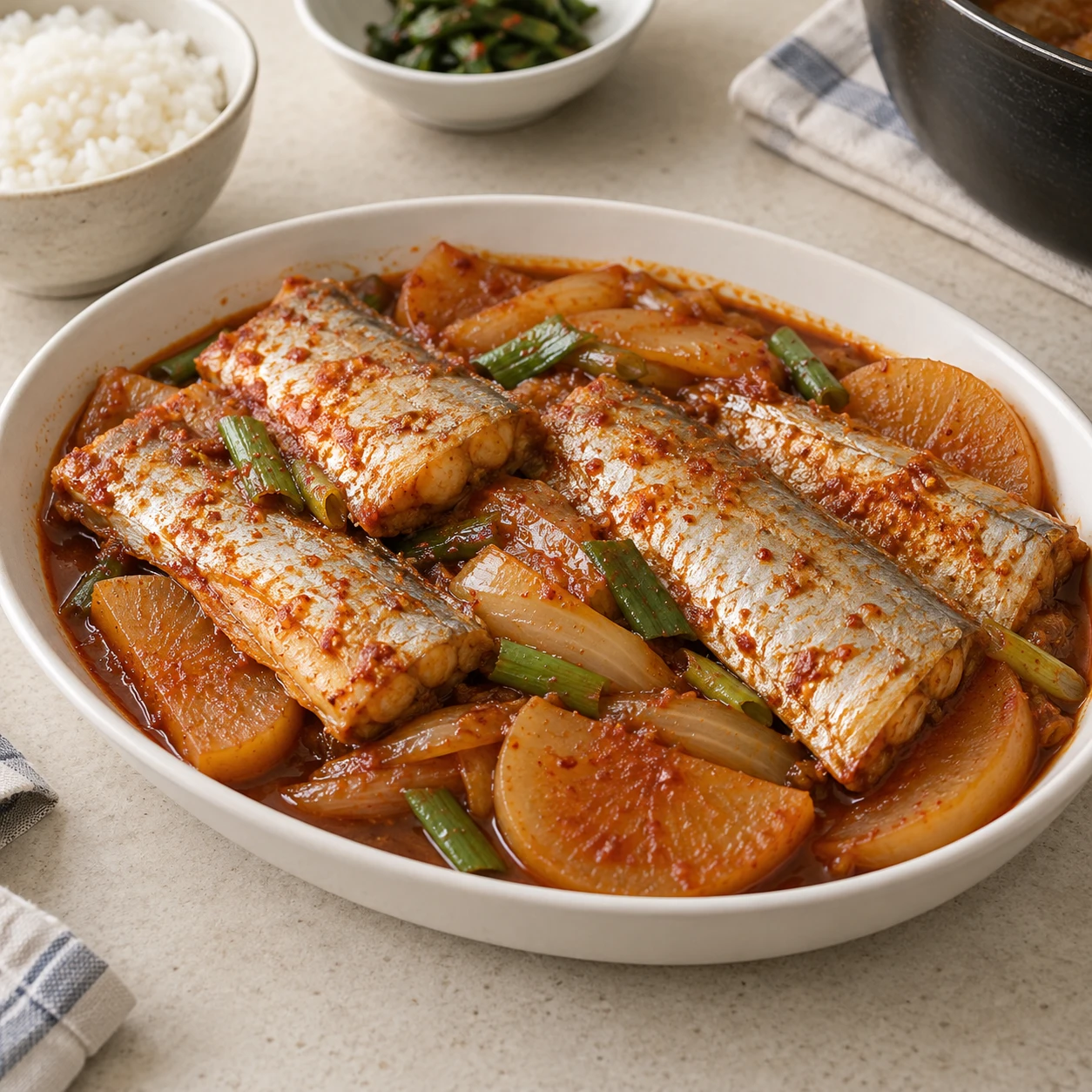
AI-generated cooking illustrations. Follow the written quantities and instructions.
Ingredients
2 servings
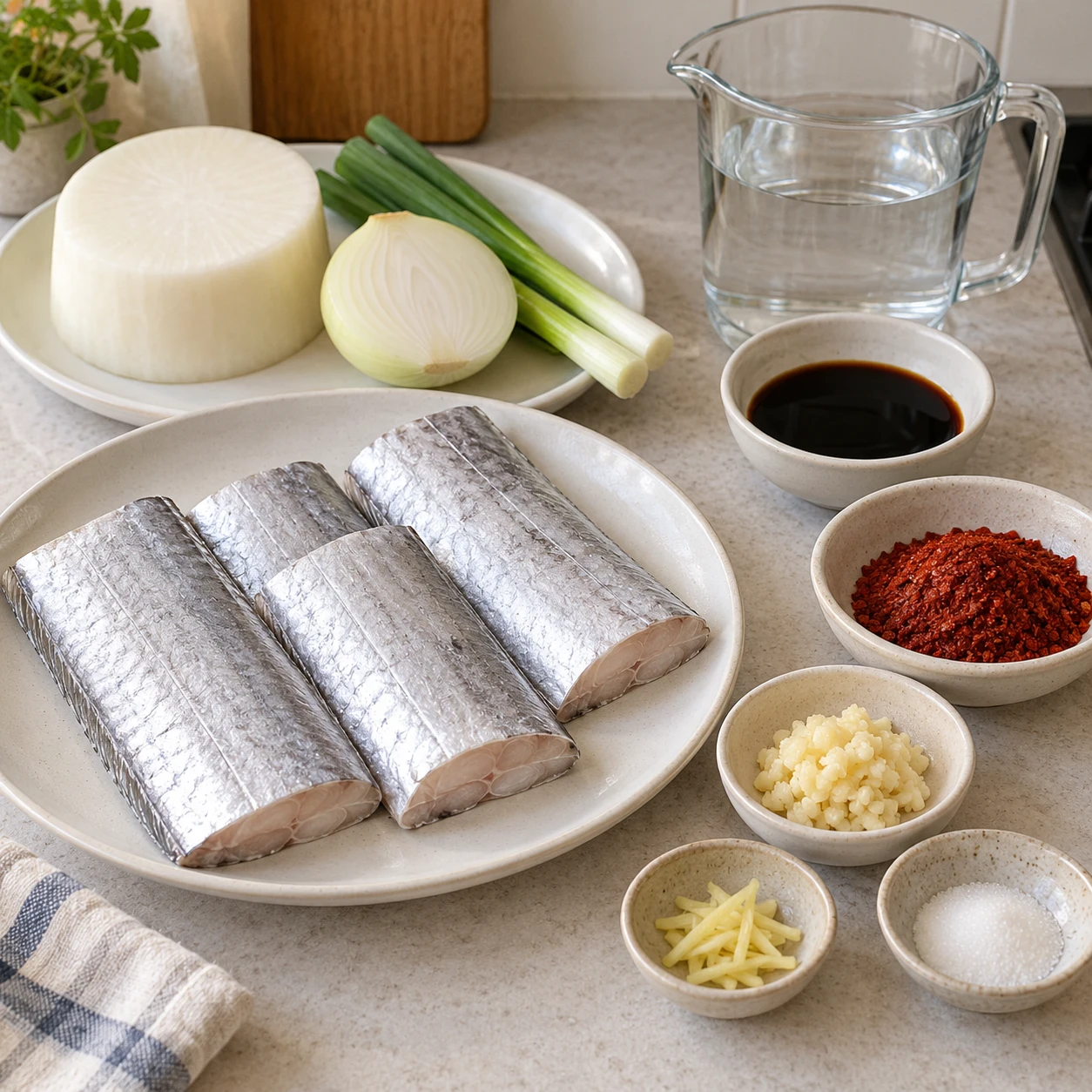
Everyday kitchen measurements
For 2 servings. Use a small 180 ml paper cup, a level eating spoon (about 15 ml) and a small teaspoon (about 5 ml).
How to fill the cup and spoons
Use the same cup and spoons throughout. Their sizes vary, so these amounts are approximate. Spoon flour in loosely and level the top without pressing. Measure vegetables after chopping, without packing them down. The amounts in g/ml are the original reference quantities. For part of a pack, use the specified pack weight and divide the contents evenly.
King Arthur Baking-
Substitute available
If Cleaned raw beltfish, 4 segments is unavailable
- Use instead
- Raw boneless cod, 4 thick pieces
- Substitute quantity
- 4 pieces, one 400 g packReference quantity: 400 g
Use unsalted raw cod, not dried salted cod, cut 2–3 cm thick. Keep the radish pre-cooking; in step 5 simmer cod 10–12 minutes and check its thickest flesh reaches 63°C and flakes. Finish briefly only as needed. Lift cooked cod out if the radish needs longer. It will be less fatty and more fragile, so do not turn or stir.
-
Substitute available
If Korean white radish is unavailable
- Use instead
- Daikon white radish
- Substitute quantity
- ½ of a 600 g packReference quantity: 300 g
Peel and slice into 5 mm half-rounds. Use the same pre-simmering step, checking tenderness with a fork before adding fish. Daikon is usually less dense; if already tender, shorten its pre-simmer rather than overcooking the fish.
-
Substitute available
If Onion is unavailable
- Use instead
- Plain frozen chopped onion
- Substitute quantity
- ¼ of a 300 g packReference quantity: 75 g
Add the measured frozen onion directly at the onion step; no thawing is needed. Small chopped pieces soften faster, so start checking after 5 minutes. Keep the chicken or fish cooking until fully done even if the onion is already soft.
-
Essential
Required for the correct broth or egg texture. Use the listed paper-cup amount for the food; any extra water below a steaming rack stays outside the bowl. Add small amounts of hot water during braising only if it starts drying out.
-
Substitute available
If Soy sauce is unavailable
- Use instead
- Regular light soy sauce or tamari
- Substitute quantity
- 3 level eating spoonsReference quantity: 45 ml
Saltiness varies: taste before adding more salt. Tamari also contains soy; check the label for wheat if relevant.
-
Optional
May be reduced or omitted. Omit its addition to the sauce; use the same water and cooking time. Fish braises become milder and browner; chicken still has heat from gochujang.
-
Substitute available
If Minced peeled garlic is unavailable
- Use instead
- Plain unsalted ready-minced garlic
- Substitute quantity
- 1 level eating spoonReference quantity: 15 g
Choose garlic with no added salt, sugar or flavored sauce. Add this replacement amount at the same sauce-mixing step. It has a slightly less fresh aroma; keep soy sauce and water unchanged.
-
Optional
May be omitted from the sauce. The fragrance will be a little milder; keep water and cooking time the same.
-
Optional
May be omitted. The sauce will taste less sweet; do not replace the missing sugar with extra salt or soy sauce.
-
Optional
May be omitted entirely; skip the chopping and final addition. It adds a fresh onion aroma and green color, but does not control cooking time.
Tap each ingredient as you prepare it. Check product labels for egg, soy, sesame, wheat, fish or shellfish where relevant.
Step-by-step cooking
-
Step 1
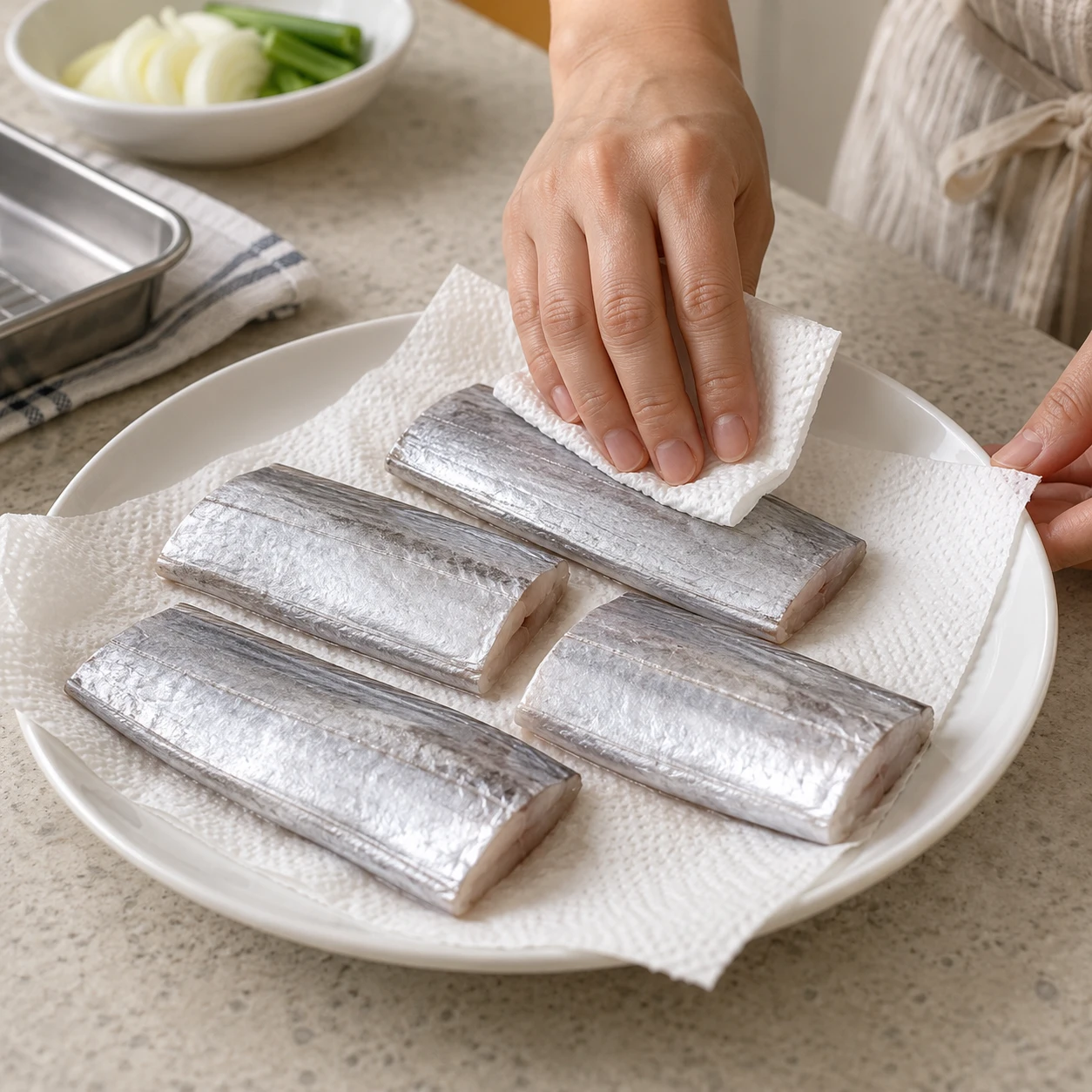
Use cleaned raw beltfish in 4 segments about 8–10 cm long, a 400 g pack in total. It is a flat silver ribbon-shaped fish. Ask the fishmonger to remove the head, guts and fins. Wipe away any remaining dark belly lining and pat dry. Thaw frozen fish in the refrigerator as directed on the label; use a separate fish board.
-
Step 2
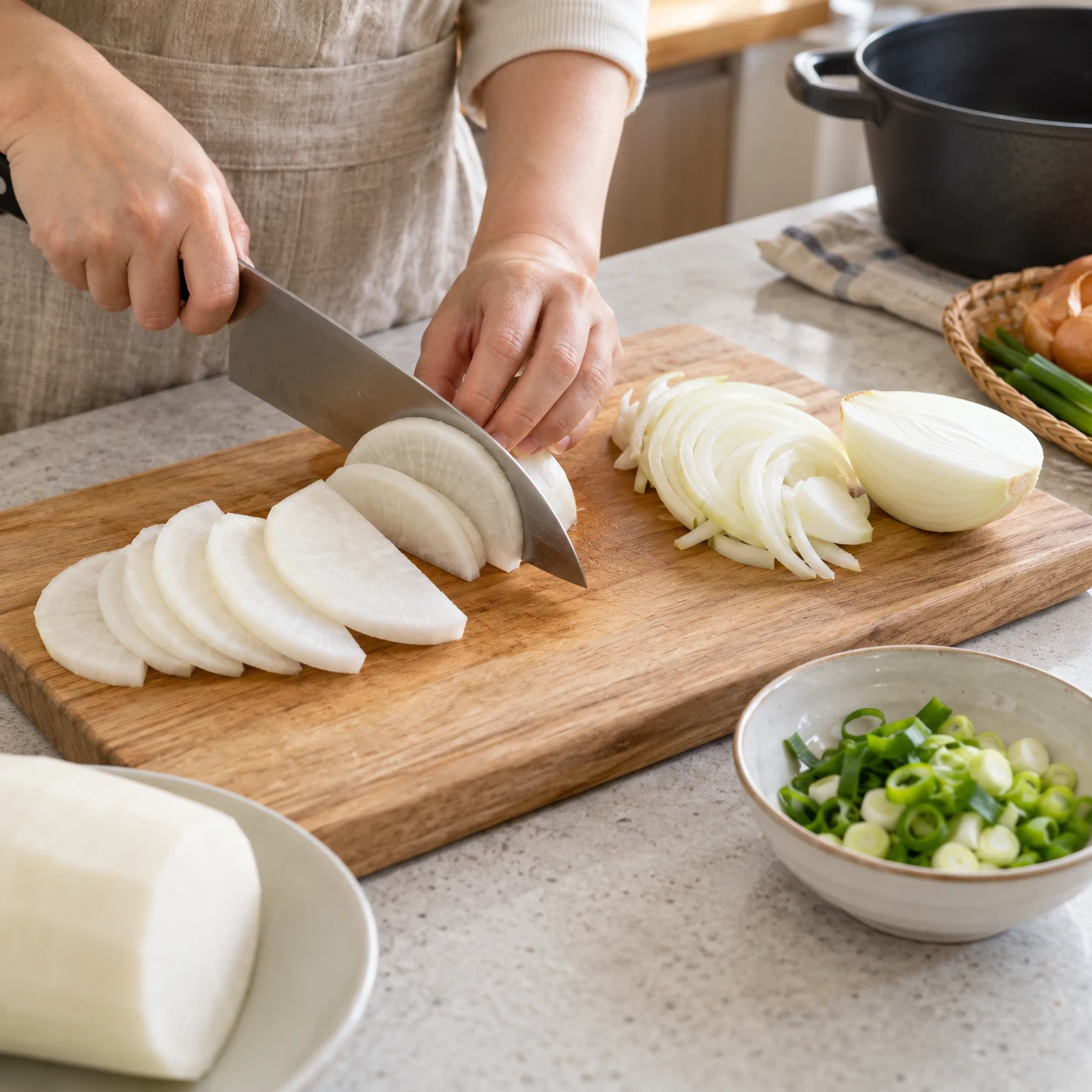
Peel the radish and cut it into half-round slices about 5 mm thick; thick chunks take much longer. Slice the half onion thinly and chop the scallion separately. Lay the radish in a single, slightly overlapping layer in a wide shallow pot so the fish can sit above it later.
-
Step 3
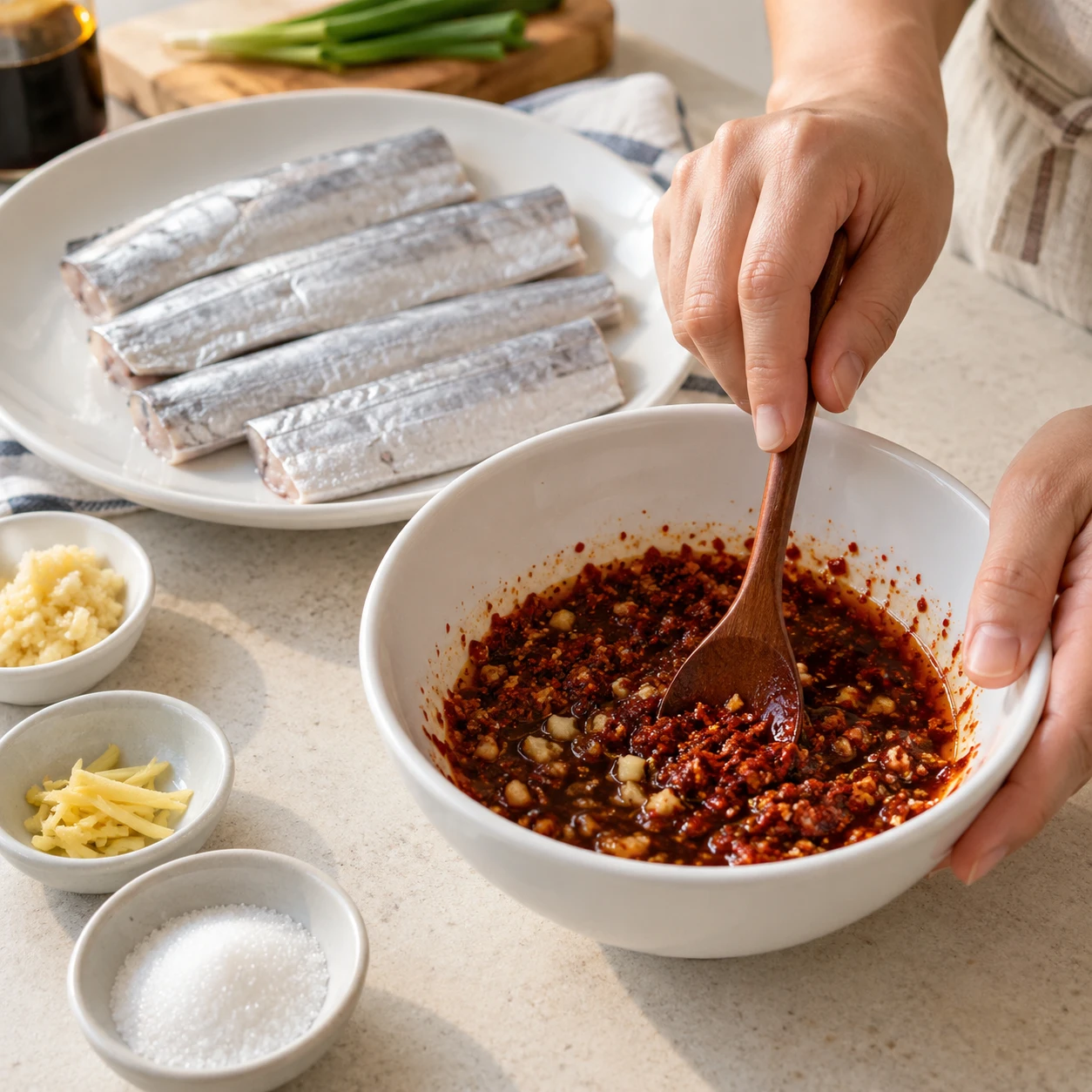
In a bowl mix 3 level eating-spoons soy sauce and 1 spoon minced garlic. Add up to 1 spoon gochugaru, ¼ small teaspoon minced ginger and 1 teaspoon sugar if using. For a milder dish reduce or omit the chili; the broth will be brown rather than red. No extra salt is needed.
-
Step 4
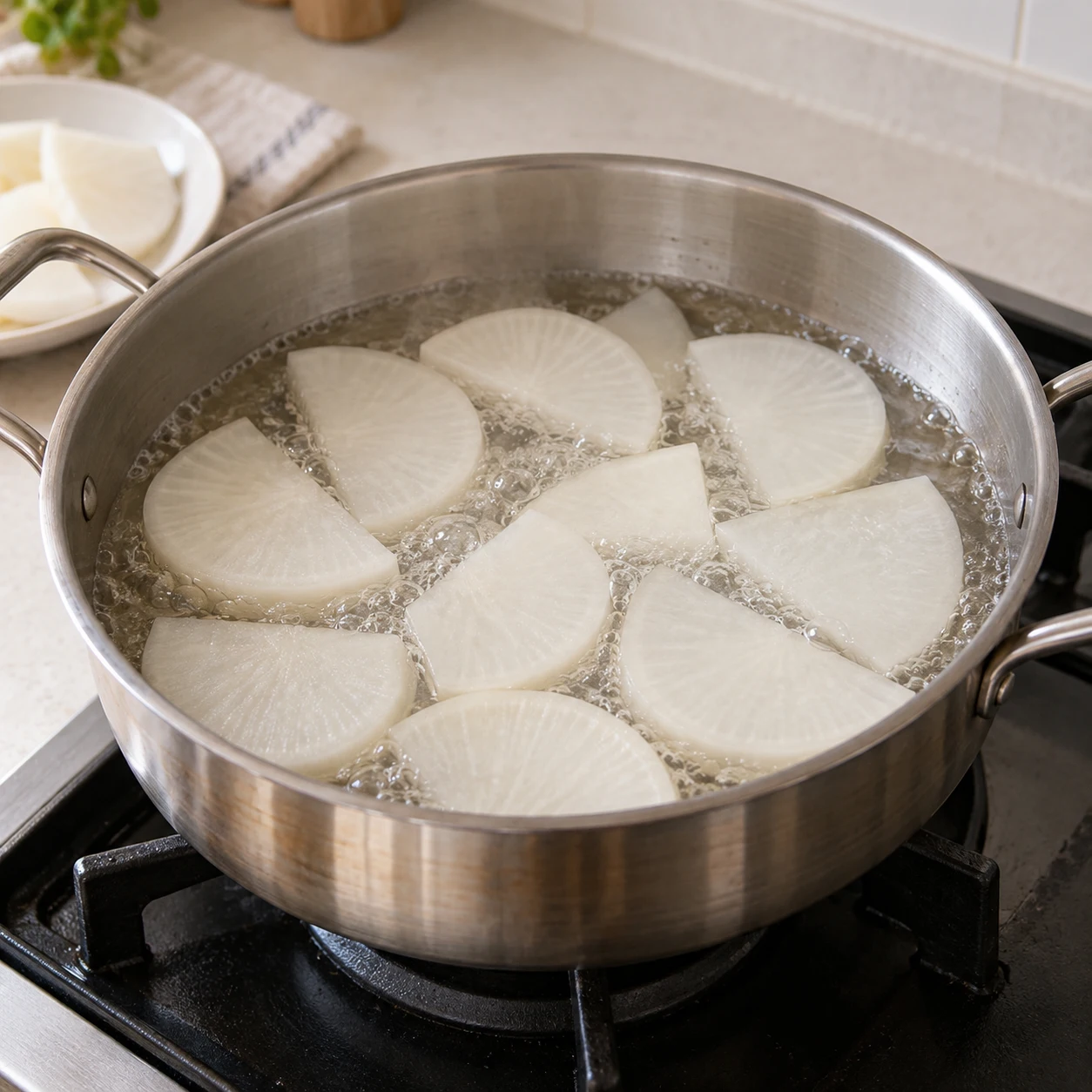
Pour 2 small paper cups water over the radish, bring to a boil, then cover and simmer gently for 10–12 minutes. The radish should start to soften when poked with a fork; if still very hard, give it another 3–5 minutes before adding fish. Keep the water level from drying out.
-
Step 5
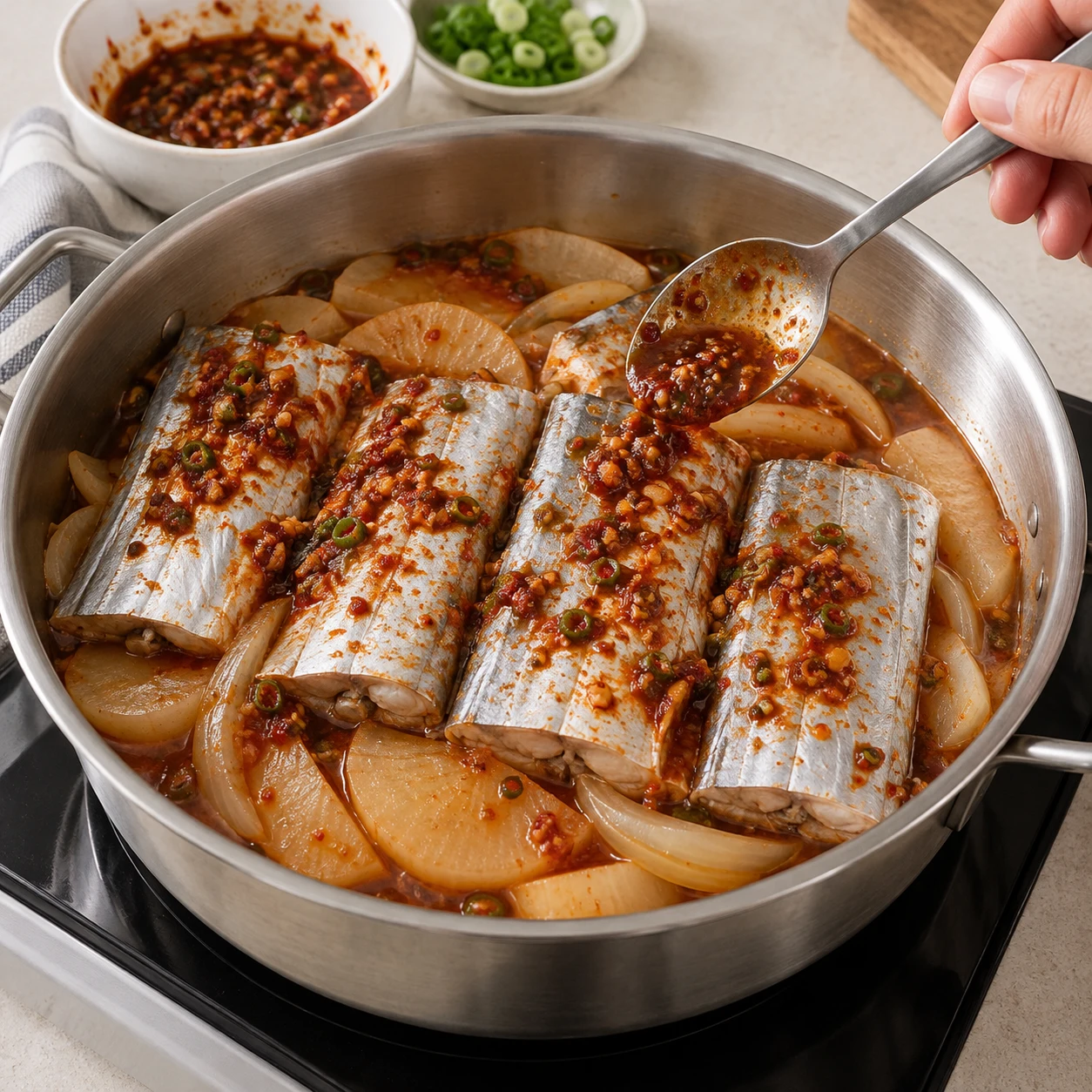
Lay sliced onion above the radish, then arrange the 4 beltfish pieces in one layer. Spoon all the seasoning over the fish. Cover and gently simmer 12–15 minutes on medium-low heat. Do not stir or turn the fragile pieces; spoon some broth from the edge over them once halfway.
-
Step 6
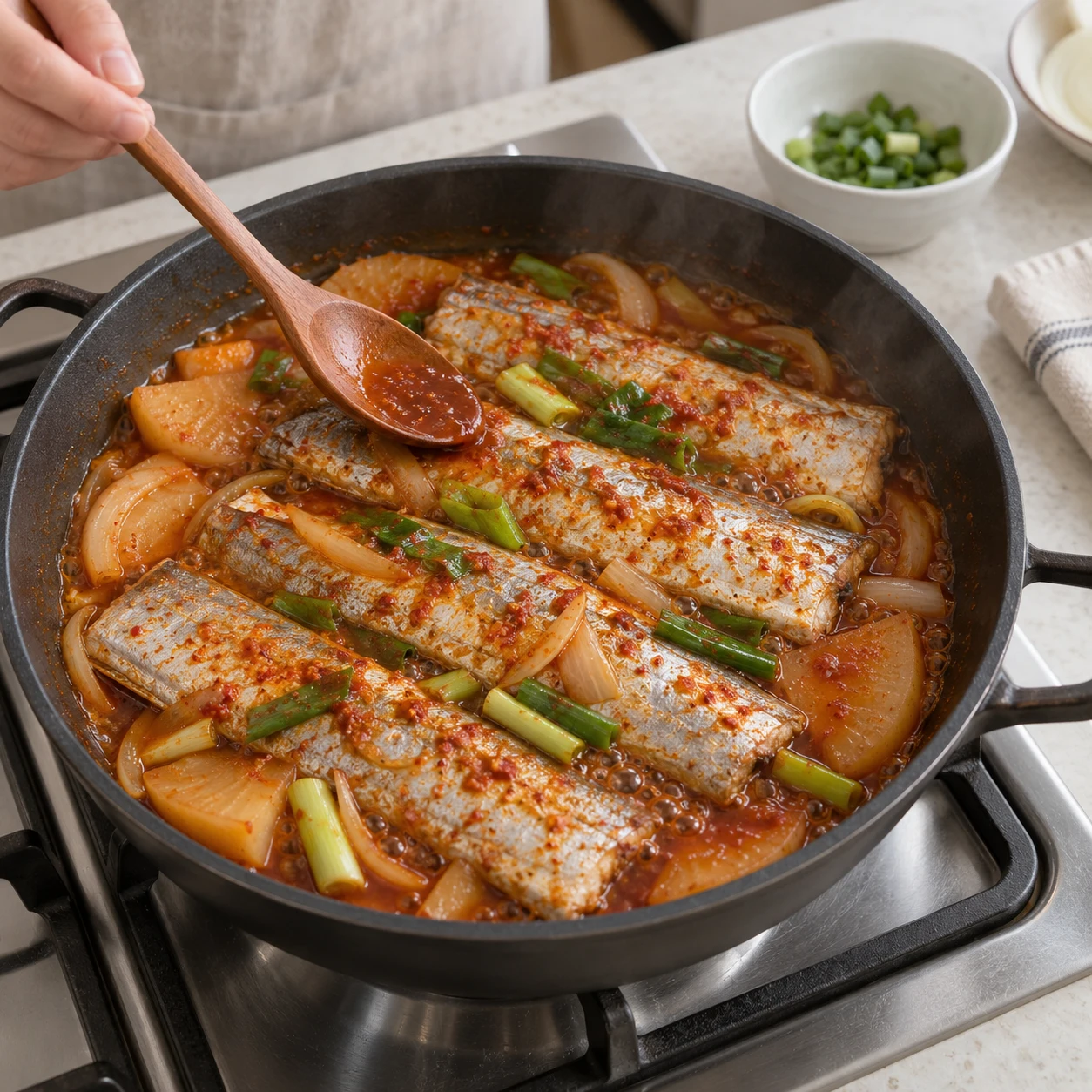
Add optional scallion and simmer uncovered for 3–5 minutes, basting gently. Radish must be fork-tender and fish opaque, separating easily into flakes; if measured, its thickest flesh reaches 63°C. Cook longer if needed, adding 2–3 spoons hot water if dry. Lift the fish gently onto two plates with radish and sauce. Remove bones carefully, especially for children.
Finished dish
Contains fish and soy; soy sauce may also contain wheat. Use unsalted raw fish for these amounts. Remove all bones from children’s portions, and reduce or omit chili for the braises. Serve with rice cooked separately; the listed time begins with thawed, cleaned fish. Use a small 180 ml paper cup, a level eating-spoon (about 15 ml) and a small teaspoon (about 5 ml). Household spoon and vegetable sizes vary; pack weights are a helpful reference. Thawing time is not included. Photos show the original ingredients, including optional extras; substitutions can change the appearance. Divide leftovers into shallow containers and refrigerate within 2 hours, or 1 hour if the room is hotter than 32°C. Keep at 4°C or colder and use within 3–4 days. Reheat the portion needed thoroughly to 74°C; soy sauce is seasoning, not a method for making meat or fish safe at room temperature.