Galbijjim — Soy-braised Beef Short Ribs
Tender beef ribs in a gently sweet soy sauce, with soft radish and carrot. A covered pot and a little patience turn an unfamiliar Korean dish into a comforting family meal.
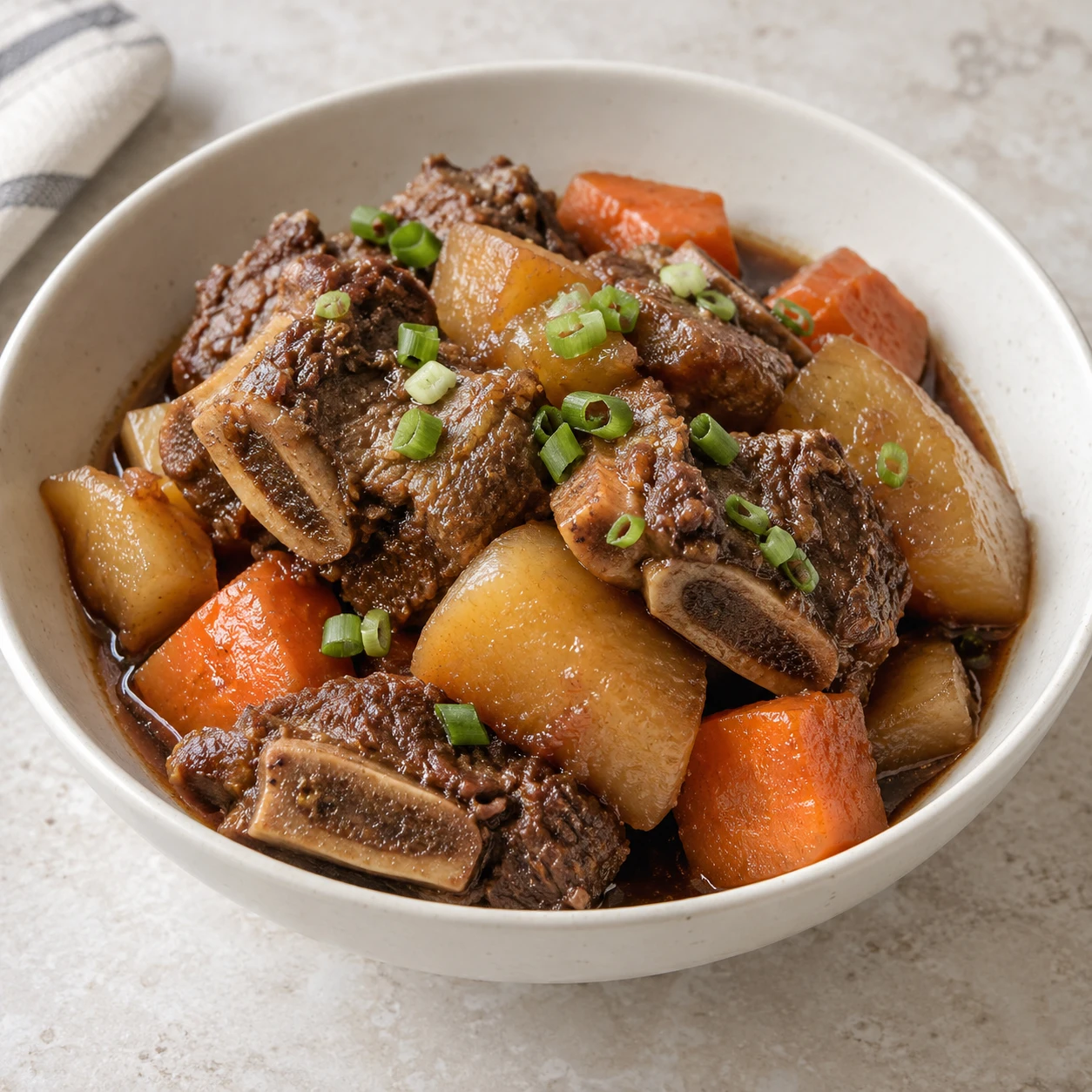
AI-generated cooking illustrations. Follow the written quantities and instructions.
Ingredients
3 servings
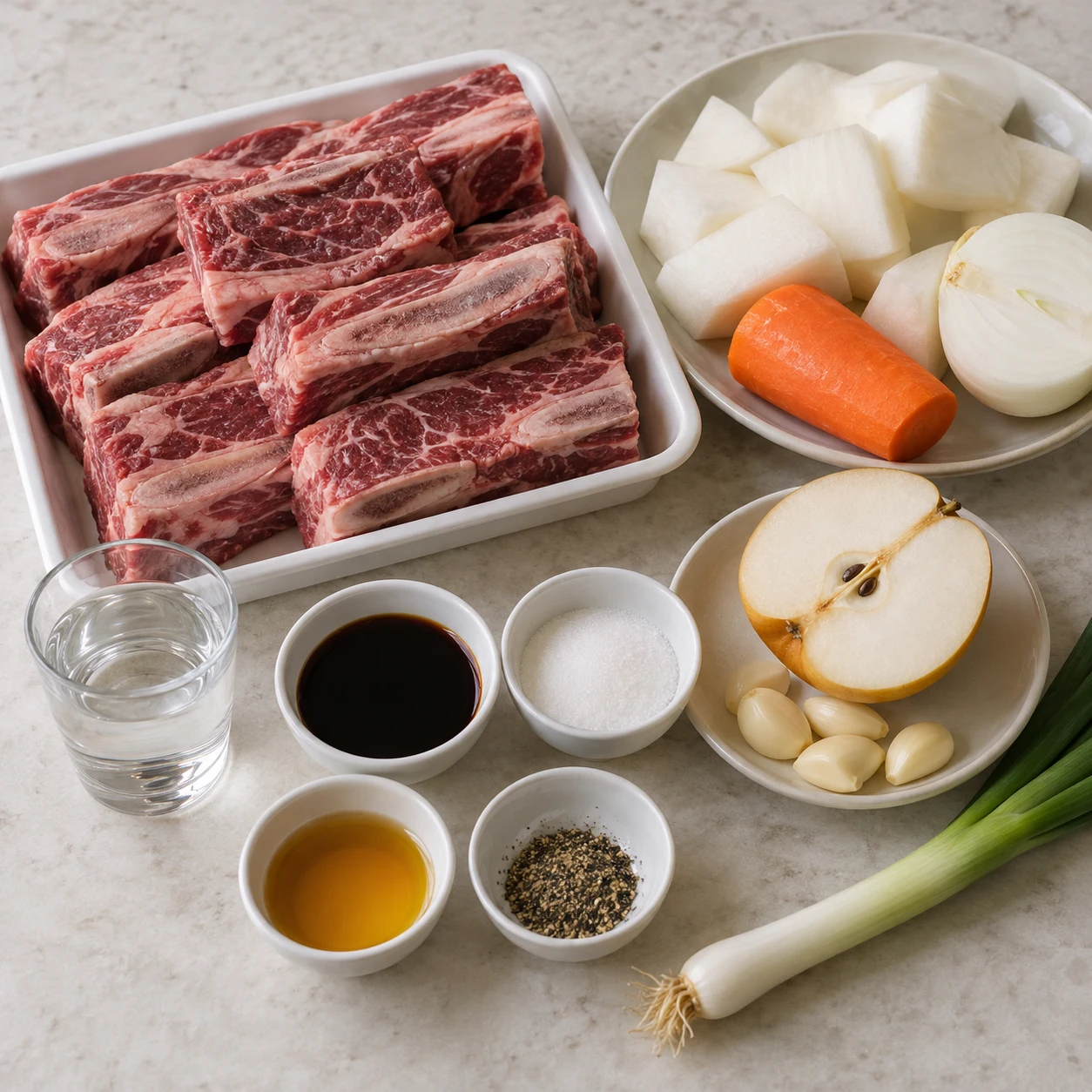
Everyday kitchen measurements
For 3 servings. Use a small 180 ml paper cup, a level eating spoon (about 15 ml) and a small teaspoon (about 5 ml).
How to fill the cup and spoons
Use the same cup and spoons throughout. Their sizes vary, so these amounts are approximate. Spoon flour in loosely and level the top without pressing. Measure vegetables after chopping, without packing them down. The amounts in g/ml are the original reference quantities. For part of a pack, use the specified pack weight and divide the contents evenly.
King Arthur Baking-
Substitute available
If Thick bone-in beef short ribs is unavailable
- Use instead
- Boneless beef chuck, cut into large chunks
- Substitute quantity
- ½ of a 1200 g packReference quantity: 600 g
Cut into 4 cm pieces. Skip the parboiling in step 2; put the beef straight into the fresh braising water in step 3 and skim the foam. Start checking tenderness after 70 minutes and continue in 15-minute intervals. This makes a beef braise without rib bones.
-
Essential
Use fresh water after draining the first boil. Keep extra water nearby and add ½ paper cup at a time if the pot dries out before the meat is tender. Water for the first boil in step 2 is additional and is discarded.
-
Substitute available
If Soy sauce is unavailable
- Use instead
- Tamari
- Substitute quantity
- 4 level eating spoonsReference quantity: 60 ml
Use in the sauce in step 3. Choose ordinary unsweetened tamari; if it tastes unusually salty, start with 3 spoons and adjust only after the ribs are tender. For a gluten-free meal, check every packaged ingredient.
-
Substitute available
If Sugar is unavailable
- Use instead
- Honey
- Substitute quantity
- 1 level eating spoonReference quantity: 15 ml
Stir into the sauce in step 3 instead of the sugar. Honey is sweeter, so use 1 spoon rather than 2. Do not serve honey-containing food to babies under 12 months.
-
Substitute available
If Pear, peeled and finely grated is unavailable
- Use instead
- Apple, peeled and finely grated
- Substitute quantity
- 3 level eating spoonsReference quantity: about 45 g
Add in step 3 instead of pear. Apple gives a slightly sharper flavor. Do not replace it with vinegar; if neither fruit is available, omit the fruit and keep the listed sugar amount.
-
Essential
Add in step 3. About 3 average peeled cloves make this amount; chop finely so that the garlic blends into the sauce.
-
Optional
If unavailable, omit the onion and its cutting in step 1. The broth will be a little less sweet; keep the sauce and cooking time the same.
-
Substitute available
If Korean radish, peeled and cut into chunks is unavailable
- Use instead
- Daikon radish, peeled and cut into chunks
- Substitute quantity
- 1 paper cupReference quantity: about 120 g
Cut into 3 cm chunks and add in step 5. Daikon is a little milder; the quantity and cooking time are the same.
-
Optional
Omit the carrot and its cutting in step 1 if you do not have it. The ribs and radish still make a complete dish; no extra sugar or cooking time is needed.
-
Optional
Skip its cutting and the finishing garnish in steps 1 and 6. The braise will still taste good without it.
-
Optional
Leave out the final sesame oil in step 6 if unavailable or unsuitable for you. Do not replace it with extra cooking oil; it is a finishing aroma.
-
Optional
Skip the pepper in step 3 for a milder sauce. No replacement is needed.
Tap each ingredient as you prepare it. Check product labels for egg, soy, sesame, wheat, fish or shellfish where relevant.
Step-by-step cooking
-
Step 1
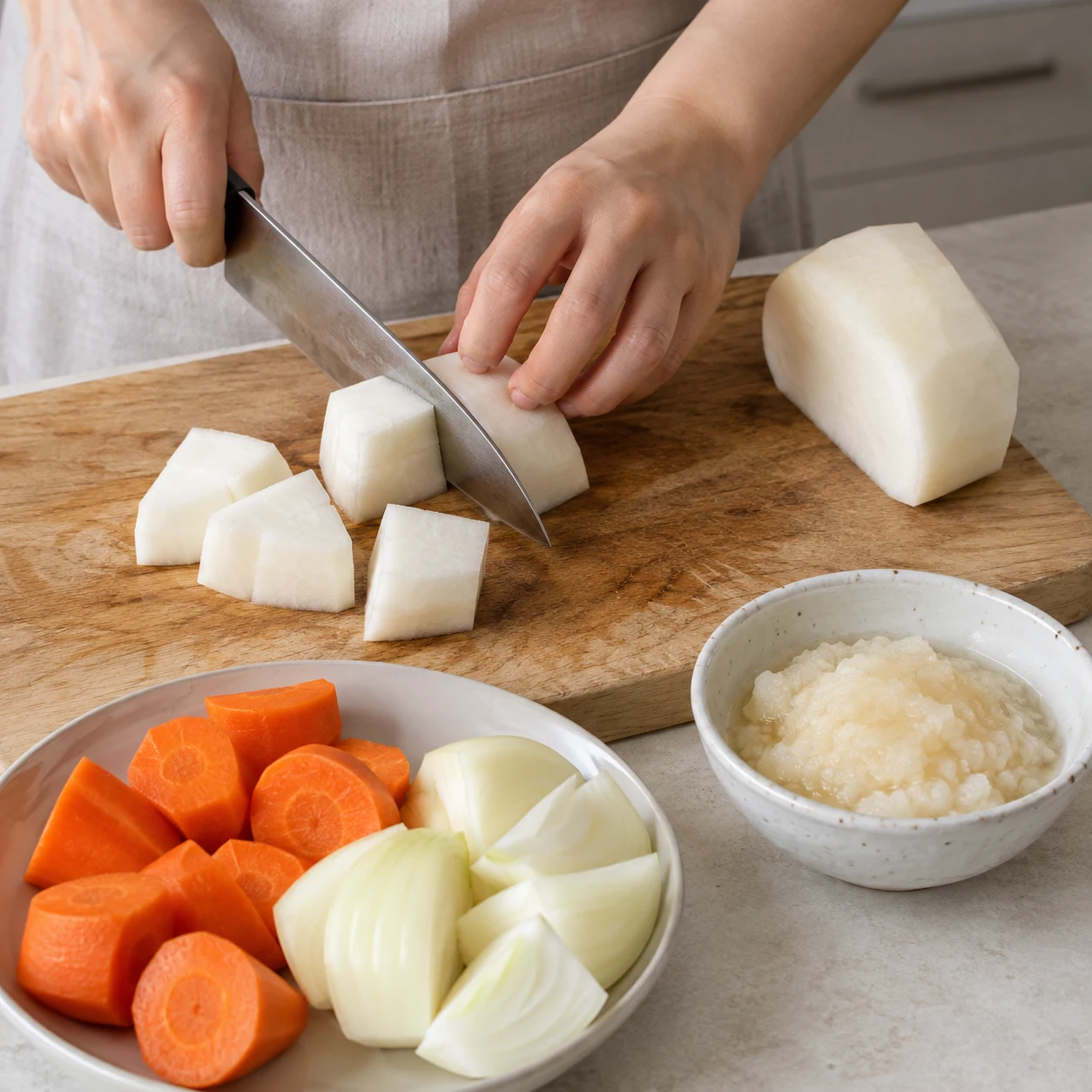
Prepare the vegetables before handling the raw beef. Cut the peeled radish into 3 cm chunks, the carrot into thick bite-size pieces, and the onion into wedges. Slice the spring onion and grate the pear. Pat the ribs dry, trim large loose pieces of fat, and carefully remove visible loose bone fragments with damp kitchen paper. Keep the vegetables away from the raw-meat board and utensils.
-
Step 2
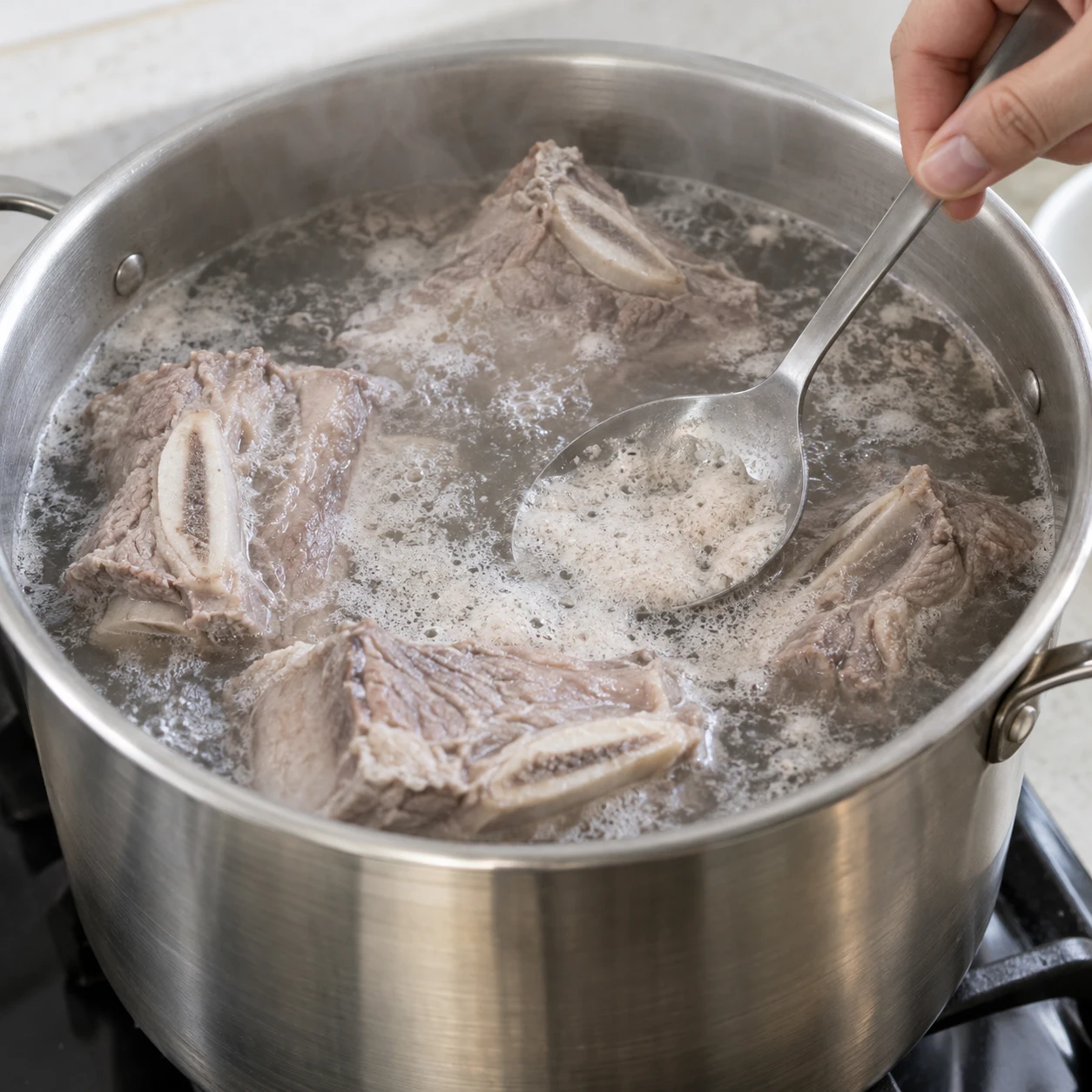
Put the ribs in a deep pot and add enough additional water to cover them. Bring to a full boil, then boil for 5 minutes, skimming the foam. Carefully lift the ribs into a clean bowl. Discard this first water and clean the pot. This is a brief first boil, not the main cooking stage; the meat will still need a long braise.
-
Step 3
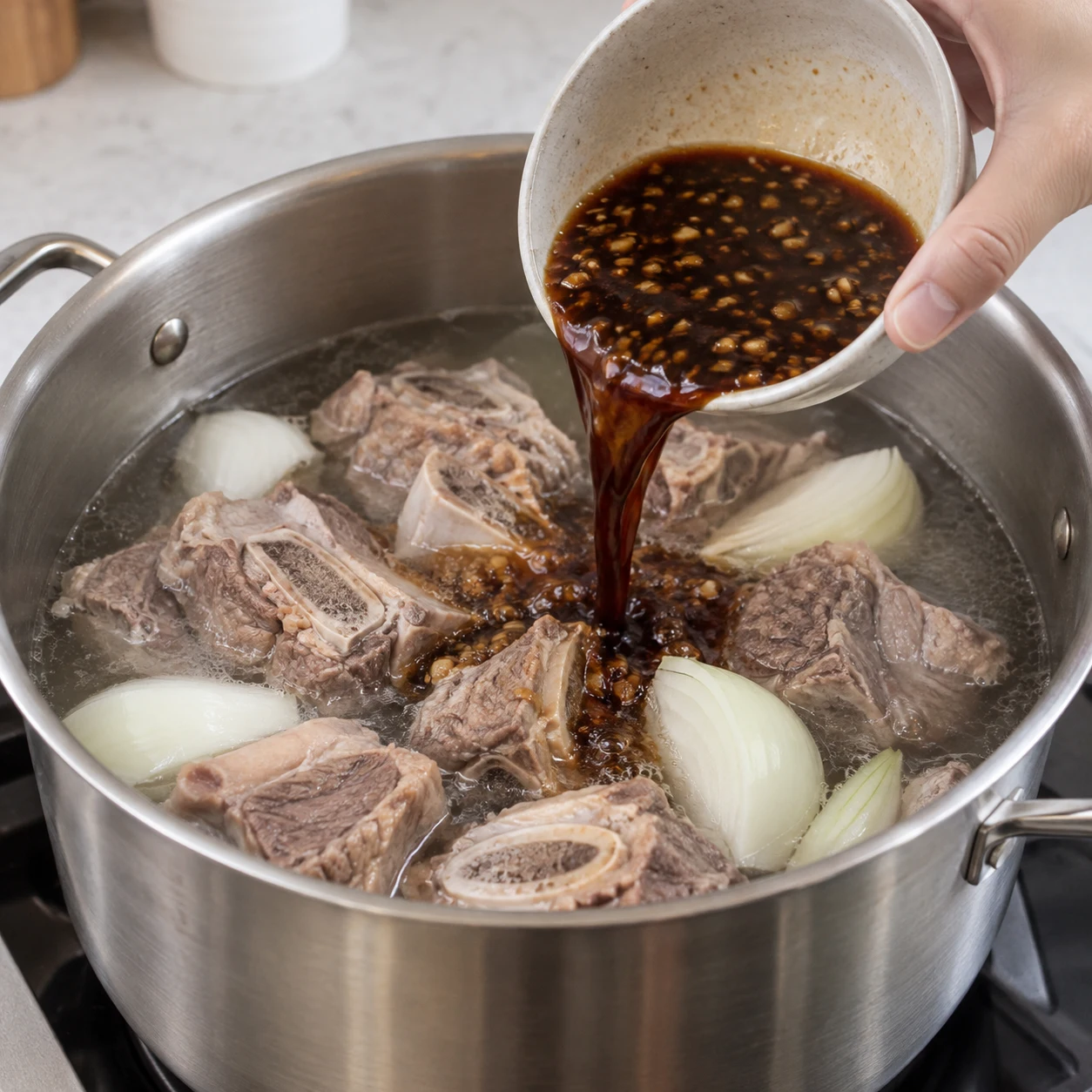
Mix 4 level eating spoons soy sauce, 2 level eating spoons sugar, 3 level eating spoons grated pear, 1 level eating spoon minced garlic and the optional pepper. Return the ribs to the pot with the onion and 4 small paper cups fresh water. Pour in the sauce. Use a pot just large enough to hold the ribs so that the liquid reaches most of the meat.
-
Step 4
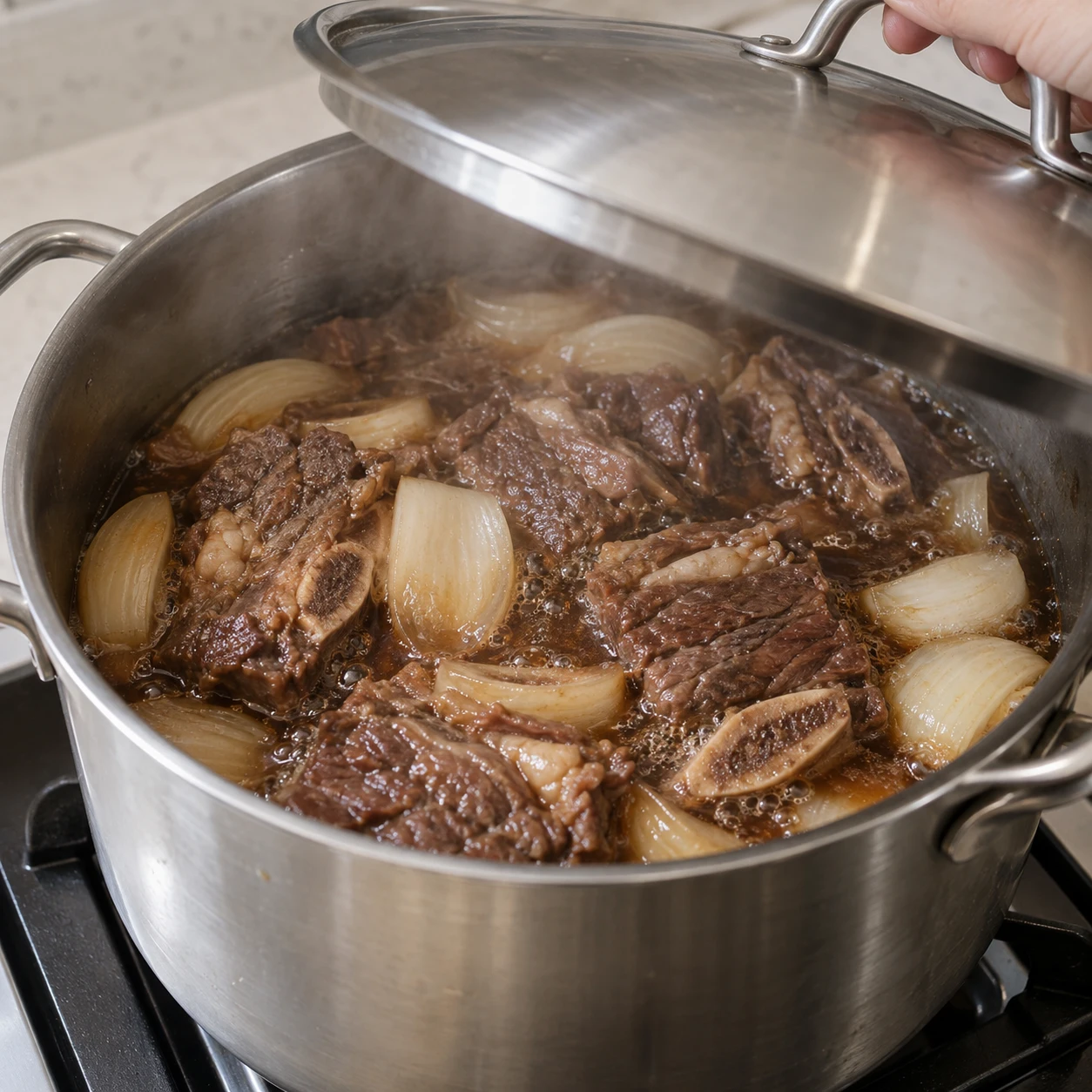
Bring to a boil, cover, and lower the heat until small bubbles rise gently. Simmer for 60 minutes, turning the ribs once or twice. Check every 20 minutes: if the bottom is becoming dry, add ½ paper cup water. Do not turn up the heat to make it faster; gentle cooking helps the tough meat soften.
-
Step 5
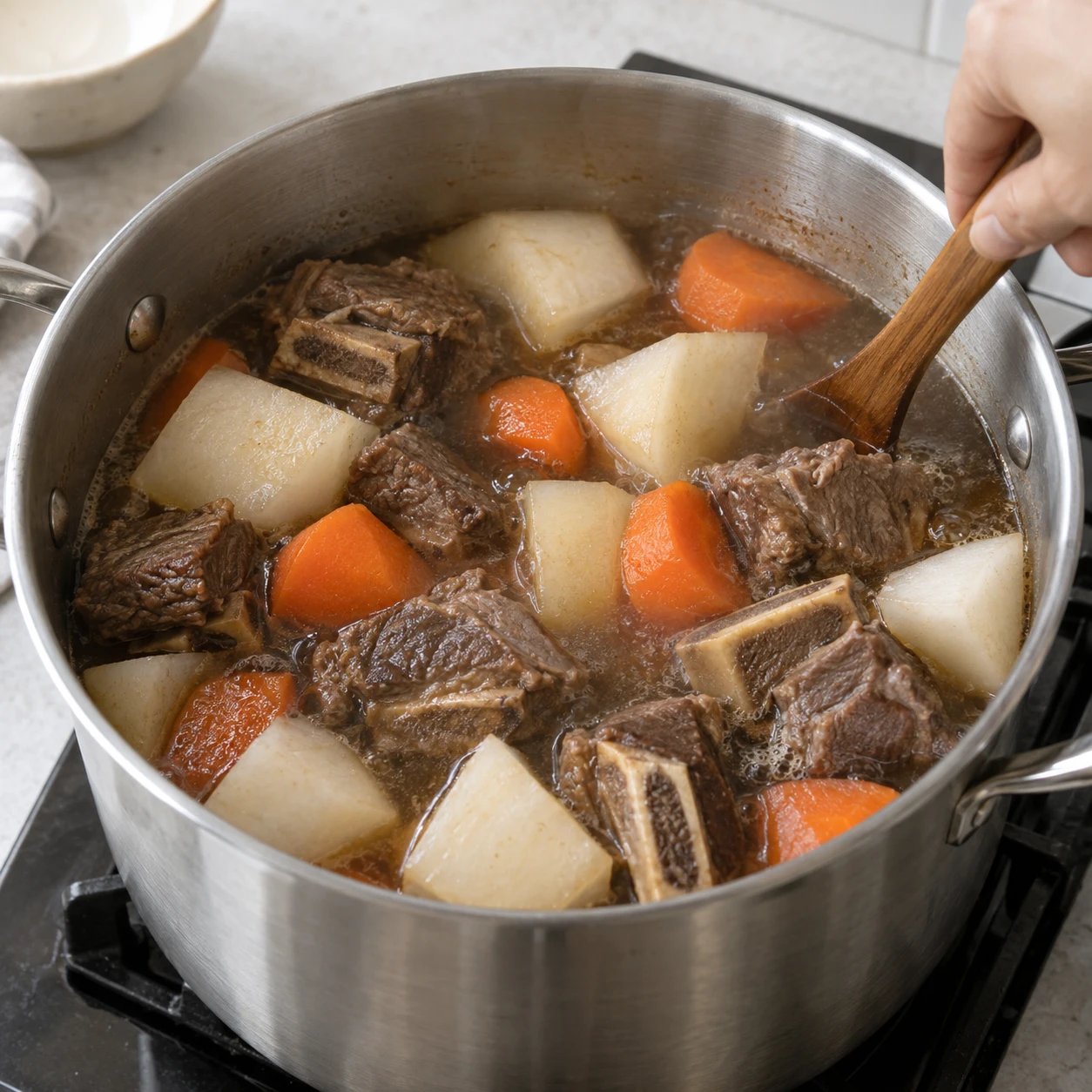
Add the radish and optional carrot. Cover and simmer for another 25–40 minutes, until a fork slips easily into both the meat and radish. If the meat is still firm, continue in 15-minute intervals with a little extra water as needed. Cooking time varies with the thickness of the ribs; tenderness is the finishing cue.
-
Step 6
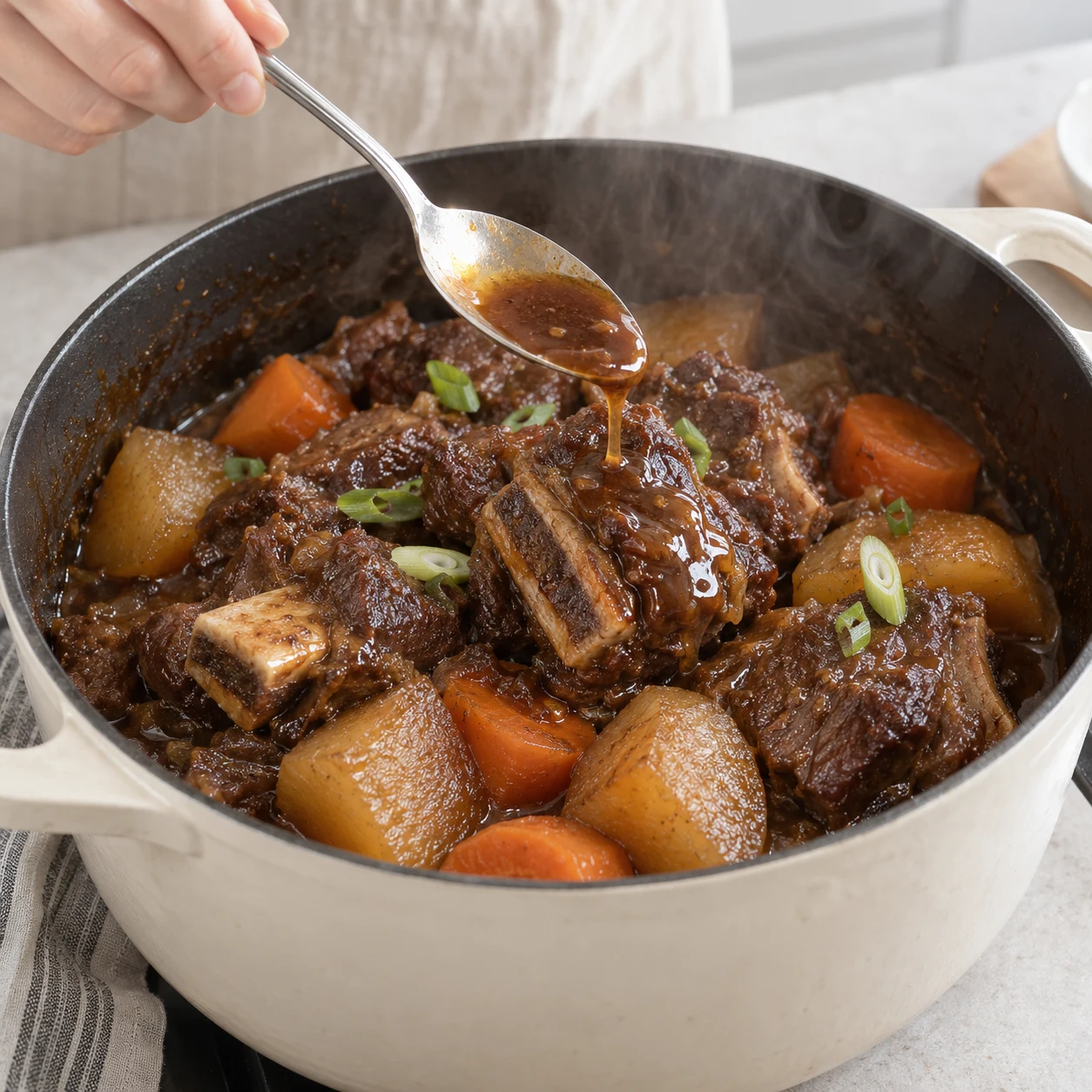
When everything is tender, uncover and simmer for 5–10 minutes, gently spooning sauce over the ribs. Stop when the sauce lightly coats them; do not reduce it to a salty sticky syrup. If it tastes too strong, stir in 2 level eating spoons water. Turn off the heat, add the optional sesame oil and spring onion, and serve with rice if desired.
Finished dish
Use thick English-cut short ribs, rather than very thin cross-cut barbecue ribs. The 120-minute estimate includes preparation and gentle braising; especially thick ribs can take longer. There is no pressure cooker or overnight marinade required. Use a small 180 ml paper cup, level eating spoons of about 15 ml and small teaspoons of about 5 ml. Vegetable counts are approximate; the pack label is the easiest way to portion the beef. Optional vegetables and garnishes may be omitted exactly as described beside each ingredient. Refrigerate leftovers in shallow covered containers within 2 hours, or within 1 hour in very hot conditions above 32°C. Keep at 4°C or colder and use within 3–4 days. Reheat until steaming hot throughout; if using a thermometer, reach 74°C. Soy sauce contains soy and often wheat; sesame oil adds sesame.