Spicy pan-grilled deodeok roots (deodeok-gui)
Scrub, peel, soak and flatten fragrant cultivated deodeok roots, then cook them first with a light oil coating and finish with a thin gochujang glaze. The fibers become tender without losing their character. Two side-dish portions, about 50 minutes.

Ingredients
2 servings

Everyday kitchen measurements
For 2 servings. Use a small 180 ml paper cup, a level eating spoon (about 15 ml) and a small teaspoon (about 5 ml).
How to fill the cup and spoons
Use the same cup and spoons throughout. Their sizes vary, so these amounts are approximate. Spoon flour in loosely and level the top without pressing. Measure vegetables after chopping, without packing them down. The amounts in g/ml are the original reference quantities. For part of a pack, use the specified pack weight and divide the contents evenly.
King Arthur Baking-
Essential
Required for this recipe; use the listed amount.
-
Essential
Required for this recipe; use the listed amount.
-
Essential
Required for this recipe; use the listed amount.
-
Essential
Required for this recipe; use the listed amount.
-
Essential
Required for this recipe; use the listed amount.
-
Essential
Required for this recipe; use the listed amount.
-
Essential
Required for this recipe; use the listed amount.
-
Substitute available
If Honey is unavailable
- Use instead
- Rice syrup
- Substitute quantity
- 1 teaspoon (7 g)Reference quantity: 7 g
If honey is unavailable, use 1 teaspoon rice syrup, about 7 g, in the glaze at the same stage. The cooking time is unchanged; keep the heat low because the syrup can also burn. The sweetness may be milder.
-
Essential
Required for this recipe; use the listed amount.
-
Essential
Required for this recipe; use the listed amount.
-
Optional
May be omitted without changing the other quantities.
-
Optional
May be omitted without changing the other quantities.
-
Optional
May be omitted without changing the other quantities.
Tap each ingredient as you prepare it. Check product labels for egg, soy, sesame, wheat, fish or shellfish where relevant.
Step-by-step cooking
Check off a completed step to move to the next one. After the last step, you will move to the finished dish.
Completed steps are saved in this browser. Start over to clear this recipe’s progress.
-
Step 1
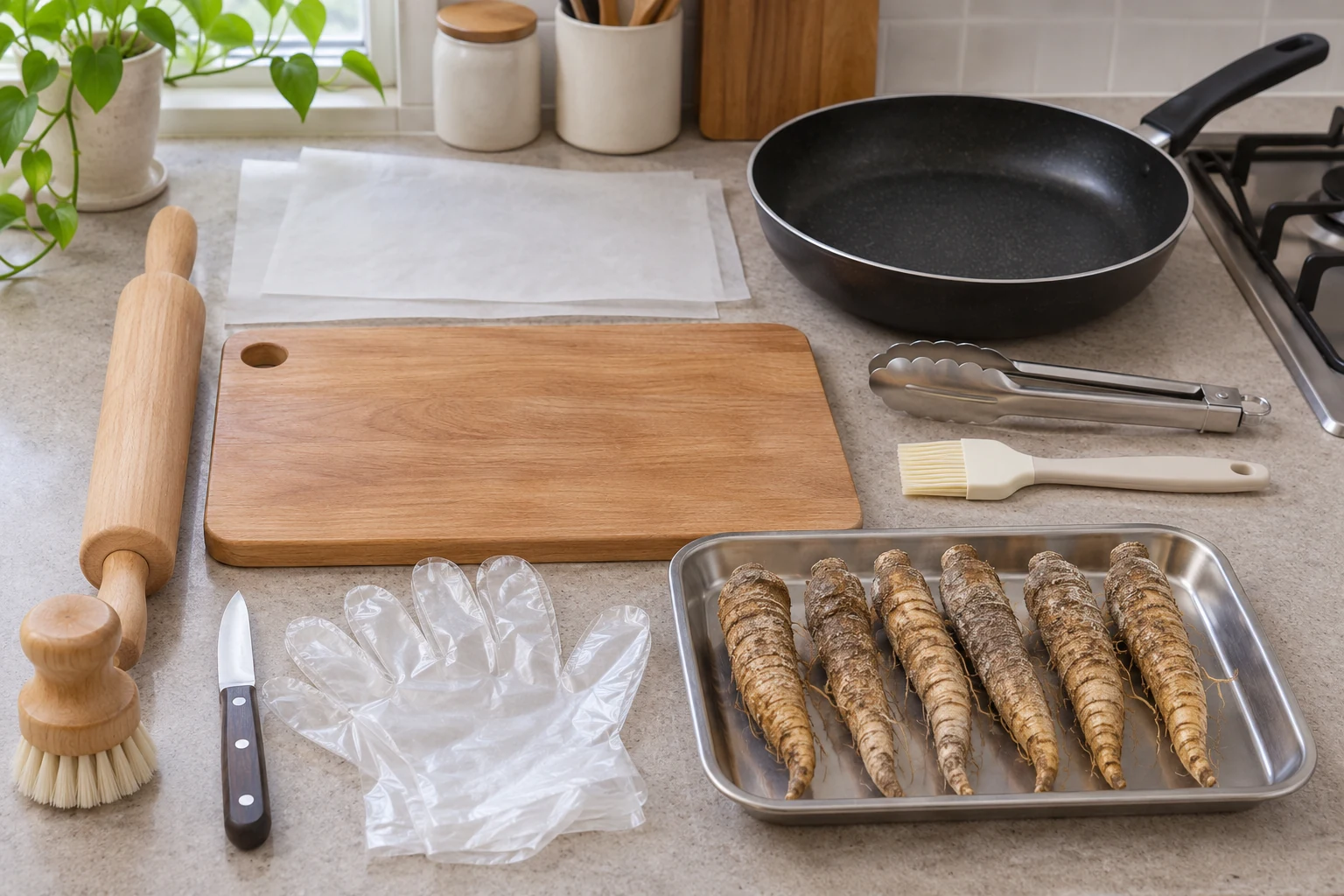
Allow 30 minutes active preparation, a 10-minute salt-water soak and about 10 minutes pan cooking; the 5-minute oil rest overlaps glaze preparation. Use food-grade cultivated deodeok, not wild unidentified roots, ginseng or bellflower root. Prepare a vegetable brush, small knife, disposable food-safe gloves, rolling pin, board, two food-safe sheets, pastry brush, tongs and a 24 cm frying pan. Buy roughly 250 g whole roots and measure 200 g after peeling; actual peel loss varies.
-
Step 2
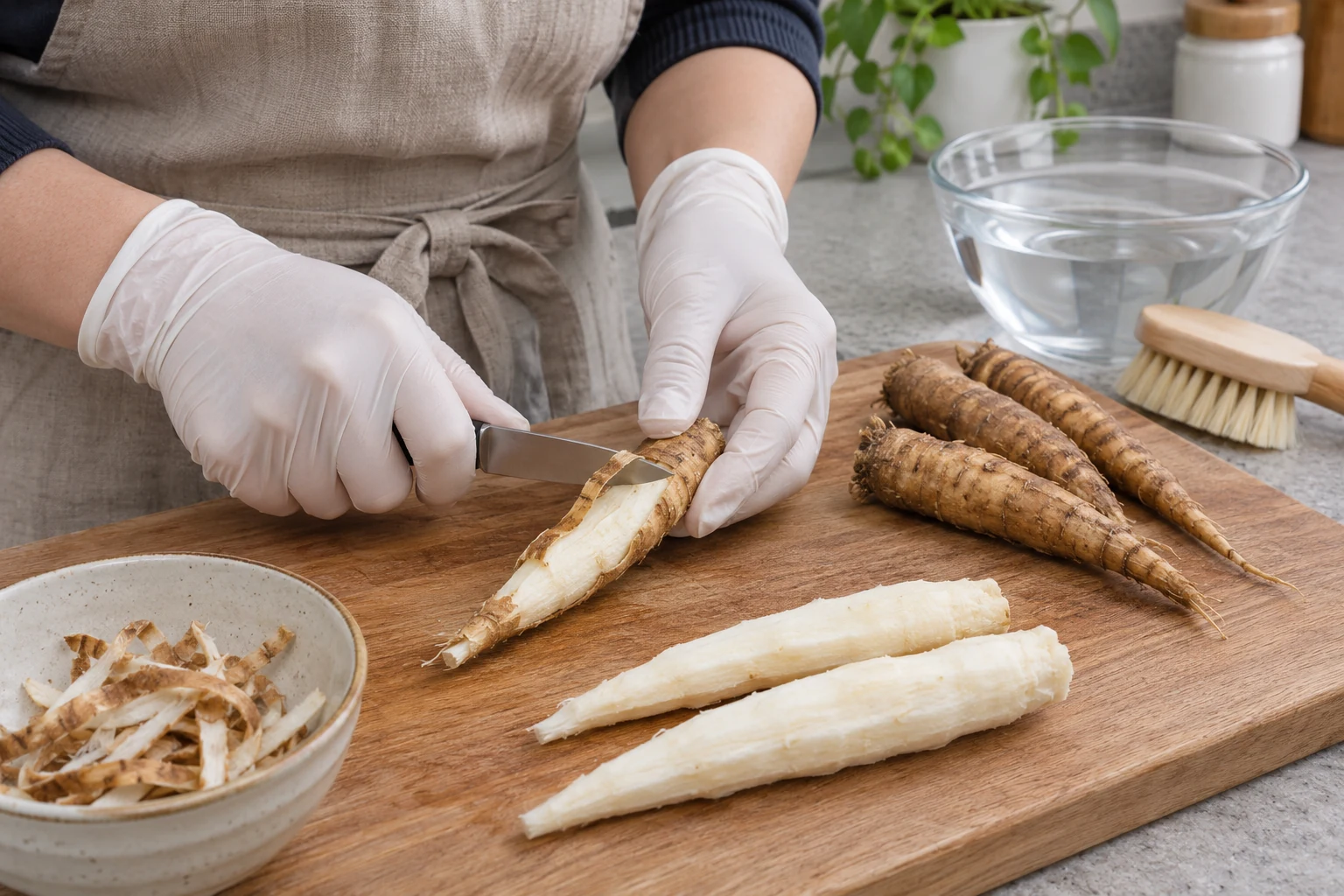
Rub and brush the whole roots in a bowl of drinking water to loosen soil, discard that water and repeat if gritty. Rinse thoroughly under running water. Trim the dry crown and thin wiry ends. Wear gloves because the milky sap is sticky. On the board, make a shallow lengthwise slit through the brown skin, then lift and peel it away with the knife, cutting away only dark damaged spots. Keep fingers behind the blade. Rinse the peeled white roots again and weigh 200 g; do not leave soil trapped in creases.
-
Step 3
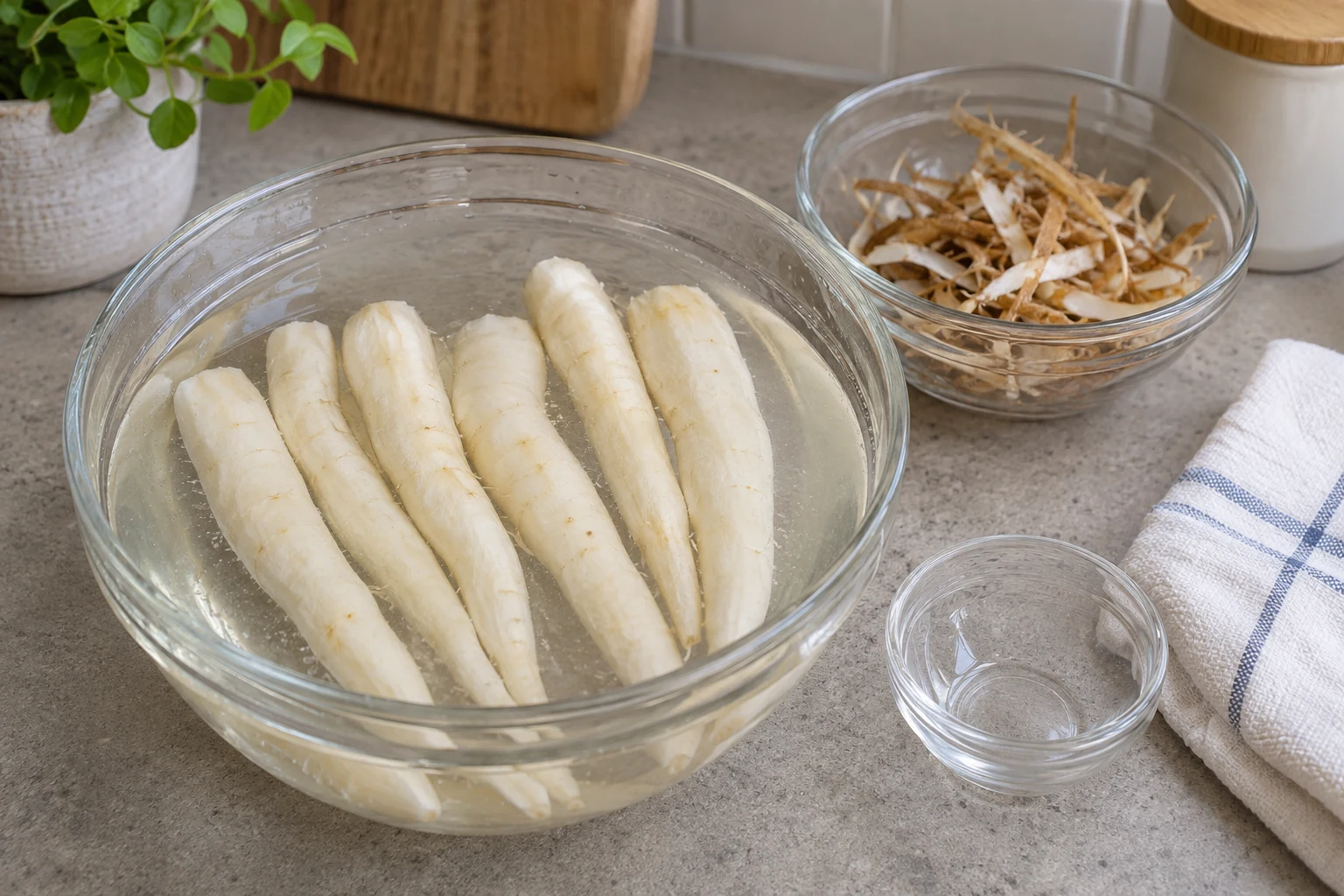
Dissolve ½ teaspoon salt in 2 small paper cups drinking water (360 ml). Add the peeled roots and soak for 10 minutes to soften the sharp bitterness. Drain and discard this brine, rinse twice in fresh drinking water and pat thoroughly dry. A mild aromatic bitterness is normal; do not soak overnight or scrub away all the white flesh. The soaking salt is not added to the glaze.
-
Step 4
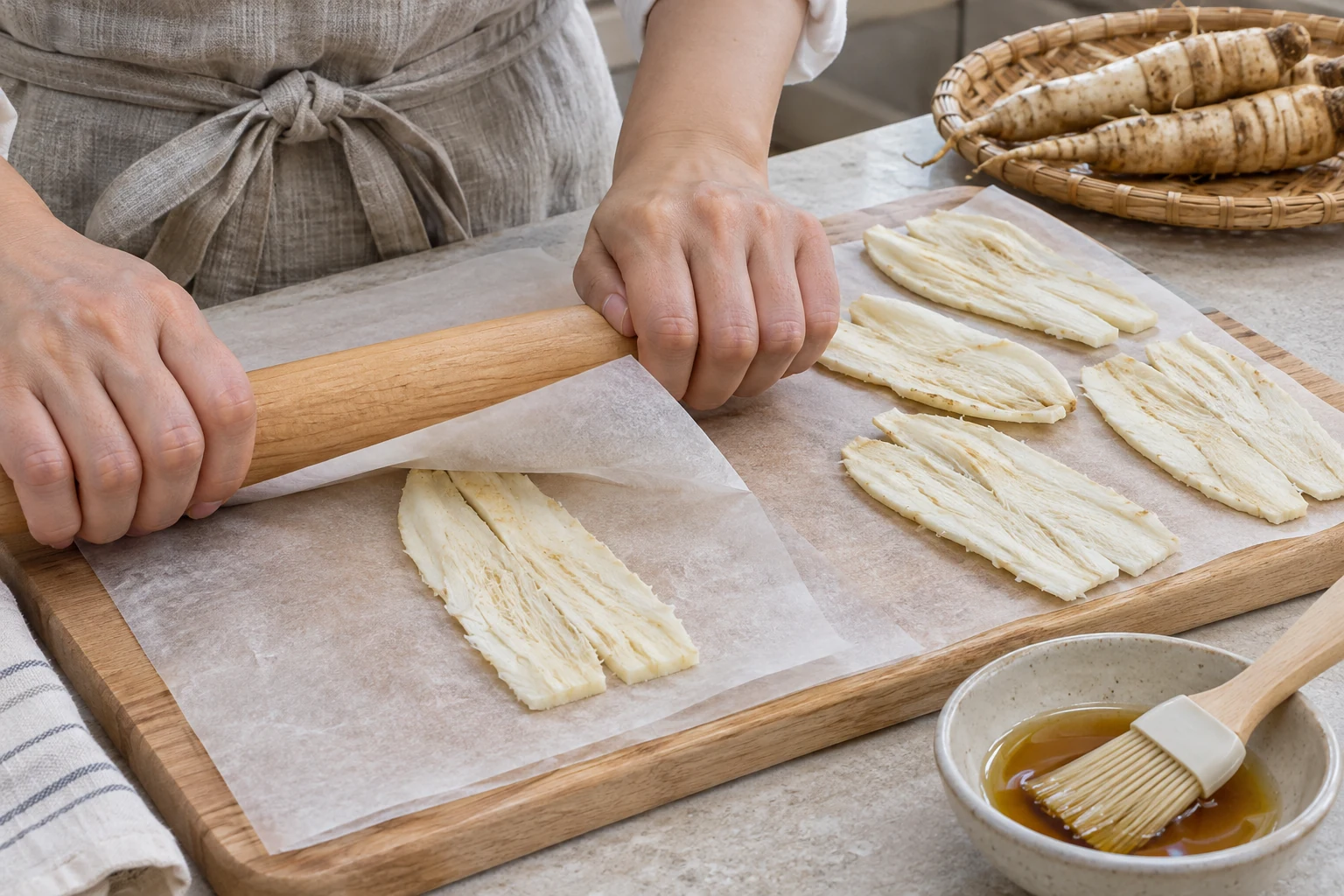
Split each root lengthwise; quarter exceptionally thick pieces. Put between two food-safe sheets on the board and gently press or roll from the thick end toward the thin end until about 3–4 mm thick. Keep the fibers joined; hard pounding makes shreds. Mix 1 teaspoon soy sauce with 1 teaspoon sesame oil and brush thinly over both sides. Rest for 5 minutes while preparing the glaze. Do not soak the roots in a large bowl of oil.
-
Step 5
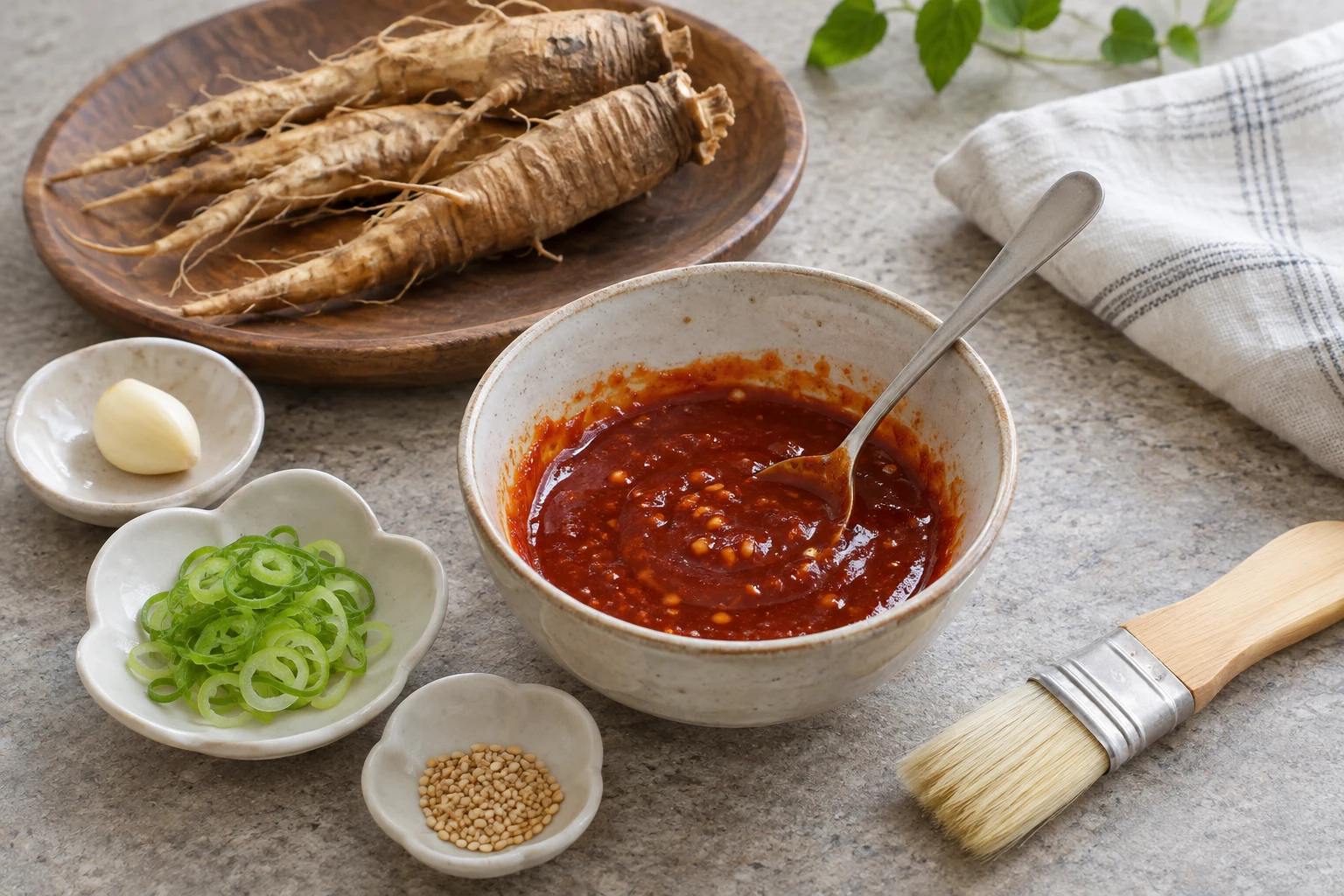
Peel the garlic, rinse, dry and mince very finely. If using scallion, trim its roots and wilted outer leaf, rinse and finely slice. Mix 1 level tablespoon gochujang, the remaining 1 teaspoon soy sauce, 1 teaspoon honey, minced garlic and 1 tablespoon of the measured drinking water into a smooth brushable glaze. Add the optional ½ teaspoon gochugaru if desired. Keep the other 1 tablespoon water as a pan-cooking reserve, and keep scallion and sesame for the end.
-
Step 6
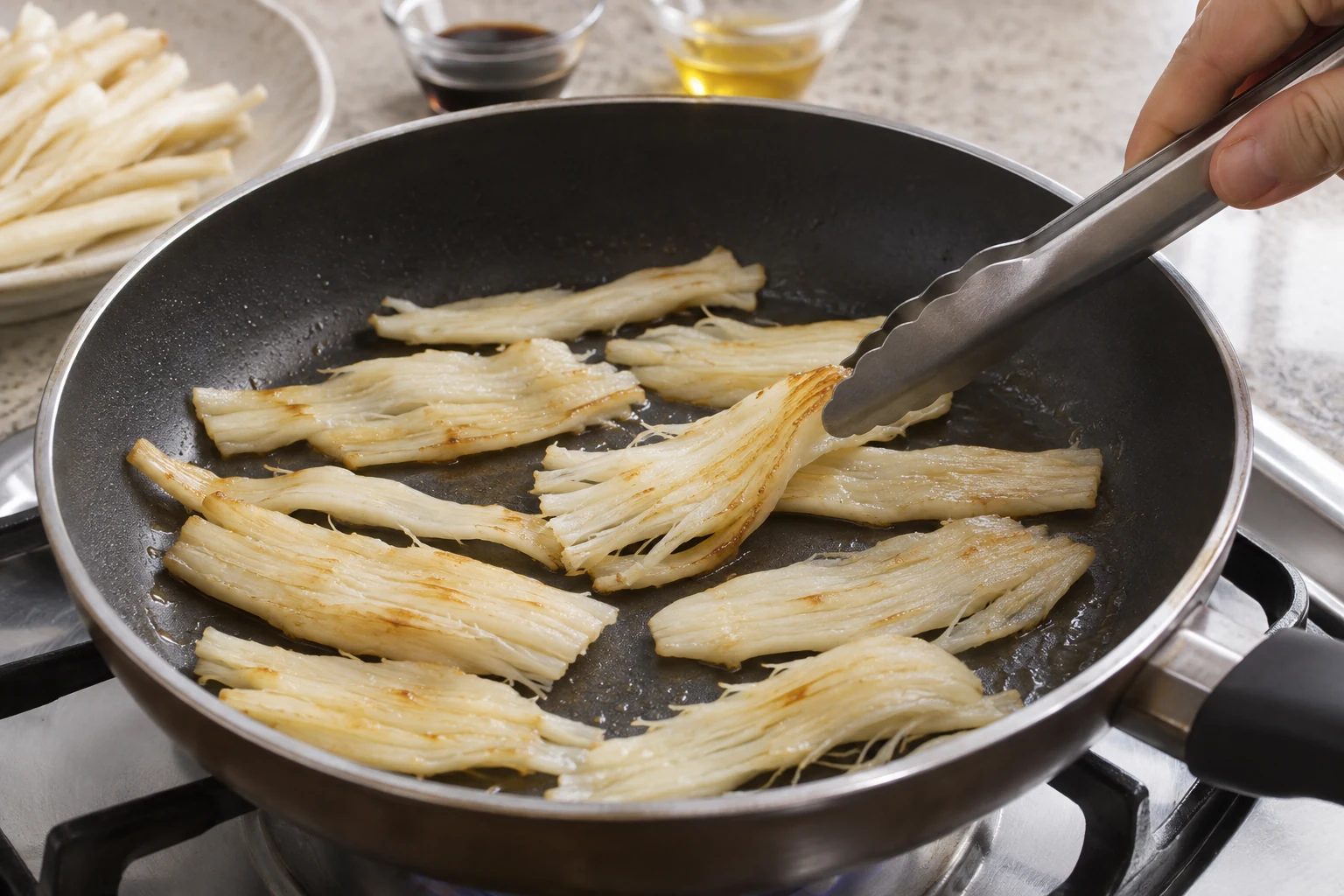
Warm the frying pan over medium-low heat for about 90 seconds and spread 1 teaspoon neutral oil across its base. Lay the lightly coated roots in one layer, without overlap; work in two batches if needed. Cook about 2 minutes per side, until light tan spots appear and the thick end bends easily. If browned but still hard, take the pan briefly off the heat, add up to the reserved 1 tablespoon water down the side, cover and cook on low for 1 minute, then uncover and let excess moisture evaporate. Open away from your face and beware of splashes.
-
Step 7
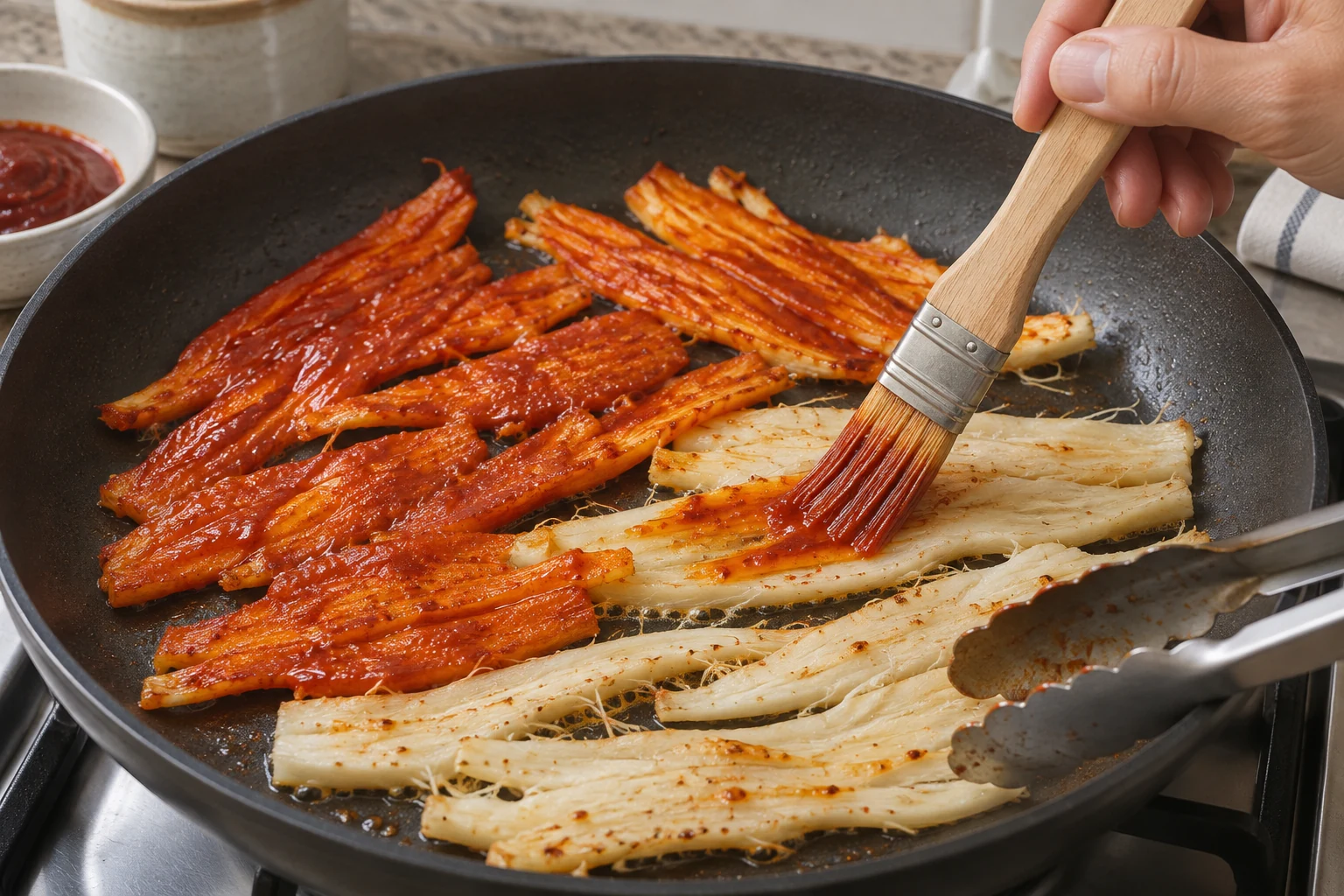
Reduce to low heat before adding the sugary glaze. Brush a thin layer over the roots, turn after 45–60 seconds and brush the other sides. Cook another 45–60 seconds, then turn as needed for 1–2 minutes until the glaze clings and bubbles gently. Light dark speckles are enough; do not blacken the garlic or sugar. If the glaze starts to smoke, take the pan off the heat and lower it before continuing. The center should be hot and yielding, with separate tender fibers, not a hard woody bite. Add an extra minute on low if needed.
-
Step 8
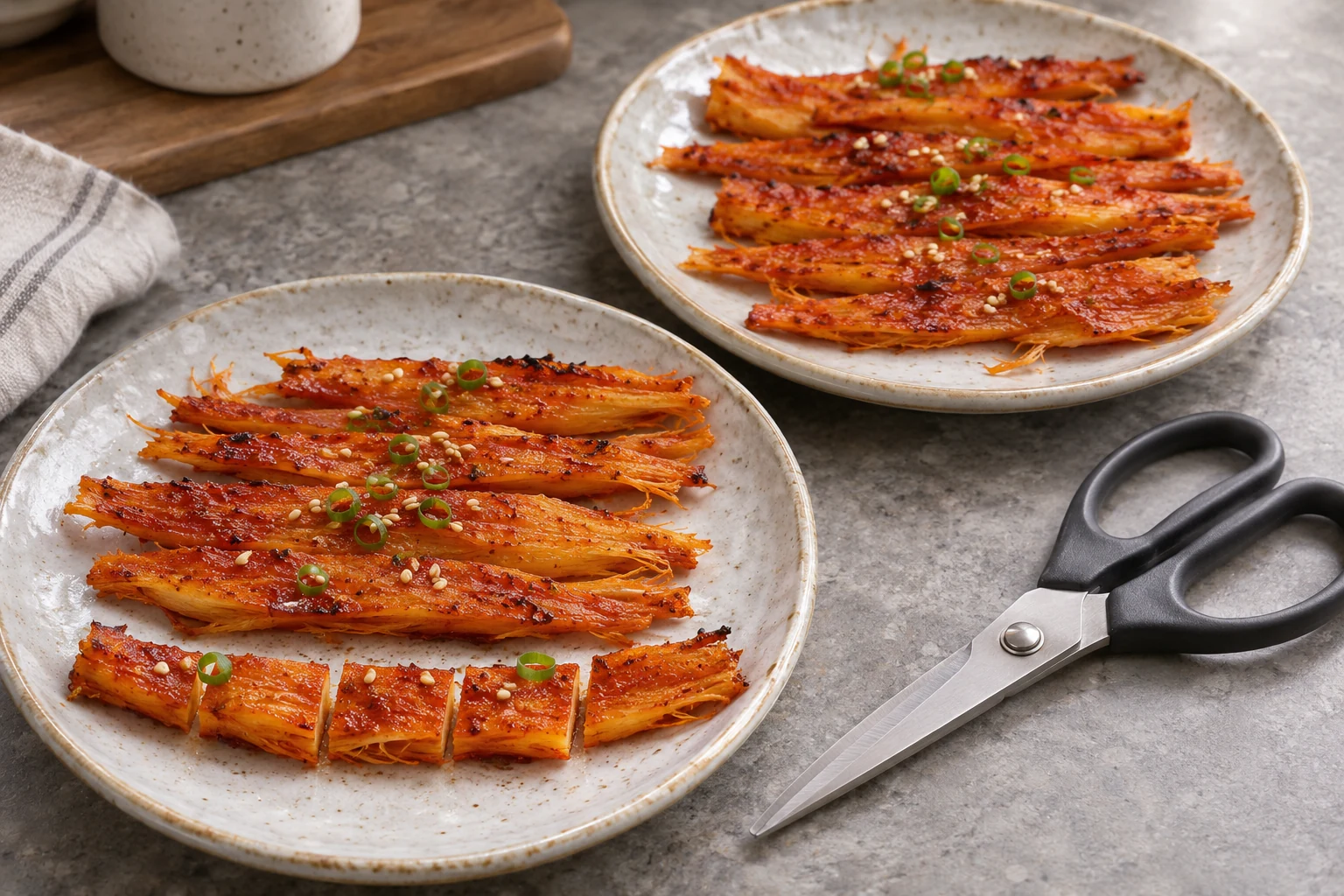
Lift onto a warm plate and divide into two side-dish portions. Add the optional sliced scallion and ½ teaspoon sesame seeds divided over the whole plate. If pieces are long, cut into 5 cm lengths with clean scissors after cooking. Serve hot with rice and a mild soup if desired; the rice and soup are accompaniments, not part of these quantities. The finish should be thin, glossy and lightly smoky, with the root still fragrant. Avoid pouring uncooked leftover glaze onto the finished plate.


Finished dish
A tablespoon is 15 ml, a teaspoon 5 ml and a small paper cup 180 ml. Use 200 g peeled roots; the 250 g purchase weight is approximate. The 360 ml brine is discarded. Soy sauce is divided 5 ml for the oil coating and 5 ml for glaze; the 30 ml water is 15 ml in glaze and up to 15 ml only if the pan needs it. Deodeok is a specific cultivated vegetable, not interchangeable with any root found outdoors. Contains soy and sesame; gochujang and soy sauce may contain wheat. Honey is unsuitable for infants under 1 year. Check labels and individual root allergies; this dish makes no medicinal claims. Refrigerate leftovers in a shallow covered container within 2 hours, or 1 hour above 32°C, at 4°C or below for up to 3 days. Reheat gently in a covered pan with a little water until 74°C throughout, then uncover briefly; fierce heat burns the glaze before the root warms.
Related recipes


Enjoy every bite
How to enjoy it
Cut across the long fibers into bite-size pieces and eat a little with rice. A mild soup and an unseasoned or lightly dressed vegetable side make the spicy root easier to appreciate.

