Dak Kkochi — Juicy Soy-glazed Chicken Skewers
Tender chicken thigh and spring onion with a gentle sweet soy glaze. Cook the chicken first, then brush on the sauce so the sugar browns without burning.
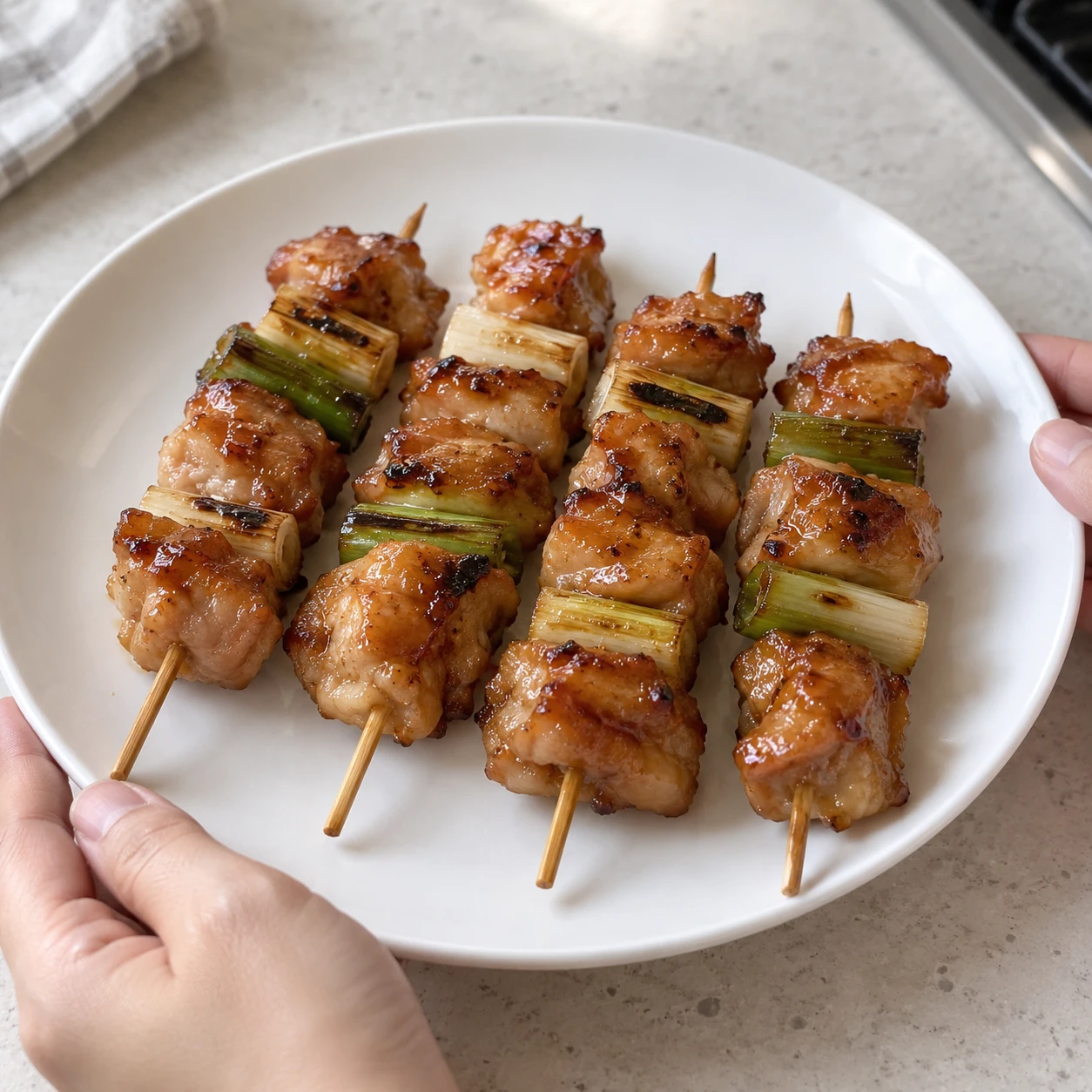
AI-generated cooking illustrations. Follow the written quantities and instructions.
Ingredients
2 servings
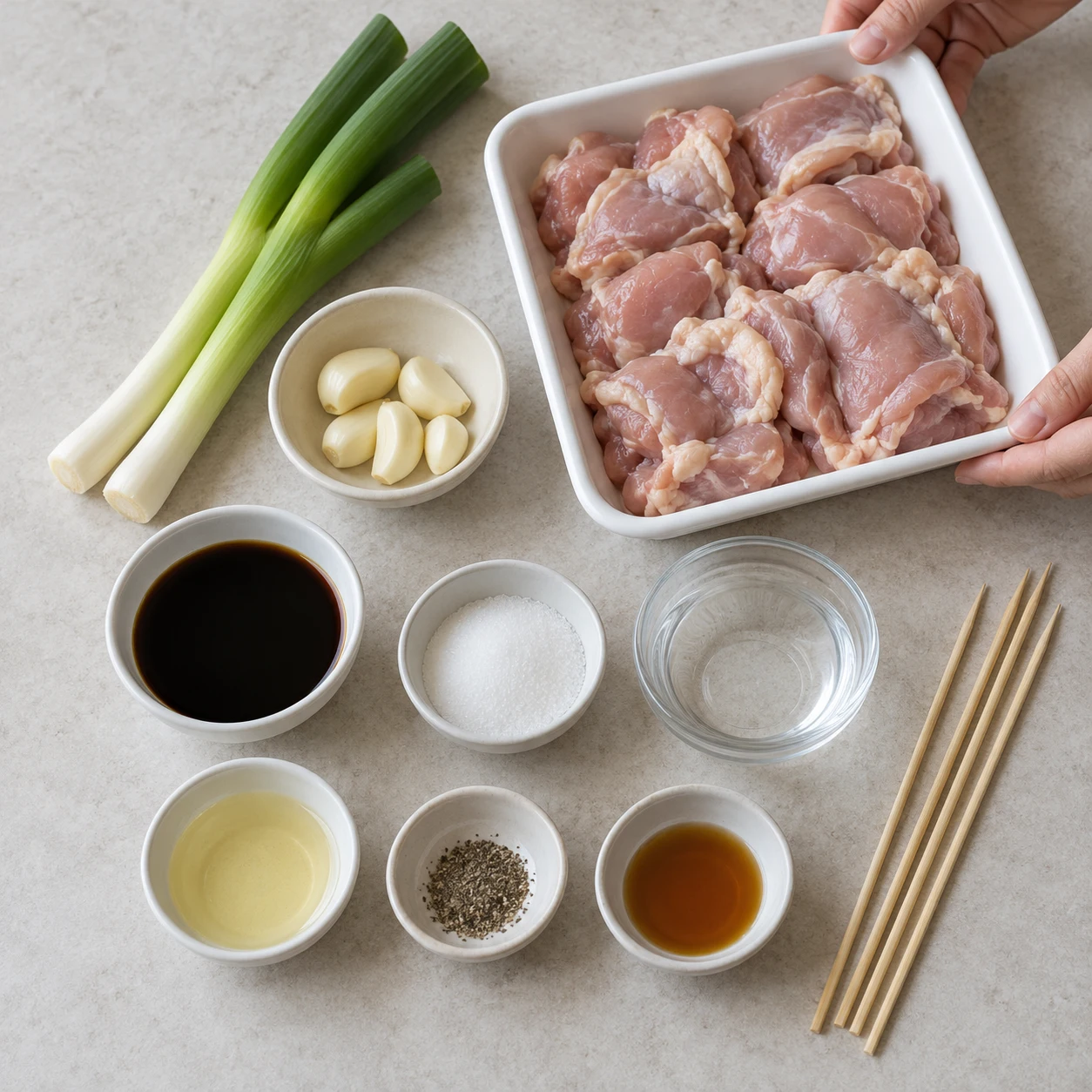
Everyday kitchen measurements
For 2 servings. Use a small 180 ml paper cup, a level eating spoon (about 15 ml) and a small teaspoon (about 5 ml).
How to fill the cup and spoons
Use the same cup and spoons throughout. Their sizes vary, so these amounts are approximate. Spoon flour in loosely and level the top without pressing. Measure vegetables after chopping, without packing them down. The amounts in g/ml are the original reference quantities. For part of a pack, use the specified pack weight and divide the contents evenly.
King Arthur Baking-
Substitute available
If Boneless chicken thigh is unavailable
- Use instead
- Boneless chicken breast
- Substitute quantity
- ½ of a 600 g packReference quantity: 300 g
Cut into equal 2 cm pieces and keep them evenly sized. Breast is leaner and dries out faster, so stop as soon as the center reaches 74°C instead of extending the cooking for extra color.
-
Optional
Omit the onion preparation and threading in steps 1 and 3 if unavailable. Use chicken-only skewers; keep the chicken amount, sauce and cooking method unchanged.
-
Substitute available
If Soy sauce is unavailable
- Use instead
- Tamari
- Substitute quantity
- 2 level eating spoonsReference quantity: 30 ml
Use unsweetened tamari in place of soy sauce. Taste the finished dish before adding more salt. If avoiding wheat, check every packaged ingredient as well.
-
Substitute available
If Sugar is unavailable
- Use instead
- Maple syrup
- Substitute quantity
- 3 small teaspoonsReference quantity: 15 ml
Mix into the sauce instead of sugar. The flavor is slightly different and the sauce may take an extra 1–2 minutes of gentle bubbling to coat the food; stir and stop before it scorches.
-
Essential
Use in the clean sauce bowl in step 2. If the pan dries before the chicken is cooked, add 1 extra spoon to the pan, not to a bowl that touched raw chicken.
-
Essential
Add to the glaze in step 2. About 1 average peeled clove makes this amount; chop finely.
-
Substitute available
If Neutral cooking oil is unavailable
- Use instead
- Sunflower oil
- Substitute quantity
- 1 small teaspoonReference quantity: 5 ml
Use the same amount in the pan. Choose a plain oil suitable for cooking; do not use butter, which browns and burns sooner.
-
Optional
Leave out the pepper in step 1 for a gentler flavor. No replacement is necessary.
-
Optional
Omit the finishing oil in step 5 if unavailable or unsuitable. Do not replace it with more frying oil.
Tap each ingredient as you prepare it. Check product labels for egg, soy, sesame, wheat, fish or shellfish where relevant.
Step-by-step cooking
-
Step 1
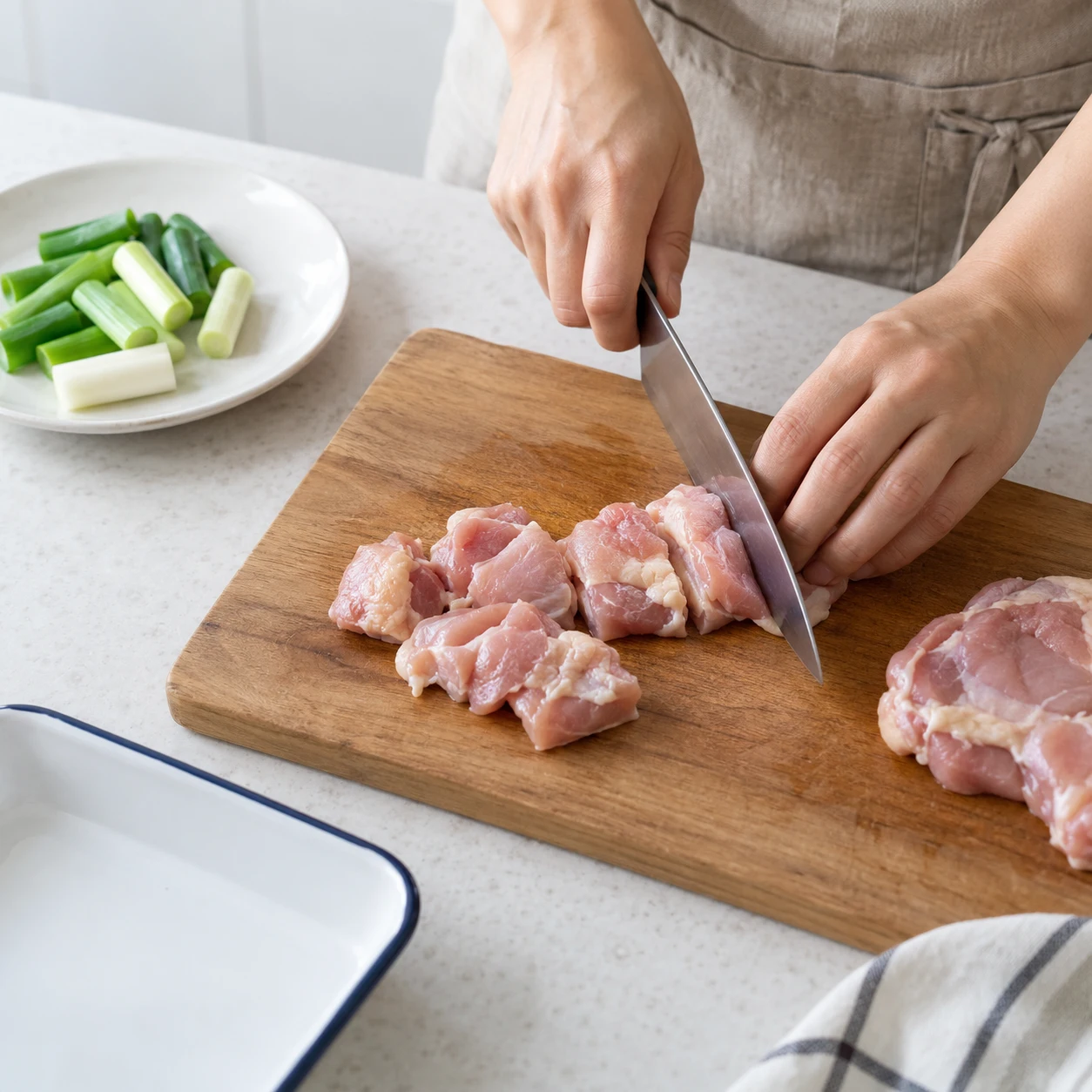
Cut the spring onions into 3 cm lengths. On a separate raw-meat board, trim loose fat from the chicken and cut into even 2 cm pieces. Pat dry and add the optional pinch of pepper. Do not wash raw chicken. If using wooden skewers, choose short ones that fit in the pan; soak them in water while preparing the sauce, then dry the handles.
-
Step 2
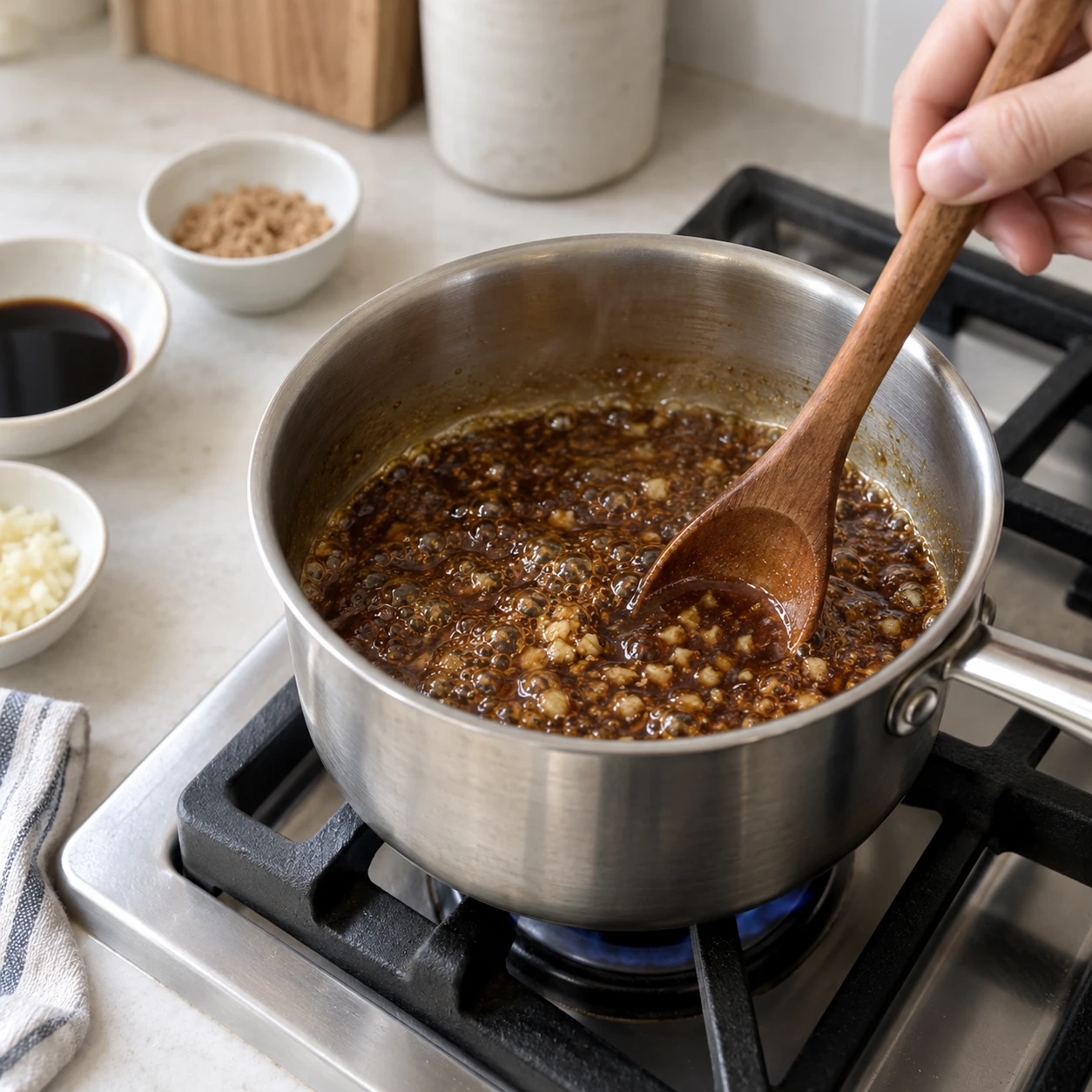
In a clean small saucepan, combine 2 level eating spoons soy sauce, 1 level eating spoon sugar, 2 level eating spoons water and 1 small teaspoon minced garlic. Simmer gently for 2–3 minutes until the sugar dissolves and the glaze slightly thickens. Set aside and keep it away from the raw chicken; it will be used only after the meat is cooked.
-
Step 3
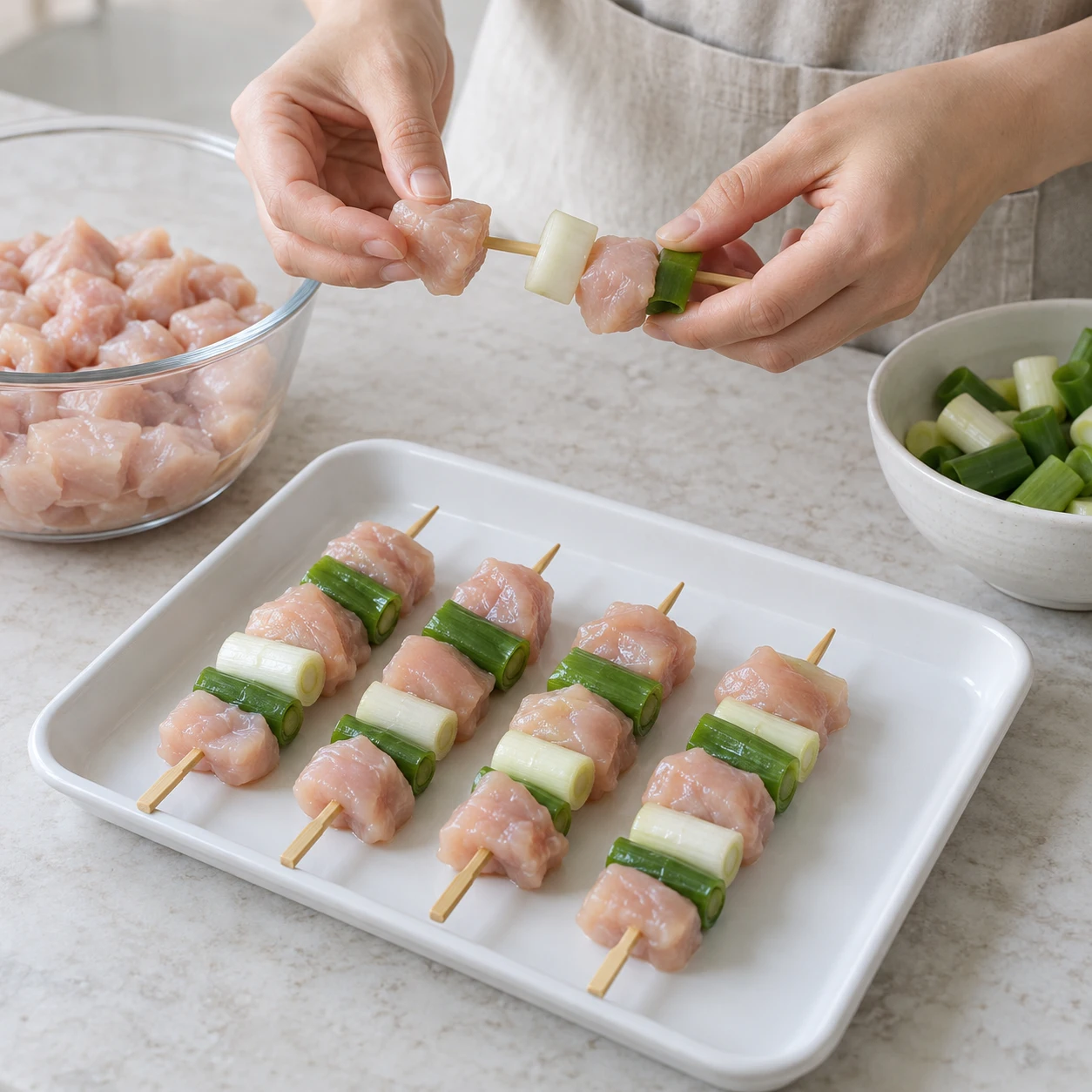
Thread the chicken onto 4 short skewers, alternating with optional spring onion pieces. Leave a small gap so heat reaches all sides, and keep the pieces about the same thickness. If no skewers are available, cook the chicken and spring onion as loose pieces in a single layer.
-
Step 4
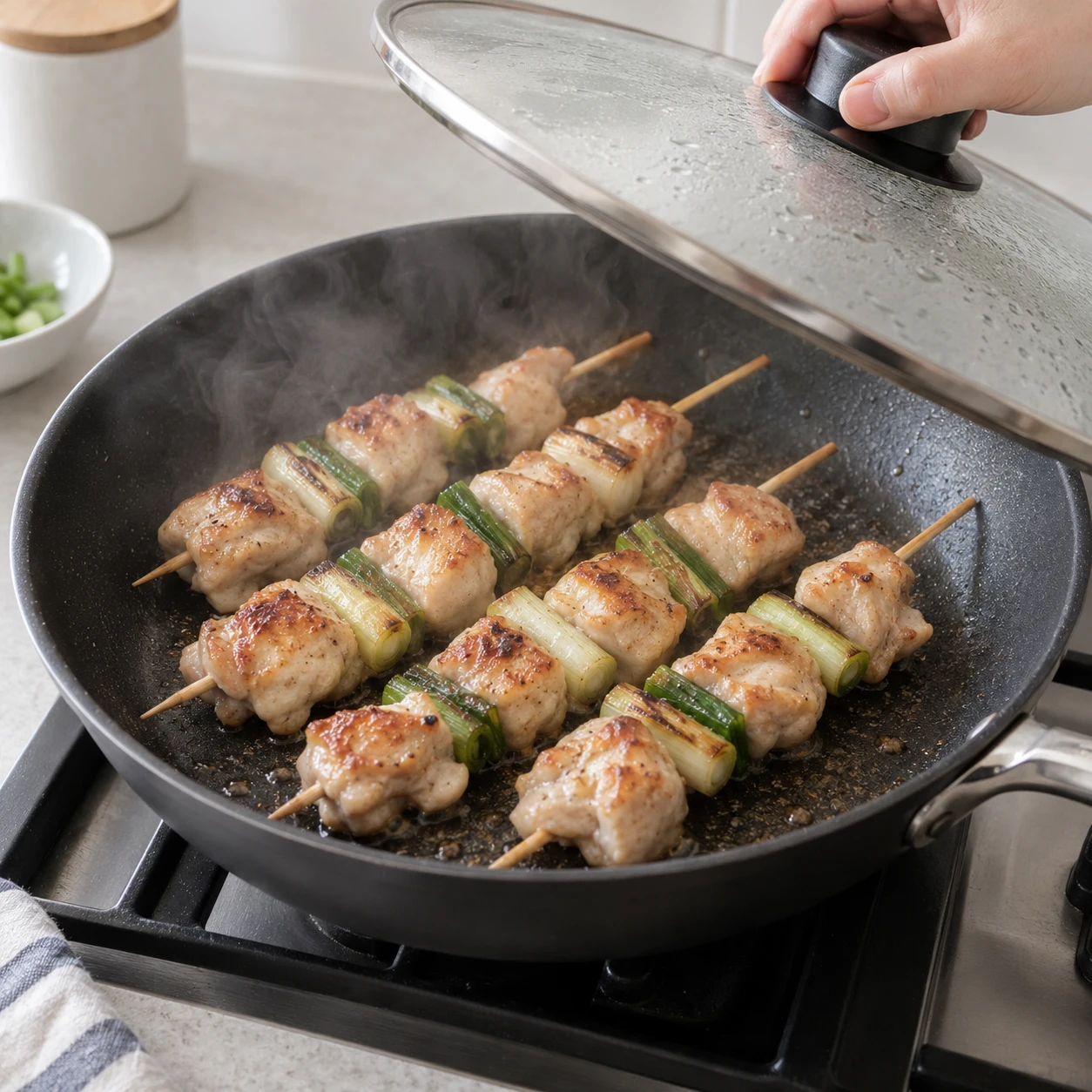
Warm 1 small teaspoon cooking oil in a wide frying pan over medium heat. Add the skewers and cook for 3 minutes on one side, then turn and cook for 3 minutes on the other. Cover and continue for 2–4 minutes, turning once. Add 1 level eating spoon water if the pan dries. Chicken must be fully cooked throughout; check the largest piece reaches 74°C with a food thermometer.
-
Step 5
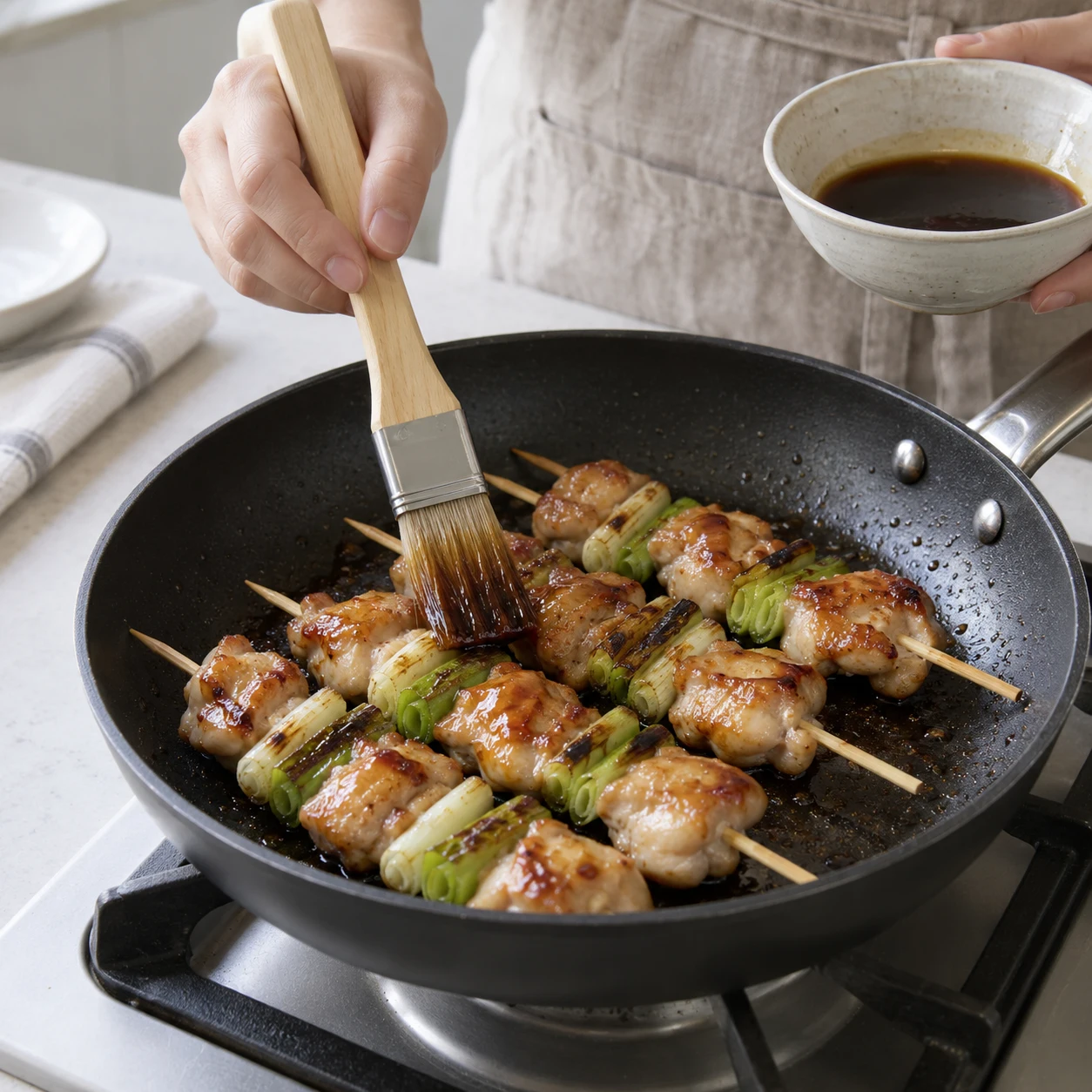
Once the chicken is cooked, uncover the pan and reduce the heat to low. Mix the optional 1 small teaspoon sesame oil into the glaze. Brush a little sauce onto the skewers, turn and warm for 30–60 seconds per side. Repeat only if needed for a light shiny coat. Stop before the sugar blackens; a black crust is burnt sauce, not extra flavor.
-
Step 6
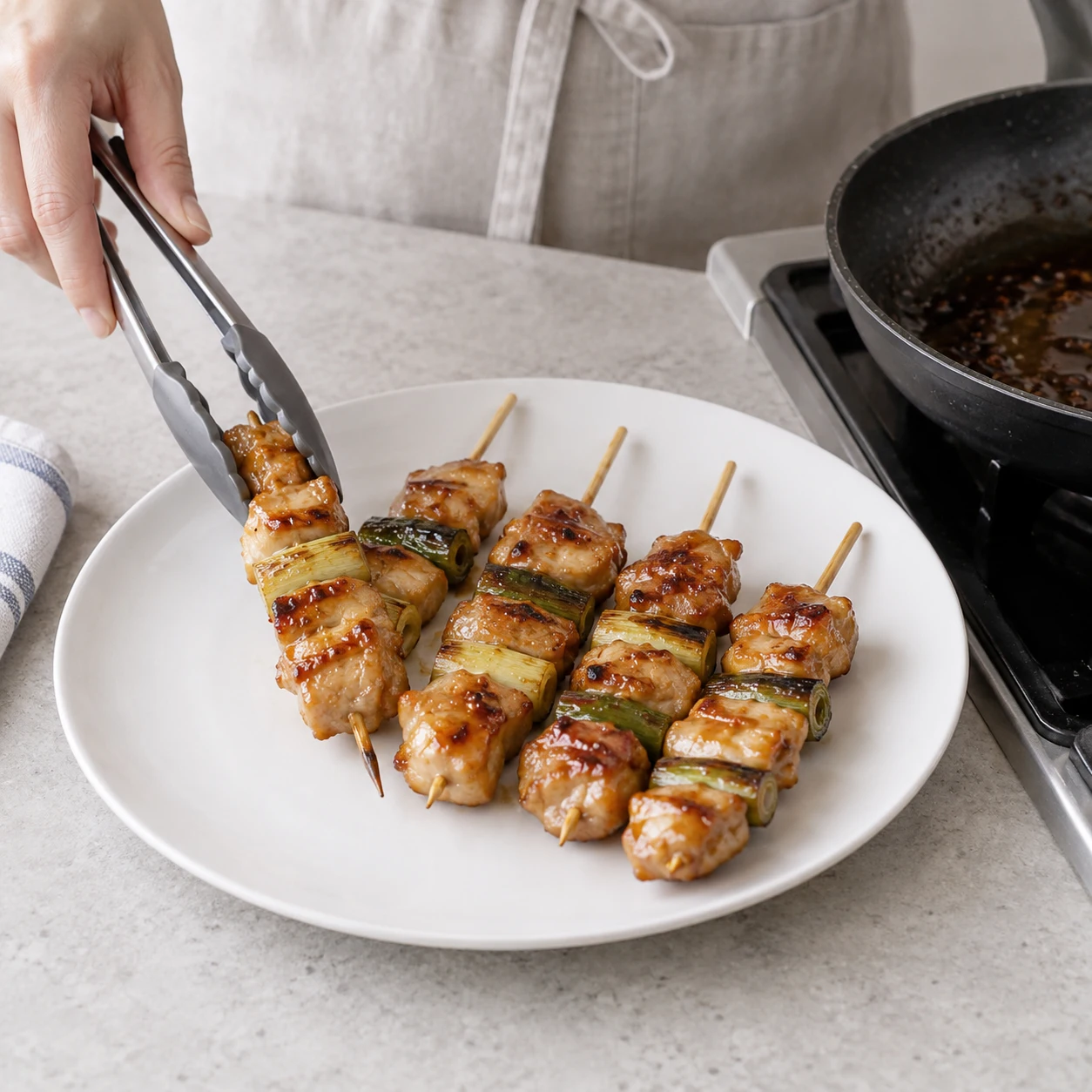
Transfer to a clean serving plate using clean tongs. Rest for 2 minutes, then serve with rice or vegetables if desired. Remove the wooden sticks before giving a portion to a child, and cut the meat into suitable pieces. Keep remaining glaze in a separate clean bowl rather than reusing raw-meat utensils.
Finished dish
The default glaze is sweet and savory with no chili. Chicken thigh stays juicier than breast, and evenly sized pieces make the skewers easier to cook properly. A stovetop pan is all that is needed; the 40-minute estimate includes preparation and the short skewer soak. Use a small 180 ml paper cup, a level eating spoon of about 15 ml and a small teaspoon of about 5 ml. Household quantities are approximate; use the same cup and spoons throughout. Packet fractions refer to the labeled packet size, not to an unknown bag. Refrigerate leftovers in a shallow covered container within 2 hours, or within 1 hour if the room is above 32°C. Keep at 4°C or colder and use within 3–4 days. Reheat cooked leftovers until hot throughout, reaching 74°C if measured. Soy sauce contains soy and often wheat; the optional sesame oil contains sesame. Rice and serving vegetables are suggestions, not part of the measured ingredients.