Korean chicken noodle soup (dak-kalguksu)
Knife-cut noodles, shredded chicken and zucchini in a gentle chicken broth. This home version of a traditional Korean soup uses boneless thighs for a smaller, quicker batch.

Ingredients
2 servings

Everyday kitchen measurements
For 2 servings. Use a small 180 ml paper cup, a level eating spoon (about 15 ml) and a small teaspoon (about 5 ml).
How to fill the cup and spoons
Use the same cup and spoons throughout. Their sizes vary, so these amounts are approximate. Spoon flour in loosely and level the top without pressing. Measure vegetables after chopping, without packing them down. The amounts in g/ml are the original reference quantities. For part of a pack, use the specified pack weight and divide the contents evenly.
King Arthur Baking-
Substitute available
If Fresh knife-cut wheat noodles is unavailable
- Use instead
- Dried wide wheat noodles
- Substitute quantity
- about ⅔ of a 200 g packReference quantity: 140 g
If fresh knife-cut noodles are unavailable, use 140 g dried wide wheat noodles. Cook them separately in 5 small paper cups water (900 ml), following their packet time, then drain. Add to the soup only in the last minute instead of cooking fresh noodles in it. This extra water is not the broth. The texture differs; use one noodle type only.
-
Substitute available
If Boneless skinless chicken thighs is unavailable
- Use instead
- Boneless skinless chicken breast
- Substitute quantity
- 1 small pack of 250 gReference quantity: 250 g
If chicken thighs are unavailable, use this same amount of boneless skinless breast. Simmer until the thickest part reaches 74°C; it can cook sooner and is leaner. Remove when cooked, shred and return in the last minute so it does not dry out.
-
Essential
Needed for this version; use the listed amount at the stated step.
-
Essential
Needed for this version; use the listed amount at the stated step.
-
Essential
Needed for this version; use the listed amount at the stated step.
-
Optional
May be omitted without changing the other quantities.
-
Essential
Needed for this version; use the listed amount at the stated step.
-
Optional
May be omitted without changing the other quantities.
-
Substitute available
If Soy sauce is unavailable
- Use instead
- Tamari soy sauce
- Substitute quantity
- 1 small teaspoonReference quantity: 5 ml
If ordinary soy sauce is unavailable, use the indicated amount of tamari instead, not both. It still contains soy; check the label for wheat and other allergens. Saltiness may differ.
-
Essential
Needed for this version; use the listed amount at the stated step.
-
Optional
May be omitted without changing the other quantities.
Tap each ingredient as you prepare it. Check product labels for egg, soy, sesame, wheat, fish or shellfish where relevant.
Step-by-step cooking
Check off a completed step to move to the next one. After the last step, you will move to the finished dish.
Completed steps are saved in this browser. Start over to clear this recipe’s progress.
-
Step 1
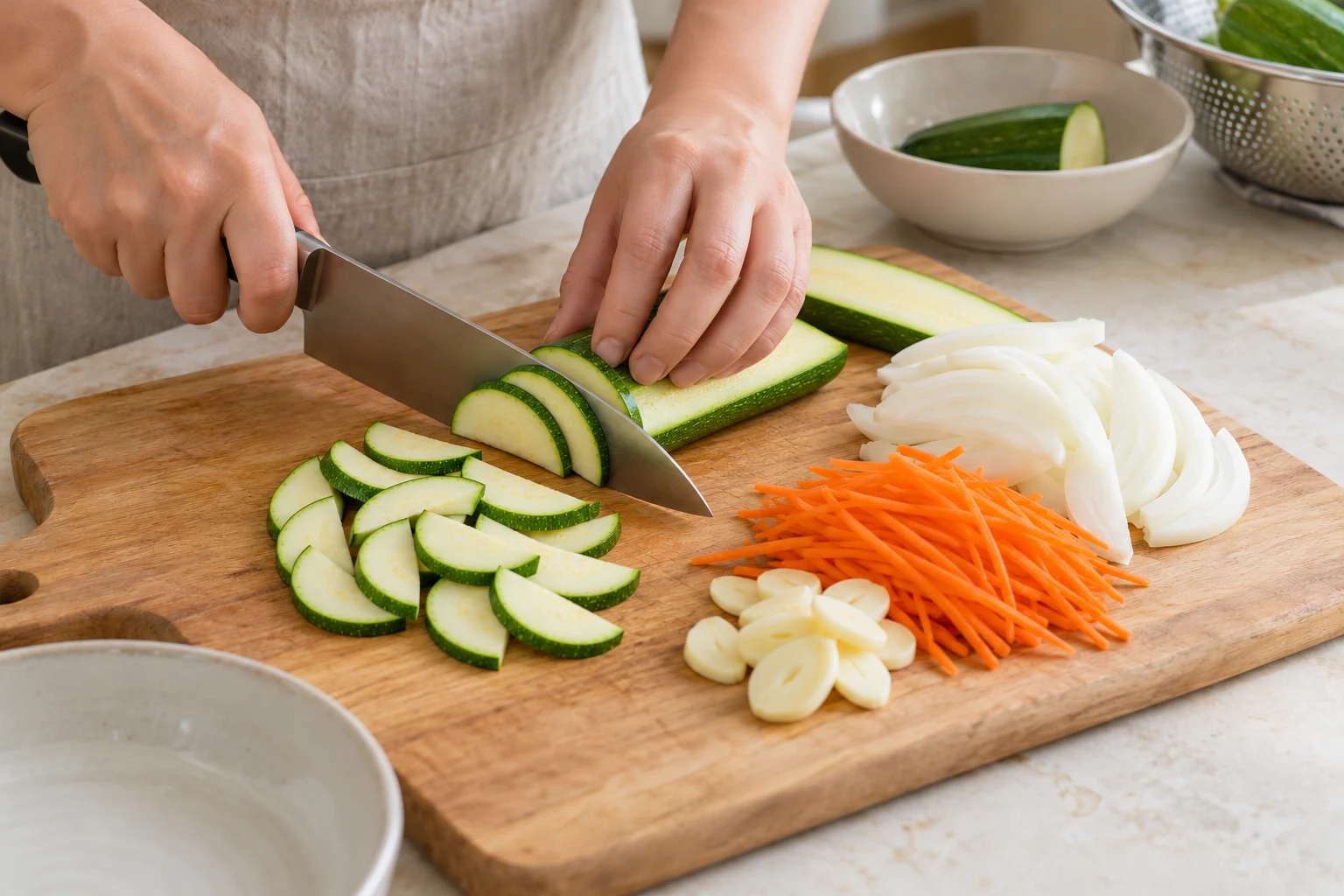
Prepare vegetables first: wash them, peel the onion, garlic and optional carrot. Thinly slice the onion, cut zucchini into 5 mm half-moons and the carrot into thin matchsticks. Slice the optional spring onion. Keep the chicken on a separate clean tray, do not rinse it, and wash hands and raw-chicken utensils before handling cooked food.
-
Step 2
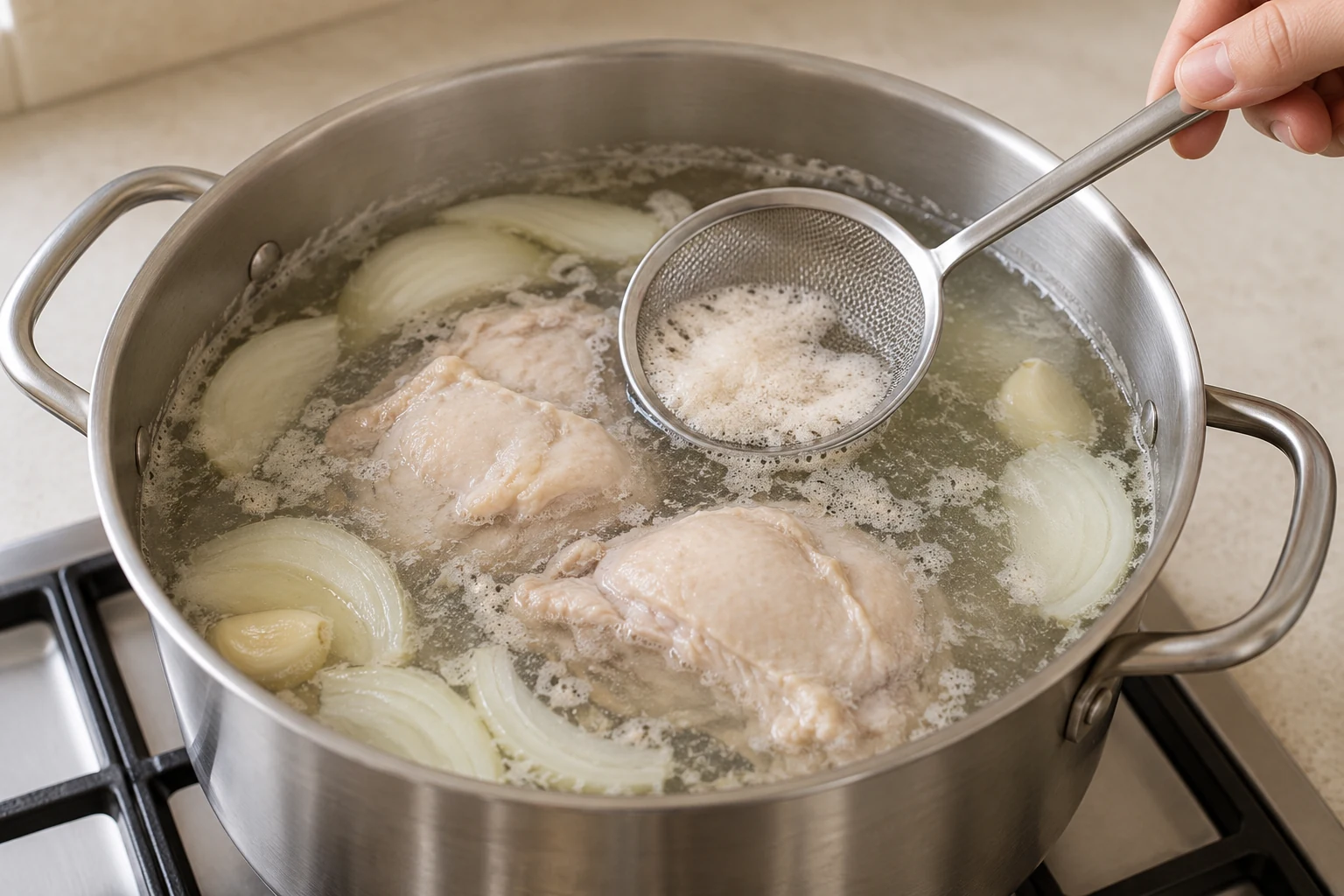
Put 6 small paper cups water, the 250 g chicken thighs, onion and garlic in a pot; keep the seventh cup for later. Bring to a boil, skim loose foam, then partly cover and simmer gently for 12–15 minutes, until the chicken reaches 74°C in the thickest part. Continue cooking if needed; do not rely on color alone.
-
Step 3
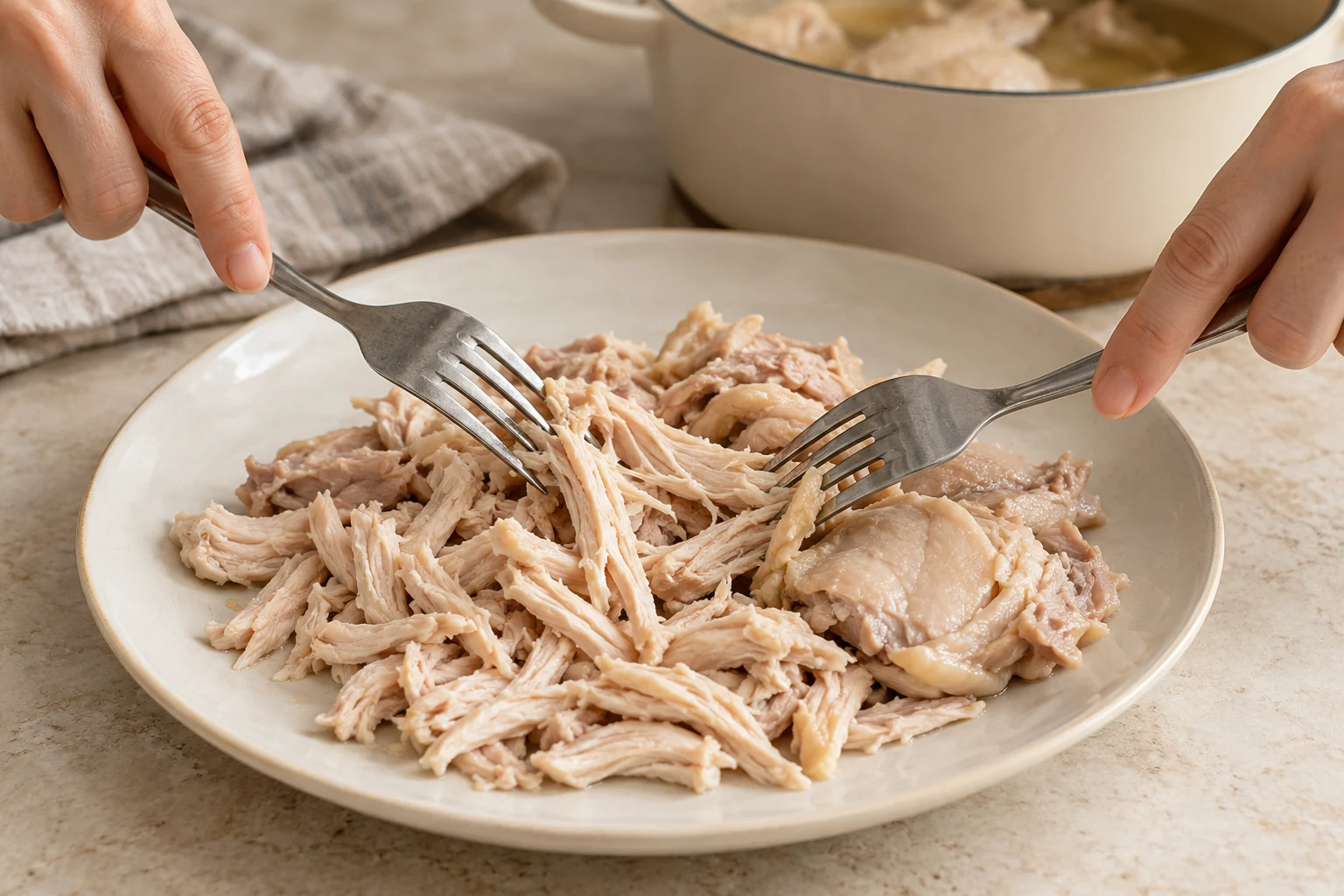
Lift the cooked chicken onto a clean plate with clean tongs. Cool for 3 minutes, then pull into bite-size shreds with two forks. Keep the broth gently simmering. If a thick area is undercooked, return the chicken to the pot and cook through before shredding.
-
Step 4
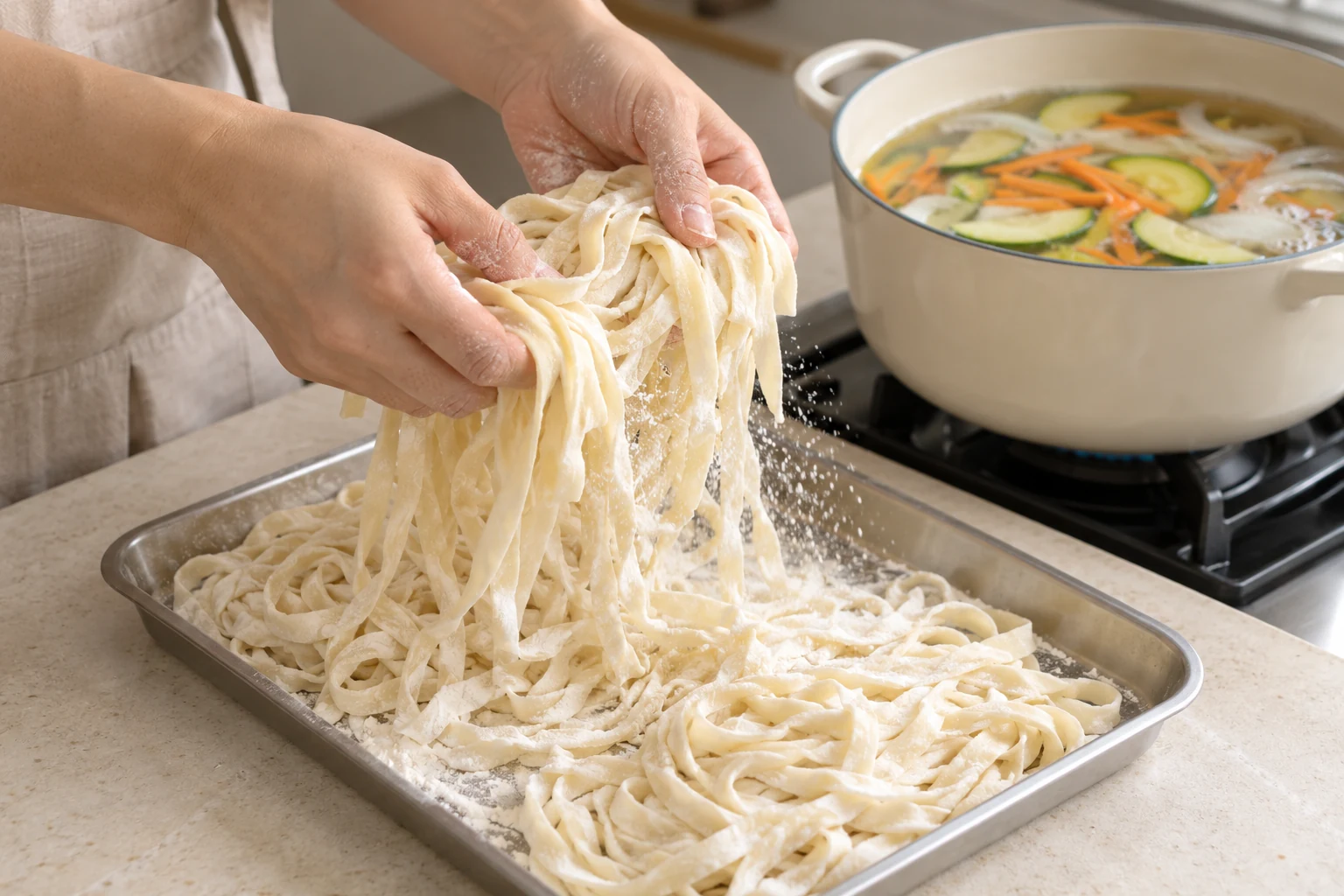
Loosen the 200 g fresh noodles and shake off loose flour without soaking them. Bring the broth to a lively boil. Add the zucchini and optional carrot and cook for 2 minutes. Keep the pot roomy enough for the noodles to move.
-
Step 5
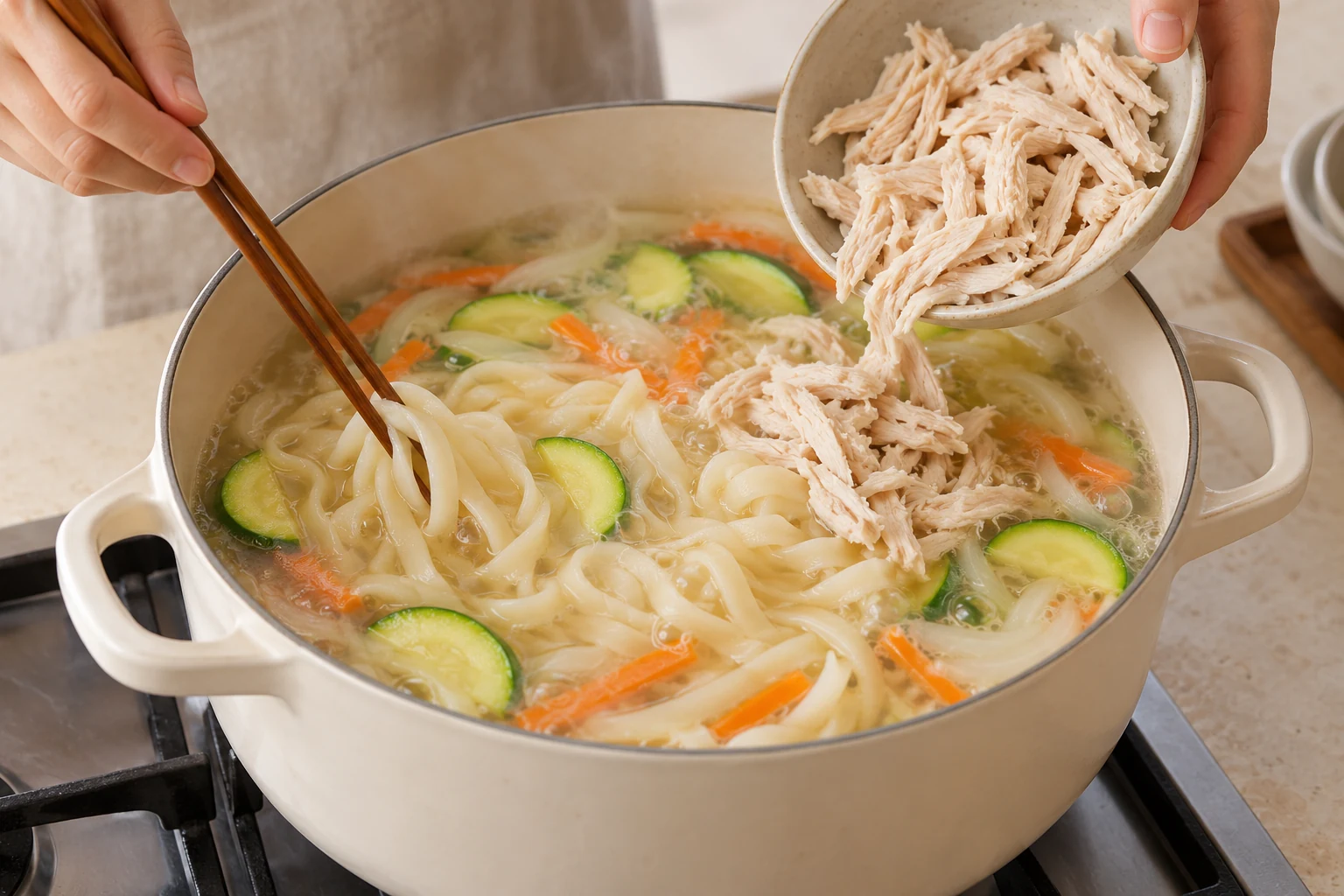
Add the fresh noodles and separate gently with chopsticks. Cook for the packet time, usually 5–7 minutes, stirring to stop sticking. Add 1 small teaspoon soy sauce and ½ small teaspoon fine salt. If the broth thickens too much, add some or all of the reserved paper cup water and bring back to a boil. Return the cooked chicken for the final minute, until steaming hot.
-
Step 6
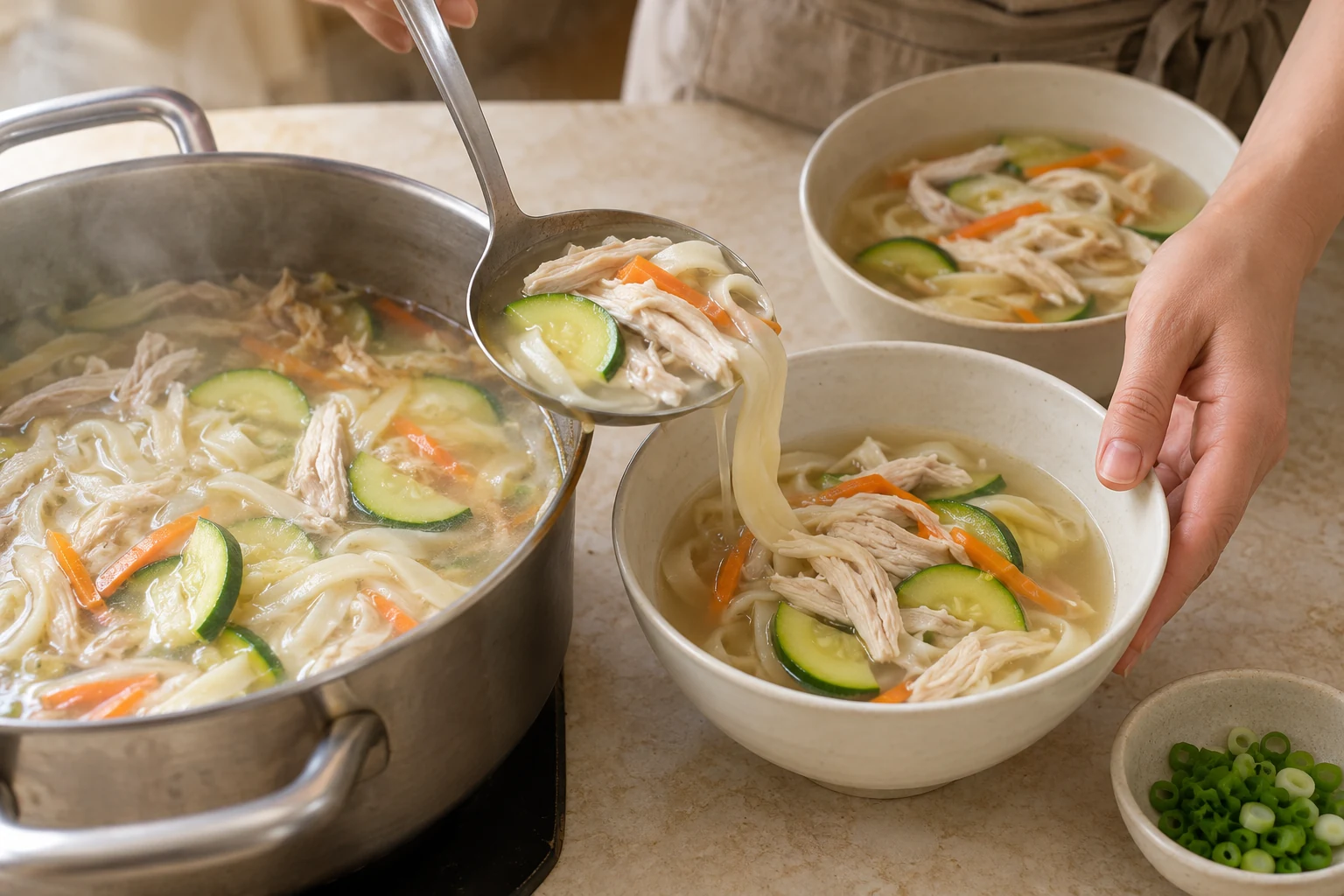
Check that the noodles are tender without a hard floury center and the chicken is hot throughout. Divide noodles, chicken, vegetables and broth between two bowls. Add optional spring onion and a pinch of pepper, then serve immediately; noodles soften as they sit.


Finished dish
2 generous meal servings. Paper cup 180 ml; level tablespoon 15 ml; small teaspoon 5 ml. Contains wheat and soy. This is a boneless-chicken home version; all chicken must be fully cooked. Refrigerate leftovers within 2 hours at 4°C or below, eat within 2 days and reheat until hot throughout. Store noodles separately from broth when possible.
Related recipes


Enjoy every bite
How to enjoy it
Serve with a small portion of kimchi or radish kimchi. Keep the noodles loose while cooking and add the cooked chicken late to keep it tender.
Serve it with

Cubed radish kimchi (kkakdugi)
Crunchy radish cubes in a simple kimchi seasoning. This small batch goes straight into the refrigerator, with clear salting and clean-container instructions.

Fresh Napa Cabbage Kimchi
Tender napa leaves are lightly salted, dressed with chili and eaten fresh as traditional Korean geotjeori.