Chadol doenjang jjigae — beef brisket soybean paste stew
Paper-thin fatty beef brisket, tofu and tender vegetables in a savory Korean soybean paste broth. Sear the beef in its own fat, dissolve the paste fully and add tofu near the end so it keeps its shape.
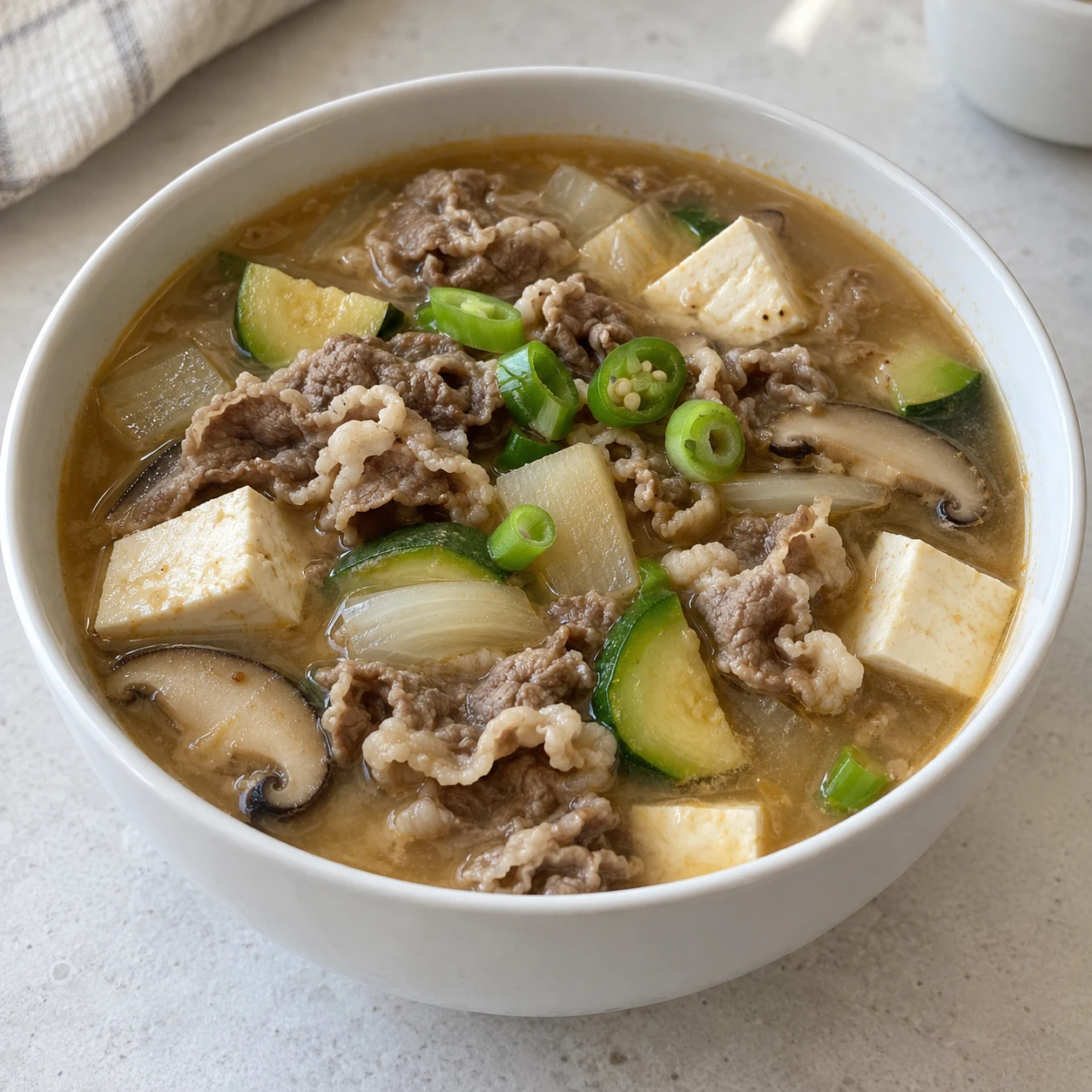
AI-generated cooking illustrations. Follow the written quantities and instructions.
Ingredients
2 servings
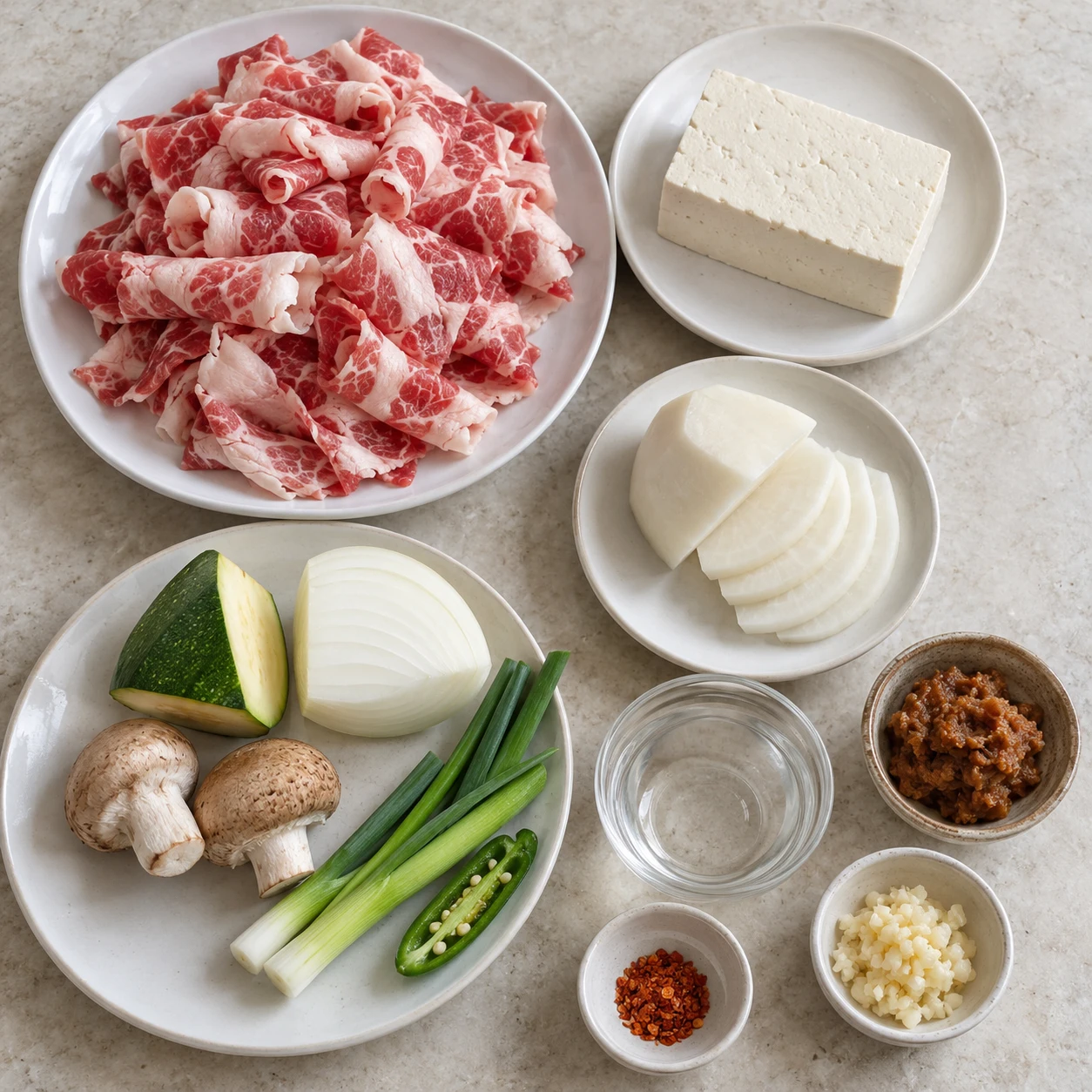
Everyday kitchen measurements
For 2 servings. Use a small 180 ml paper cup, a level eating spoon (about 15 ml) and a small teaspoon (about 5 ml).
How to fill the cup and spoons
Use the same cup and spoons throughout. Their sizes vary, so these amounts are approximate. Spoon flour in loosely and level the top without pressing. Measure vegetables after chopping, without packing them down. The amounts in g/ml are the original reference quantities. For part of a pack, use the specified pack weight and divide the contents evenly.
King Arthur Baking-
Substitute available
If Paper-thin beef brisket (chadol) is unavailable
- Use instead
- Thinly sliced beef chuck for hot pot
- Substitute quantity
- ½ of a 300 g packReference quantity: 150 g
Use half of a 300 g pack of plain beef sliced about 1 mm thick. Separate the slices before cooking. If the meat is lean, add 1 small teaspoon neutral cooking oil at the beef-searing step. The broth will be less rich than with fatty brisket.
-
Substitute available
If Doenjang (Korean fermented soybean paste) is unavailable
- Use instead
- Red miso paste
- Substitute quantity
- 2 level eating spoonsReference quantity: about 36 g
Use up to 2 level eating spoons. Skip frying the paste with the beef: cook the vegetables in the water first, then dissolve 1½ level eating spoons miso into the broth when adding the tofu. Reserve the remaining ½ spoon for tasting at the end. This is a milder miso variation with a different flavor.
-
Substitute available
If Firm tofu is unavailable
- Use instead
- Silken tofu
- Substitute quantity
- ½ of a 300 g packReference quantity: 150 g
Use half of a 300 g pack. Spoon it into large pieces instead of cutting small cubes. Add only for the last 2–3 minutes and move the pot gently rather than stirring; it breaks much more easily.
-
Substitute available
If Korean radish is unavailable
- Use instead
- Potato
- Substitute quantity
- ½ medium potatoReference quantity: about 75 g
Peel and cut into 1 cm cubes. Add at the radish step and simmer for 8–10 minutes, until a fork enters easily, before adding the zucchini. The broth will be slightly thicker and less sweet.
-
Optional
Omit the zucchini from the cutting and vegetable simmer if unavailable. The stew will have fewer vegetables; keep the liquid and paste quantities unchanged.
-
Optional
Omit the onion from the preparation and radish simmer if unavailable. The broth will be a little less sweet; no other adjustment is needed.
-
Optional
Omit the mushrooms from the vegetable simmer if unavailable. The broth will have less mushroom aroma; keep the beef and paste amounts unchanged.
-
Substitute available
If Minced garlic is unavailable
- Use instead
- Garlic powder
- Substitute quantity
- ¼ small teaspoonReference quantity: about 0.5 g
Use ¼ small teaspoon plain garlic powder in place of fresh garlic. Stir it into the broth at the same step; do not use garlic salt.
-
Essential
Use the small 180 ml paper cup described in the household guide. Plain water is enough because beef and doenjang provide the broth flavor.
-
Optional
Omit the spring onion at the final simmer if unavailable. It adds fresh aroma but is not essential; no other adjustment is needed.
-
Optional
Leave this out for a non-spicy version, and skip cutting it. Remove seeds before slicing if you prefer less heat; chili varieties differ greatly in strength.
-
Optional
Omit these flakes from the broth for a non-spicy version. Do not replace them with hot sauce; the doenjang still supplies the main flavor.
Tap each ingredient as you prepare it. Check product labels for egg, soy, sesame, wheat, fish or shellfish where relevant.
Step-by-step cooking
-
Step 1
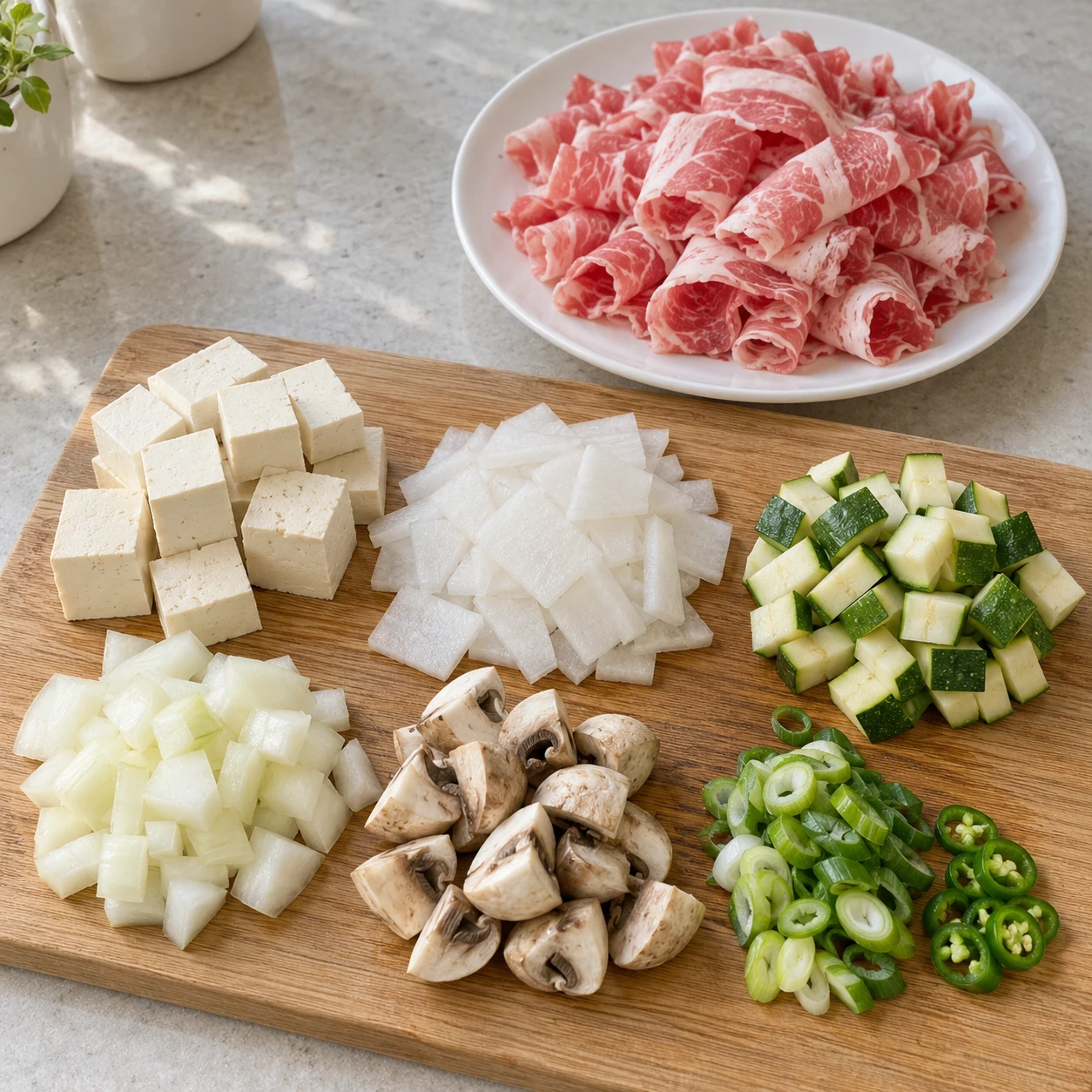
Prepare the ingredients. Use half of a 300 g pack of paper-thin fatty beef brisket. If frozen, thaw in the refrigerator and separate the slices; pat away moisture without washing raw beef. Cut very long slices into bite-size lengths. Peel and thinly slice radish to loosely fill ½ small paper cup. Cut ¼ zucchini and ¼ onion into 1 cm pieces and quarter 2 mushrooms. Drain half of a 300 g pack of tofu and cut into 2 cm cubes. Slice 1 spring onion and the optional ½ green chili. Keep the tofu separate and clean the utensils that touched raw beef.
-
Step 2
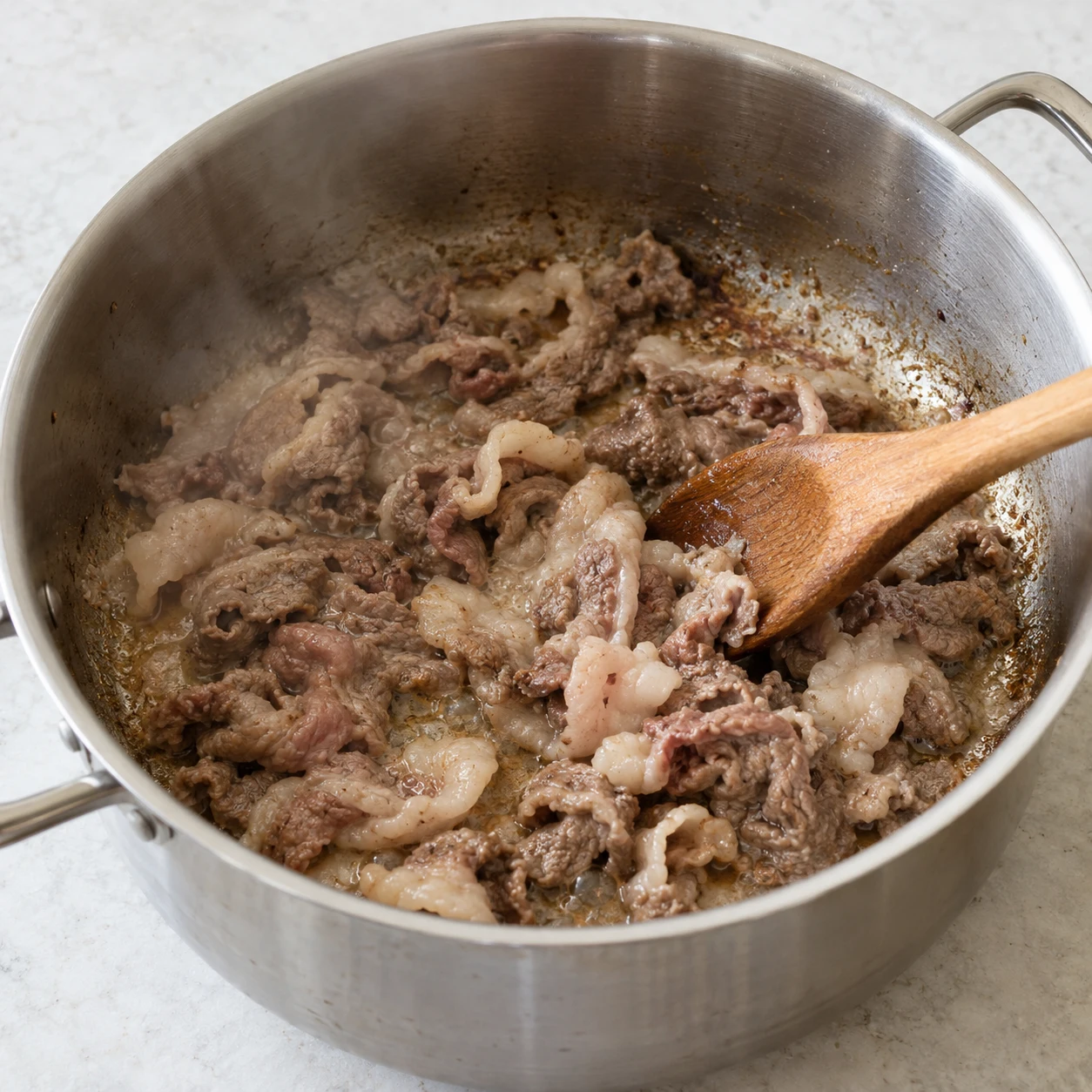
Sear the brisket without extra oil. Warm an ordinary heavy pot over medium heat. Add the beef in a shallow layer and stir for 2 minutes, separating folded slices. Its white fat will melt and the meat will turn opaque and lightly brown. Lower the heat if it sticks or smokes. Thin hot-pot beef with little fat may need the 1 small teaspoon oil described in the replacement note; fatty chadol normally does not.
-
Step 3
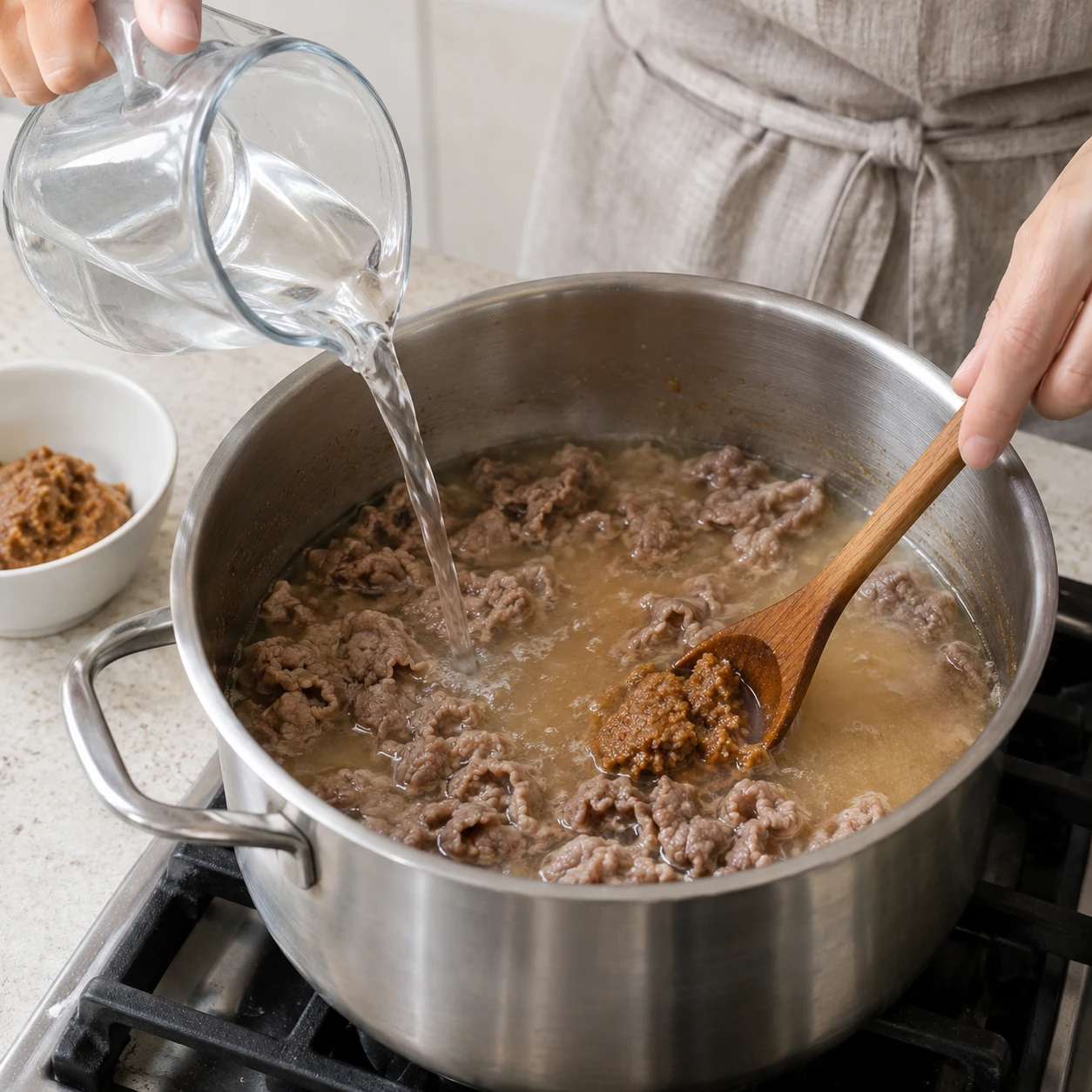
Briefly cook and dissolve the doenjang. Lower the heat. Add 1½ level eating spoons doenjang to the beef and stir for 30 seconds, just until fragrant; keep the remaining ½ spoon for later. Pour in 4 small paper cups water and scrape the bottom gently. Stir until there are no large lumps of paste. Add 1 small teaspoon minced garlic and the optional ½ small teaspoon chili flakes. If using the miso replacement, leave the paste out at this stage and add it with the tofu instead.
-
Step 4
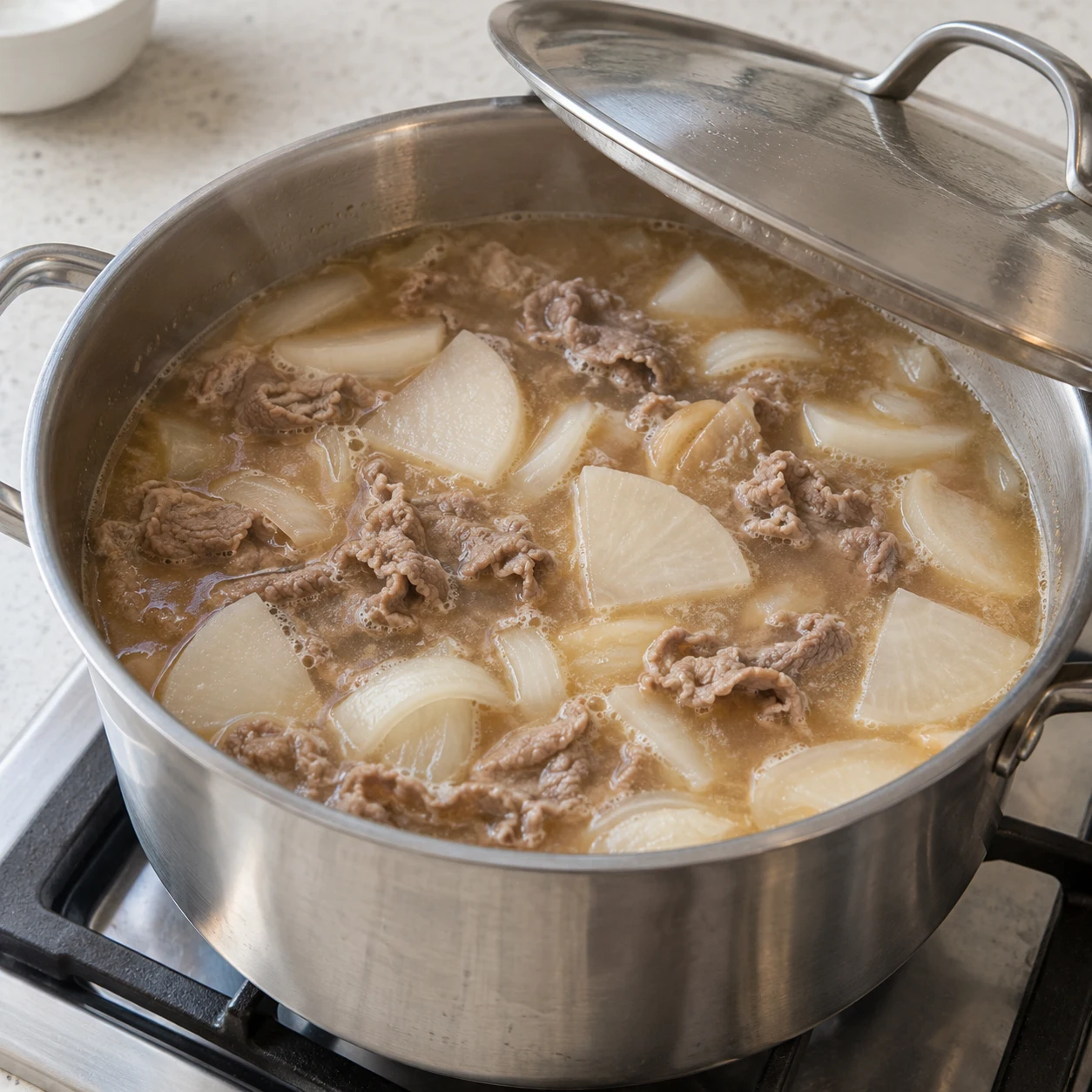
Soften the radish and onion. Bring the broth to a boil, then reduce to a gentle simmer. Add the radish and onion and simmer for 8 minutes, with the lid slightly open. The radish should turn slightly translucent and become easy to bite. If using potato instead, simmer the small cubes for 8–10 minutes until easily pierced with a fork. Skim off loose foam with a spoon, but keep some flavorful beef fat in the broth.
-
Step 5
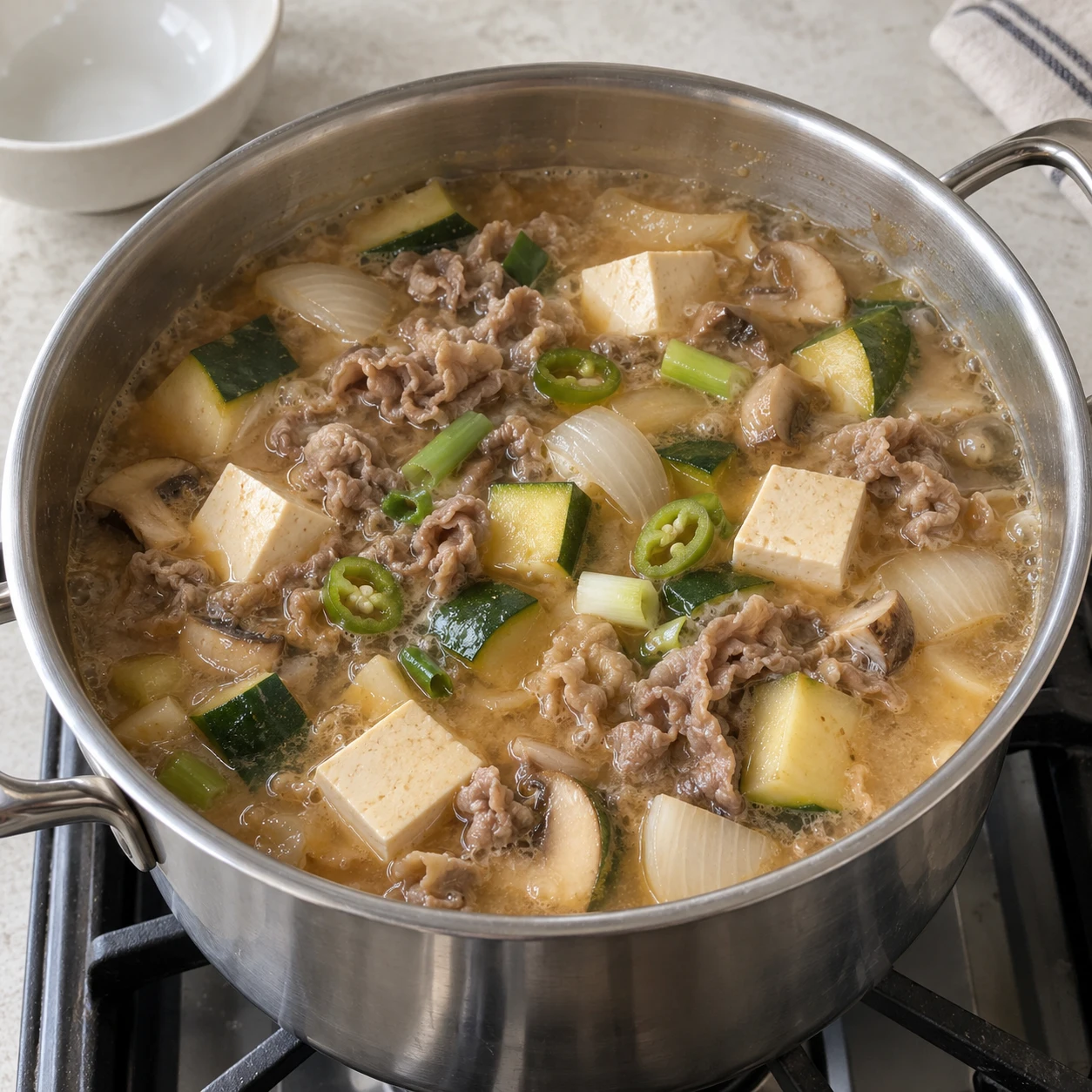
Add the softer vegetables and tofu. Add the zucchini and mushrooms and simmer for 5 minutes. Gently lower in the tofu cubes, spring onion and optional green chili, then simmer for another 3 minutes until the tofu is hot through and the zucchini is tender. Stir around the tofu rather than crushing it. If using red miso, dissolve 1½ level eating spoons in a little hot broth and add it with the tofu now. If using silken tofu, spoon in large pieces only for the last 2–3 minutes.
-
Step 6
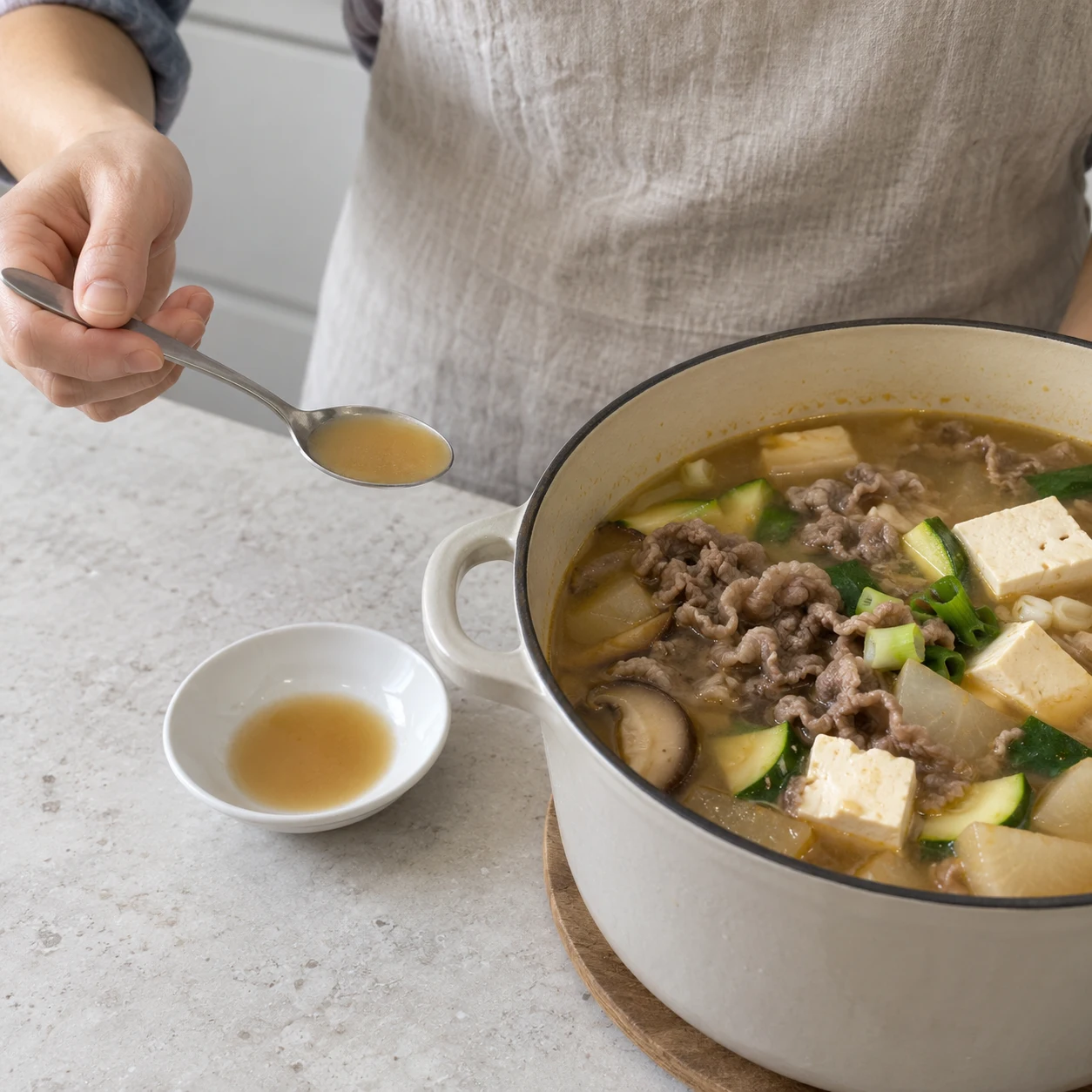
Taste, finish and serve. Taste a cooled spoonful of broth before adding more seasoning. If too light, dissolve the reserved paste into the stew ½ small teaspoon at a time; you may not need all of it. If too salty, add 1–2 level eating spoons hot water at a time. Let the stew bubble gently for 1 more minute after adjusting. Every beef slice should be fully opaque and the vegetables tender. Turn off the heat, rest for 3 minutes and serve carefully in bowls. Let hot broth cool further before serving to children.
Finished dish
A level eating spoon is about 15 ml, a small teaspoon about 5 ml, and the small paper cup here about 180 ml. Ordinary cutlery and cups vary: use the same spoon and cup throughout. No extra salt, stock cube or soy sauce is needed at the start. Use paper-thin fatty brisket for the quick cooking time. Thick chunks of brisket need a much longer braise and are not suitable for these instructions. Plain water keeps the seasoning predictable; salty packaged stock can make the stew too salty. Doenjang is essential to the characteristic Korean flavor. Red miso is an explicitly different alternative, added late to preserve its aroma. For a non-spicy family version, omit both the green chili and chili flakes and check that your paste itself contains no chili. Keep raw beef and its utensils away from cooked food. Refrigerate leftovers within 2 hours, use within 3–4 days and reheat thoroughly to 74°C. Check soybean paste and tofu labels for soy and possible wheat allergens. The photographs illustrate the cooking stages; doneness must be checked while cooking.