Gochujang garlic shrimp for camping
Quick Korean-style shrimp glazed with gochujang and garlic on a camp stove. Keep the seafood chilled until the pan is ready.
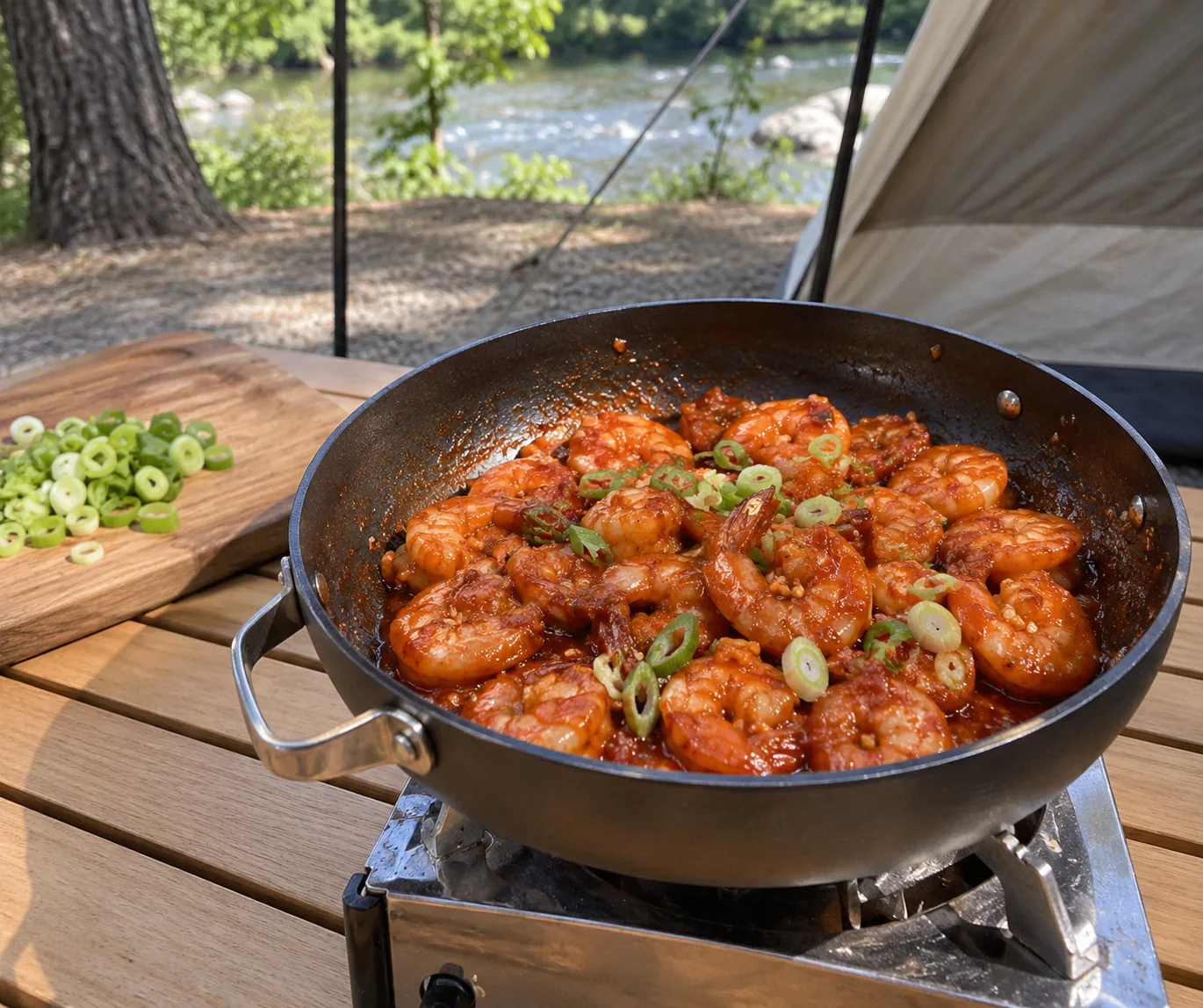
AI-generated cooking illustrations. Follow the written quantities and instructions.
Ingredients
2 servings
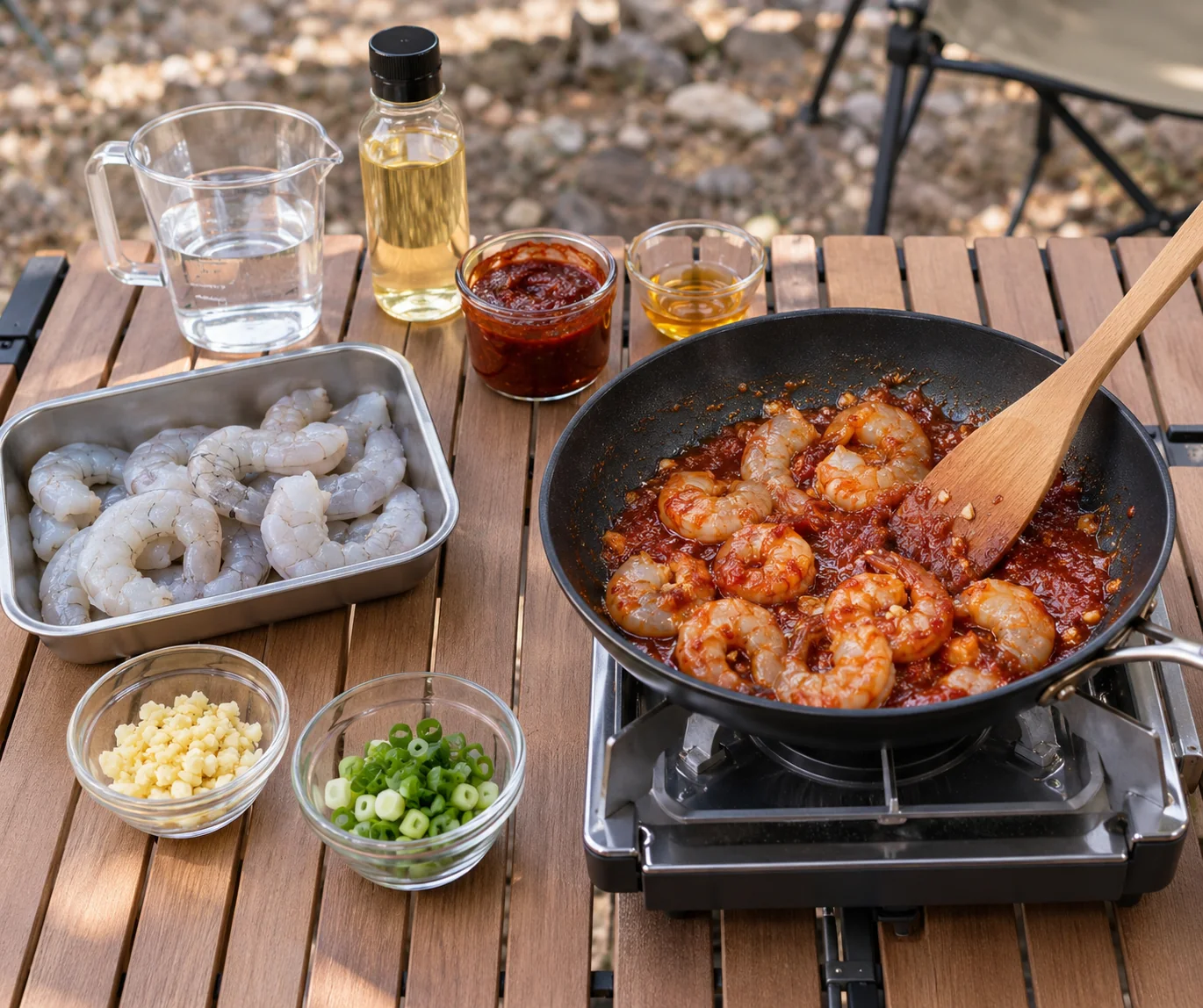
Everyday kitchen measurements
For 2 servings. Use a small 180 ml paper cup, a level eating spoon (about 15 ml) and a small teaspoon (about 5 ml).
How to fill the cup and spoons
Use the same cup and spoons throughout. Their sizes vary, so these amounts are approximate. Spoon flour in loosely and level the top without pressing. Measure vegetables after chopping, without packing them down. The amounts in g/ml are the original reference quantities. For part of a pack, use the specified pack weight and divide the contents evenly.
King Arthur Baking-
Substitute available
If Peeled raw shrimp — about 200 g is unavailable
If shrimp is unavailable, use 200 g bite-size boneless chicken pieces, but cook them to 74°C before adding sauce; total cooking time will be longer.
-
Essential
This is the main chilli glaze. Do not replace with dry chilli alone.
-
Essential
Thins the glaze for a short simmer.
-
Optional
Leave out if unavailable; the sauce will be milder.
-
Substitute available
If Neutral cooking oil — 1 level tablespoon (15 ml) is unavailable
If neutral oil is unavailable, use the same amount of canola or sunflower oil.
-
Optional
Leave out for a less sweet glaze.
-
Optional
Leave out if unavailable; it is only a garnish.
Tap each ingredient as you prepare it. Check product labels for egg, soy, sesame, wheat, fish or shellfish where relevant.
Step-by-step cooking
-
Step 1
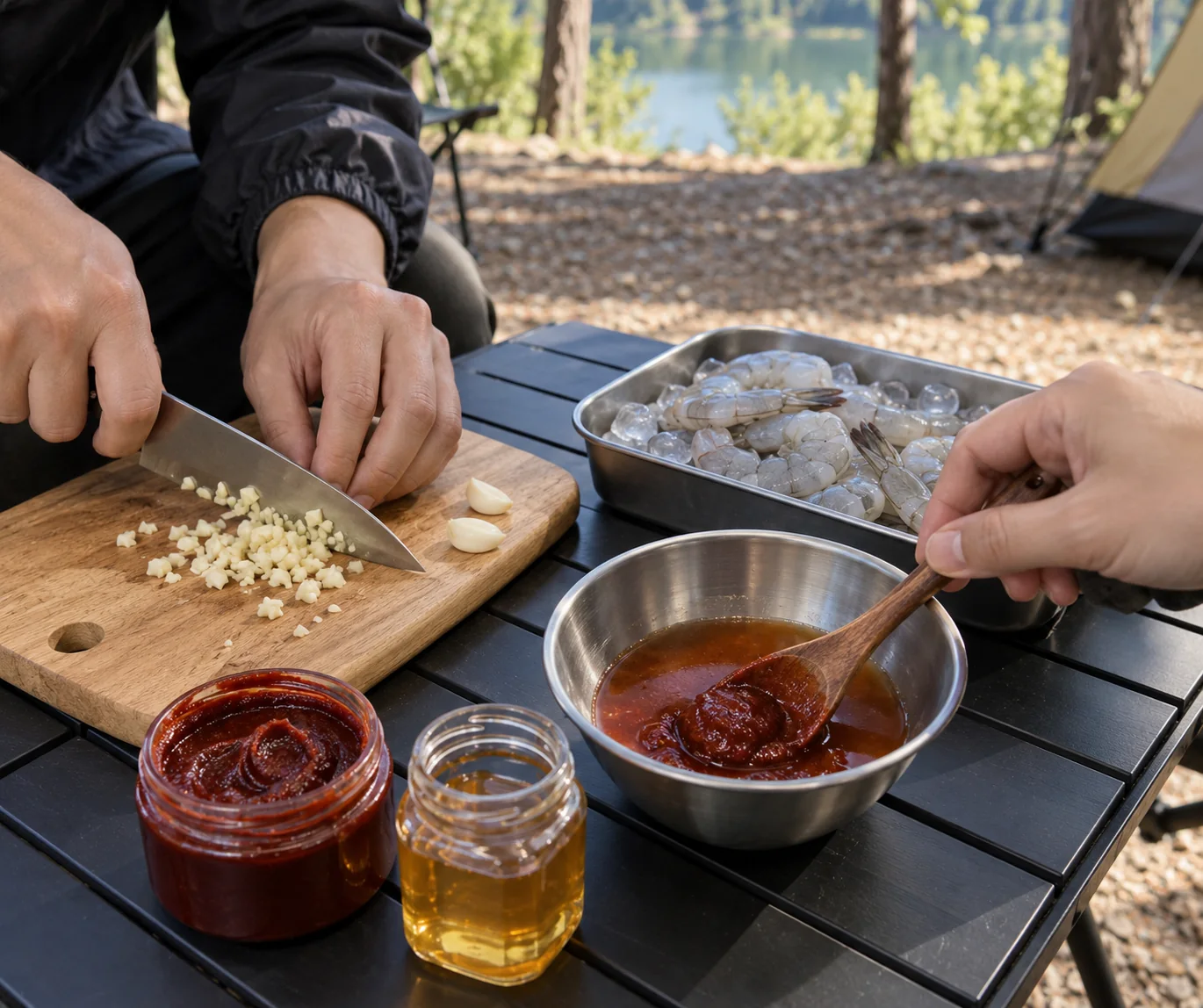
Keep 200 g peeled shrimp in a cooler below 4°C. Mix 1 level tablespoon gochujang with 2 level tablespoons drinking water and optional honey. Mince 1 garlic clove if using; keep raw shrimp and its utensils away from other food.
-
Step 2
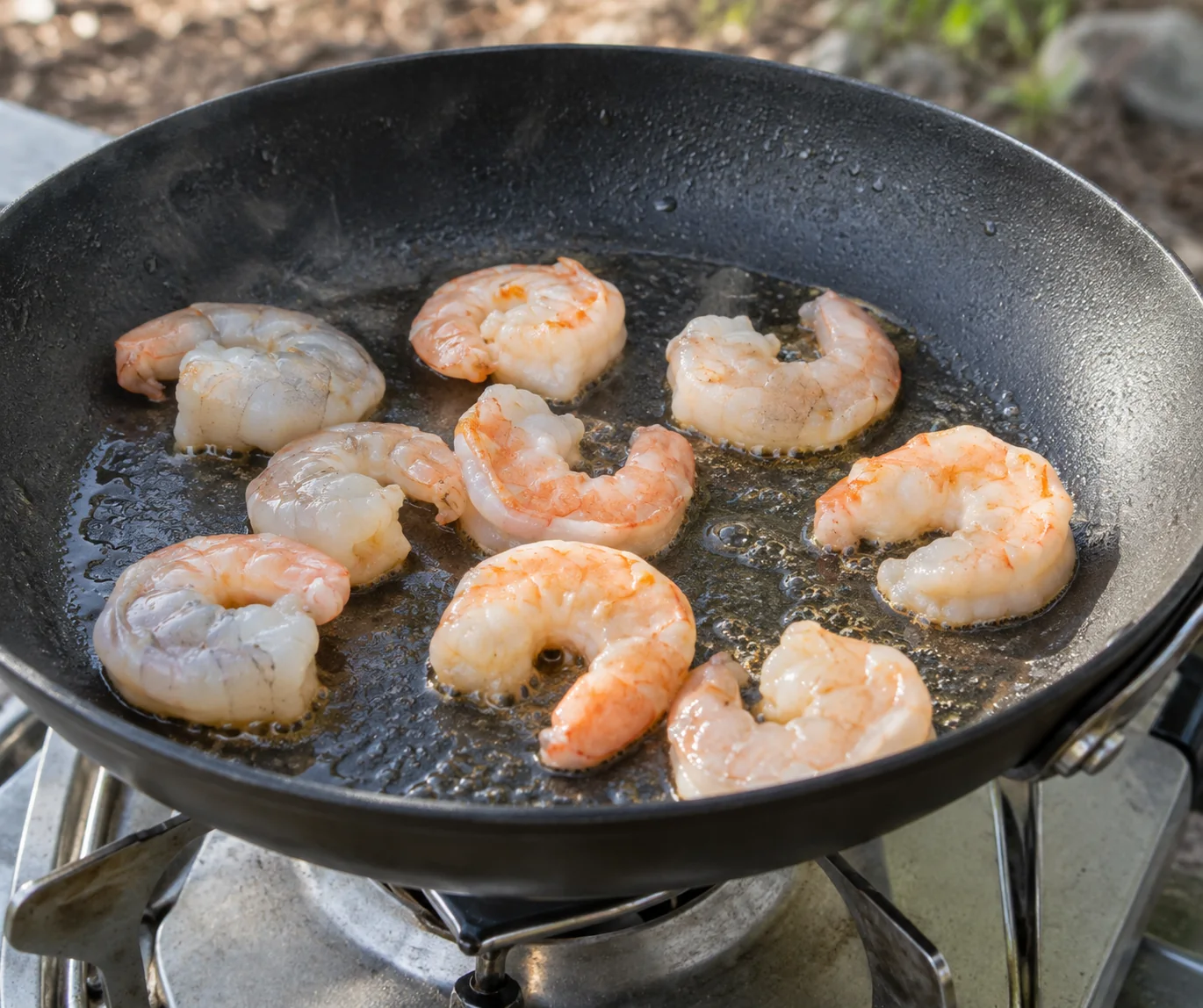
Heat 1 level tablespoon oil in a pan over medium camp-stove heat. Add shrimp in one layer and cook 2–3 minutes per side until pearly, opaque and fully cooked. If using the chicken substitute, cook to 74°C with a thermometer instead.
-
Step 3
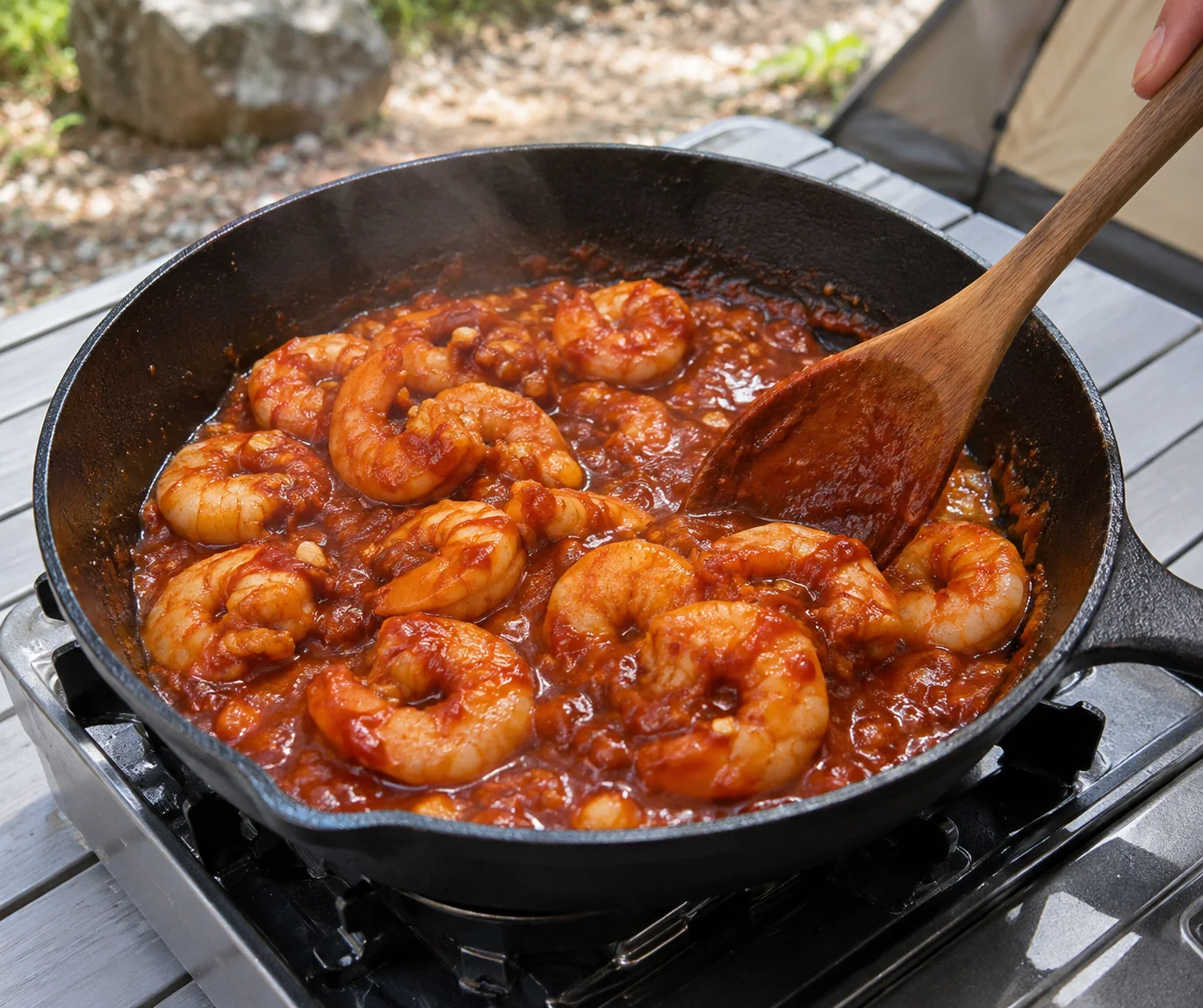
Add garlic if using, then pour in the gochujang mixture. Stir and bubble for 1 minute until the shrimp are glossy and hot. Serve immediately with optional spring onion. Never reuse the raw-shrimp plate for cooked shrimp.
Finished dish
Use a cold source for raw seafood and cook shrimp until opaque throughout; seafood is generally safe at 63°C. The chicken substitution needs 74°C and longer cooking. Gochujang may contain soy and wheat. Refrigerate leftovers promptly. Cook only outdoors where your campsite permits the equipment. Use clean drinking water and utensils. Keep perishable food at 4°C or below in a cooler; chill leftovers within 2 hours, or within 1 hour above 32°C.