Bulgogi beef kimbap
Two Korean rice rolls filled with sweet soy-garlic beef, carrot, cucumber and pickled radish. A mild, fully cooked meat filling with no chilli.
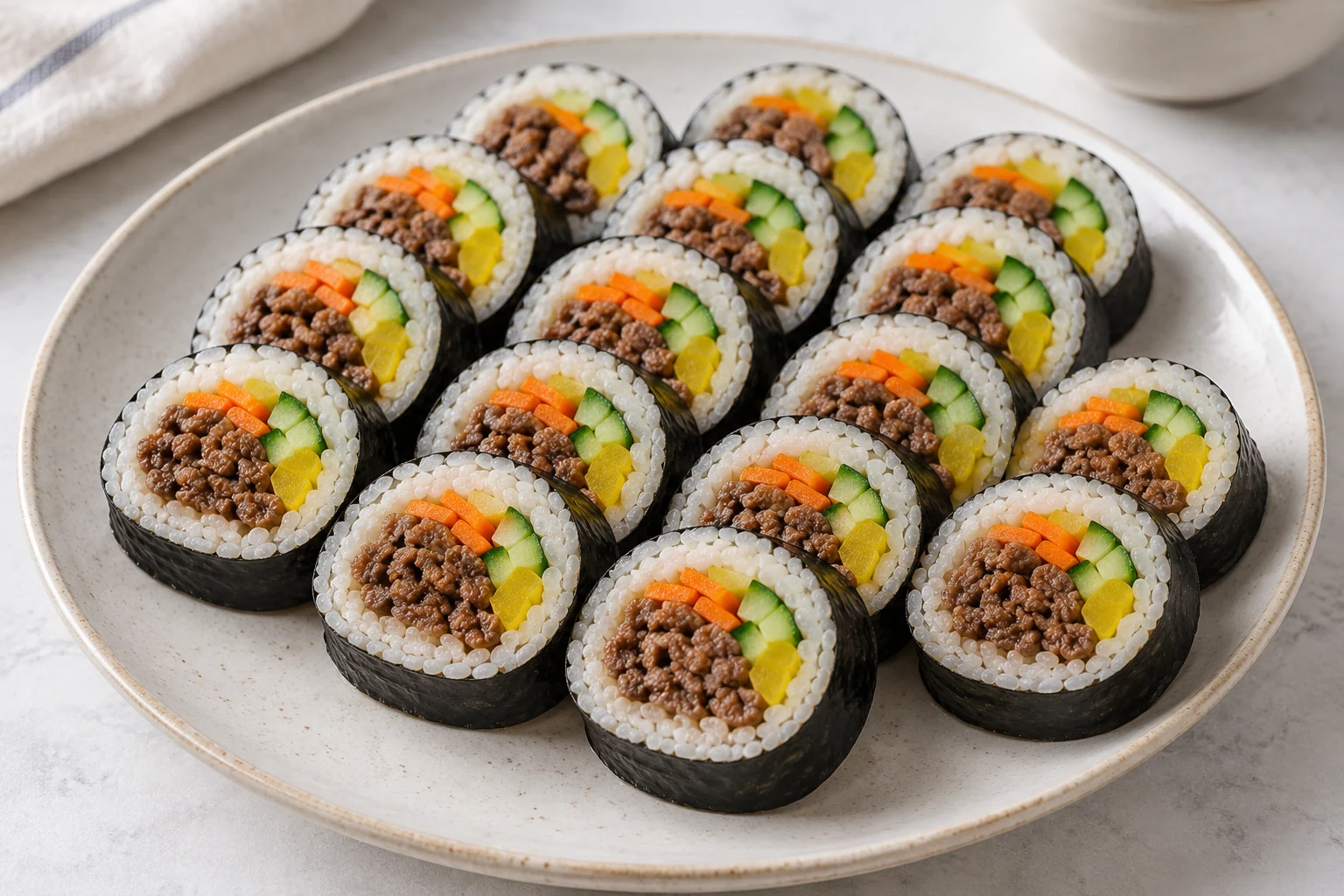
AI-generated cooking illustrations. Follow the written quantities and instructions.
Ingredients
2 servings
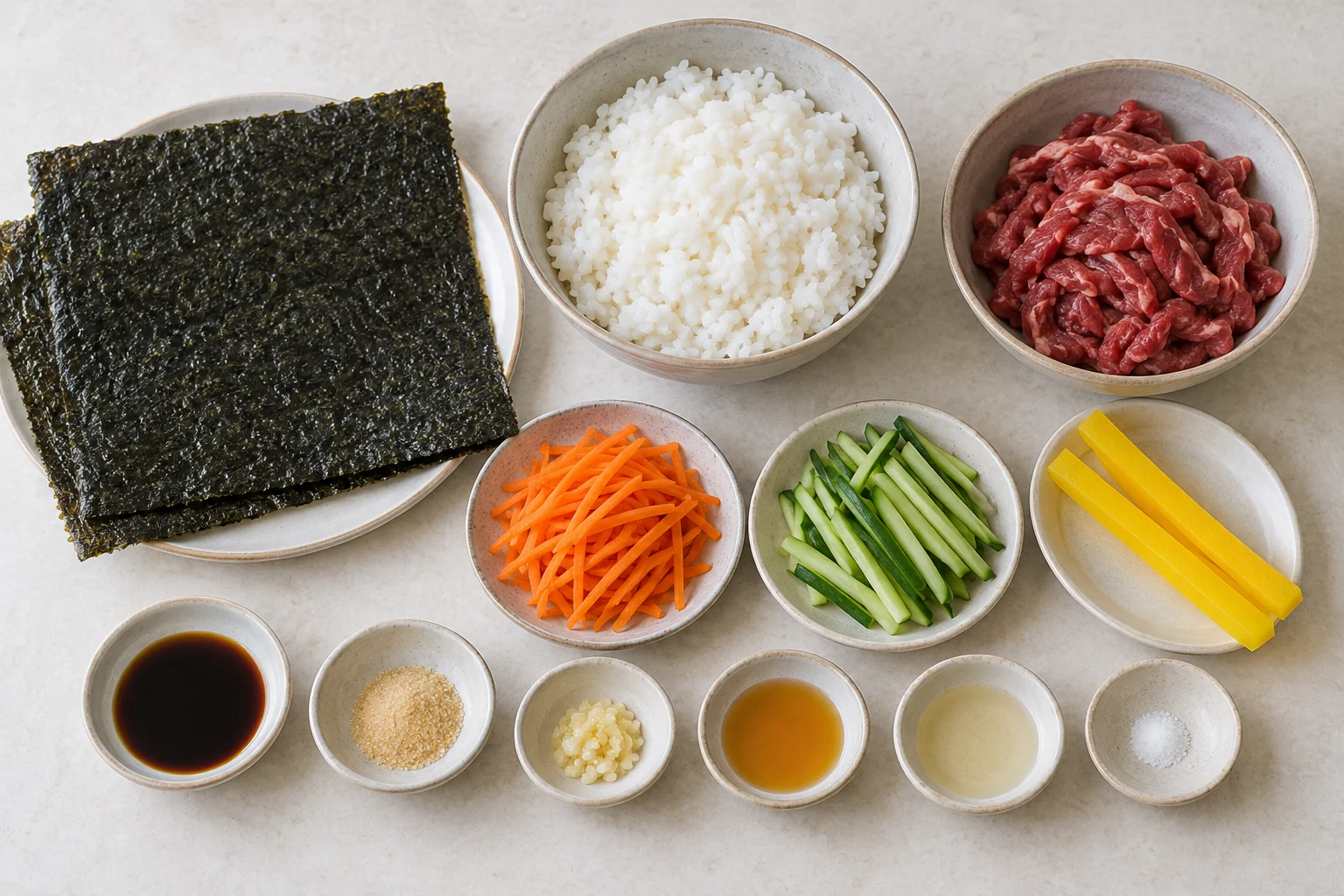
Everyday kitchen measurements
For 2 servings. Use a small 180 ml paper cup, a level eating spoon (about 15 ml) and a small teaspoon (about 5 ml).
How to fill the cup and spoons
Use the same cup and spoons throughout. Their sizes vary, so these amounts are approximate. Spoon flour in loosely and level the top without pressing. Measure vegetables after chopping, without packing them down. The amounts in g/ml are the original reference quantities. For part of a pack, use the specified pack weight and divide the contents evenly.
King Arthur Baking-
Substitute available
If Cooked short-grain rice is unavailable
If Korean rice is unavailable, use the same 2 paper cups of cooked Japanese sushi rice without vinegar. Long-grain rice is less sticky and the rolls may split.
-
Essential
Use whole sheets for kimbap or sushi. Small salted snack seaweed cannot wrap these rolls.
-
Substitute available
If Thinly sliced beef is unavailable
If beef is unavailable, use ⅓ of a 450 g pack (150 g) boneless chicken thigh, thinly sliced. Use the same marinade, stir-fry 5–7 minutes and check that the centre reaches 74°C; extend cooking if needed.
-
Optional
May be omitted; skip frying it and use the full teaspoon cooking oil for the beef.
-
Substitute available
If Cucumber is unavailable
If cucumber is unavailable, use 2 small washed lettuce leaves (about 20 g), thoroughly dried and torn to fit across the sheet. Add uncooked during rolling.
-
Substitute available
If Yellow pickled radish (danmuji) is unavailable
If danmuji is unavailable, use 2 drained dill-pickle spears (40 g), cut lengthwise and pat dry. The flavour will be more sour and less sweet.
-
Substitute available
If Soy sauce is unavailable
If soy sauce is unavailable, use 1 tablespoon (15 ml) tamari. Choose certified gluten-free tamari if necessary; it still contains soy.
-
Substitute available
If Sugar is unavailable
If sugar is unavailable, use 1 teaspoon honey (7 g) in the marinade. Lower the heat if it browns too quickly. Honey is unsuitable for children under 12 months.
-
Optional
May be omitted; skip adding it to the marinade.
-
Substitute available
If Sesame oil is unavailable
If sesame oil is unavailable, use 1 teaspoon (5 ml) neutral cooking oil in the rice, in addition to the separate frying oil. The nutty aroma will be absent.
-
Essential
Use half for the carrot and half for the beef. If omitting the carrot, use it all for the beef.
-
Optional
May be omitted from the rice; the beef and pickles already provide salt.
Tap each ingredient as you prepare it. Check product labels for egg, soy, sesame, wheat, fish or shellfish where relevant.
Step-by-step cooking
-
Step 1
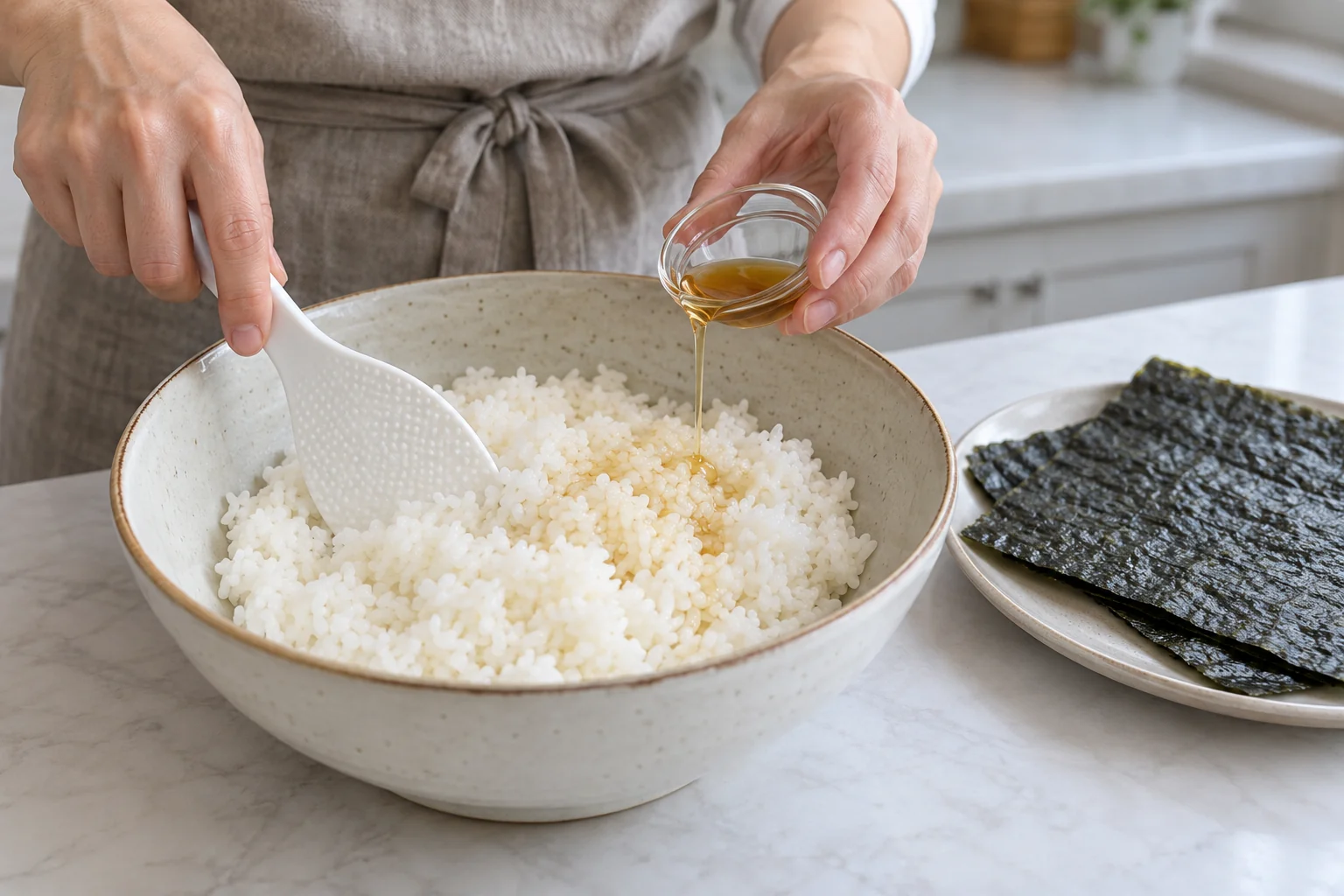
Use freshly cooked short-grain rice. Measure 2 loosely filled small paper cups of cooked rice into a wide bowl. Mix in the sesame oil and optional salt. Spread it out for a few minutes until warm enough to touch; do not leave it cooling for hours. Keep the seaweed dry.
-
Step 2
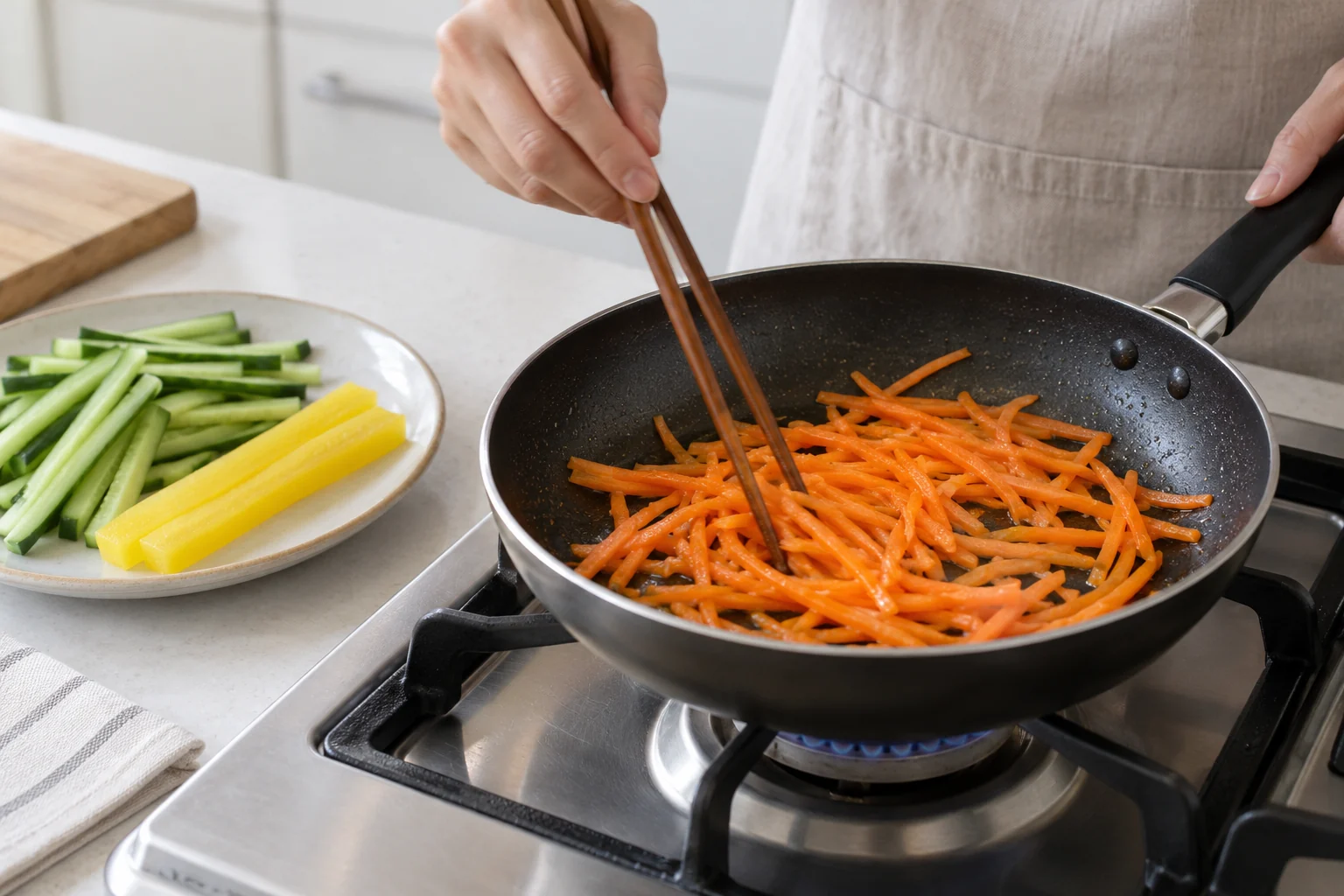
Cut the carrot into thin matchsticks and the cucumber into long thin sticks, removing watery seeds. Pat the cucumber and pickled radish dry. Heat ½ teaspoon cooking oil in a frying pan over medium heat. Stir-fry the carrot for 2–3 minutes until tender-crisp; transfer to a clean plate.
-
Step 3
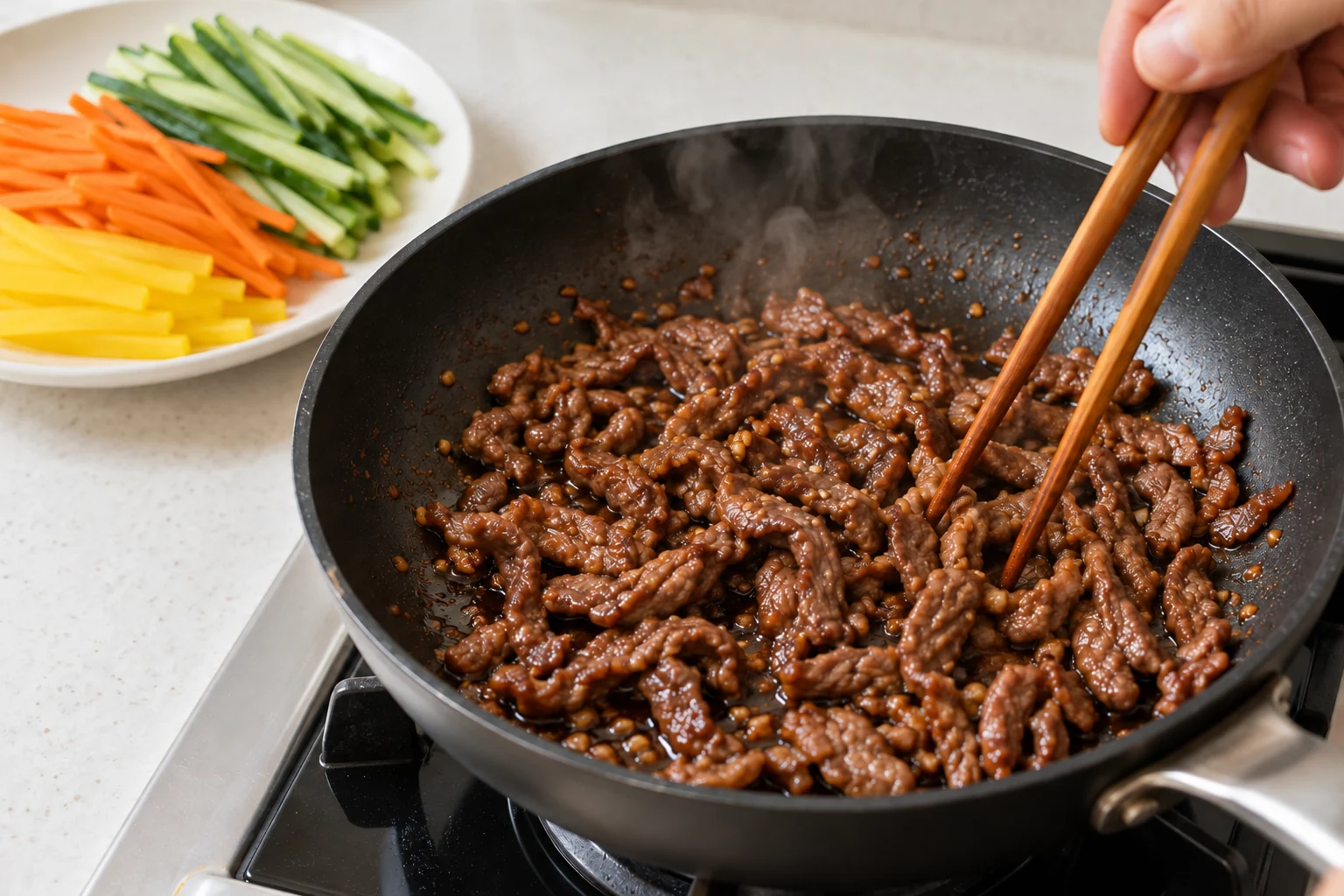
Cut the beef across the grain into short, very thin strips. Mix with 1 tablespoon soy sauce, 1 teaspoon sugar and optional garlic; marinate for 10 minutes in the refrigerator. Heat the remaining ½ teaspoon cooking oil over medium-high heat. Spread the beef in the pan and stir-fry for 3–5 minutes until cooked through and excess sauce has evaporated. Whole-cut beef should reach at least 63°C and rest for 3 minutes; chicken replacement must reach 74°C. Transfer to a clean plate and cool briefly until no longer steaming. Do not put cooked beef on the raw-meat plate.
-
Step 4
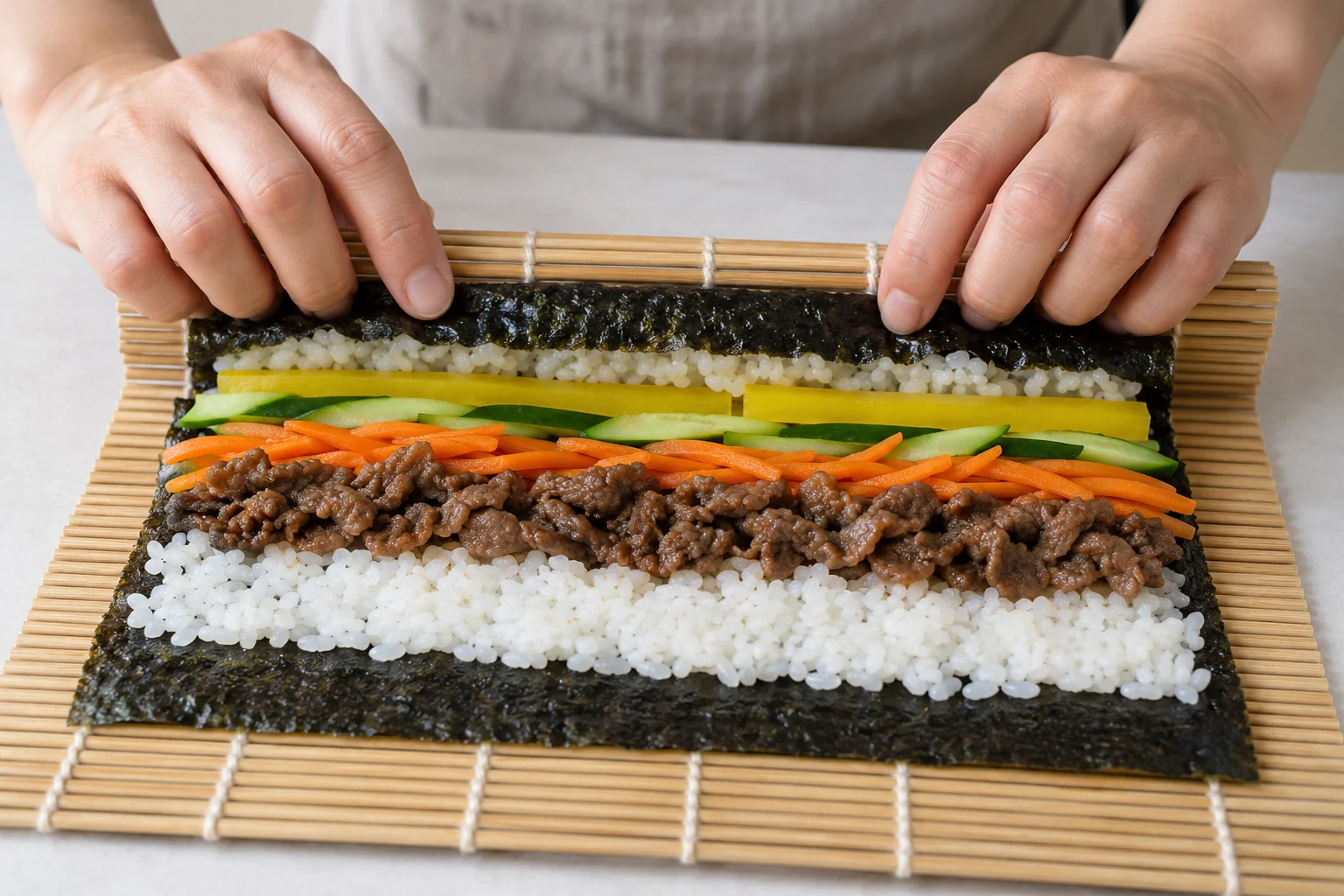
Put a full-size seaweed sheet shiny-side down on a bamboo mat or clean food-safe silicone mat. Spread half the rice thinly over it, leaving 3 cm bare at the far edge. Lay half of each prepared filling in narrow horizontal lines across the lower third. Lift the near edge over the filling, tuck firmly and roll away from you, lifting the mat so it stays outside the food. Seal the bare edge with a few rice grains and press gently. Repeat for the second roll; do not overfill.
-
Step 5
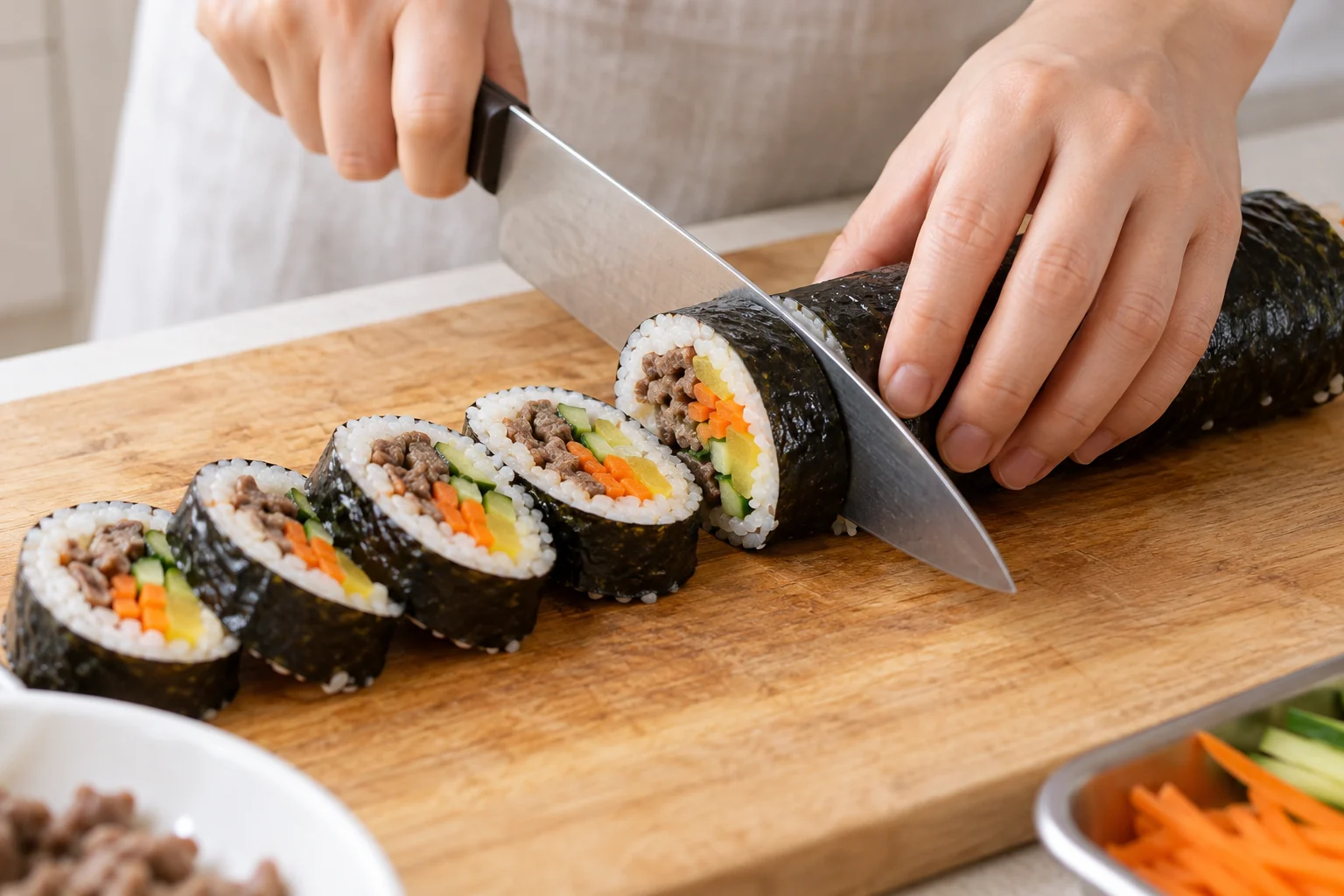
Rest the rolls seam-side down for 1 minute. Wipe a sharp knife with a damp clean cloth and cut each roll into 8 pieces, wiping between cuts. Serve promptly. A little filling may show at the ends; keep those pieces too.
Finished dish
Contains soy and usually wheat in soy sauce, plus sesame in sesame oil. Keep raw meat, its knife and board separate from ready-to-eat vegetables. The stated time includes the 10-minute marinade; prepare the rice and vegetables during that wait. Makes 2 full rolls, one per person; timing starts with cooked rice. If starting with dry rice, allow its package cooking time. One small paper cup means 180 ml, a tablespoon 15 ml and a teaspoon 5 ml. Do not add sushi vinegar. If using refrigerated leftover rice, reheat it to 74°C before briefly cooling for rolling. Refrigerate leftovers promptly, within 1 hour, at 4°C or below and eat within 24 hours. Carry in a chilled bag with ice packs; never leave rice rolls in a warm car.
Enjoy every bite
How to enjoy it
Make the filling lines thin rather than piling them high. A thin, even rice layer and well-drained fillings help the roll hold together.
Serve it with
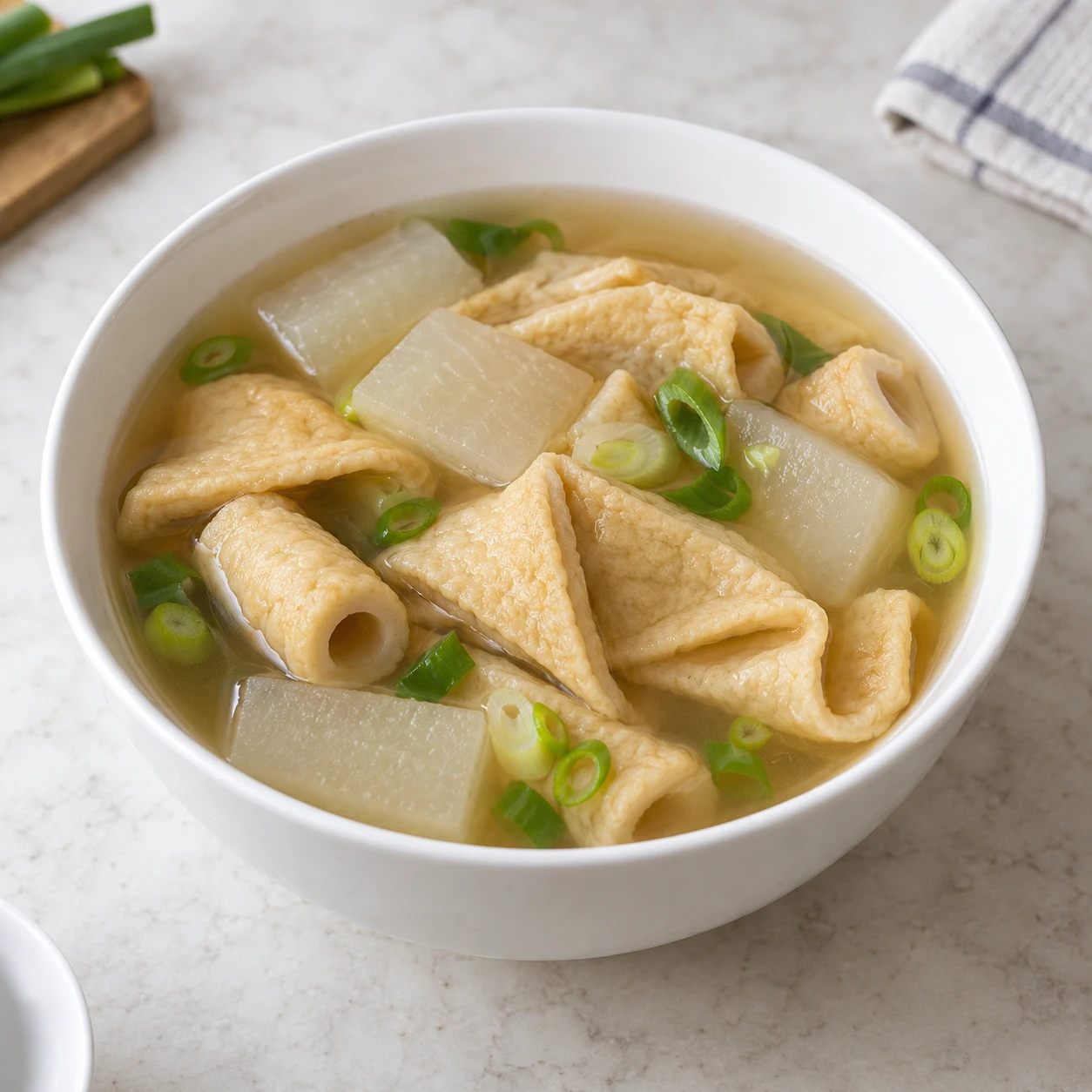
Eomuk tang — comforting Korean fish cake soup
A sip of warm broth makes a pleasant change between bites.
View recipe