Bibim guksu — sweet, tangy and spicy cold noodles
Cold thin wheat noodles tossed in a sweet-tangy gochujang sauce, with crisp cucumber and optional kimchi and egg. Rinse the noodles fully cold and drain well so the sauce stays flavorful.
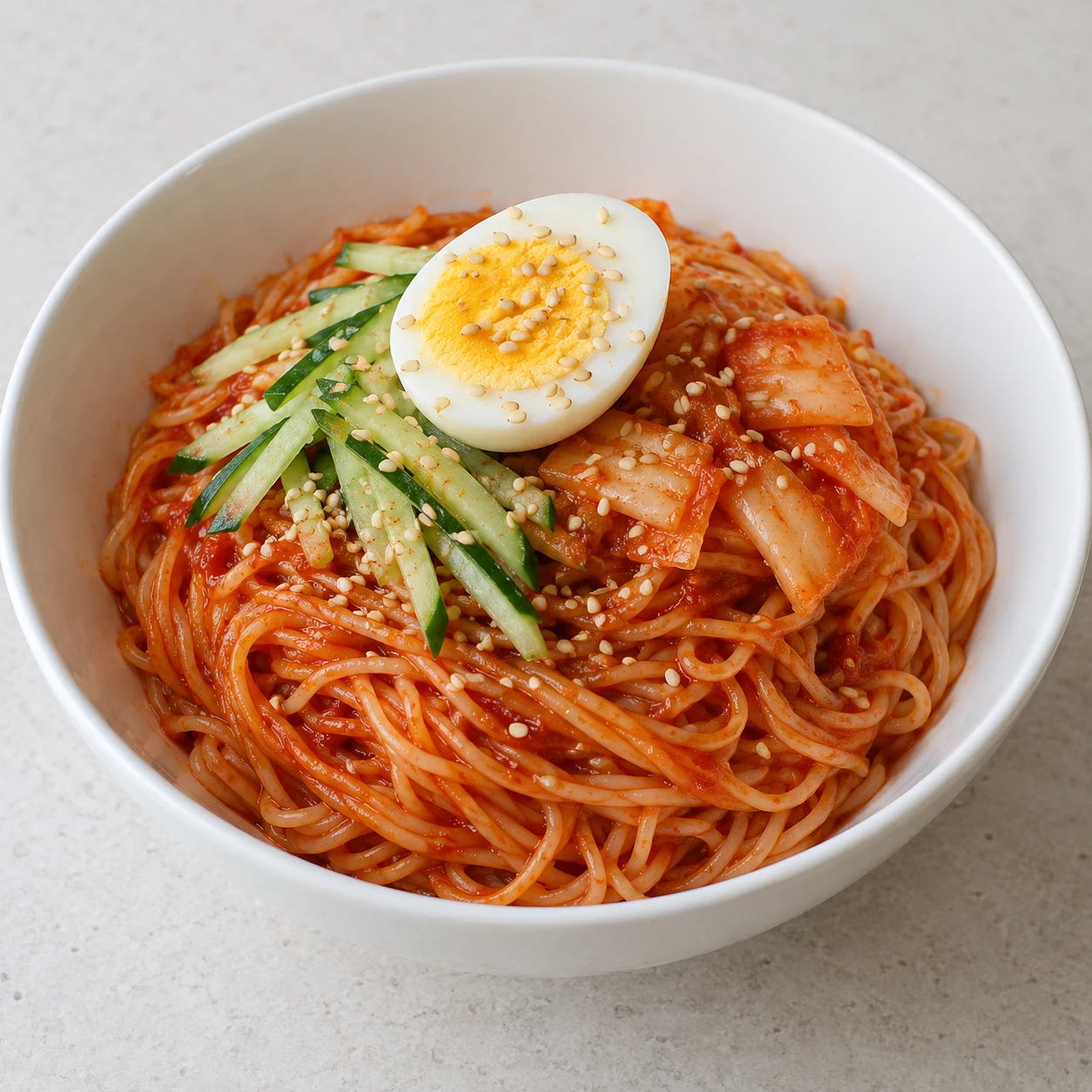
AI-generated cooking illustrations. Follow the written quantities and instructions.
Ingredients
2 servings
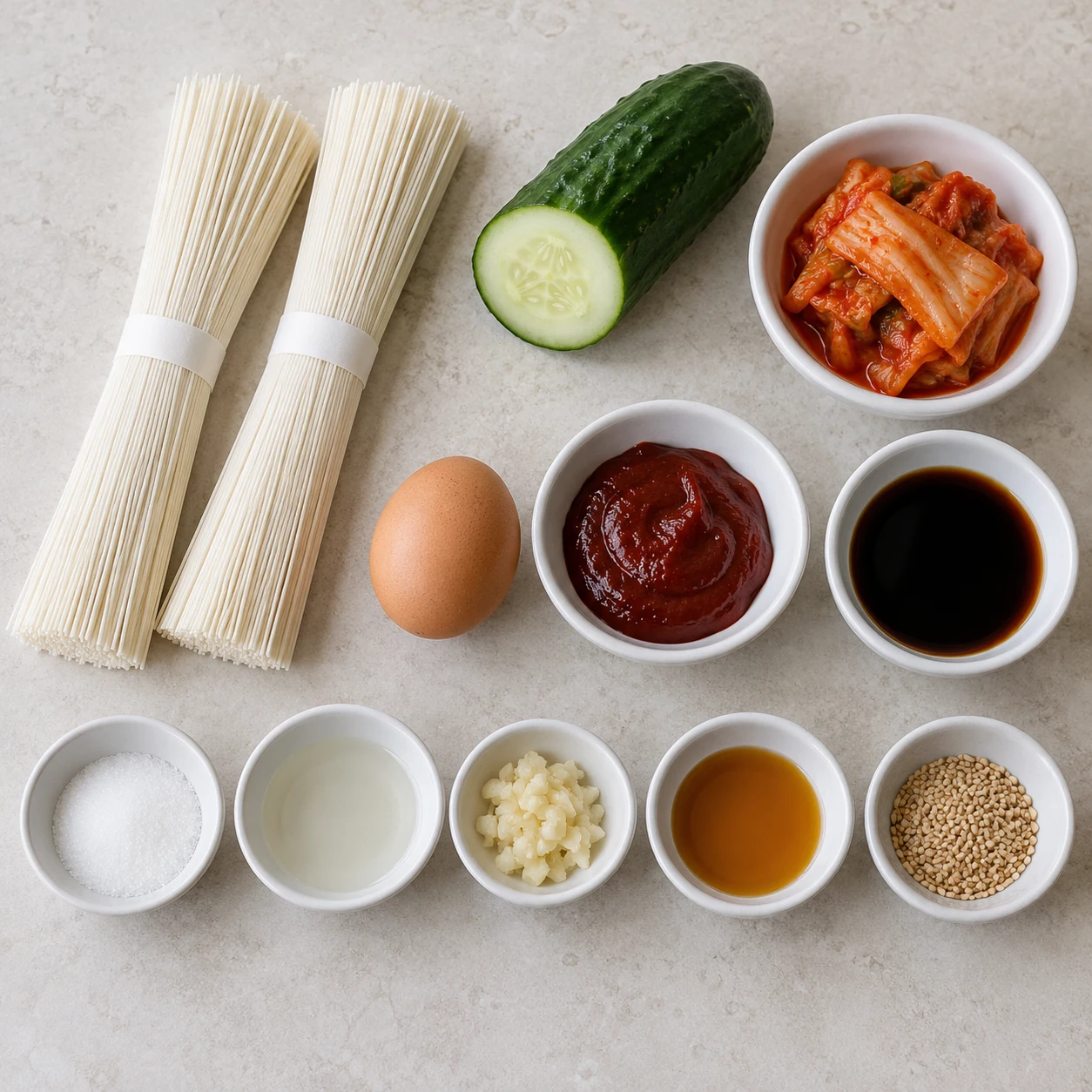
Everyday kitchen measurements
For 2 servings. Use a small 180 ml paper cup, a level eating spoon (about 15 ml) and a small teaspoon (about 5 ml).
How to fill the cup and spoons
Use the same cup and spoons throughout. Their sizes vary, so these amounts are approximate. Spoon flour in loosely and level the top without pressing. Measure vegetables after chopping, without packing them down. The amounts in g/ml are the original reference quantities. For part of a pack, use the specified pack weight and divide the contents evenly.
King Arthur Baking-
Substitute available
If Dry thin wheat noodles (somyeon) is unavailable
- Use instead
- Angel hair pasta (capellini)
- Substitute quantity
- ½ of a 400 g packReference quantity: 200 g
Use half of a 400 g pack of dry angel hair pasta. Cook according to that packet, usually 3–5 minutes, then rinse cold and drain as described in this recipe. It has a firmer bite than somyeon; this is a pasta variation. Avoid thick spaghetti and noodles already packed with soup seasoning.
-
Essential
This fermented chili paste gives the dish its characteristic sweet-spicy flavor. Choose mild gochujang for less heat; ordinary hot sauce is not an equivalent replacement.
-
Substitute available
If Soy sauce is unavailable
- Use instead
- Tamari
- Substitute quantity
- 1 level eating spoonReference quantity: 15 ml
Use the same spoon amount at the same step. Choose a similar salt level and check the label if avoiding wheat.
-
Substitute available
If Sugar is unavailable
- Use instead
- Honey
- Substitute quantity
- 1 level eating spoonReference quantity: 15 ml
Use the same spoon amount in the sauce. The sauce will be a little wetter, so reduce it gently rather than using high heat. Do not serve honey to infants under 12 months.
-
Substitute available
If Rice vinegar, about 5% acidity is unavailable
- Use instead
- Apple cider vinegar, about 5% acidity
- Substitute quantity
- 2 level eating spoonsReference quantity: 30 ml
Use the same spoon amount in the dressing. The fruit aroma will differ. Do not use concentrated cleaning vinegar or vinegar essence.
-
Substitute available
If Cucumber is unavailable
- Use instead
- Carrot
- Substitute quantity
- ½ small carrotReference quantity: about 50 g
Peel and cut into very thin matchsticks. Use raw at the same vegetable mixing step; the crunch is firmer and the flavor sweeter.
-
Optional
Omit the kimchi from the chopping and tossing steps if unavailable. Keep the dressing amounts unchanged; the noodles will be less fermented and a little milder.
-
Optional
Omit the egg topping and skip its boiling step if unavailable. The noodles still work; no other quantity changes are needed.
-
Optional
Omit the raw garlic from the dressing for a gentler flavor. No other adjustment is needed.
-
Optional
Omit the sesame oil from the final tossing step if unavailable. The noodles will have less nutty aroma; do not replace it with extra sauce.
-
Optional
Omit the sesame seed topping if unavailable. The dish will have less nutty crunch; the sauce and cooking times stay the same.
Tap each ingredient as you prepare it. Check product labels for egg, soy, sesame, wheat, fish or shellfish where relevant.
Step-by-step cooking
-
Step 1
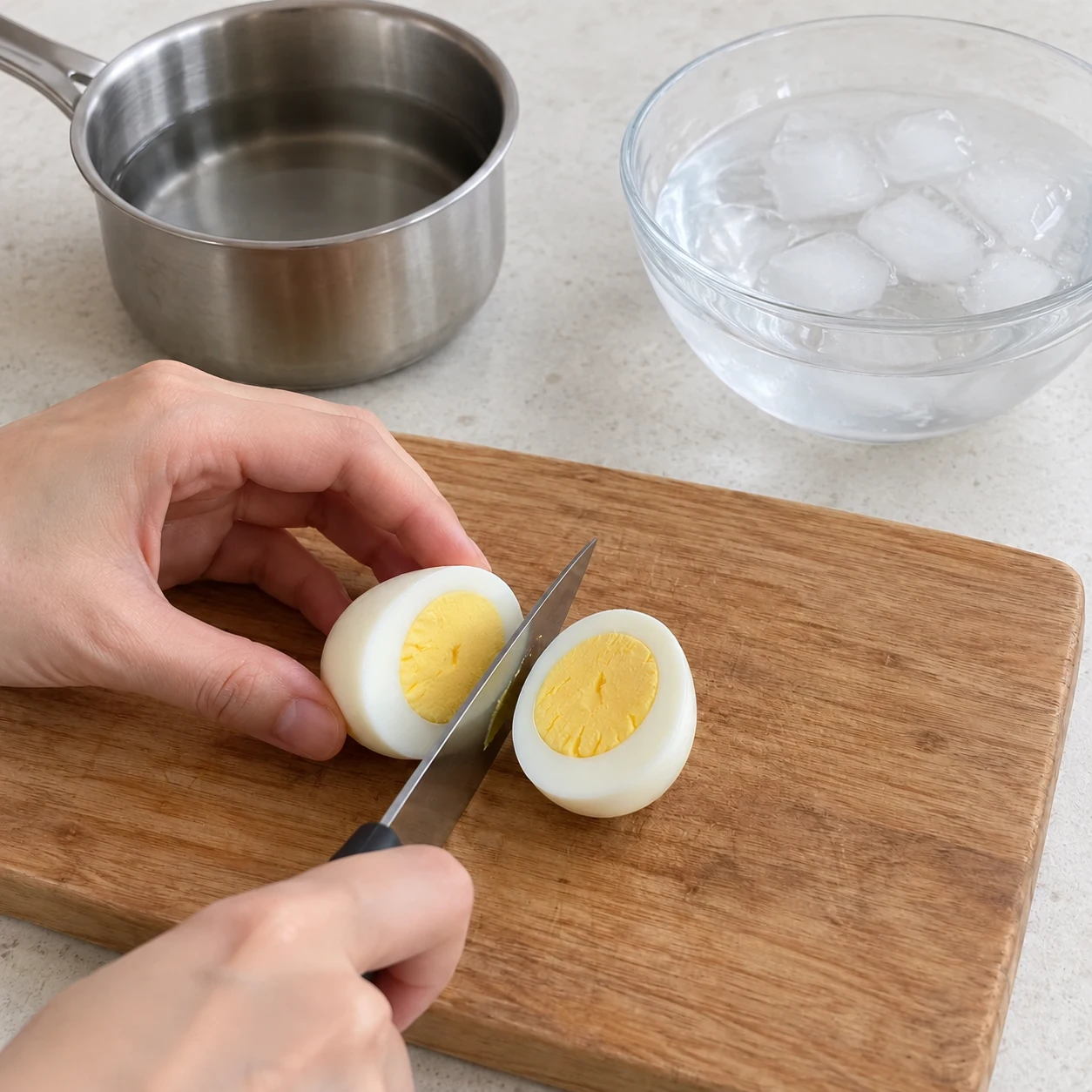
Cook the optional egg first. Put 1 egg in a small saucepan, cover with plain water and bring to a gentle boil. Reduce to a gentle simmer and cook for 10–12 minutes, until the white and yolk are set. Cool under cold water, peel and cut in half. While the egg cooks, prepare the sauce and vegetables. Skip this step if not using an egg.
-
Step 2
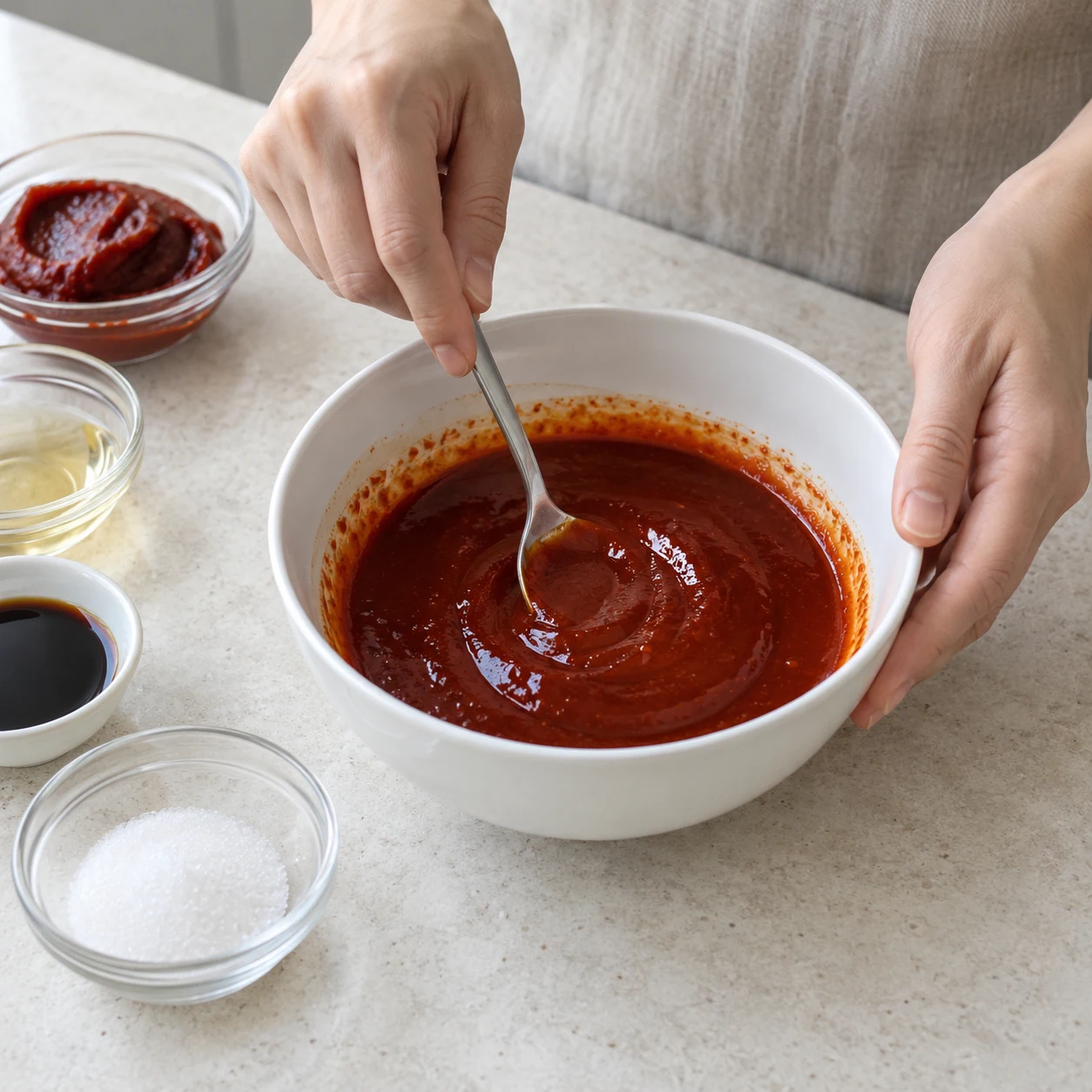
Make the cold dressing. Mix 2 level eating spoons gochujang, 1 level eating spoon soy sauce, 1 level eating spoon sugar and 2 level eating spoons rice vinegar. Add the optional 1 small teaspoon minced garlic. Stir until the sugar dissolves. Keep this dressing in the refrigerator while cooking the noodles. Do not add water; wet noodles and vegetables would dilute it.
-
Step 3
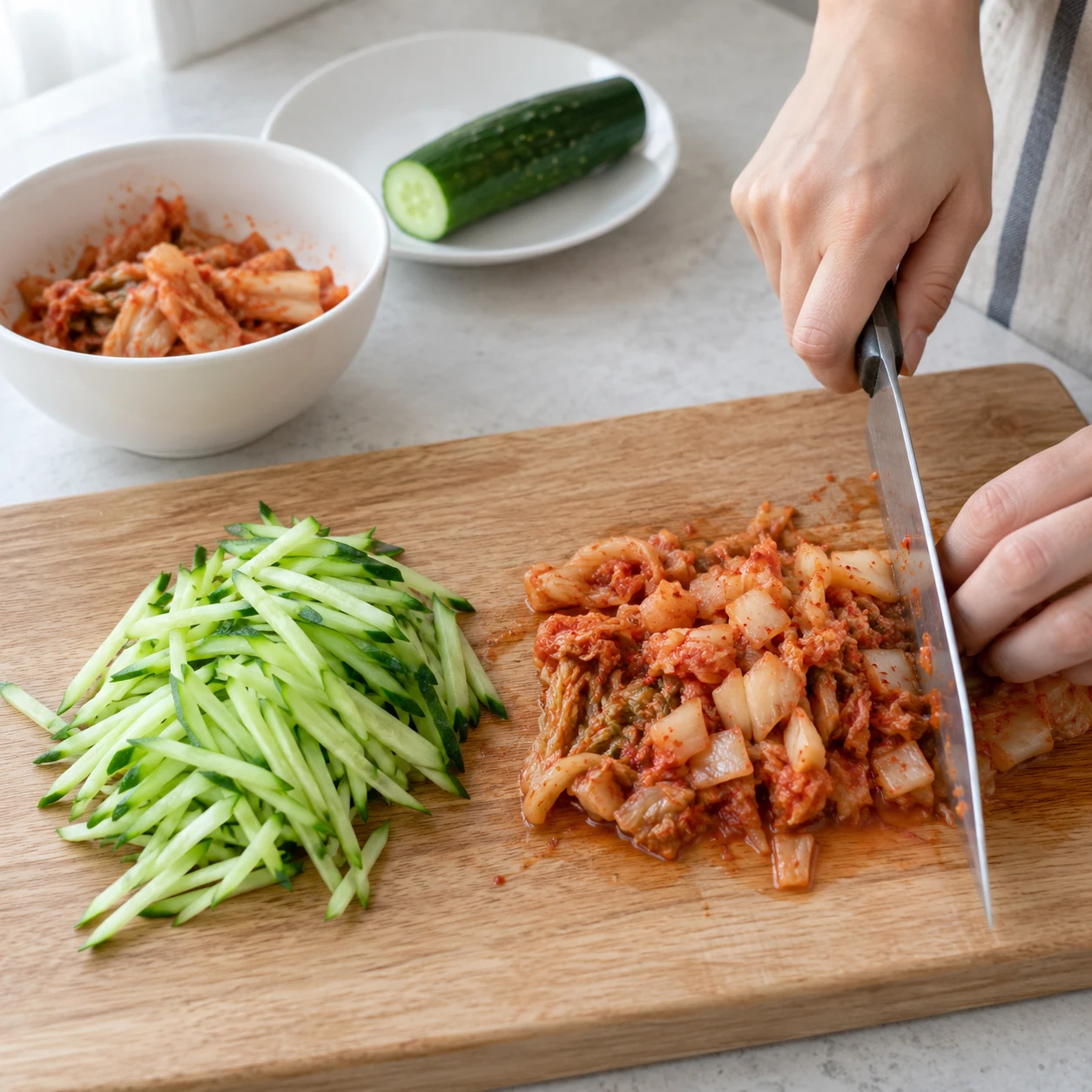
Prepare the fresh toppings. Rinse ½ cucumber and cut into thin matchsticks. If using kimchi, drain ¼ small paper cup of kimchi and chop into small pieces. Keep both cool. Do not pour kimchi brine into the dressing; its salt and acidity would change the balance. If replacing cucumber with carrot, cut the carrot very thin and use it raw.
-
Step 4
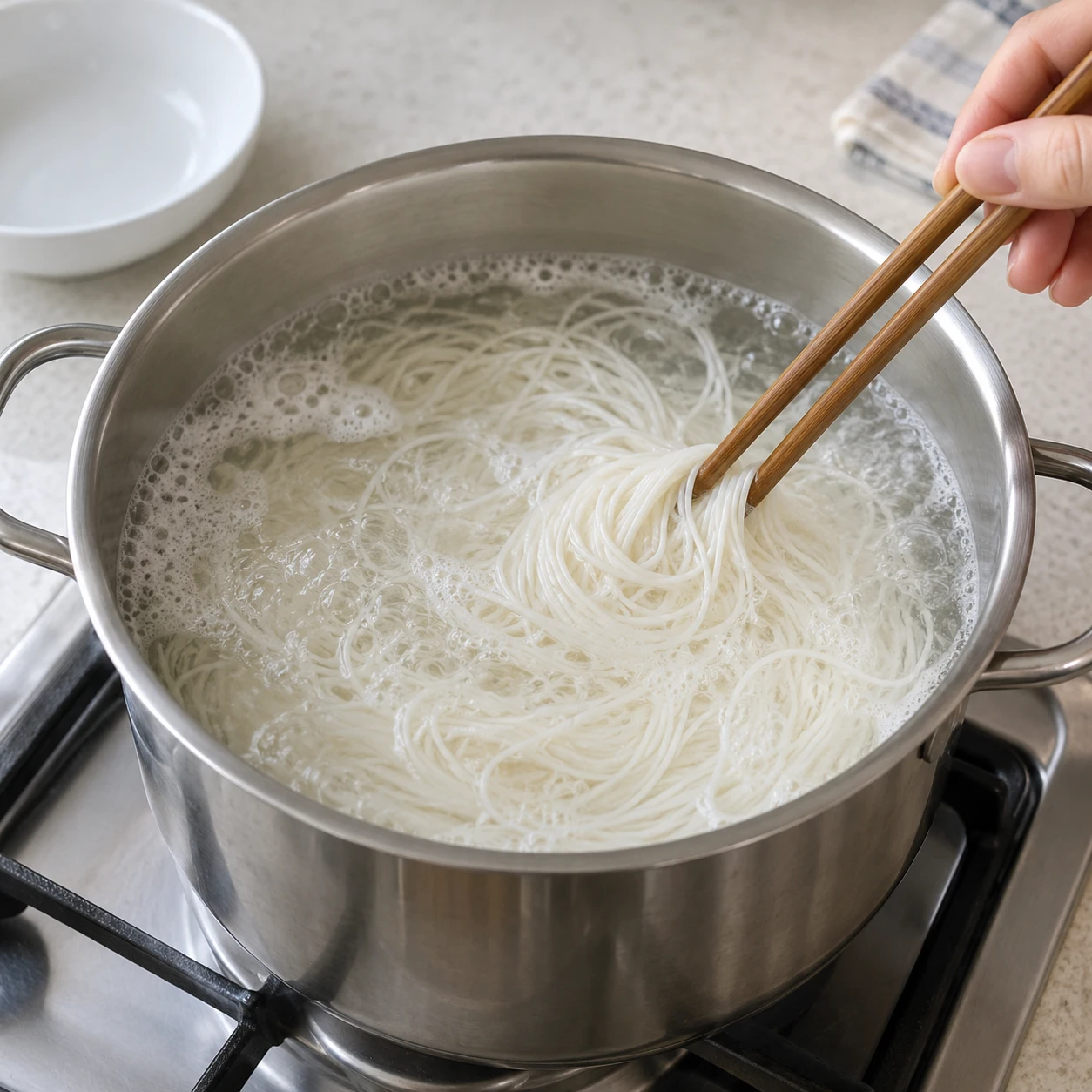
Boil the noodles. Bring a large pot of plain water to a full boil. Add ½ of a 400 g pack of dry thin wheat noodles. Stir to loosen the strands and cook according to the packet, usually 3–4 minutes. Lower the heat if foam climbs toward the rim. Taste a cooled strand: it should be tender without a hard center.
-
Step 5
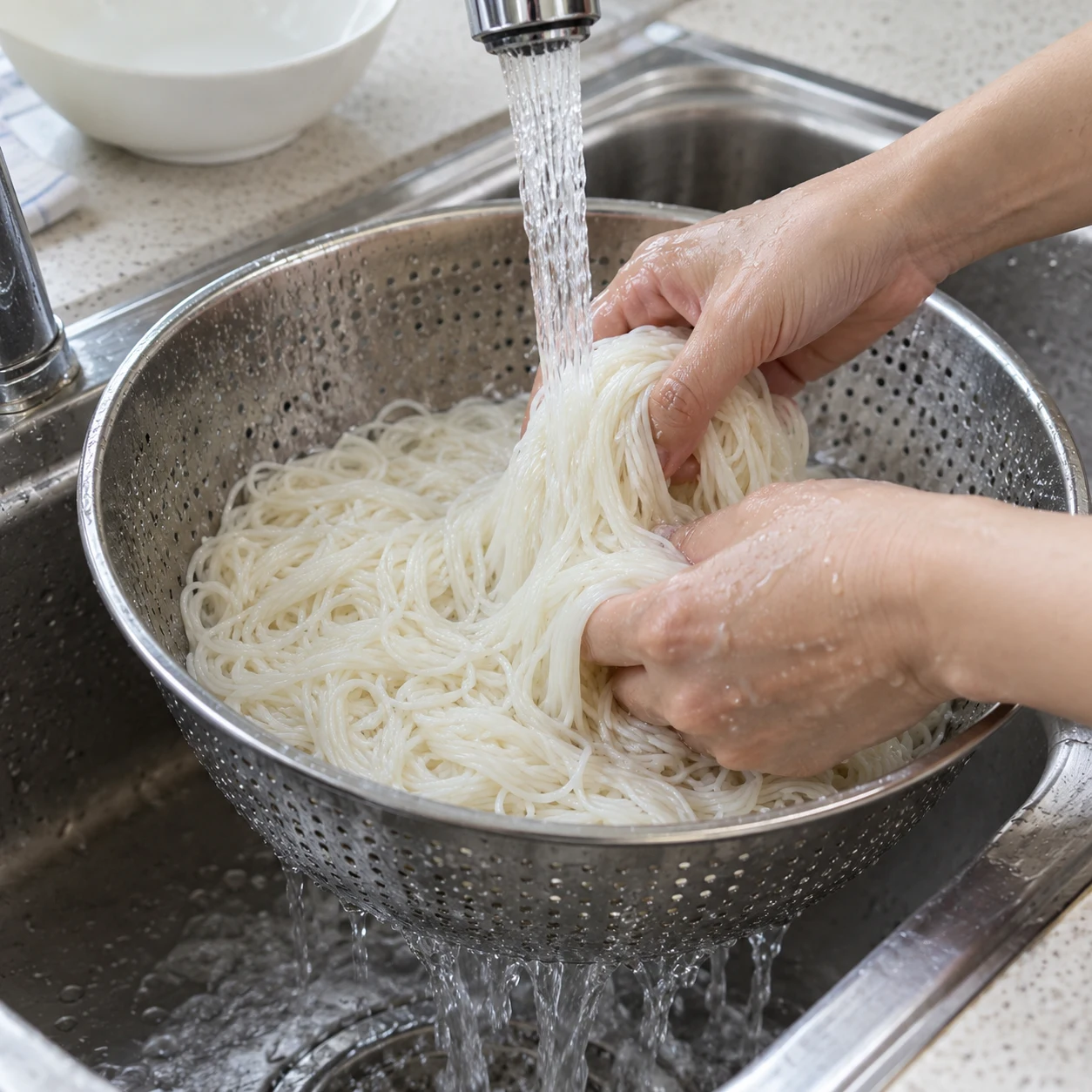
Rinse fully cold and drain. Drain into a colander and rinse under cold running water until the noodles are completely cool. Only after they are cool, gently rub the strands between clean hands to remove surface starch. Rinse again until the water runs clearer, then leave to drain for 1 minute and shake the colander well. Excess water makes the sauce weak and watery.
-
Step 6
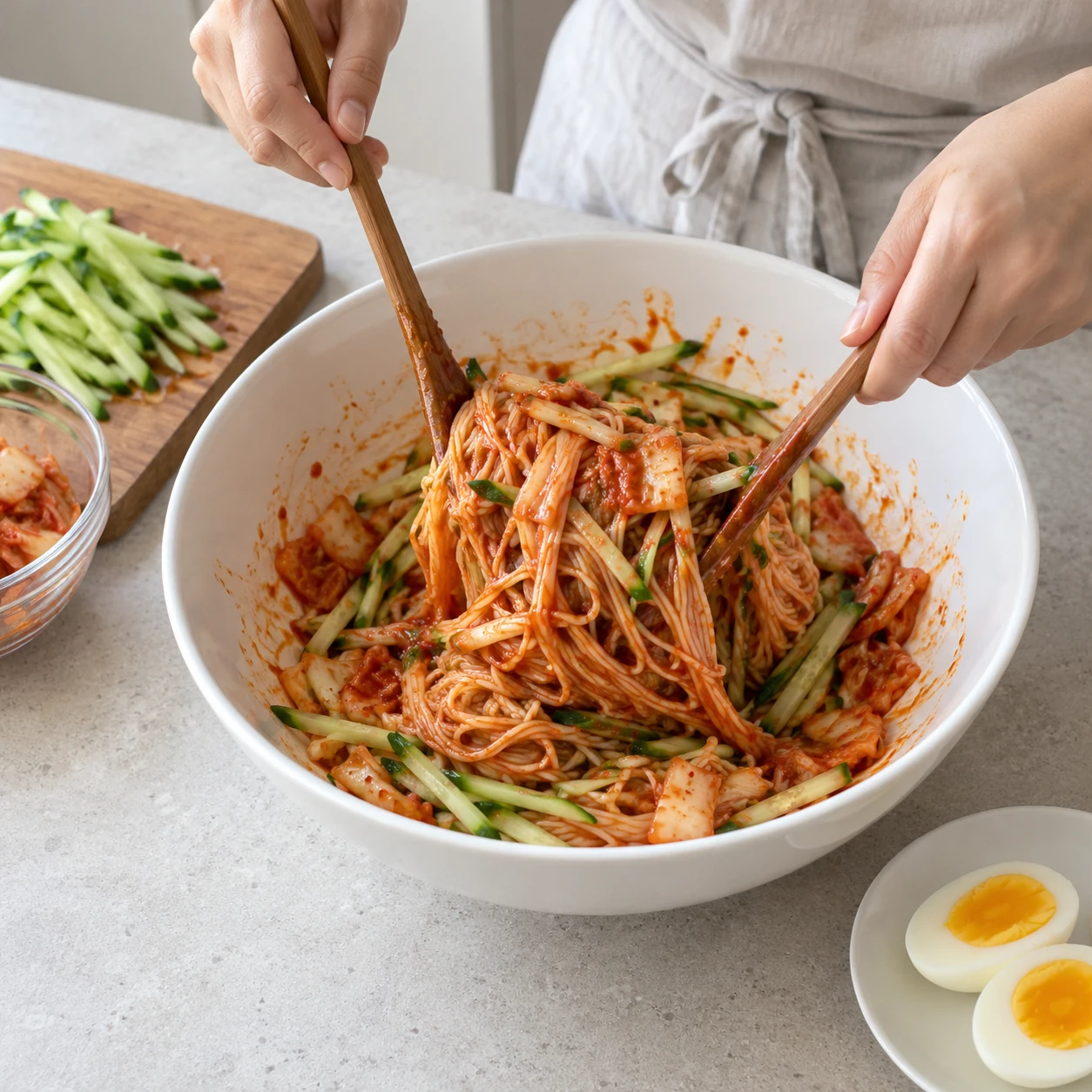
Toss and serve straight away. Put the cold drained noodles into a large bowl with the chilled dressing, cucumber and optional chopped kimchi. Add the optional 2 small teaspoons sesame oil and toss until every strand is evenly coated. Divide into 2 bowls. Top each with half the boiled egg and sprinkle with the optional 1 small teaspoon sesame seeds divided between the bowls. Serve immediately; the sauce remains spicy even if the raw garlic is omitted.
Finished dish
A level eating spoon is about 15 ml, a small teaspoon about 5 ml, and the small paper cup used here about 180 ml. Use the same spoon or cup throughout; ordinary cutlery and cups vary in size. Choose mild gochujang for less heat. This dish is cold but still spicy; it is not automatically suitable for children who do not eat chili. A plain sauce made from another condiment would make a different dish. For advance preparation, keep the sauce, cooked egg and cut vegetables refrigerated separately. Cook and rinse the noodles just before serving, because dressed noodles become soft and watery. Refrigerate perishable ingredients within 2 hours and use cooked leftovers within 3–4 days. Check wheat, soy, sesame and egg labels where relevant.