Andong jjimdak — soy-braised chicken with glass noodles
A home-style Andong-inspired braise with chicken, potatoes and chewy glass noodles in a savory-sweet soy sauce. Add the noodles near the end so they absorb sauce without becoming mushy.
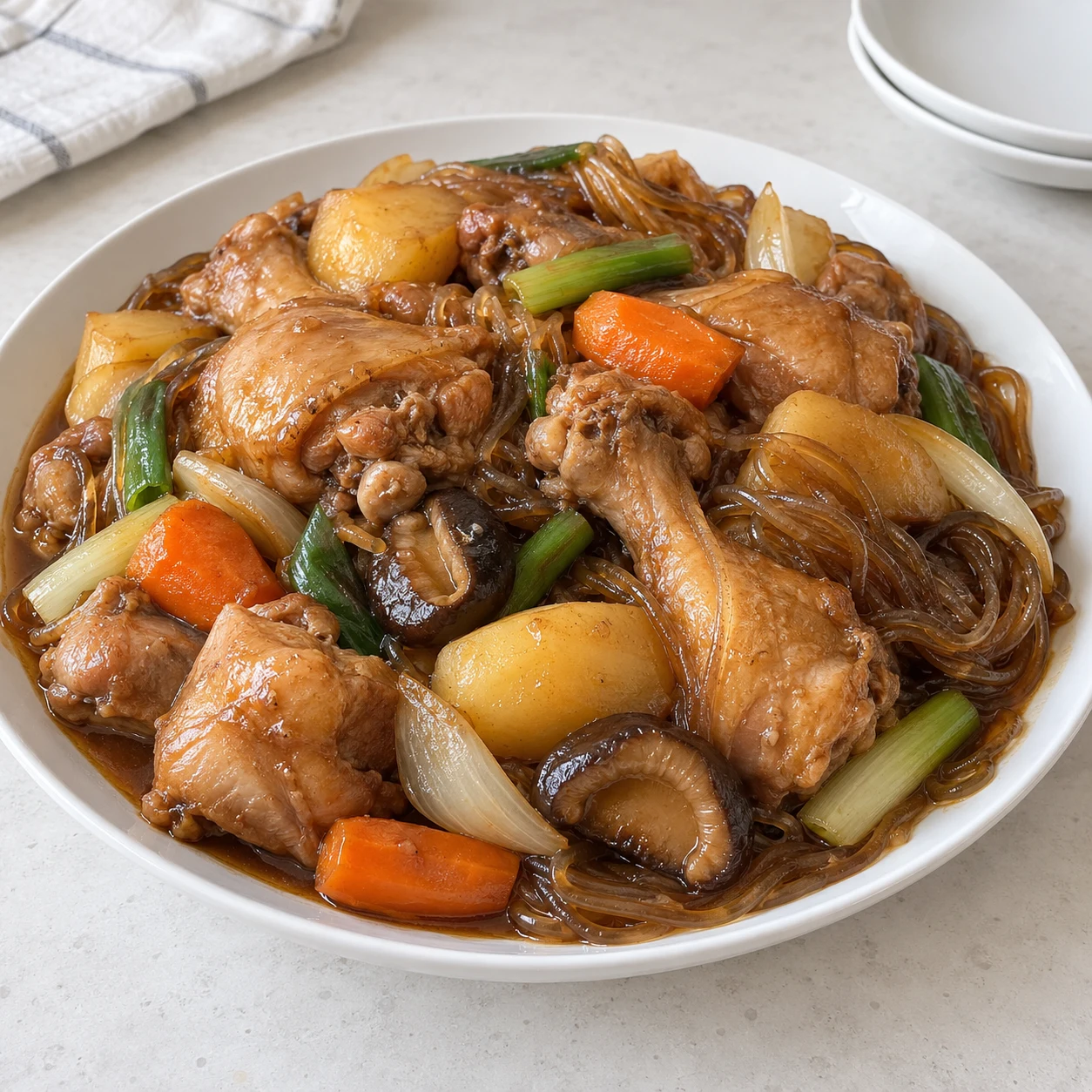
AI-generated cooking illustrations. Follow the written quantities and instructions.
Ingredients
4 servings
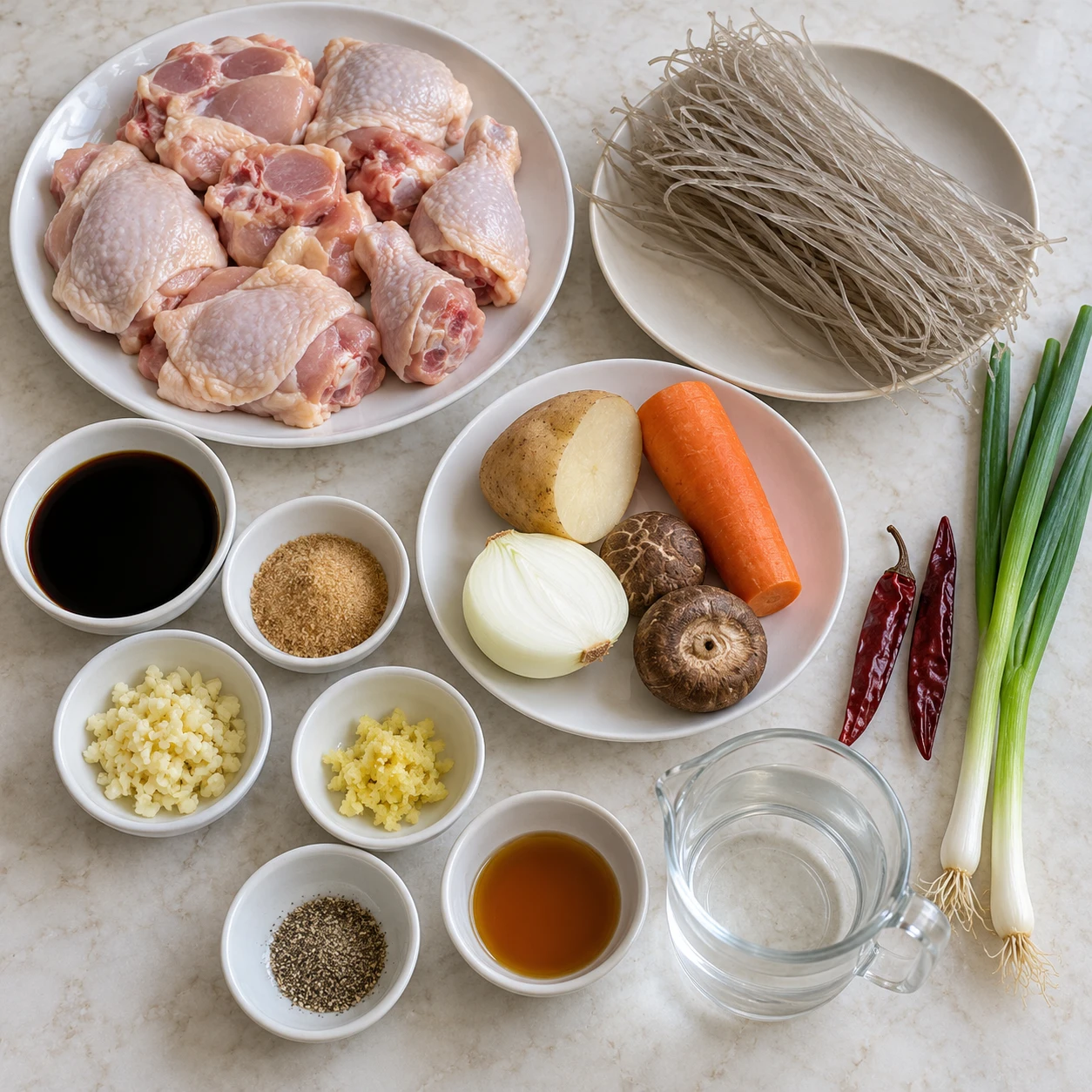
Everyday kitchen measurements
For 4 servings. Use a small 180 ml paper cup, a level eating spoon (about 15 ml) and a small teaspoon (about 5 ml).
How to fill the cup and spoons
Use the same cup and spoons throughout. Their sizes vary, so these amounts are approximate. Spoon flour in loosely and level the top without pressing. Measure vegetables after chopping, without packing them down. The amounts in g/ml are the original reference quantities. For part of a pack, use the specified pack weight and divide the contents evenly.
King Arthur Baking-
Substitute available
If Bone-in chicken pieces is unavailable
- Use instead
- Boneless skinless chicken thigh
- Substitute quantity
- 1 of a 600 g packReference quantity: 600 g
Use 1 small 600 g pack cut into 4 cm pieces in place of the bone-in pack. Skip the preliminary boiling step, and begin checking the chicken after 20 minutes of total simmering. The chicken must reach 74°C; still cook the potatoes and noodles until tender.
-
Substitute available
If Korean sweet-potato glass noodles (dangmyeon) is unavailable
- Use instead
- Mung bean glass noodles
- Substitute quantity
- ¼ of a 400 g packReference quantity: 100 g
Use a quarter of a 400 g pack. Soak according to its packet, usually 5–10 minutes, instead of soaking for 30 minutes. Start the braise with 3½ paper cups water instead of 4, and add these fine noodles only for the last 1–2 minutes, not 5–7 minutes. The texture is softer.
-
Substitute available
If Potato is unavailable
- Use instead
- Sweet potato
- Substitute quantity
- 1 small sweet potatoReference quantity: about 150 g
Peel and cut into 3 cm chunks. Add 5 minutes after the carrot and onion so it does not fall apart. Check tenderness before adding the noodles; the dish will be sweeter.
-
Optional
Omit the carrot from the cutting and cooking steps if unavailable. The dish will have less color and sweetness; the other quantities stay the same.
-
Optional
Omit the onion from the preparation and cooking steps. The dish will have less sweetness and fewer vegetables; keep the remaining quantities unchanged.
-
Optional
Omit the mushrooms from the vegetable stage if unavailable. The sauce will have less mushroom flavor; the other quantities stay the same.
-
Substitute available
If Soy sauce is unavailable
- Use instead
- Tamari
- Substitute quantity
- 5 level eating spoonsReference quantity: 75 ml
Use the same spoon amount at the same step. Choose a similar salt level and check the label if avoiding wheat.
-
Substitute available
If Sugar is unavailable
- Use instead
- Honey
- Substitute quantity
- 2 level eating spoonsReference quantity: 30 ml
Use the same spoon amount in the sauce. The sauce will be a little wetter, so reduce it gently rather than using high heat. Do not serve honey to infants under 12 months.
-
Substitute available
If Minced garlic is unavailable
- Use instead
- Garlic powder
- Substitute quantity
- ¾ small teaspoonReference quantity: about 1.5 g
Mix this small amount of powder into the sauce in place of fresh garlic. Use plain garlic powder, not garlic salt.
-
Optional
Omit the ginger from the sauce if unavailable. The aroma will be milder; keep the garlic and all other quantities unchanged.
-
Essential
Use the small 180 ml paper cup described in the household measurement guide. A large mug is not the same size.
-
Optional
Omit the dried chilies for a mild version. Add no other chili sauce; the soy, garlic and sugar amounts stay unchanged.
-
Optional
Omit the spring onion at the finishing step if unavailable. It adds fresh aroma, but the dish still works without it.
-
Optional
Omit the sesame oil at the finishing step if unavailable. The dish will have less nutty aroma; no other quantity or cooking-time change is needed.
-
Optional
Omit this pinch from the sauce if unavailable. The dish will be less peppery; no other change is needed.
Tap each ingredient as you prepare it. Check product labels for egg, soy, sesame, wheat, fish or shellfish where relevant.
Step-by-step cooking
-
Step 1
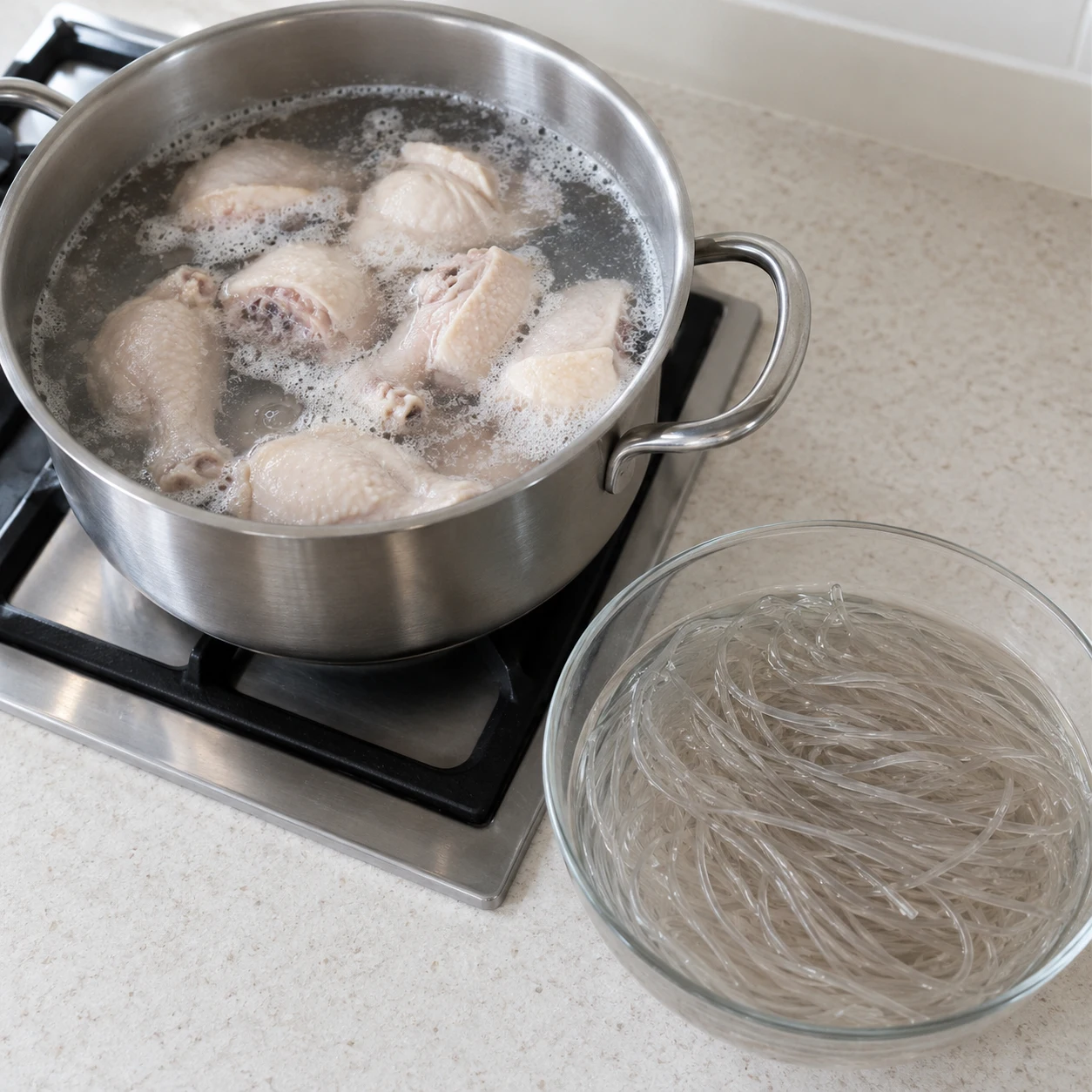
Soak the noodles and prepare the chicken. Cover ¼ of a 400 g pack of Korean sweet-potato glass noodles with plain cool water and soak for 30 minutes while preparing the rest. Use 1 small 800 g pack of bone-in chicken pieces; pat dry without washing raw chicken. Put the chicken in a pot with extra water to cover, bring to a boil and boil for 3 minutes. Drain and discard this water, skim off loose foam and clean the pot. The chicken is not yet fully cooked.
-
Step 2
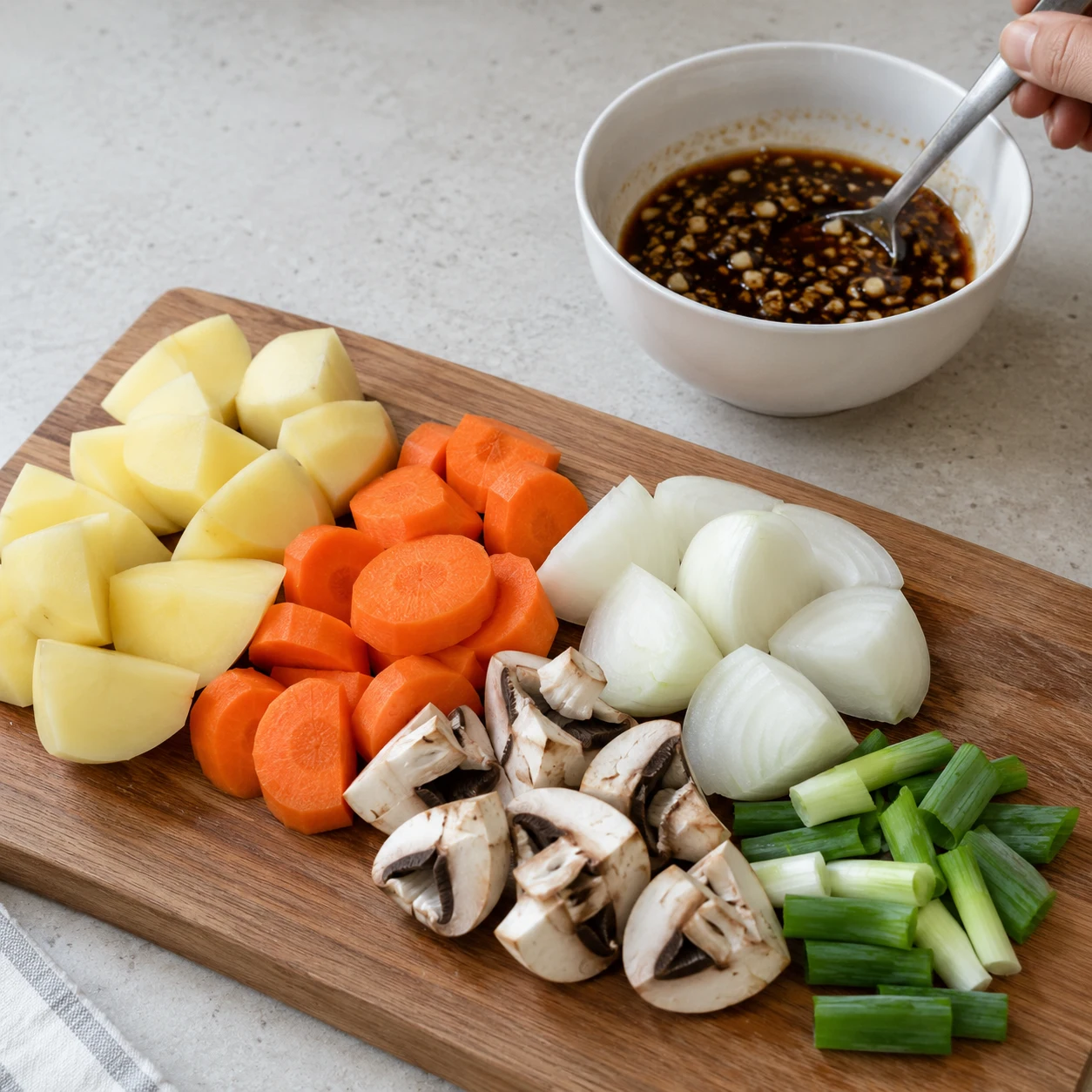
Prepare vegetables and sauce. Peel 1 medium potato and cut into 3 cm chunks. Cut ½ small carrot into thick slices, slice ½ onion and quarter 2 mushrooms. Cut 1 spring onion into short lengths. Mix 5 level eating spoons soy sauce, 2 level eating spoons sugar and 3 small teaspoons minced garlic, plus the optional ½ small teaspoon ginger and pinch of black pepper.
-
Step 3
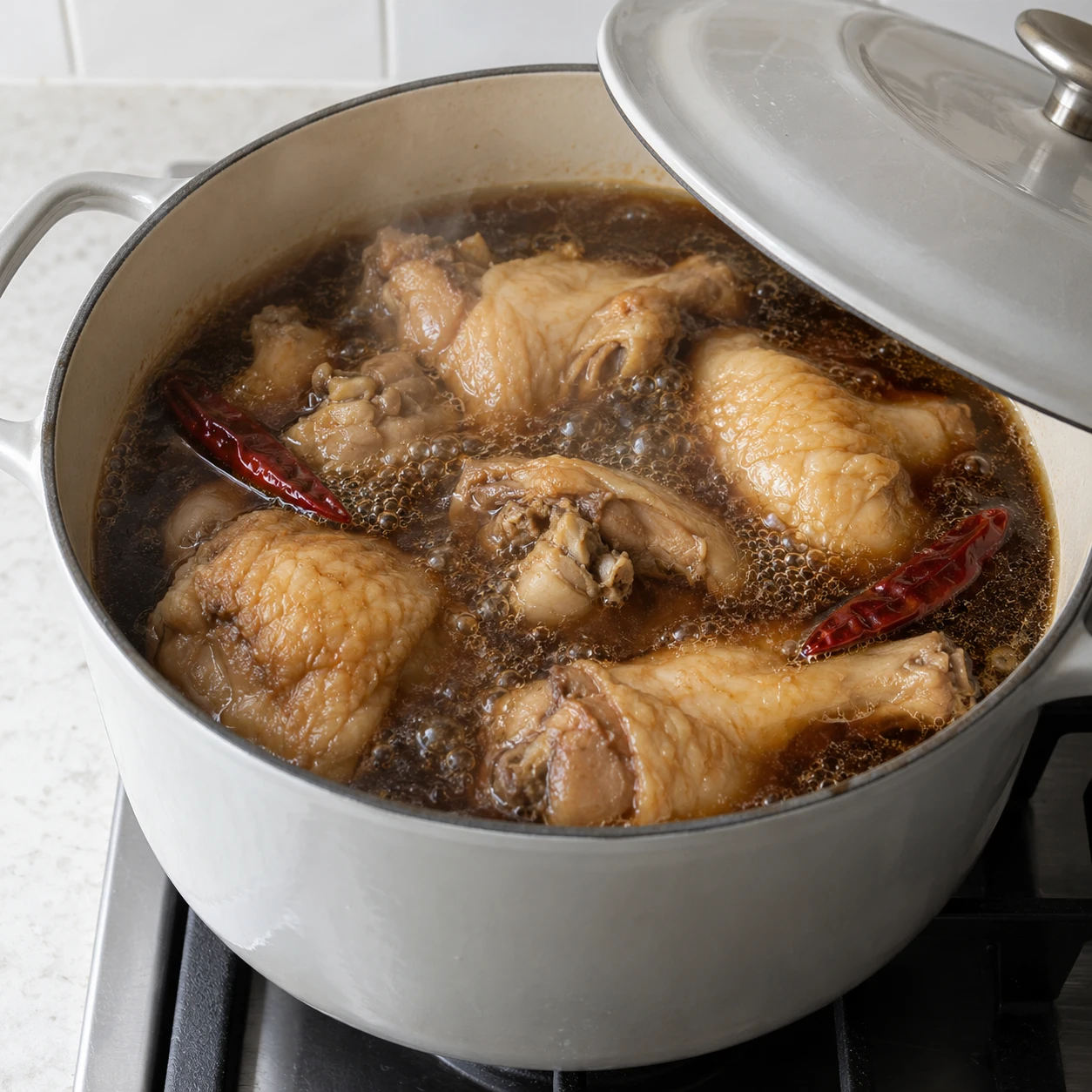
Begin the chicken braise. Put the chicken into the clean pot. Add all the soy sauce mixture and 4 small paper cups fresh water. Add the optional 2 dried chilies. Bring to a boil, then lower to a steady gentle simmer. Cover with a lid slightly ajar and cook for 15 minutes, turning the chicken once. Do not taste the sauce until the chicken has cooked through.
-
Step 4
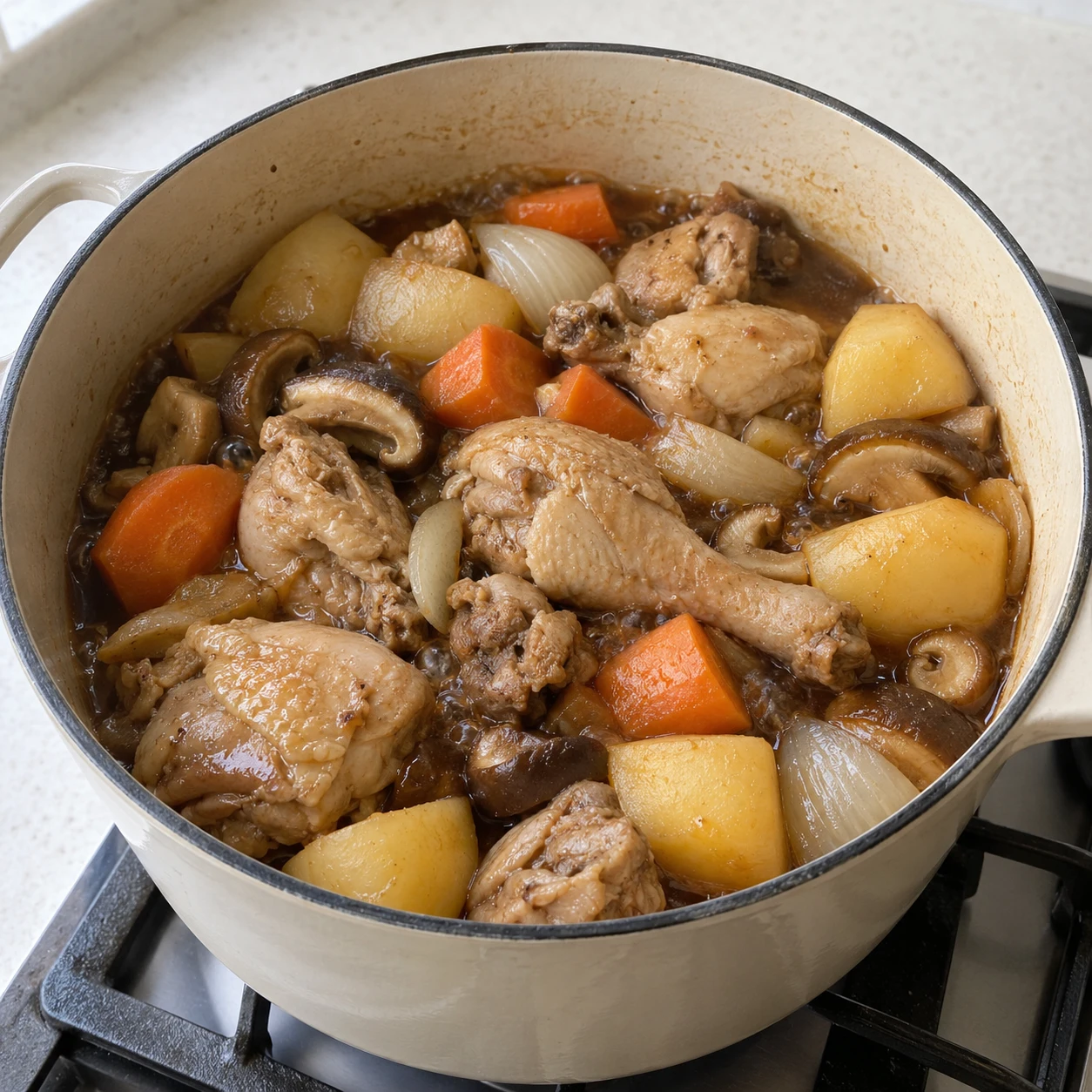
Cook the vegetables. Add the potato, carrot, onion and mushrooms. Cover again and simmer for 15–20 minutes, turning gently once. A fork should pierce a potato chunk easily. Check the chicken in its thickest part away from bone: it must reach 74°C with no raw-looking center. Continue simmering if either the chicken or potato is not ready. If using sweet potato instead, add it 5 minutes after the other vegetables.
-
Step 5
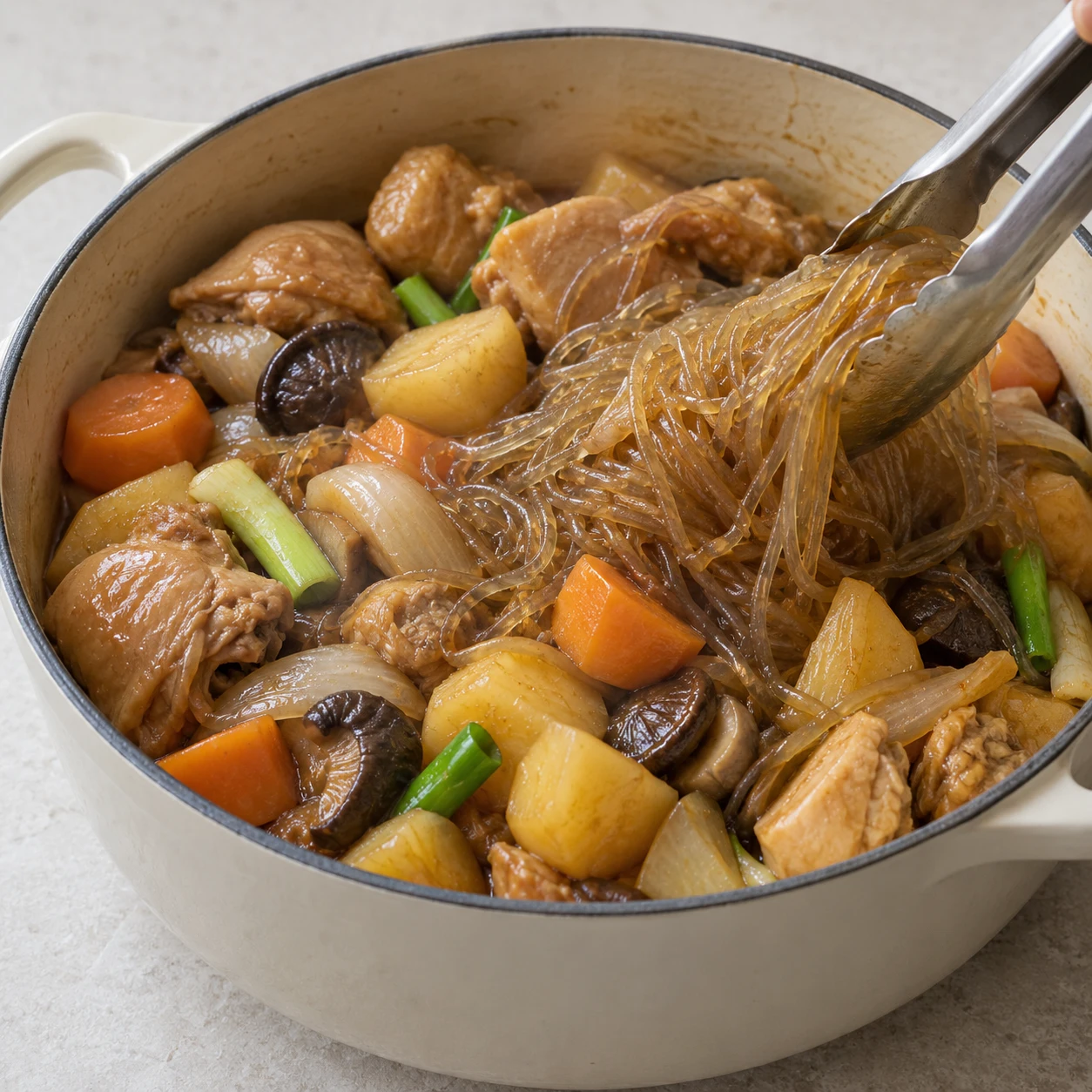
Add the drained noodles last. Drain the soaked Korean glass noodles and spread them into the simmering sauce. Toss gently with tongs for 5–7 minutes until the strands are flexible and translucent with no hard center. Add the spring onion during the last 1 minute. If the sauce is drying before the noodles soften, add ½ small paper cup hot water. Keep a little sauce in the pot; the noodles continue absorbing liquid after the heat is turned off.
-
Step 6
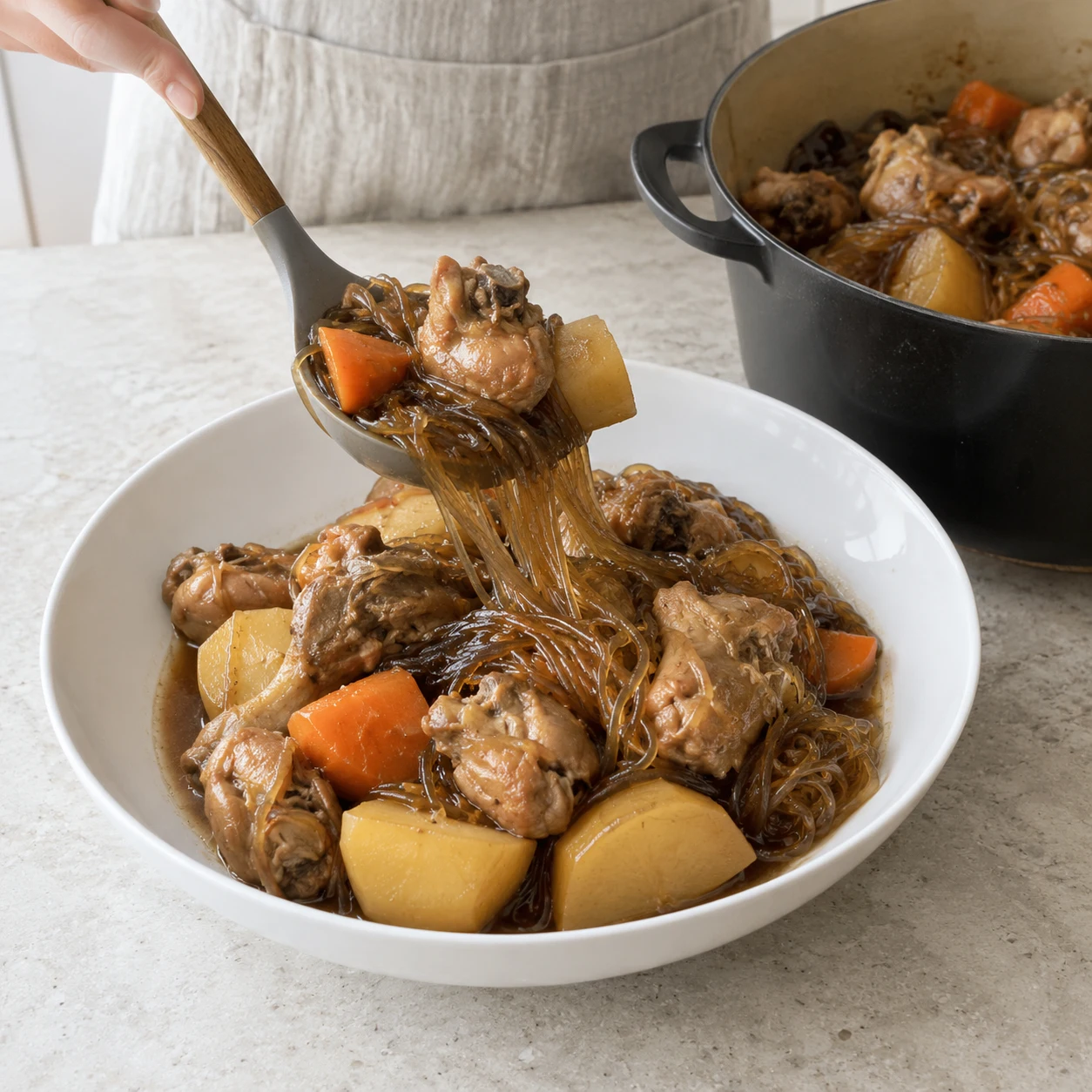
Finish and serve promptly. Turn off the heat and mix in the optional 1 small teaspoon sesame oil. Remove and discard the dried chilies before serving. Put the chicken, vegetables and noodles onto a wide serving dish with a little sauce. Remove bones and cut noodles into manageable lengths for children. For a mild family version, leave out the dried chilies from the start.
Finished dish
A level eating spoon is about 15 ml, a small teaspoon about 5 ml, and the small paper cup used here about 180 ml. Use the same spoon or cup throughout; ordinary cutlery and cups vary in size. This is an accessible soy-braised home version inspired by Andong jjimdak, not spicy red chicken stew. The cooking estimate includes the noodle soak, which overlaps with preparation and braising. Do not add dry unsoaked dangmyeon straight to the finished dish. Refrigerate cooked leftovers within 2 hours. Use within 3–4 days and reheat thoroughly to 74°C. Keep raw meat utensils separate from cooked food. A food thermometer is the most reliable doneness check. For leftovers, the noodles absorb sauce and become firmer. Add a little water when reheating and stir gently; do not repeatedly boil the noodles for a long time.